
Glacial cycles, changing sea levels and human histories are recorded at resolutions that older rocks rarely preserve.
The Quaternary includes the Pleistocene and the Holocene. The latter began 11,700 years ago on the international timescale. As ice sheets grew and shrank, shorelines moved and animal habitats changed. Local records reveal how those shifts played out in places far from the ice sheets. [1] [2]
Recent sediments can preserve pollen, small fossils and chemical signals in closely spaced sequences. Ice cores also preserve ancient air and information about the conditions in which snow accumulated. These archives permit questions about rates and sequences that are often difficult to ask of much older rocks. Even here, dating methods, missing layers and differences between the ages of ice and enclosed gas require careful interpretation. [3]
At Olduvai, sediments around the FLK Zinj site record freshwater and a wooded patch about 1.84 million years ago. At Rancho La Brea, dating individual bones helps researchers put local disappearances of large mammals in order. In the Naracoorte caves, mineral deposits can record the history of openings to the surface, while bones record animals introduced after the cave formed. Each clock dates a different event. [5] [6] [7]
A turning point
High-resolution archives make it possible to distinguish rapid changes from longer background trends.
Reading this chapter carefully
An age for a deposit, a date on an animal bone and a date for the formation of a cave measure different events. These local records cannot resolve the timing of environmental changes everywhere.
Ma means millions of years before the present. The international chart gives the estimated boundary ages. [1]
Where to see this chapter in the rocks
These places preserve selected windows from the chapter. Find all overlapping regional histories.
 Africa
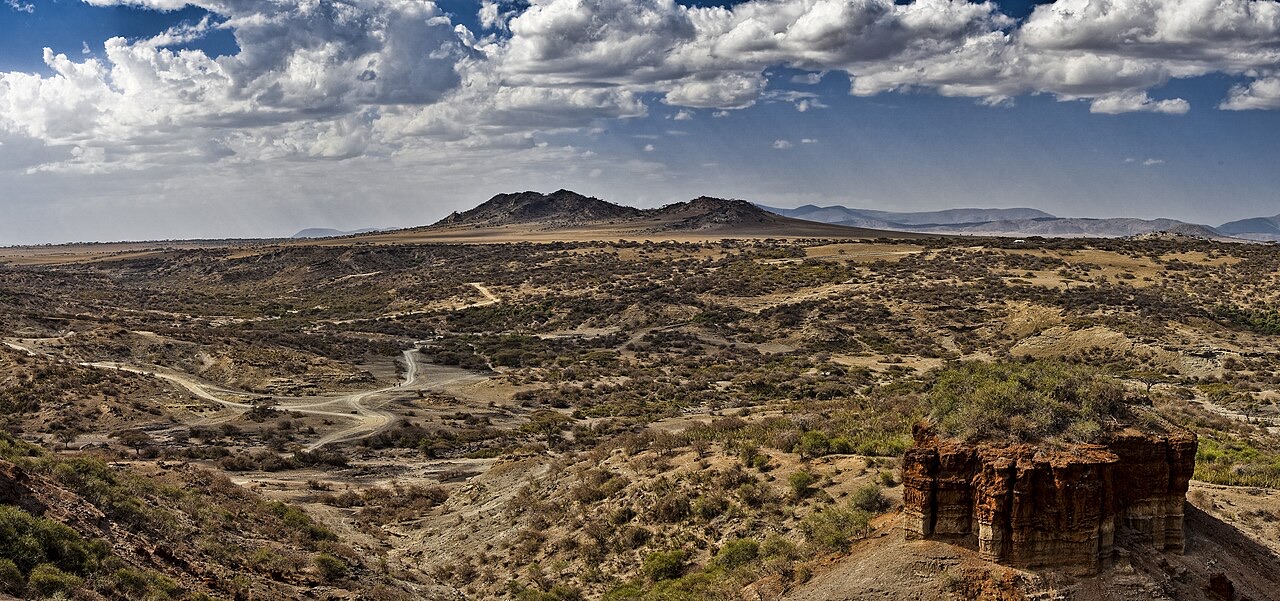
Tanzania ↗
Olduvai Gorge
Post-eruption rivers at Ewass Oldupa and younger spring-fed woodland at FLK Zinj reveal local habitat changes within an Early Pleistocene rift basin.
2.03 Ma → 1.84 Ma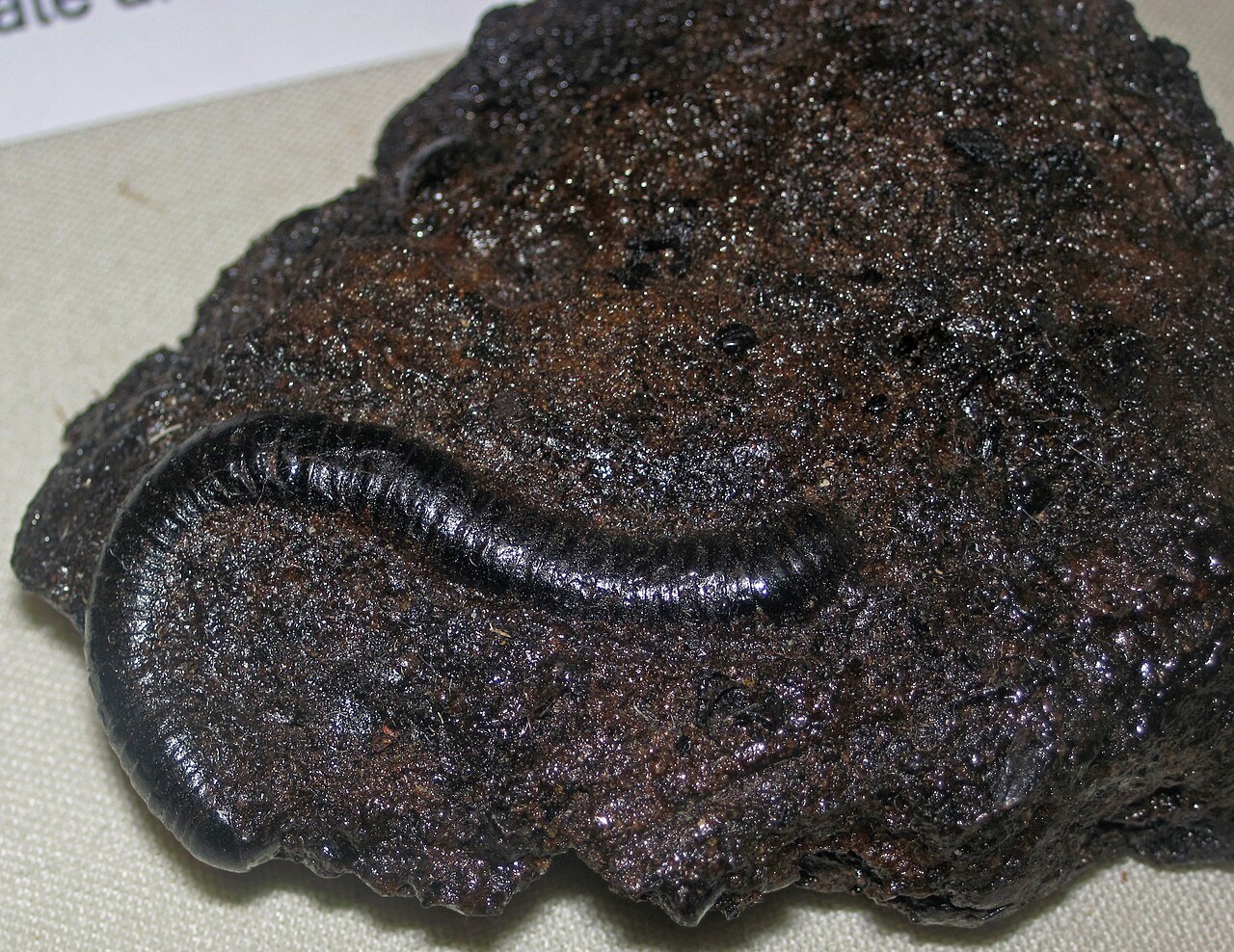 North America
United States ↗
La Brea
Natural asphalt seeps in the Los Angeles Basin trapped and preserved organisms through the late Pleistocene. Pit 91 reveals small organisms alongside large mammals, while directly dated bones help test the timing of regional megafaunal disappearance.
0.025 Ma → 0.0132 Ma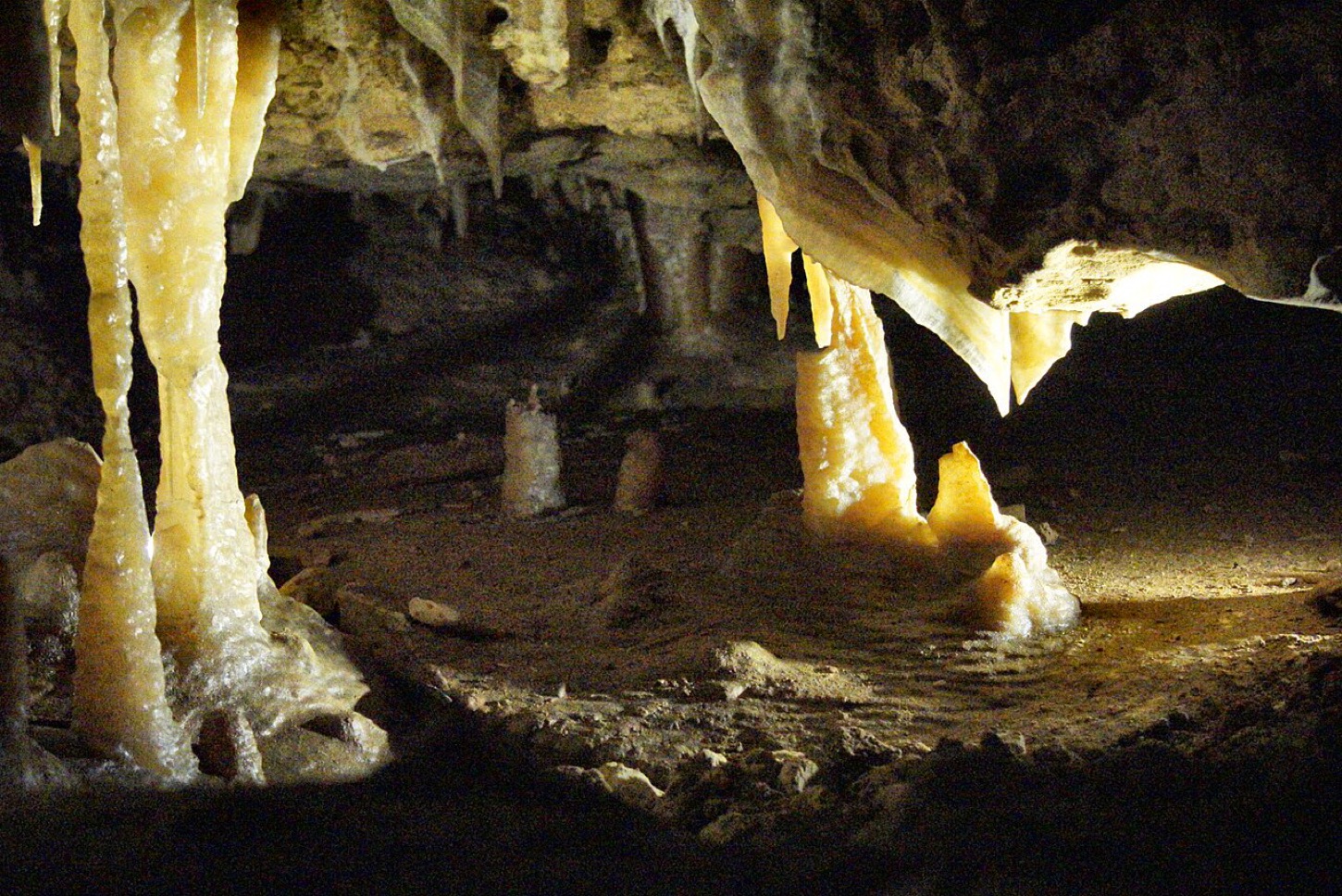 Oceania
Australia ↗
Naracoorte Caves
Dated cave minerals record early passages. Later openings let pollen, charcoal, sediment and animals enter.
1.34 Ma → 0.5 Ma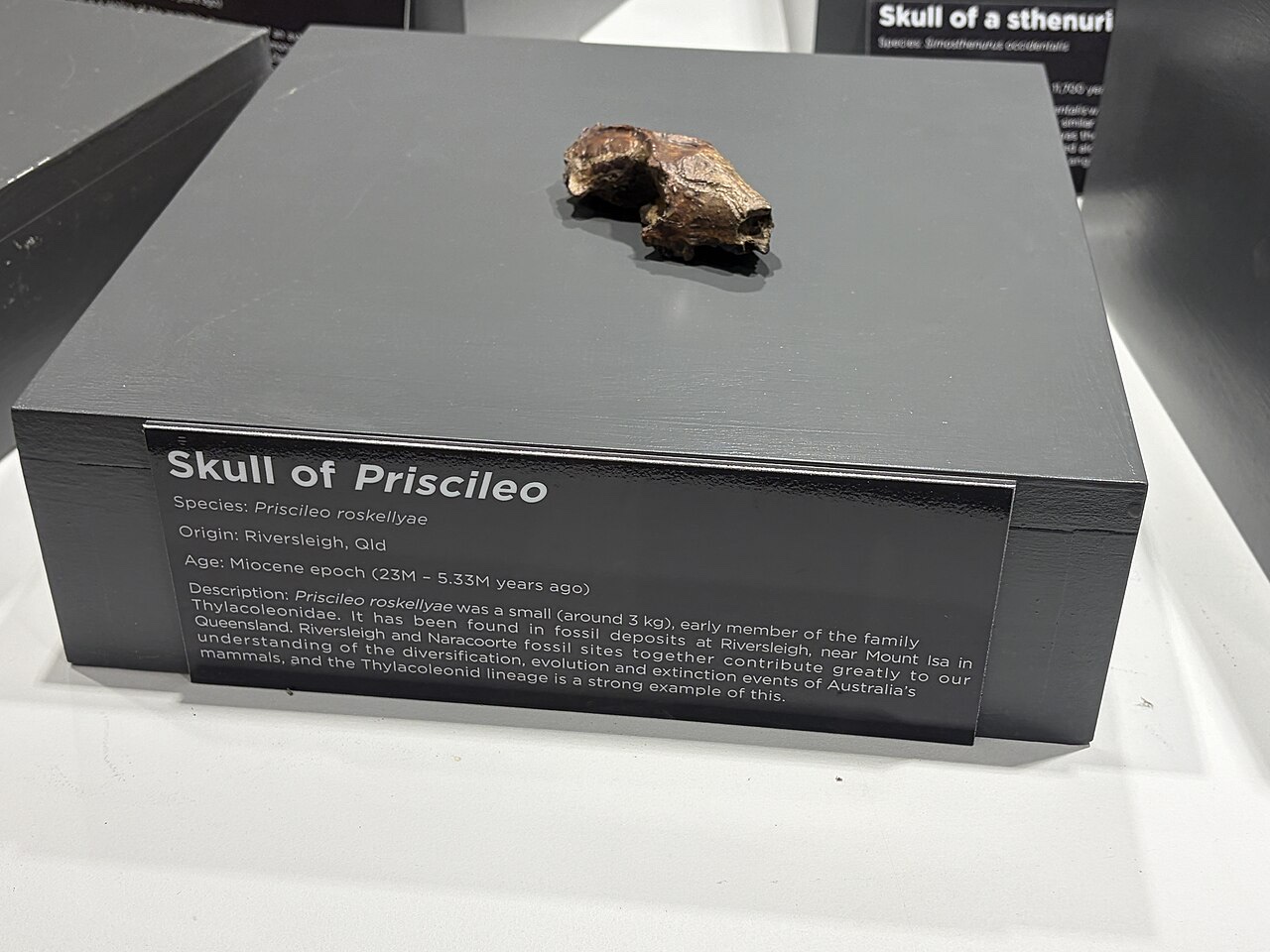 Oceania
Australia ↗
Riversleigh
Riversleigh’s fossil deposits connect wetter Oligocene–Miocene habitats with later faunas, revealing Australian mammals, birds, reptiles and bats.
23 Ma → 2.1 Ma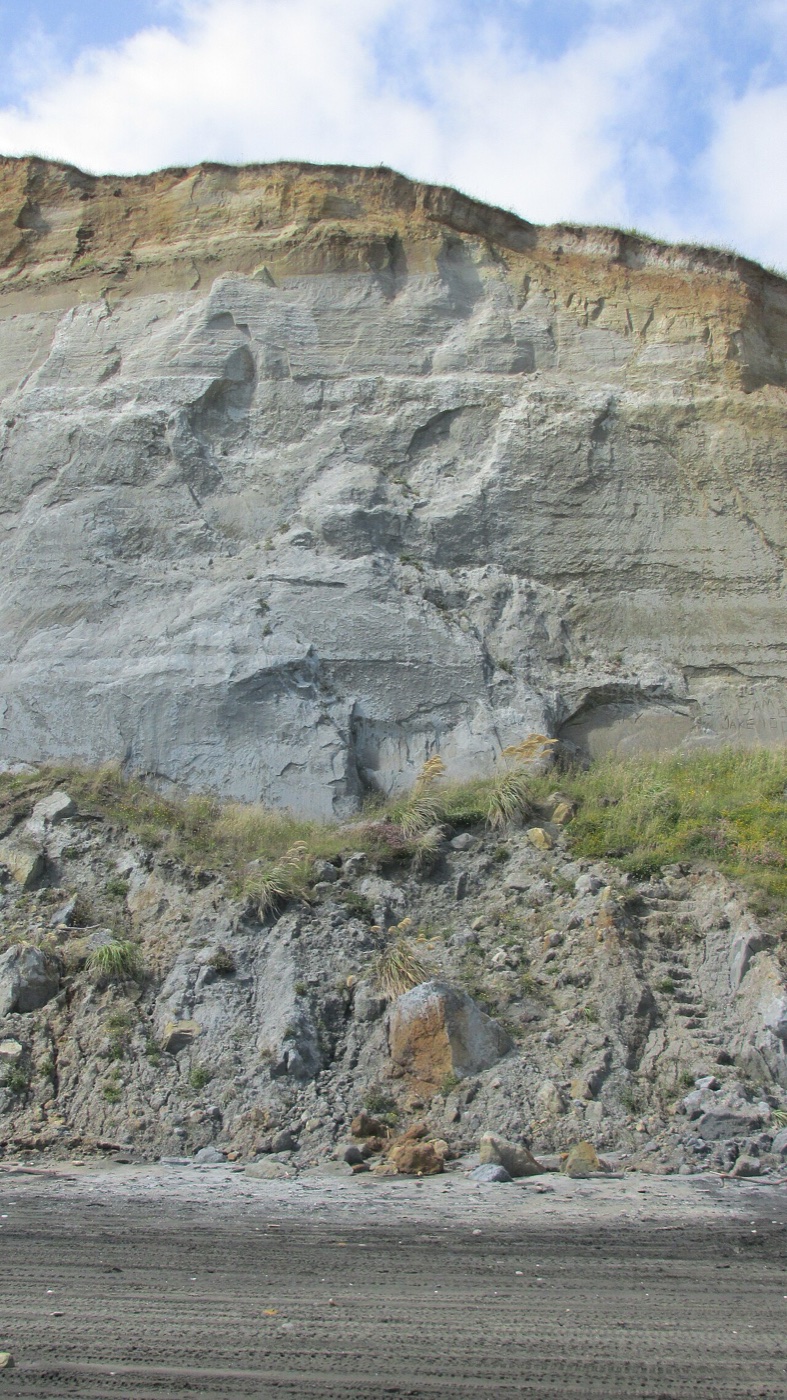 Oceania
New Zealand ↗
Whanganui Basin
Pliocene shelf sediments and younger Pleistocene shellbeds record recurring changes in water depth, sediment supply and tectonic accommodation in New Zealand.
3 Ma → 0.9 Ma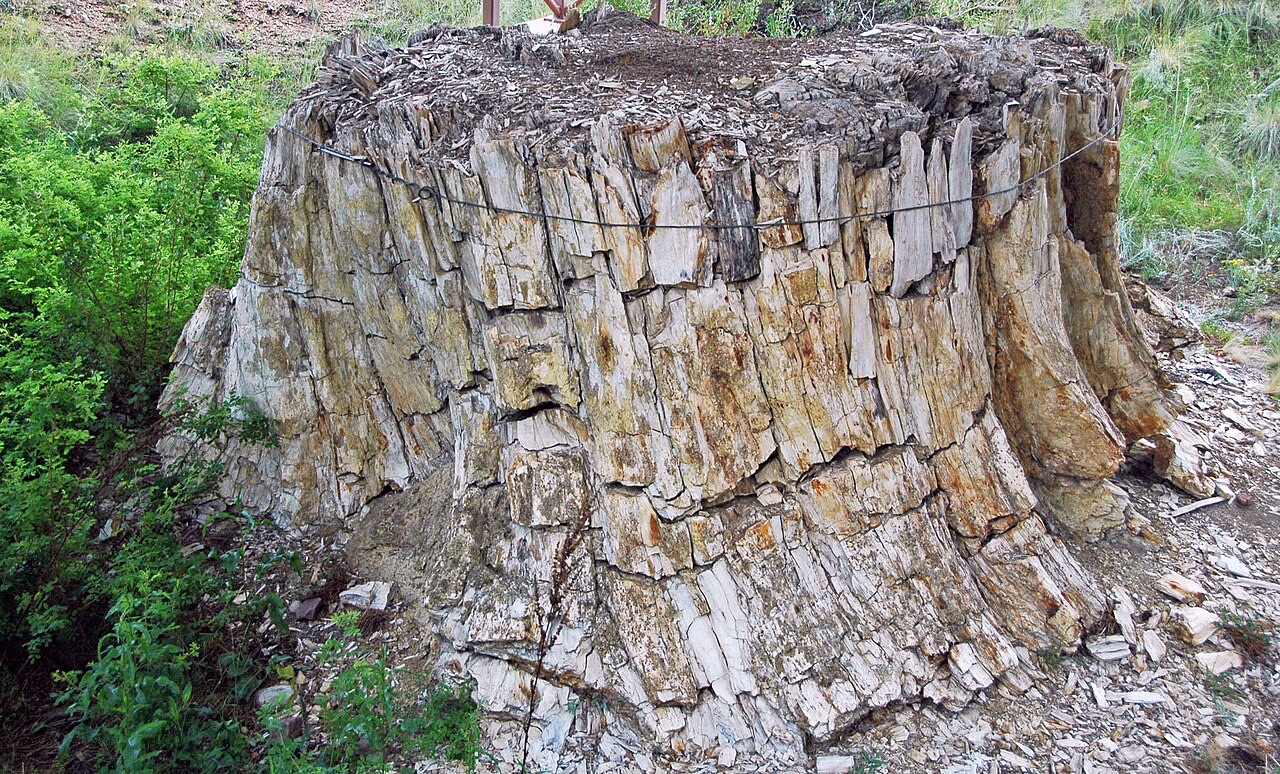 North America
United States ↗
Florissant
Florissant juxtaposes an Eocene lake and buried redwoods with much younger gravel containing mammoth remains.
34.5 Ma → 0.04993 MaFollow the evidence
Sources & credits
- International Chronostratigraphic Chart, version 2026/06 ↗
International Commission on Stratigraphy · 2026-06
Use, credit & modifications
Reference only. No source text, photographs, charts or other assets reproduced; original factual synthesis.
Credit: International Commission on Stratigraphy. Original explanatory synthesis; geological boundary ages normalized to ICS 2026/06 where relevant. No third-party asset reuse; no territorial asset licence asserted.
- The Pleistocene Epoch ↗
University of California Museum of Paleontology · 2011-06-10
Use, credit & modifications
Reference only. No source text, photographs, charts or other assets reproduced; original factual synthesis.
Credit: University of California Museum of Paleontology. Original explanatory synthesis; geological boundary ages normalized to ICS 2026/06 where relevant. No third-party asset reuse; no territorial asset licence asserted.
- What Are Proxy Data? ↗
NOAA National Centers for Environmental Information · 2018-08-24
Use, credit & modifications
Reference only. No source text, photographs, charts or other assets reproduced; original factual synthesis.
Credit: NOAA National Centers for Environmental Information. Original explanatory synthesis; geological boundary ages normalized to ICS 2026/06 where relevant. No third-party asset reuse; no territorial asset licence asserted.
- Geologic Time ↗
US National Park Service · Not stated
Use, credit & modifications
Reference only. No source text, photographs, charts or other assets reproduced; original factual synthesis.
Credit: US National Park Service. Original explanatory synthesis; geological boundary ages normalized to ICS 2026/06 where relevant. No third-party asset reuse; no territorial asset licence asserted.
- A spring and wooded habitat at FLK Zinj and their relevance to origins of human behavior ↗
Ashley et al.; Quaternary Research / Olduvai Paleoanthropology and Paleoecology Project · 2010
Use, credit & modifications
Reference only. No third-party prose, figures or media reproduced in the regional narrative; original factual synthesis.
Credit: Ashley et al.; Quaternary Research / Olduvai Paleoanthropology and Paleoecology Project — A spring and wooded habitat at FLK Zinj and their relevance to origins of human behavior. Original educational synthesis. Age envelopes are explicitly rounded teaching intervals, not new analytical uncertainties. No media licence or territorial reuse permission asserted for this reference. Photographs have separate item-level credits.
- Pre–Younger Dryas megafaunal extirpation at Rancho La Brea linked to fire-driven state shift ↗
Science · 2023-08-18
Use, credit & modifications
Reference only. No text, photographs, figures or datasets from this source are reproduced; the atlas provides original factual synthesis.
Credit: F. Robin O’Keefe and colleagues. Original educational synthesis. Numerical intervals are explicitly rounded teaching windows, not measured ages for every fossil. No source asset reused; no territorial asset licence asserted.
- Cave opening and fossil accumulation in Naracoorte through charcoal and pollen in dated speleothems ↗
Weij et al. · Communications Earth & Environment · 2022
Use, credit & modifications
Reference only. No source text, figures or photographs reproduced in this record.
Credit: Weij et al. · Communications Earth & Environment. Facts paraphrased in original text; teaching intervals distinguished from measurement uncertainty. Reference use; no media rights asserted.