
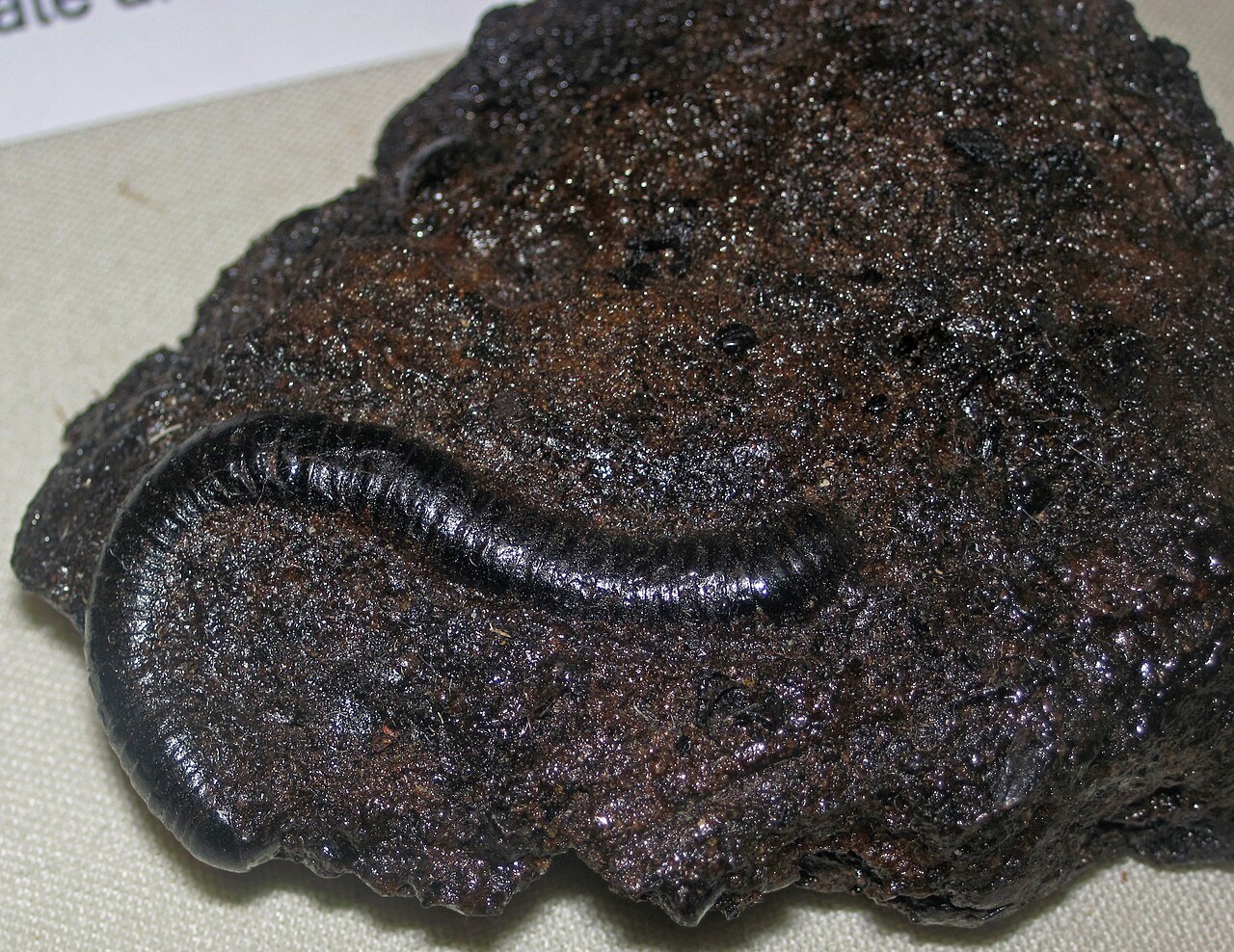
Can a deposit rich in predators give a fair picture of an Ice Age ecosystem?
La Brea’s famous “tar” is natural asphalt, and its fossil deposits are accumulations built through time. Animals could become trapped at sticky seeps; predators and scavengers attracted to a trapped animal could then be caught themselves. That mechanism makes the record unusually rich while also making it selective. A large number of carnivore bones is not a direct measure of how many carnivores lived in the surrounding landscape. Preservation must be understood before fossil counts become ecological claims.
The older window centres on the Ice Age environments investigated through Pit 91, around 25,000 years ago. The site preserves large mammal remains, but careful recovery also finds seeds, twigs, insects and other small material. These discoveries change the questions that can be asked. A mammal skeleton helps establish an animal’s presence; a broader collection of small fossils offers clues about the habitat around it. Earlier collecting priorities and later recovery methods have therefore shaped different pictures of the same deposit.
The younger window examines the interval approaching 13,000 years ago. A published study used directly dated La Brea bones to investigate the regional disappearance of several large mammals. Comparison with charcoal and vegetation records from Lake Elsinore, a separate site in southern California, linked that change with warming, drying and increased fire. The lake evidence is regional context, not a layer of ash excavated from every La Brea skeleton. Human involvement in ignition is an interpretation of combined evidence.
The distinction between regional disappearance and global extinction matters. A local last fossil can precede the final survival of a species elsewhere, and an incomplete record can hide survivors. The study addresses a particular sequence of environmental and biological changes, not a universal single cause for every late Pleistocene extinction. La Brea’s strength is that its rich collection allows those claims to be tested against individual dates while its trapping process makes the limitations visible.
[1] [2] [3] [4] [5]Time windows and evidence
Older ages are on the left. Bars span the dated intervals. A dot marks a single age.
- An Ice Age habitat sampled by seeps 0.02–0.03 Ma
- A warming landscape approaches a threshold 0.0129–0.0156 Ma
- The small fossils of Pit 91 0.02–0.03 Ma
- Smilodon in the asphalt deposits 0.0129–0.05 Ma
- Radiocarbon dates of the last megafauna 0.0129–0.0156 Ma
Researched windowsEvidence records
0.025 Ma · interval 0.02–0.03 Ma
An Ice Age habitat sampled by seeps
The Pit 91 record provides a window into the Los Angeles Basin around 25,000 years ago. Woodland, open vegetation and local wet areas are treated as a habitat mosaic rather than a continuous dense forest. Asphalt trapped organisms repeatedly, accumulating remains with different histories. Small plant and animal fossils are particularly useful for recovering ecological detail that a display of large mammals alone would miss. The 30–20 thousand year interval is a broad teaching window centred on the museum’s Pit 91 interpretation.
[1] [5]Locate this time in the atlas ↗Observed
Pit 91 contains large mammal bones together with seeds, twigs, insects and other small remains.
Reconstructed
A varied terrestrial habitat surrounded persistent or recurring natural asphalt seeps.
Uncertain
The deposit mixes trapping episodes; it is not a single day’s undisturbed animal community.
Evidence windows overlapping this state: 2. Overlap does not establish exact coexistence.
locality · La Brea ↗
The small fossils of Pit 91
Pit 91 preserves seeds, twigs, insect remains and small vertebrate material alongside large mammal bones. Recovering these pieces requires different attention from removing a conspicuous skull. The resulting collection helps rebuild the surrounding habitat and exposes the bias introduced when excavation targets only spectacular specimens. The broad interval here centres on the museum’s approximately 25,000-year teaching example; it does not claim that every small fossil in the pit has an identical measured age.
body fossil · La Brea ↗
Smilodon in the asphalt deposits
Saber-toothed cat remains are a prominent part of the La Brea record, including Pit 91. Their occurrence establishes the presence of a large predator in the region, while their abundance must be interpreted through the trapping mechanism. Carnivores attracted to struggling animals could themselves become trapped. A predator-rich deposit can therefore arise without the living ecosystem containing more predators than prey. Specimens from different pits and dates also must not be combined into an imagined single hunting group.
0.0132 Ma · interval 0.0129–0.0156 Ma
A warming landscape approaches a threshold
Late Pleistocene bones allow researchers to follow several large mammal populations toward their regional disappearance around 13,000 years ago. Regional pollen and charcoal records indicate a landscape undergoing warming, drying and a sharp increase in fire. The scene represents open woodland during this transition, with vegetation changing through the interval. It does not show a proven fire at every entrapment event. The window concerns southern California and predates the start of the Holocene.
[2] [3] [4]Locate this time in the atlas ↗Observed
Radiocarbon dates from La Brea constrain when seven sampled large mammals disappeared locally. A separate Lake Elsinore core records regional changes in vegetation and fire.
Reconstructed
Climate, vegetation, fire and human pressures interacted during an ecological transition.
Uncertain
The exact causal contribution of each pressure and the timing of survival outside the region remain distinct questions.
Evidence windows overlapping this state: 2. Overlap does not establish exact coexistence.
body fossil · La Brea ↗
Smilodon in the asphalt deposits
Saber-toothed cat remains are a prominent part of the La Brea record, including Pit 91. Their occurrence establishes the presence of a large predator in the region, while their abundance must be interpreted through the trapping mechanism. Carnivores attracted to struggling animals could themselves become trapped. A predator-rich deposit can therefore arise without the living ecosystem containing more predators than prey. Specimens from different pits and dates also must not be combined into an imagined single hunting group.
radiometric · La Brea ↗
Radiocarbon dates of the last megafauna
A study obtained 172 radiocarbon dates from La Brea bones, spanning 15,600 to 10,000 calendar years before present. Its analysis places the local disappearance of seven sampled species by about 12,900 years ago. Coyotes in the same study persisted. Researchers compared the sequence with charcoal and vegetation changes at Lake Elsinore. A bone date constrains the presence of an animal at the sampled site; the final date alone does not establish when a species became extinct elsewhere or what caused its loss.
What this story cannot resolve
Both scenes are late Pleistocene, not present-day Los Angeles. The tiny ages are expressed in Ma: 0.025 Ma equals 25,000 years. Regional fire evidence includes a different locality, Lake Elsinore. Asphalt entrapment and excavation methods strongly influence the fossil sample.
Keep these ideas handy
Taphonomy
Studying what happens between an organism’s life, death, burial, preservation and eventual discovery. Explore the idea ↗
Sampling bias
Differences between the history of life and the subset preserved, exposed, collected, identified and published. Explore the idea ↗
Radiometric dating
Estimating the time of a geological event from radioactive decay and the isotopic composition of a suitable material. Explore the idea ↗
The evidence notebook
locality · La Brea ↗
The small fossils of Pit 91
Pit 91 preserves seeds, twigs, insect remains and small vertebrate material alongside large mammal bones. Recovering these pieces requires different attention from removing a conspicuous skull. The resulting collection helps rebuild the surrounding habitat and exposes the bias introduced when excavation targets only spectacular specimens. The broad interval here centres on the museum’s approximately 25,000-year teaching example; it does not claim that every small fossil in the pit has an identical measured age.
body fossil · La Brea ↗
Smilodon in the asphalt deposits
Saber-toothed cat remains are a prominent part of the La Brea record, including Pit 91. Their occurrence establishes the presence of a large predator in the region, while their abundance must be interpreted through the trapping mechanism. Carnivores attracted to struggling animals could themselves become trapped. A predator-rich deposit can therefore arise without the living ecosystem containing more predators than prey. Specimens from different pits and dates also must not be combined into an imagined single hunting group.
radiometric · La Brea ↗
Radiocarbon dates of the last megafauna
A study obtained 172 radiocarbon dates from La Brea bones, spanning 15,600 to 10,000 calendar years before present. Its analysis places the local disappearance of seven sampled species by about 12,900 years ago. Coyotes in the same study persisted. Researchers compared the sequence with charcoal and vegetation changes at Lake Elsinore. A bone date constrains the presence of an animal at the sampled site; the final date alone does not establish when a species became extinct elsewhere or what caused its loss.
Follow the evidence
Sources & credits
- Pit 91 ↗
La Brea Tar Pits / Natural History Museums of Los Angeles County · Not stated
Use, credit & modifications
Reference only. No text, photographs, figures or datasets from this source are reproduced; the atlas provides original factual synthesis.
Credit: La Brea Tar Pits / Natural History Museums of Los Angeles County. Original educational synthesis. Numerical intervals are explicitly rounded teaching windows, not measured ages for every fossil. No source asset reused; no territorial asset licence asserted.
- Pre–Younger Dryas megafaunal extirpation at Rancho La Brea linked to fire-driven state shift ↗
Science · 2023-08-18
Use, credit & modifications
Reference only. No text, photographs, figures or datasets from this source are reproduced; the atlas provides original factual synthesis.
Credit: F. Robin O’Keefe and colleagues. Original educational synthesis. Numerical intervals are explicitly rounded teaching windows, not measured ages for every fossil. No source asset reused; no territorial asset licence asserted.
- New study links Southern California Ice Age mammal extinction to climate change, humans and fire ↗
Natural History Museums of Los Angeles County · 2023-08-17
Use, credit & modifications
Reference only. No text, photographs, figures or datasets from this source are reproduced; the atlas provides original factual synthesis.
Credit: Natural History Museums of Los Angeles County. Original educational synthesis. Numerical intervals are explicitly rounded teaching windows, not measured ages for every fossil. No source asset reused; no territorial asset licence asserted.
- Human-set fires 13,000 years ago led to extinction of megafauna in Southern California ↗
University of California, Los Angeles · 2023-08-18
Use, credit & modifications
Reference only. No text, photographs, figures or datasets from this source are reproduced; the atlas provides original factual synthesis.
Credit: David Colgan / UCLA. Original educational synthesis. Numerical intervals are explicitly rounded teaching windows, not measured ages for every fossil. No source asset reused; no territorial asset licence asserted.
- Fossil carrion beetles of Pleistocene California asphalt deposits, with a synopsis of Holocene California Silphidae ↗
Transactions of the San Diego Society of Natural History; NHMLA research archive · 1979-10-12
Use, credit & modifications
Reference only. No text, photographs, figures or datasets from this source are reproduced; the atlas provides original factual synthesis.
Credit: Scott E. Miller and Stewart B. Peck. Original educational synthesis. Numerical intervals are explicitly rounded teaching windows, not measured ages for every fossil. No source asset reused; no territorial asset licence asserted.
Follow the connections
 North America
United States ↗
Hell Creek & the Williston Basin
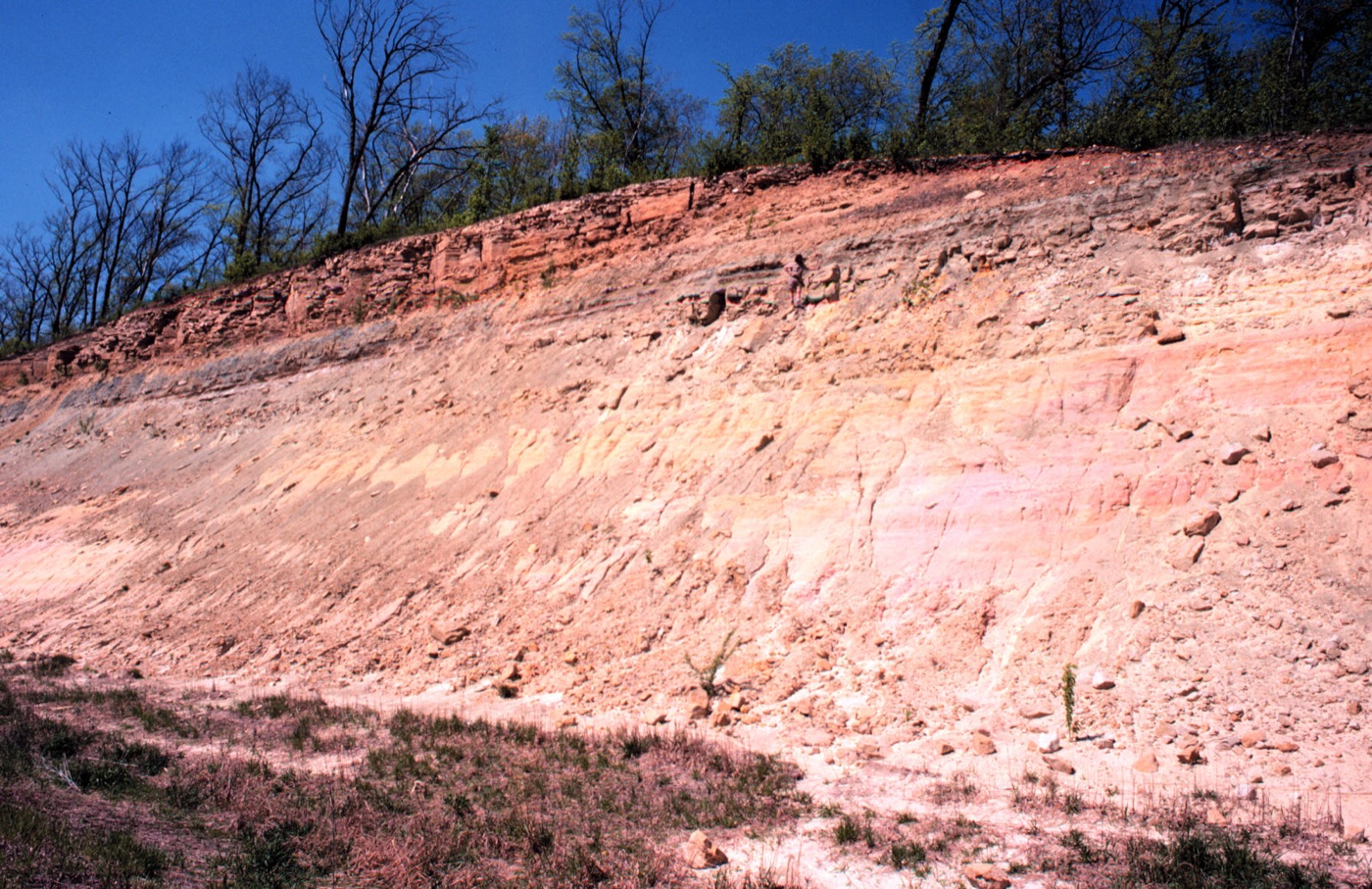
Floodplain fossils on either side of the end-Cretaceous boundary reveal major biological turnover. Pollen and leaves help place the change in time, alongside the more conspicuous dinosaur bones.
67 Ma → 65.5 Ma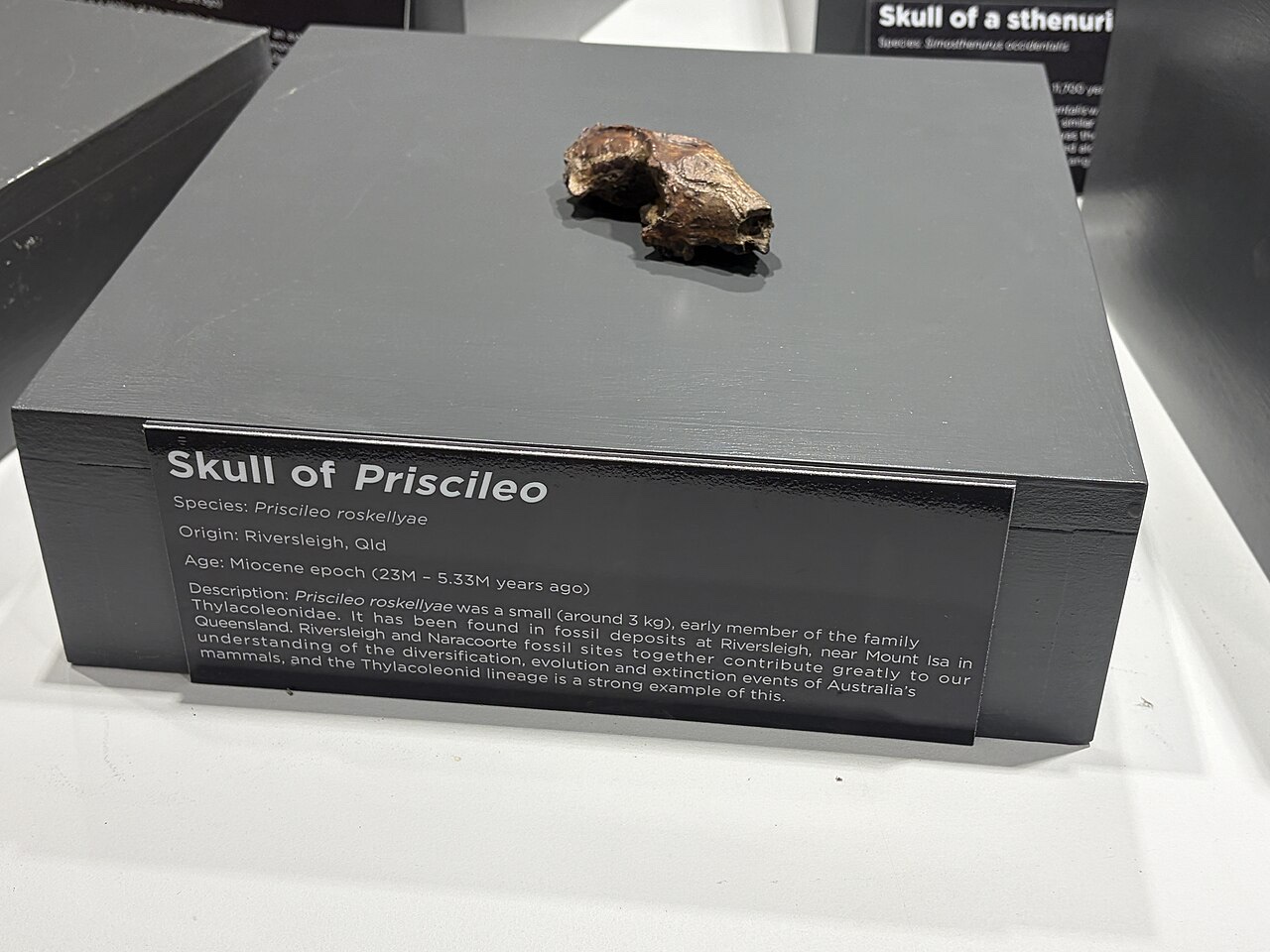 Oceania
Australia ↗
Riversleigh
Riversleigh’s fossil deposits connect wetter Oligocene–Miocene habitats with later faunas, revealing Australian mammals, birds, reptiles and bats.
23 Ma → 2.1 Ma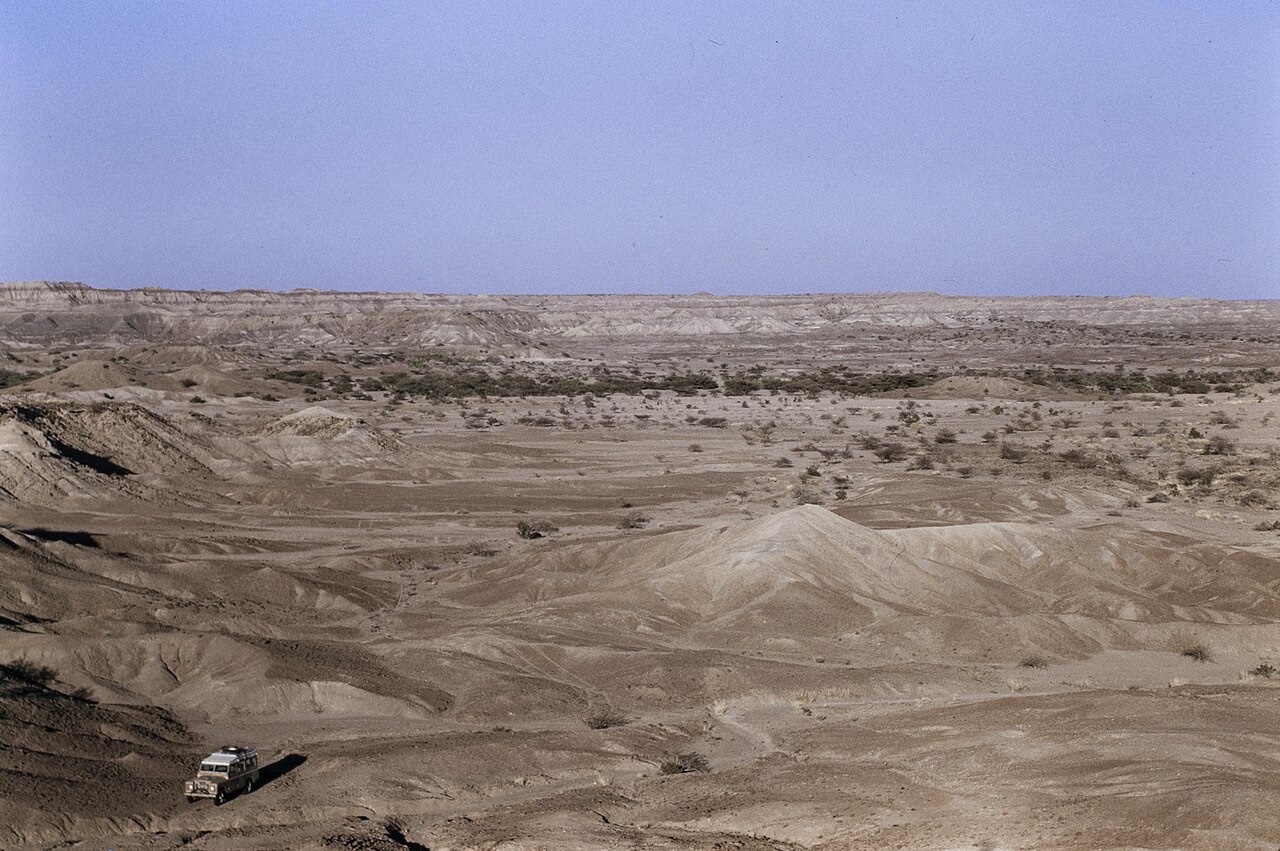 Africa
Ethiopia ↗
Hadar & the Afar Rift
Lucy’s skeleton belongs within a wider Pliocene record of lakes, river margins, pollen and changing vegetation in the Afar basin.
3.2 Ma → Today