
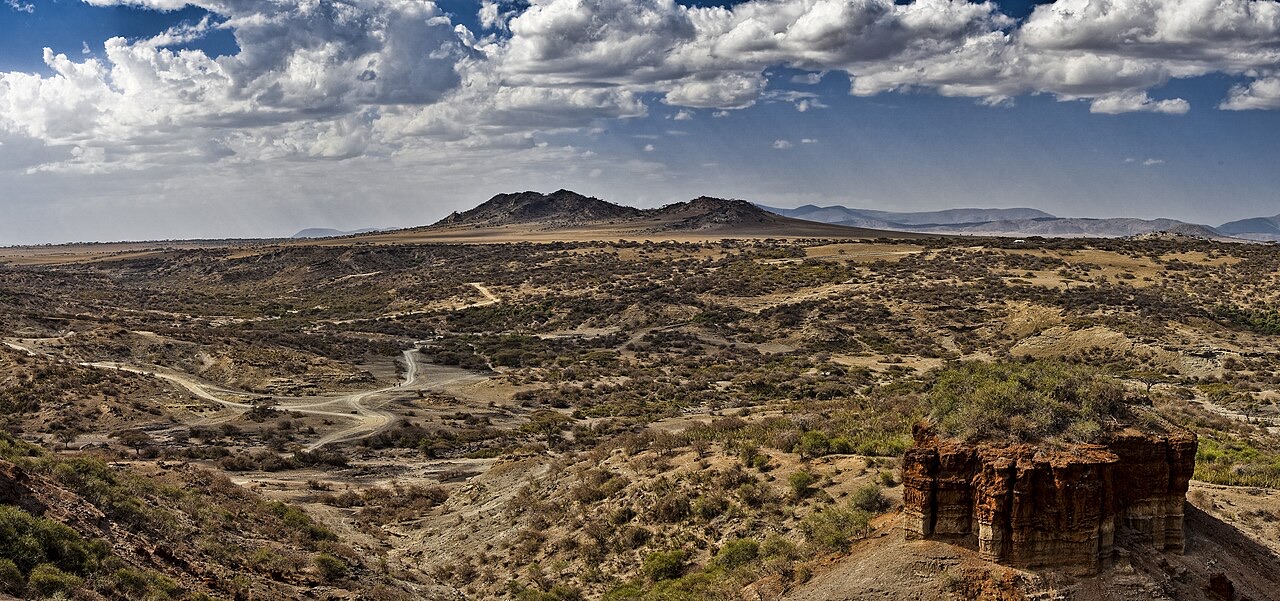
How did early hominins use a landscape that repeatedly changed around them?
Olduvai, also called Oldupai, is often introduced through a famous skull or a stone tool. The sediments around those discoveries are equally important. Volcanic eruptions, rivers, lake margins and groundwater shaped a basin that did not provide one permanent setting for early hominins. At Ewass Oldupa, archaeological material occurs above the Naabi ignimbrite, after the landscape stabilized enough for channels and vegetation to return. The artefacts record presence in that changing environment; they do not name the species responsible.
Plant microremains and sedimentary relationships help reconstruct the succession of habitats. The earliest documented phase includes a river and fern-rich vegetation after volcanic disturbance. Later levels record other combinations of woodland, grassland and lakeside conditions. These are local, sequential observations. They should not be compressed into a single panoramic scene with every habitat present simultaneously, or taken to mean that the same group remained in the area without interruption.
By roughly 1.84 million years ago, the FLK Zinj locality preserves evidence for a wooded patch near freshwater within a wider lake-margin landscape. Spring carbonates and plant silica bodies supply complementary tests of that reconstruction. The famous OH 5 cranium belongs to Paranthropus boisei, a hominin with a distinctive chewing apparatus. Its association with an archaeological landscape does not prove that this individual, or even this species, made every nearby tool.
The two states compare different localities and episodes in the basin. Dated volcanic layers help organize time, while fossils, sediments and chemical indicators answer different environmental questions. This combination supports a history of flexible use of changing habitats without turning environmental change into a complete explanation of human evolution. The modern gorge is the exposure through which those older deposits are studied, rather than the valley configuration in which the hominins originally lived.
[1] [2] [3] [4] [5] [6]Time windows and evidence
Older ages are on the left. Bars span the dated intervals. A dot marks a single age.
- A river after the Naabi eruption 2–2.04 Ma
- Freshwater and a wooded patch at FLK Zinj 1.8–1.86 Ma
- Ewass Oldupa occupation above the Naabi ignimbrite 2–2.04 Ma
- FLK Zinj spring carbonates and phytoliths 1.8–1.86 Ma
- OH 5, the Paranthropus boisei cranium 1.8–1.86 Ma
Researched windowsEvidence records
2.03 Ma · interval 2–2.04 Ma
A river after the Naabi eruption
At Ewass Oldupa, stone artefacts occur above the Naabi ignimbrite in deposits associated with a stabilized river and floodplain. Phytolith assemblages indicate fern-rich vegetation during an early phase of ecological recovery. The age is anchored by the approximately 2.038 Ma ignimbrite and the stratigraphic position of the occupation, with a rounded 2.04–2.00 Ma teaching window. This scene represents the earliest phase discussed here, rather than the complete sequence of later Ewass Oldupa habitats or the moment of the eruption itself.
[1] [2]Locate this time in the atlas ↗Observed
Artefacts, channel deposits and plant silica bodies occur above the Naabi ignimbrite.
Reconstructed
Hominins used a post-eruption river landscape with pioneer vegetation.
Uncertain
No diagnostic hominin body fossil identifies the toolmakers in this earliest occupation phase.
Evidence windows overlapping this state: 1. Overlap does not establish exact coexistence.
1.84 Ma · interval 1.8–1.86 Ma
Freshwater and a wooded patch at FLK Zinj
The younger snapshot represents the approximately 1.84 Ma FLK Zinj landscape. Plant silica bodies and spring-related carbonates support local woody vegetation and access to freshwater near a lake margin. The forest category is shorthand for that wooded patch, not a claim that the entire Olduvai Basin was closed forest. Animal bones, hominin remains and stone artefacts record several interacting processes of occupation, accumulation and burial. The broad age envelope avoids implying that all finds across the complex formed during one brief event.
[3] [4] [5]Locate this time in the atlas ↗Observed
Spring carbonates, woody-vegetation phytoliths and fossil-bearing archaeological deposits occur around FLK Zinj.
Reconstructed
A locally wooded freshwater refuge within a more varied basin landscape.
Uncertain
Vegetation density, occupation duration and contributions by different bone-accumulating agents remain debated.
Evidence windows overlapping this state: 2. Overlap does not establish exact coexistence.
geochemistry · Olduvai Gorge ↗
FLK Zinj spring carbonates and phytoliths
Carbonate deposits near FLK Zinj have geochemical properties interpreted as freshwater-spring deposits. Plant silica bodies from the same landscape support substantial woody vegetation in the vicinity. Combining these observations provides a stronger environmental reconstruction than using either a carbonate bed or a single phytolith alone. The resulting wooded patch was part of a wider, changing lake-margin mosaic. It does not require a uniformly forested basin, and the source of freshwater should be distinguished from the chemistry of the larger palaeolake.
body fossil · Olduvai Gorge ↗
OH 5, the Paranthropus boisei cranium
Mary Leakey discovered the OH 5 cranium at Olduvai in 1959. Assigned today to Paranthropus boisei, the fossil preserves a distinctive facial and chewing anatomy and provides direct evidence for this hominin in the Early Pleistocene basin. Its approximate age is commonly presented as 1.8 million years, with the FLK Zinj landscape studied at around 1.84 Ma. The skull identifies a biological taxon; it does not alone identify a preferred food, a social organization or the maker of associated stone tools.
What this story cannot resolve
The marker is a modern regional location. Ewass Oldupa and FLK Zinj are distinct sites. Stone artefacts establish hominin activity but do not identify a maker species; woodland reconstruction applies locally, and the age windows are teaching envelopes.
Keep these ideas handy
Radiometric dating
Estimating the time of a geological event from radioactive decay and the isotopic composition of a suitable material. Explore the idea ↗
Climate proxy
A measured feature of a natural archive used to infer some aspect of past climate. Explore the idea ↗
Taphonomy
Studying what happens between an organism’s life, death, burial, preservation and eventual discovery. Explore the idea ↗
Uncertainty & reconstruction limits
Explicit limits on what evidence and models allow us to infer, including uncertainty in age, identity, place and process. Explore the idea ↗
The evidence notebook
locality · Olduvai Gorge ↗
Ewass Oldupa occupation above the Naabi ignimbrite
The earliest documented Ewass Oldupa phase contains stone artefacts in deposits above the Naabi ignimbrite, near a channel and exposed raw-material sources. The ignimbrite’s approximately 2.038 Ma age provides a lower stratigraphic anchor, while the artefacts and overlying sediments record subsequent use of the landscape. Phytoliths indicate fern-rich pioneer vegetation during this phase. This association links archaeological presence with an environmental setting, but it neither identifies the toolmakers anatomically nor demonstrates continuous occupation from the eruption onward.
geochemistry · Olduvai Gorge ↗
FLK Zinj spring carbonates and phytoliths
Carbonate deposits near FLK Zinj have geochemical properties interpreted as freshwater-spring deposits. Plant silica bodies from the same landscape support substantial woody vegetation in the vicinity. Combining these observations provides a stronger environmental reconstruction than using either a carbonate bed or a single phytolith alone. The resulting wooded patch was part of a wider, changing lake-margin mosaic. It does not require a uniformly forested basin, and the source of freshwater should be distinguished from the chemistry of the larger palaeolake.
body fossil · Olduvai Gorge ↗
OH 5, the Paranthropus boisei cranium
Mary Leakey discovered the OH 5 cranium at Olduvai in 1959. Assigned today to Paranthropus boisei, the fossil preserves a distinctive facial and chewing anatomy and provides direct evidence for this hominin in the Early Pleistocene basin. Its approximate age is commonly presented as 1.8 million years, with the FLK Zinj landscape studied at around 1.84 Ma. The skull identifies a biological taxon; it does not alone identify a preferred food, a social organization or the maker of associated stone tools.
Follow the evidence
Sources & credits
- Earliest Olduvai hominins exploited unstable environments ~2 million years ago ↗
Mercader et al.; Nature Communications · 2021-01-07
Use, credit & modifications
Reference only. No third-party prose, figures or media reproduced in the regional narrative; original factual synthesis.
Credit: Mercader et al.; Nature Communications — Earliest Olduvai hominins exploited unstable environments ~2 million years ago. Original educational synthesis. Age envelopes are explicitly rounded teaching intervals, not new analytical uncertainties. No media licence or territorial reuse permission asserted for this reference. Photographs have separate item-level credits.
- Oldowan Technology Amid Shifting Environments ~2.03–1.83 Million Years Ago ↗
Cueva-Temprana et al.; Frontiers in Ecology and Evolution · 2022
Use, credit & modifications
Reference only. No third-party prose, figures or media reproduced in the regional narrative; original factual synthesis.
Credit: Cueva-Temprana et al.; Frontiers in Ecology and Evolution — Oldowan Technology Amid Shifting Environments ~2.03–1.83 Million Years Ago. Original educational synthesis. Age envelopes are explicitly rounded teaching intervals, not new analytical uncertainties. No media licence or territorial reuse permission asserted for this reference. Photographs have separate item-level credits.
- A spring and wooded habitat at FLK Zinj and their relevance to origins of human behavior ↗
Ashley et al.; Quaternary Research / Olduvai Paleoanthropology and Paleoecology Project · 2010
Use, credit & modifications
Reference only. No third-party prose, figures or media reproduced in the regional narrative; original factual synthesis.
Credit: Ashley et al.; Quaternary Research / Olduvai Paleoanthropology and Paleoecology Project — A spring and wooded habitat at FLK Zinj and their relevance to origins of human behavior. Original educational synthesis. Age envelopes are explicitly rounded teaching intervals, not new analytical uncertainties. No media licence or territorial reuse permission asserted for this reference. Photographs have separate item-level credits.
- The FLK Zinj paleolandscape: Reconstruction of a 1.84 Ma wooded habitat in the FLK Zinj-AMK-PTK-DS archaeological complex ↗
Arráiz et al.; Palaeogeography, Palaeoclimatology, Palaeoecology / Olduvai Project · 2017
Use, credit & modifications
Reference only. No third-party prose, figures or media reproduced in the regional narrative; original factual synthesis.
Credit: Arráiz et al.; Palaeogeography, Palaeoclimatology, Palaeoecology / Olduvai Project — The FLK Zinj paleolandscape: Reconstruction of a 1.84 Ma wooded habitat in the FLK Zinj-AMK-PTK-DS archaeological complex. Original educational synthesis. Age envelopes are explicitly rounded teaching intervals, not new analytical uncertainties. No media licence or territorial reuse permission asserted for this reference. Photographs have separate item-level credits.
- OH 5: Paranthropus boisei from Olduvai Gorge ↗
Smithsonian National Museum of Natural History, Human Origins Program · Not stated
Use, credit & modifications
Reference only. No third-party prose, figures or media reproduced in the regional narrative; original factual synthesis.
Credit: Smithsonian National Museum of Natural History, Human Origins Program — OH 5: Paranthropus boisei from Olduvai Gorge. Original educational synthesis. Age envelopes are explicitly rounded teaching intervals, not new analytical uncertainties. No media licence or territorial reuse permission asserted for this reference. Photographs have separate item-level credits.
- Ecosystem variability and early human habitats in eastern Africa ↗
Magill, Ashley and Freeman; Proceedings of the National Academy of Sciences / Rutgers University · 2013
Use, credit & modifications
Reference only. No third-party prose, figures or media reproduced in the regional narrative; original factual synthesis.
Credit: Magill, Ashley and Freeman; Proceedings of the National Academy of Sciences / Rutgers University — Ecosystem variability and early human habitats in eastern Africa. Original educational synthesis. Age envelopes are explicitly rounded teaching intervals, not new analytical uncertainties. No media licence or territorial reuse permission asserted for this reference. Photographs have separate item-level credits.
Follow the connections
 Africa
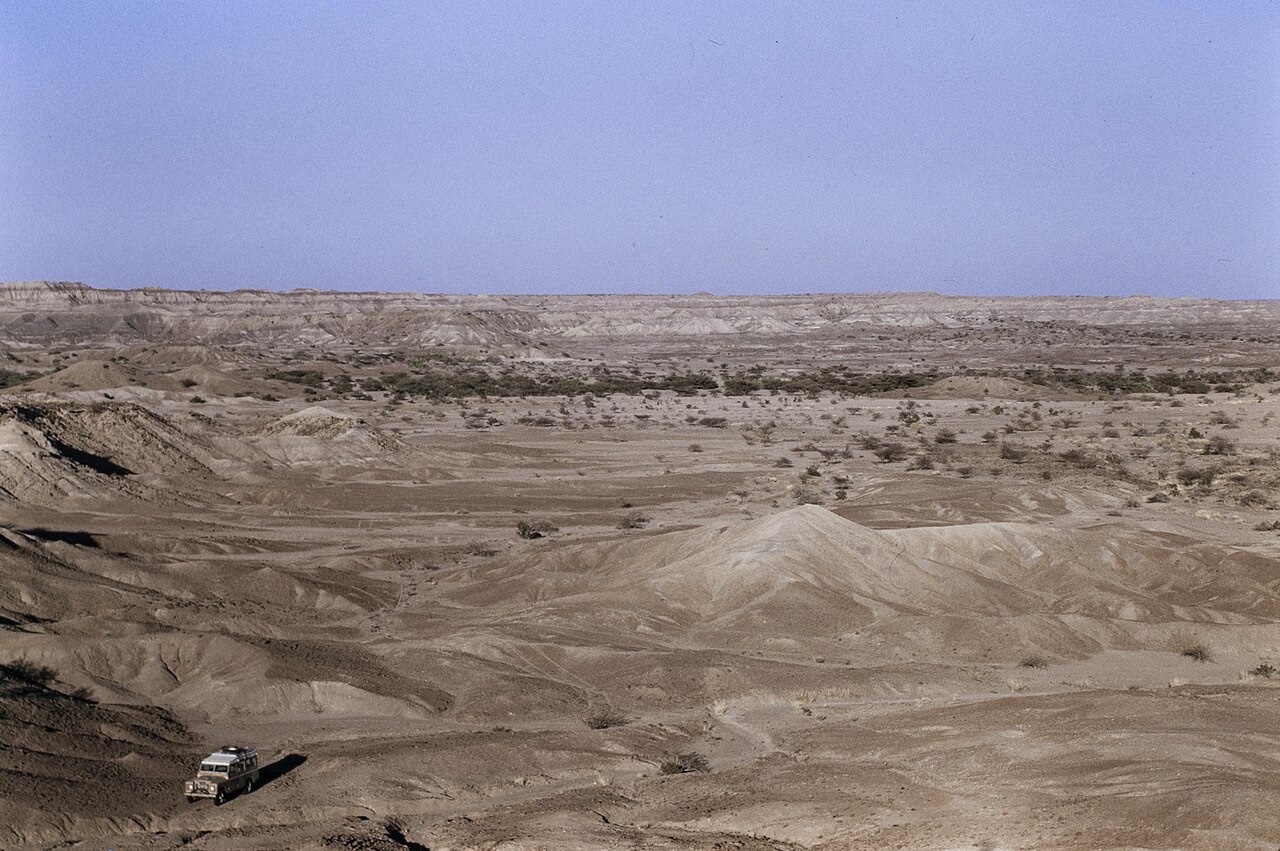
Ethiopia ↗
Hadar & the Afar Rift
Lucy’s skeleton belongs within a wider Pliocene record of lakes, river margins, pollen and changing vegetation in the Afar basin.
3.2 Ma → Today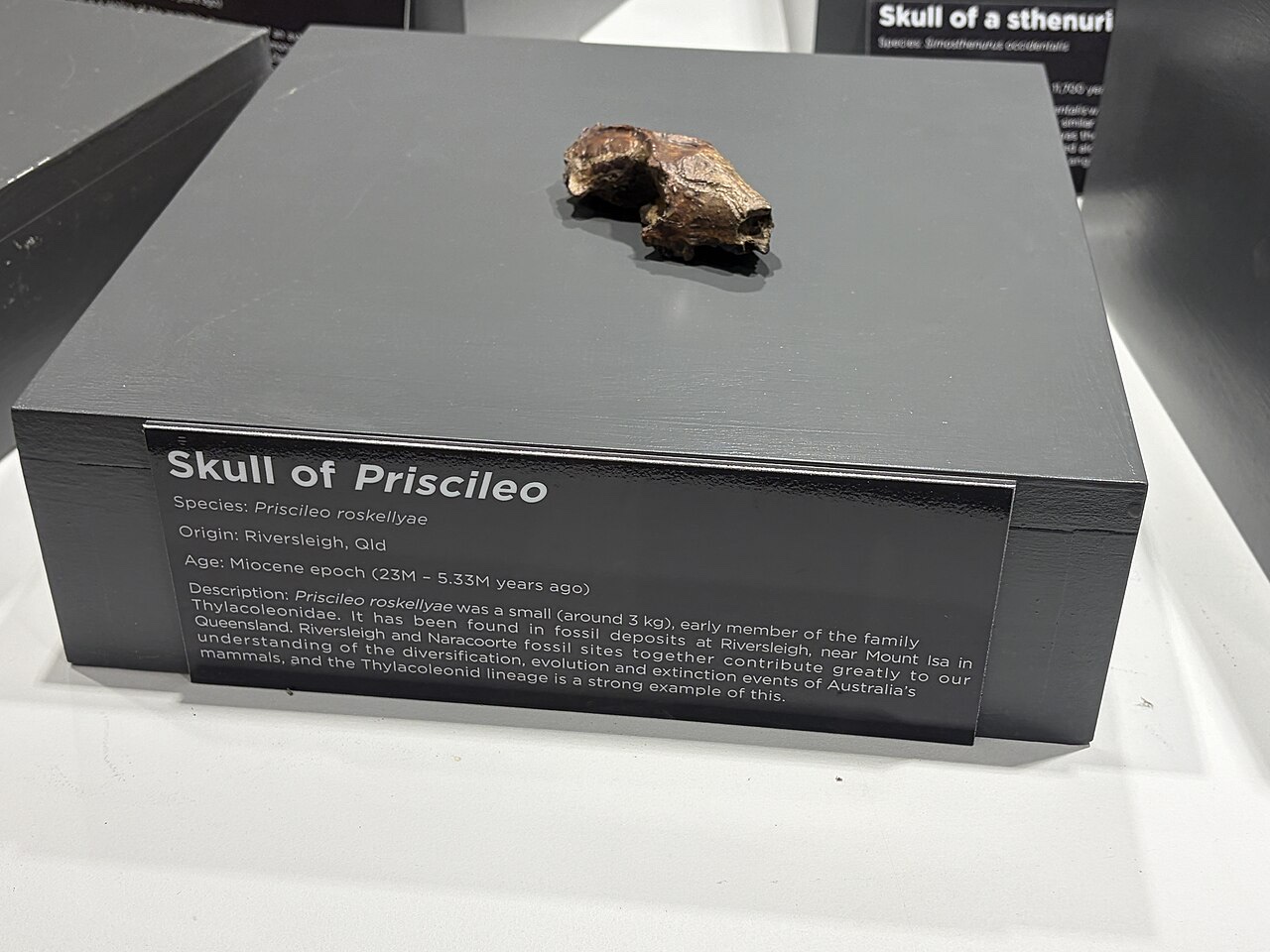 Oceania
Australia ↗
Riversleigh
Riversleigh’s fossil deposits connect wetter Oligocene–Miocene habitats with later faunas, revealing Australian mammals, birds, reptiles and bats.
23 Ma → 2.1 Ma