
Almost two billion years contain major changes in atmospheric chemistry, continental arrangements and the complexity of life.
Oxygen did not turn on everywhere at once. Geological evidence indicates a lasting rise in atmospheric oxygen early in the Proterozoic, following earlier, more limited oxygenation. The atmosphere and different parts of the ocean could respond differently. Local oxygen-producing communities could exist while oxygen was still consumed rapidly by reactions with reduced materials. This is why a chemical signal from one basin needs context before it becomes a claim about the whole planet.
Later Proterozoic time includes major glaciations, changing continental assemblies, increasingly complex cells and the appearance of large organisms in the fossil record. These developments were not a single event or a straight staircase of progress. The interval is much longer than all the time since the Cambrian began. Its unfamiliar organisms deserve to be understood within their own environments, rather than treated only as a prelude to dinosaurs.
The atlas enters this chapter through Ediacaran seafloors in southern Australia and Namibia. Bedding surfaces, impressions and skeletal fossils ask different questions about bodies, behavior and preservation. Compare what is actually visible with what has been reconstructed. A fossil assemblage records particular environments and modes of burial; it cannot stand in for every living community across this enormous span.
[1] [2] [3] [4] [5] [6] [7] [8]A turning point
By the Ediacaran, large organisms and increasingly varied animal evidence become visible in multiple regional records.
Reading this chapter carefully
The chapter groups many distinct eras and periods. Its late Ediacaran regional cases must not be projected back across the entire Proterozoic.
Ma means millions of years before the present. The international chart gives the estimated boundary ages. [1]
Where to see this chapter in the rocks
These places preserve selected windows from the chapter. Find all overlapping regional histories.
 Oceania
Australia ↗
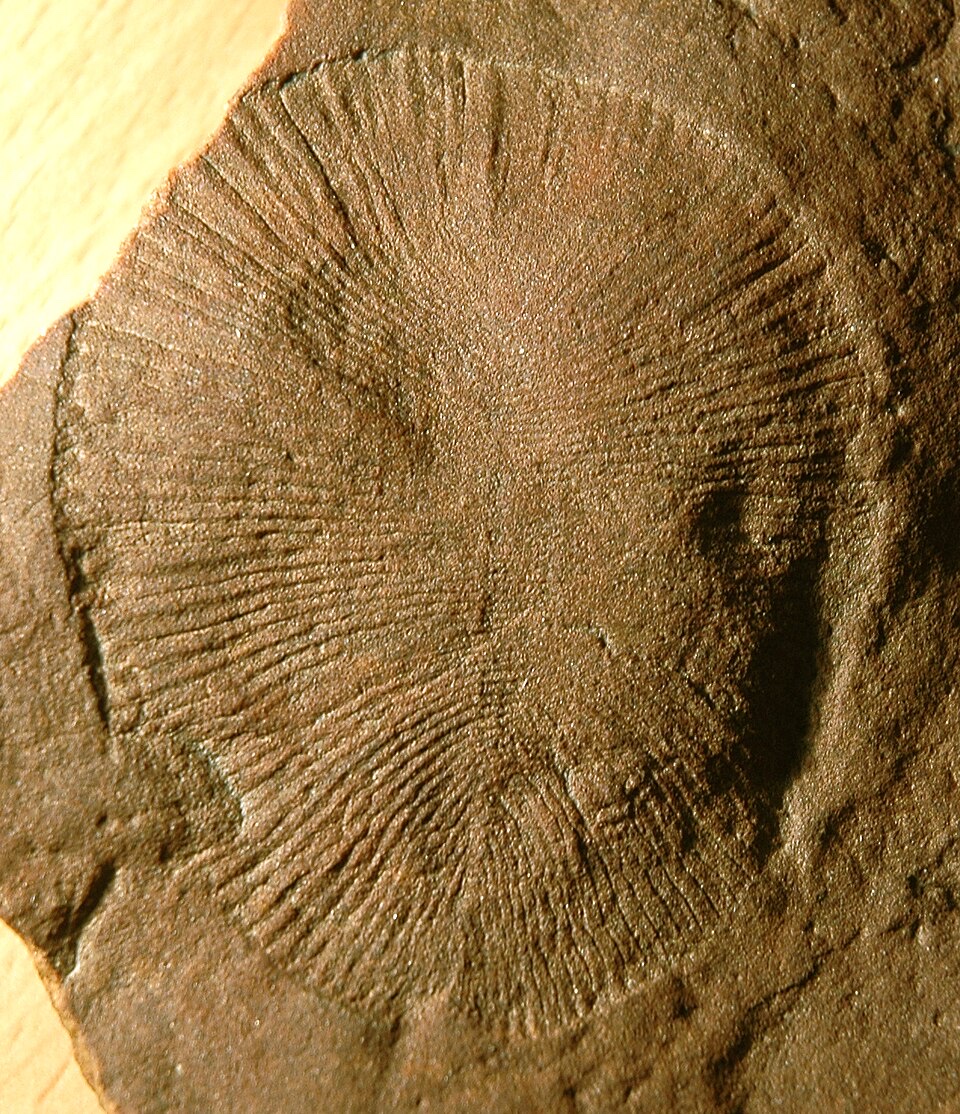
Ediacara & Nilpena
South Australian bedding surfaces record soft-bodied Ediacaran organisms and the patchiness of life on an ancient marine floor.
555 Ma → Today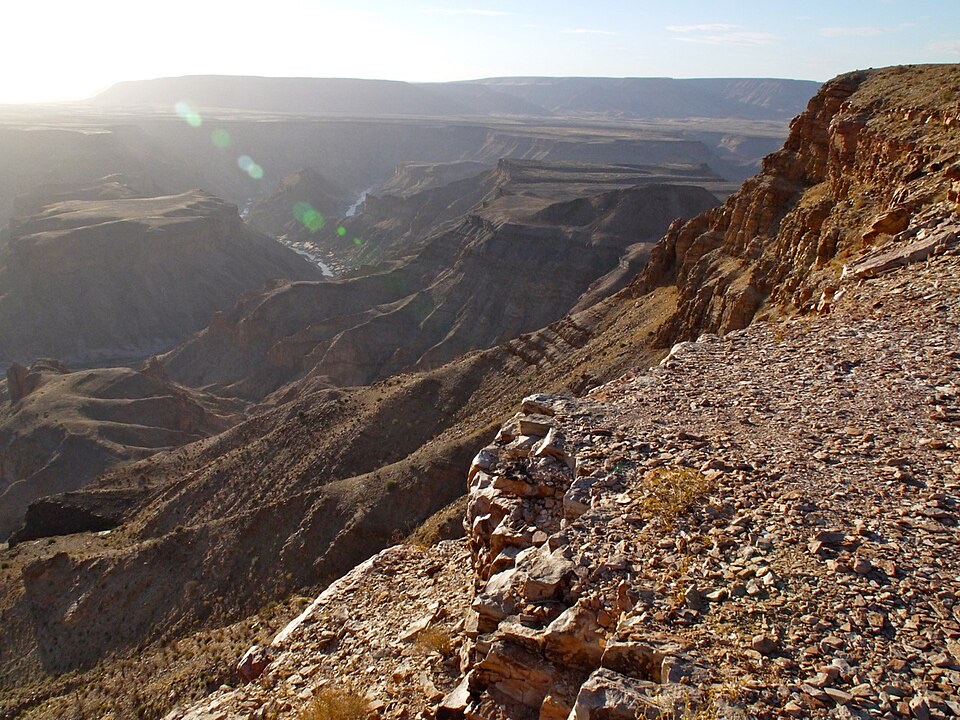 Africa
Namibia ↗
Nama Basin
Late Ediacaran skeletons and younger burrows show two different ways animals began shaping marine habitats in southern Namibia.
548 Ma → 537 Ma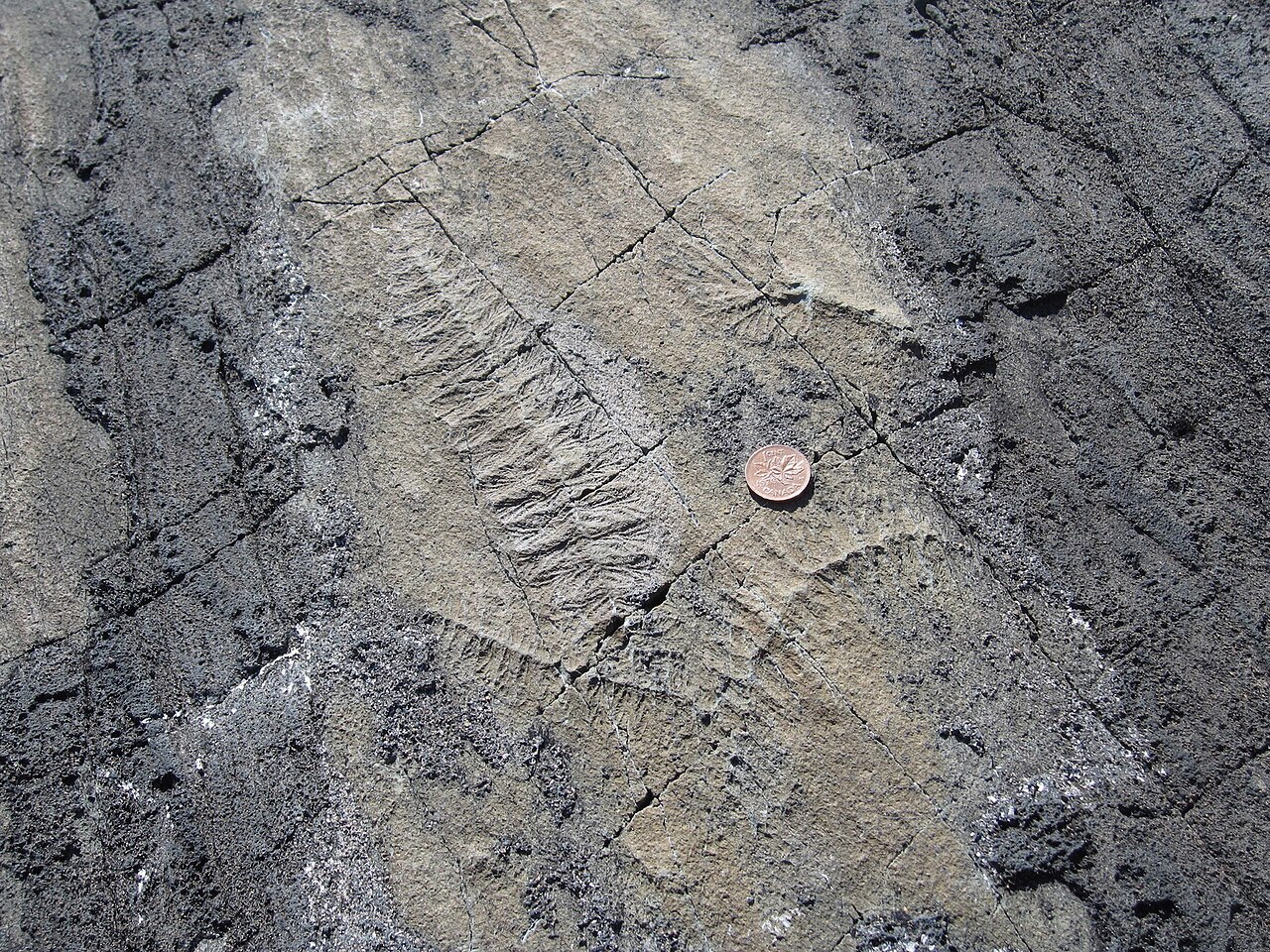 North America
Canada ↗
Mistaken Point
Ediacaran bedding surfaces on Newfoundland’s Avalon Peninsula record complex soft-bodied communities. Two dated intervals, around 574 and 565 million years ago, reveal early branching organisms and later densely populated seafloors.
574 Ma → 565 Ma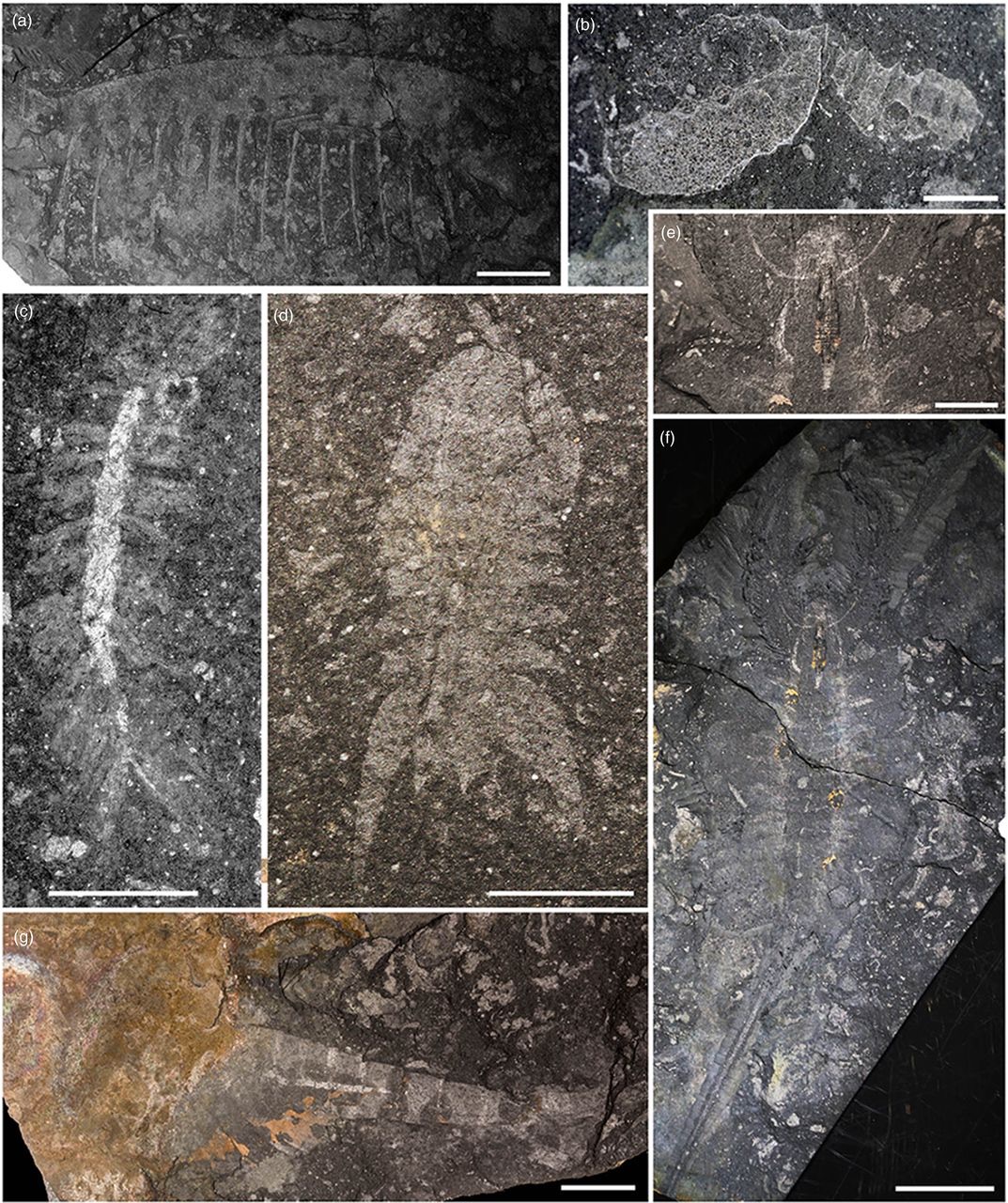 North America
Greenland (Kingdom of Denmark) ↗
Peary Land & Sirius Passet
Ediacaran microscopic fossils and Cambrian soft-bodied animals reveal two marine worlds in northern Greenland.
570 Ma → 518 MaFollow the evidence
Sources & credits
- International Chronostratigraphic Chart, version 2026/06 ↗
International Commission on Stratigraphy · 2026-06
Use, credit & modifications
Reference only. No source text, photographs, charts or other assets reproduced; original factual synthesis.
Credit: International Commission on Stratigraphy. Original explanatory synthesis; geological boundary ages normalized to ICS 2026/06 where relevant. No third-party asset reuse; no territorial asset licence asserted.
- Clues to Oxygen on Earth before the Great Oxidation Event ↗
NASA Astrobiology · 2021
Use, credit & modifications
Reference only. No source text, photographs, charts or other assets reproduced; original factual synthesis.
Credit: NASA Astrobiology. Original explanatory synthesis; geological boundary ages normalized to ICS 2026/06 where relevant. No third-party asset reuse; no territorial asset licence asserted.
- What the earliest evidence for life tells us about the early evolution of the biosphere ↗
Philosophical Transactions of the Royal Society B · 2025
Use, credit & modifications
Reference only. No source text, photographs, charts or other assets reproduced; original factual synthesis.
Credit: Philosophical Transactions of the Royal Society B. Original explanatory synthesis; geological boundary ages normalized to ICS 2026/06 where relevant. No third-party asset reuse; no territorial asset licence asserted.
- Stromatolites ↗
Western Australian Museum · Not stated
Use, credit & modifications
Reference only. No source text, photographs, charts or other assets reproduced; original factual synthesis.
Credit: Western Australian Museum. Original explanatory synthesis; geological boundary ages normalized to ICS 2026/06 where relevant. No third-party asset reuse; no territorial asset licence asserted.
- Meet the fossils of Nilpena Ediacara National Park ↗
National Parks and Wildlife Service South Australia · 2023
Use, credit & modifications
Reference only. No third-party prose, figures, photographs or datasets reproduced; factual interpretation written originally for this atlas.
Credit: National Parks and Wildlife Service South Australia — Meet the fossils of Nilpena Ediacara National Park. Original educational synthesis; geological ages rounded into explicitly labelled teaching intervals. No licensed media incorporated; no territorial reuse permission asserted.
- Museum Director marks Ediacara’s 80th anniversary with visit to fossil beds ↗
South Australian Museum · 2026
Use, credit & modifications
Reference only. No third-party prose, figures, photographs or datasets reproduced; factual interpretation written originally for this atlas.
Credit: South Australian Museum — Museum Director marks Ediacara’s 80th anniversary with visit to fossil beds. Original educational synthesis; geological ages rounded into explicitly labelled teaching intervals. No licensed media incorporated; no territorial reuse permission asserted.
- Extensive metazoan reefs from the Ediacaran Nama Group, Namibia: the rise of benthic suspension feeding ↗
Wood and Curtis; Geobiology / University of Edinburgh · 2015
Use, credit & modifications
Reference only. No third-party prose, figures, photographs or datasets reproduced; factual interpretation written originally for this atlas.
Credit: Wood and Curtis; Geobiology / University of Edinburgh — Extensive metazoan reefs from the Ediacaran Nama Group, Namibia: the rise of benthic suspension feeding. Original educational synthesis; geological ages rounded into explicitly labelled teaching intervals. No licensed media incorporated; no territorial reuse permission asserted.
- Multiscale approach reveals that Cloudina aggregates are detritus and not in situ reef constructions ↗
Mehra and Maloof; PNAS · 2018
Use, credit & modifications
Reference only. No third-party prose, figures, photographs or datasets reproduced; factual interpretation written originally for this atlas.
Credit: Mehra and Maloof; PNAS — Multiscale approach reveals that Cloudina aggregates are detritus and not in situ reef constructions. Original educational synthesis; geological ages rounded into explicitly labelled teaching intervals. No licensed media incorporated; no territorial reuse permission asserted.