
Continental fragmentation created changing connections while marine and terrestrial communities left very different kinds of records.
Jurassic geography included growing separations within the earlier supercontinent and extensive marine environments. Ammonites, fishes and marine reptiles occupied seas, while dinosaurs and many smaller organisms lived on land. These habitats did not share a single fossilization process. A marine mudstone, an inland river deposit and a restricted lagoon each select different parts of the living world for preservation. [2] [4]
Lyme Regis and Solnhofen make that contrast tangible. The first is associated with a layered marine record; the second is famous for unusually fine preservation in limestone deposits, including organisms that reached the sediment from outside the immediate depositional setting. An exquisitely preserved animal is not proof that it normally lived on the lagoon bottom. Taphonomy remains essential even when a fossil seems almost complete. [5] [6] [7] [8] [3]
On land, petrified conifer trunks and cones at Cerro Cuadrado in Patagonia record a woodland around 160 million years ago. Volcanic deposits helped bury and preserve parts of that landscape. The cones preserve reproductive structures of plants, while the lagoon fossils give unusually fine views of animals. The evidence in each starts with what reached the sediment and survived burial. [9] [10]
A turning point
Opening seas and volcanic landscapes left different kinds of fossil archives on land and underwater.
Reading this chapter carefully
A Jurassic lagoon scene is an explanatory reconstruction, not a measured coastline or a claim that every fossil belonged to one local community.
Ma means millions of years before the present. The international chart gives the estimated boundary ages. [1]
Where to see this chapter in the rocks
These places preserve selected windows from the chapter. Find all overlapping regional histories.
 Europe
United Kingdom ↗
Lyme Regis & Pinhay Bay
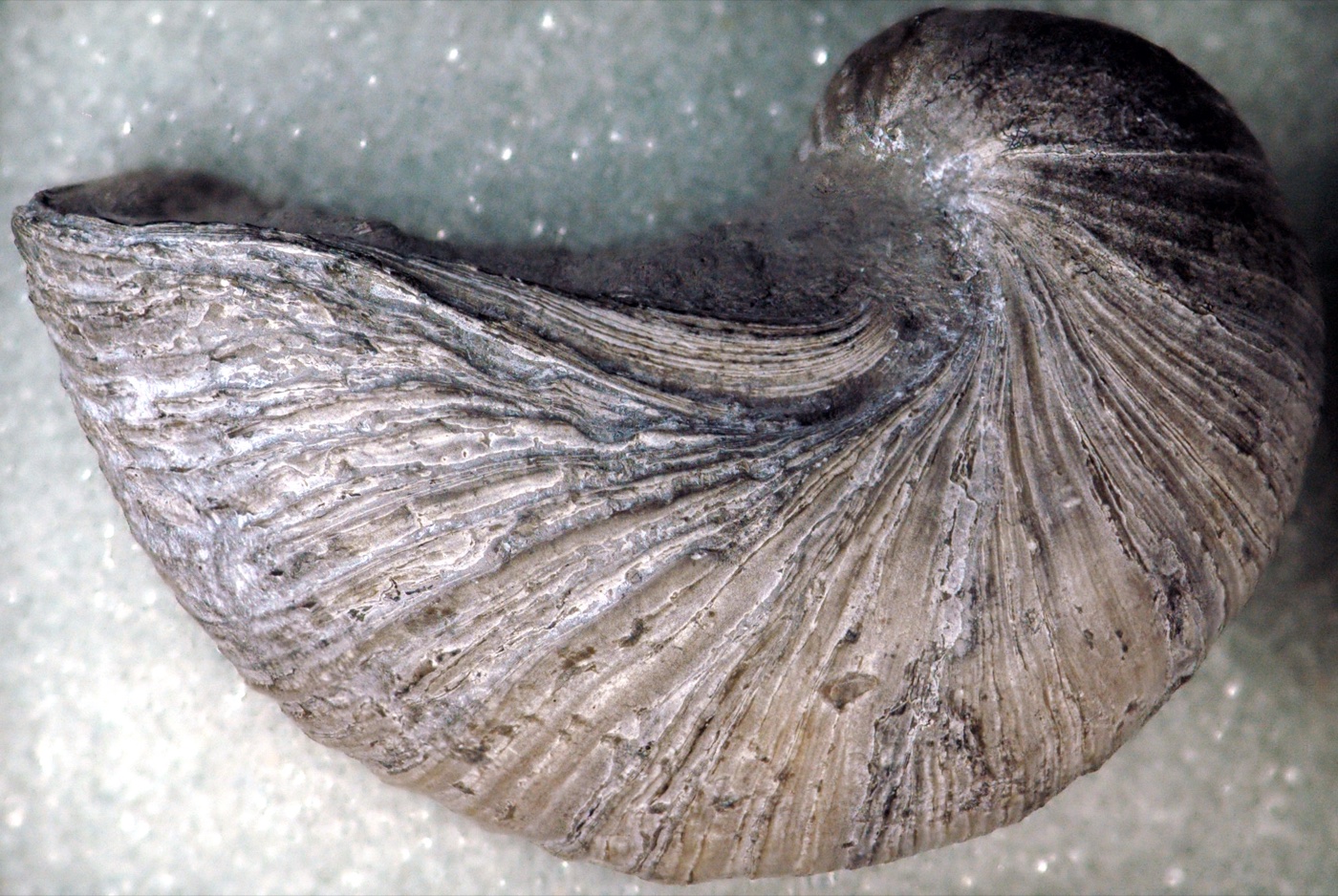
The coastal succession near Lyme Regis connects latest Triassic marginal seas with Early Jurassic marine life. Rock layers, ammonites and fish help separate environmental change from the definition of a time boundary.
202 Ma → 199 Ma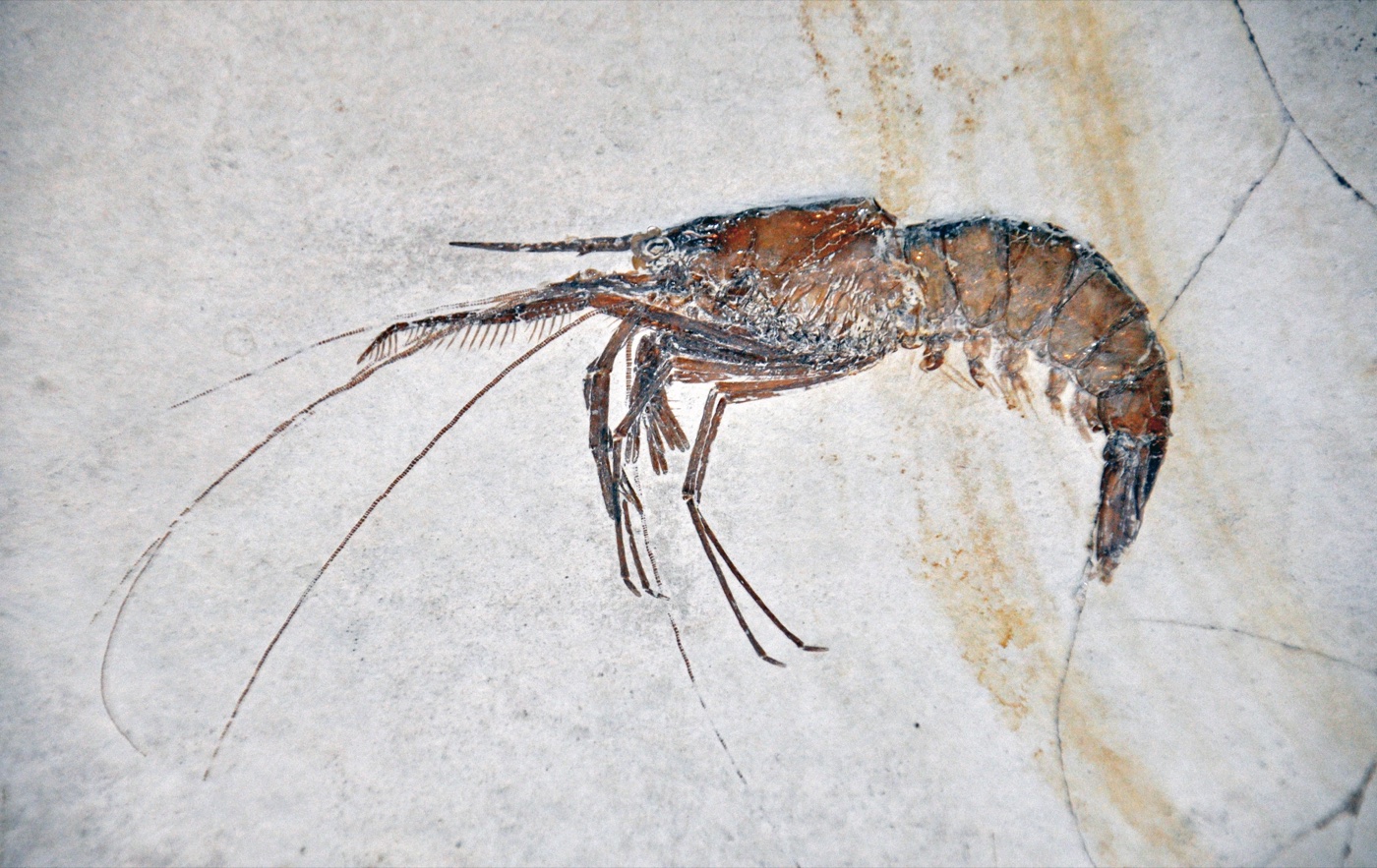 Europe
Germany ↗
Solnhofen–Eichstätt
Fine Jurassic limestone preserves feathered dinosaurs, marine animals and traces of movement. Their shared burial place need not mean a shared habitat or a single cause of death.
150 Ma → Today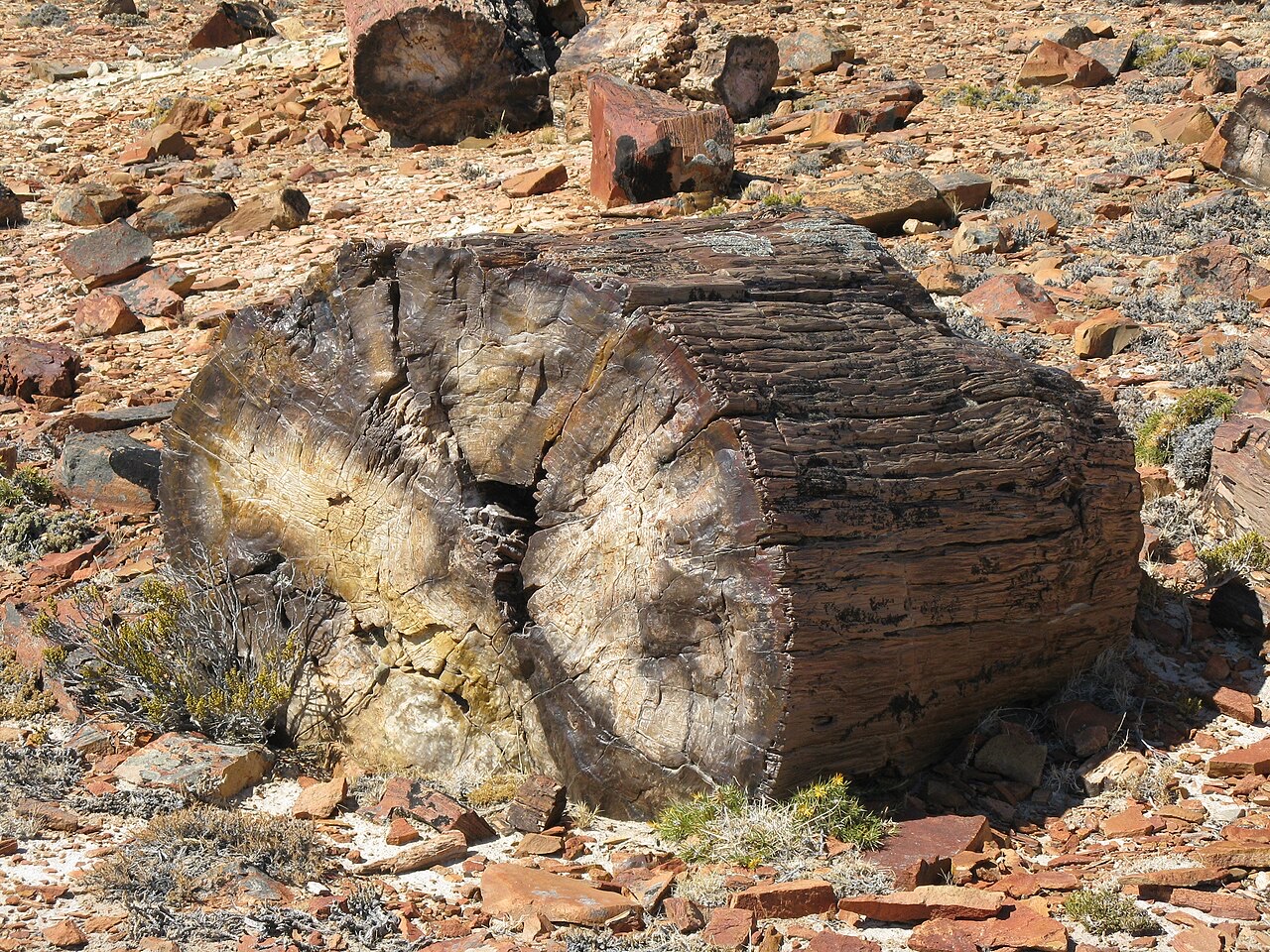 South America
Argentina ↗
Southern Patagonia
Jurassic petrified conifers and Miocene mammals reveal two distinct southern Patagonian ecosystems without treating “forest” as an unchanging habitat.
160 Ma → 17 Ma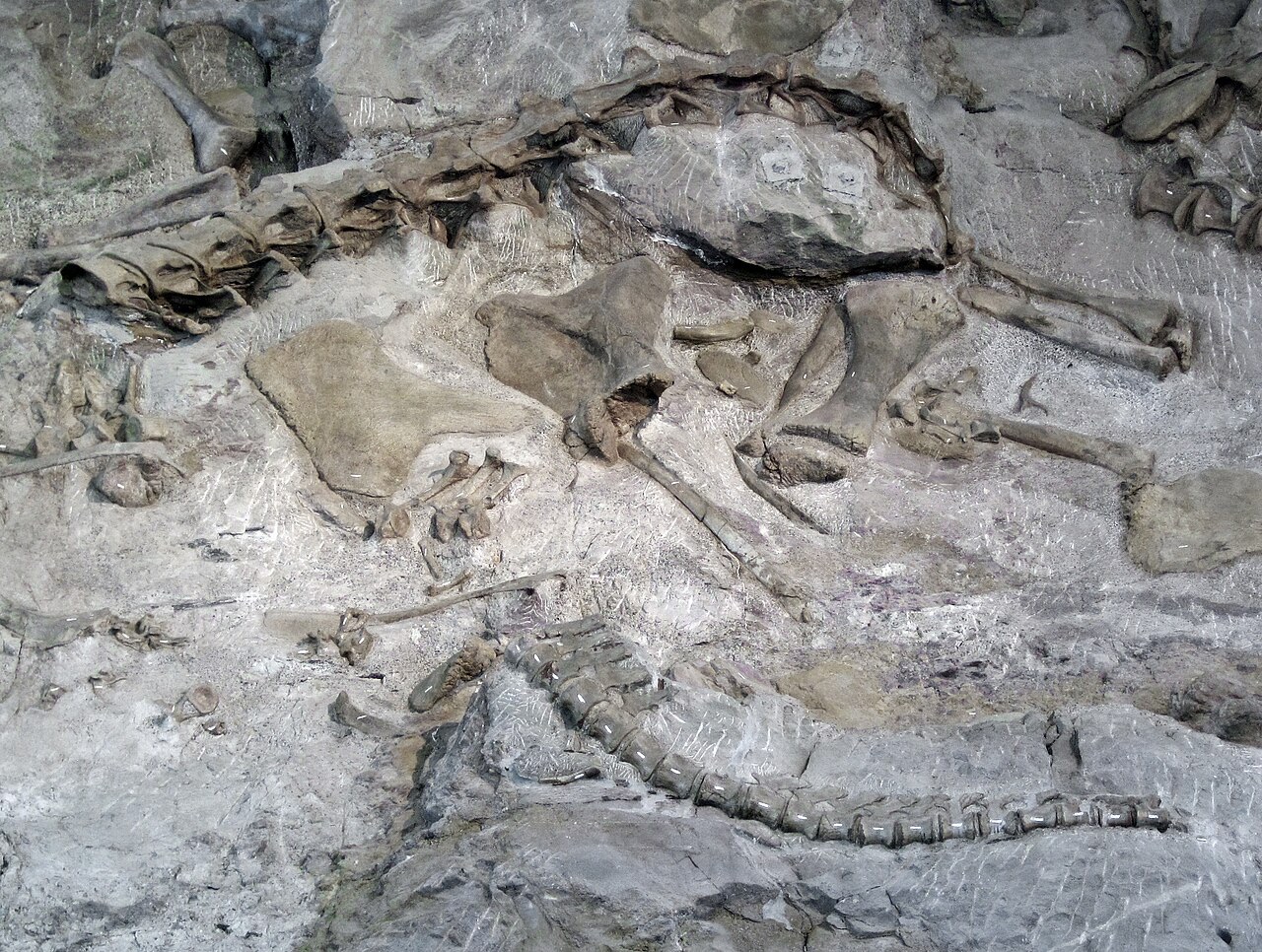 North America
United States ↗
Dinosaur National Monument
The monument preserves more than the Morrison dinosaur quarry. Older Nugget Sandstone records animals crossing desert dunes; younger river deposits preserve bones, wood and evidence of a different ecosystem.
200 Ma → 151 Ma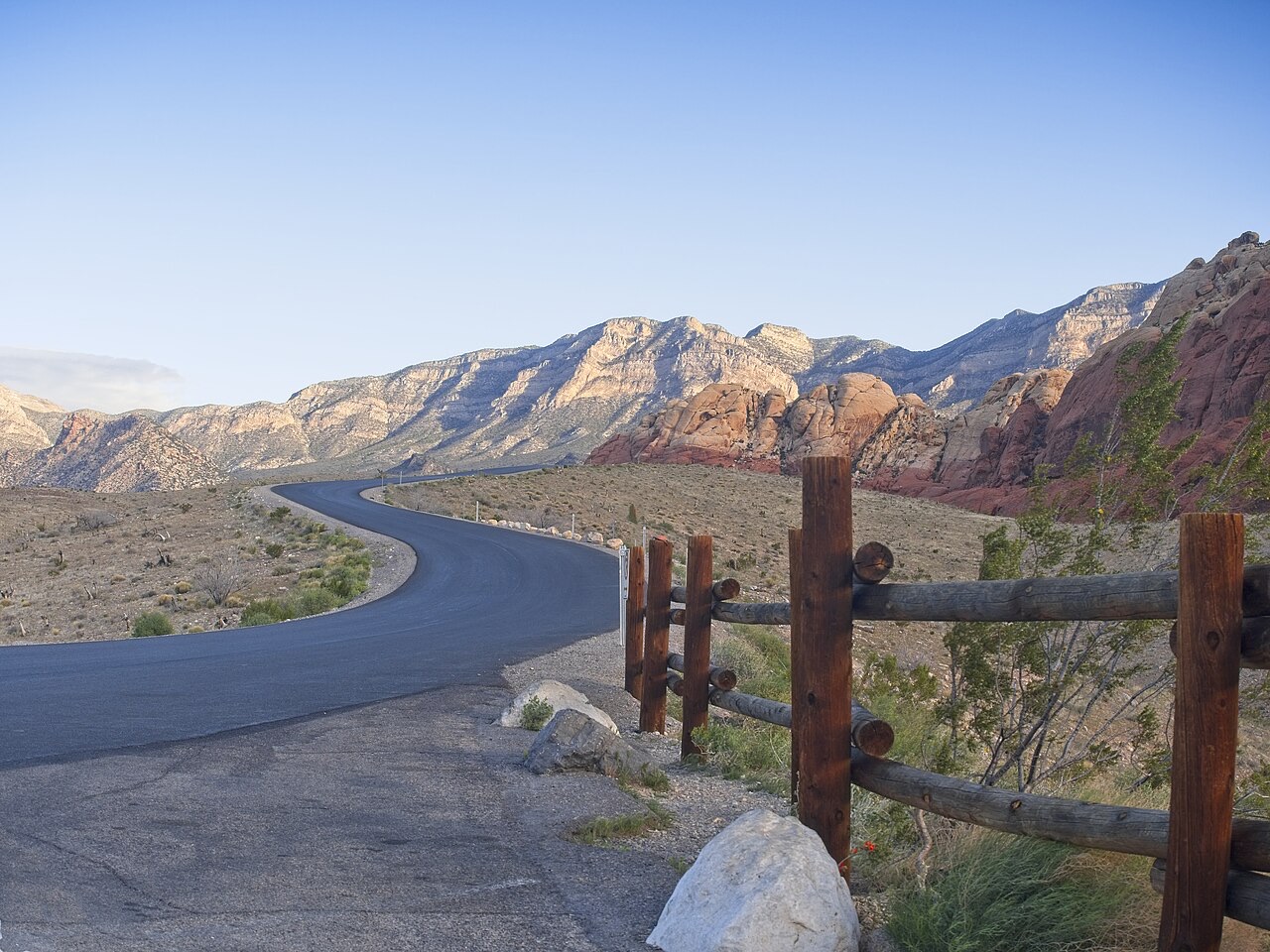 North America
United States ↗
Red Rock Canyon, Nevada
Cambrian carbonates, Jurassic dunes and later thrust faulting make Red Rock a readable record of deposition and tectonic rearrangement.
510 Ma → 185 Ma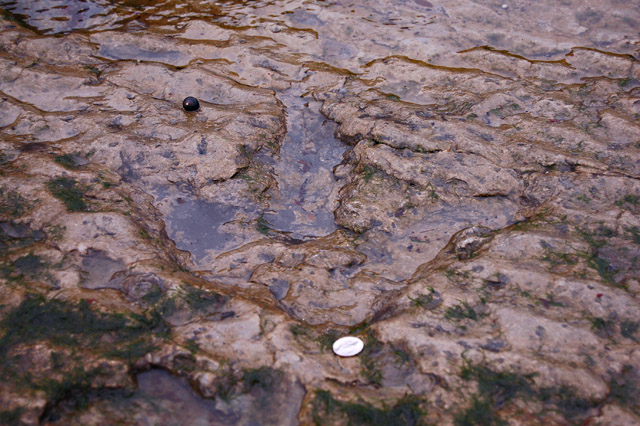 Europe
United Kingdom ↗
Isle of Skye
Middle Jurassic coastal rocks preserve repeated dinosaur track surfaces. Comparing older Brothers’ Point beds with younger formations reveals behaviour, shifting environments and the limits of identifying trackmakers.
170 Ma → 167 MaFollow the evidence
Sources & credits
- International Chronostratigraphic Chart, version 2026/06 ↗
International Commission on Stratigraphy · 2026-06
Use, credit & modifications
Reference only. No source text, photographs, charts or other assets reproduced; original factual synthesis.
Credit: International Commission on Stratigraphy. Original explanatory synthesis; geological boundary ages normalized to ICS 2026/06 where relevant. No third-party asset reuse; no territorial asset licence asserted.
- The Jurassic Period ↗
University of California Museum of Paleontology · 2011 compilation; older underlying material
Use, credit & modifications
Reference only. No source text, photographs, charts or other assets reproduced; original factual synthesis.
Credit: University of California Museum of Paleontology. Original explanatory synthesis; geological boundary ages normalized to ICS 2026/06 where relevant. No third-party asset reuse; no territorial asset licence asserted.
- Taphonomy—Death & Decay ↗
US National Park Service · Not stated
Use, credit & modifications
Reference only. No source text, photographs, charts or other assets reproduced; original factual synthesis.
Credit: US National Park Service. Original explanatory synthesis; geological boundary ages normalized to ICS 2026/06 where relevant. No third-party asset reuse; no territorial asset licence asserted.
- Understanding plate motions ↗
US Geological Survey · Not stated
Use, credit & modifications
Reference only. No source text, photographs, charts or other assets reproduced; original factual synthesis.
Credit: US Geological Survey. Original explanatory synthesis; geological boundary ages normalized to ICS 2026/06 where relevant. No third-party asset reuse; no territorial asset licence asserted.
- South Dorset and south-east Devon and its World Heritage Coast ↗
British Geological Survey · 2011
Use, credit & modifications
Reference only. No source text, photographs, figures or datasets reproduced. Original factual synthesis; no reuse licence asserted.
Credit: British Geological Survey — South Dorset and south-east Devon and its World Heritage Coast. Facts paraphrased into original educational text; ages rounded to declared teaching intervals. No asset reuse requested; territorial permissions not applicable.
- Lyme Regis Coast (Pinhay Bay–Charmouth) ↗
Joint Nature Conservation Committee Geological Conservation Review / GeoGuide · 1999
Use, credit & modifications
Reference only. No source text, photographs, figures or datasets reproduced. Original factual synthesis; no reuse licence asserted.
Credit: Joint Nature Conservation Committee Geological Conservation Review / GeoGuide — Lyme Regis Coast (Pinhay Bay–Charmouth). Facts paraphrased into original educational text; ages rounded to declared teaching intervals. No asset reuse requested; territorial permissions not applicable.
- Jurassic Solnhofen–Eichstätt Archaeopteryx serial site ↗
International Union of Geological Sciences · Not stated
Use, credit & modifications
Reference only. No source text, photographs, figures or datasets reproduced. Original factual synthesis; no reuse licence asserted.
Credit: International Union of Geological Sciences — Jurassic Solnhofen–Eichstätt Archaeopteryx serial site. Facts paraphrased into original educational text; ages rounded to declared teaching intervals. No asset reuse requested; territorial permissions not applicable.
- Archaeopteryx #11 — Prehistoric bird wings in to Senckenberg ↗
Senckenberg Society for Nature Research · Not stated
Use, credit & modifications
Reference only. No source text, photographs, figures or datasets reproduced. Original factual synthesis; no reuse licence asserted.
Credit: Senckenberg Society for Nature Research — Archaeopteryx #11 — Prehistoric bird wings in to Senckenberg. Facts paraphrased into original educational text; ages rounded to declared teaching intervals. No asset reuse requested; territorial permissions not applicable.
- Die fossilen Araucaria-Zapfen der La Matilde Formation im versteinerten Wald von Cerro Cuadrado in Patagonien ↗
Dörken and Steinecke; Der Palmengarten / Goethe University Frankfurt · 2020
Use, credit & modifications
Reference only. No third-party prose, figures, photographs or datasets reproduced; factual interpretation written originally for this atlas.
Credit: Dörken and Steinecke; Der Palmengarten / Goethe University Frankfurt — Die fossilen Araucaria-Zapfen der La Matilde Formation im versteinerten Wald von Cerro Cuadrado in Patagonien. Original educational synthesis; geological ages rounded into explicitly labelled teaching intervals. No licensed media incorporated; no territorial reuse permission asserted.
- Araucarian woodlands from the Jurassic of Patagonia, taphonomy and paleoecology ↗
Journal of South American Earth Sciences · 2021
Use, credit & modifications
Reference only. No third-party prose, figures, photographs or datasets reproduced; factual interpretation written originally for this atlas.
Credit: Journal of South American Earth Sciences — Araucarian woodlands from the Jurassic of Patagonia, taphonomy and paleoecology. Original educational synthesis; geological ages rounded into explicitly labelled teaching intervals. No licensed media incorporated; no territorial reuse permission asserted.