
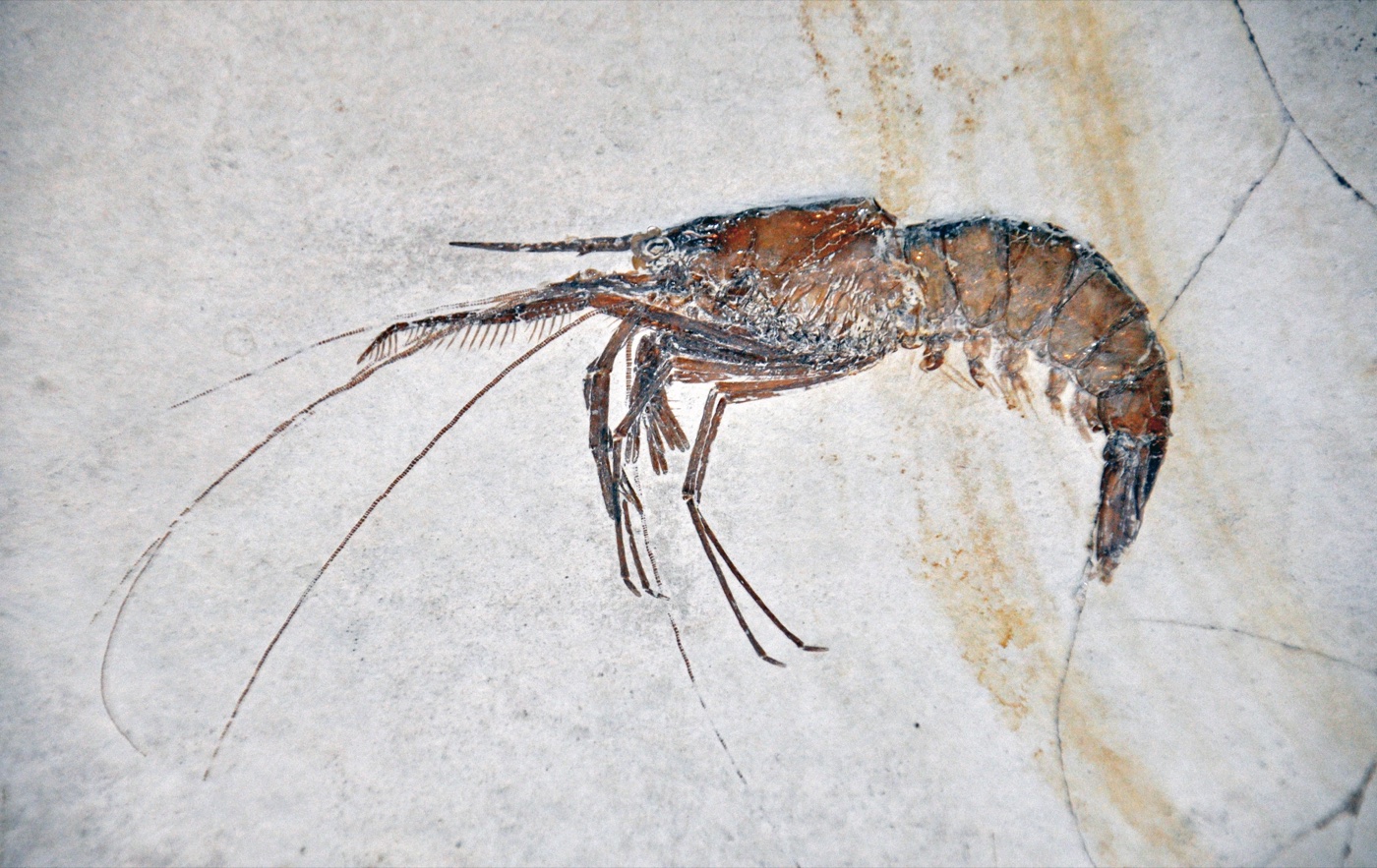
Does an animal buried in a lagoon have to have lived in it?
The Solnhofen–Eichstätt region preserves a network of Late Jurassic carbonate basins and nearby land environments. Fine lime mud accumulated in sheltered depressions among reef structures. Some deposits retained delicate features that normally vanish, making the region famous for Archaeopteryx and many other animals. Yet an exceptionally complete fossil is not an unfiltered photograph of an ecosystem. It is the product of a particular route from life to death, transport, burial and later exposure.
Archaeopteryx links feathers with a skeleton carrying numerous features shared with non-avian dinosaurs. Those features can be compared directly in the rock. A reconstruction of how it moved between islands or used its wings goes a step beyond the preserved anatomy. Terrestrial or flying animals could reach a lagoon after death or during a fatal event, so placing every fossil species underwater would confuse the place of burial with the place of life.
Traces make that distinction unusually vivid. A long Mesolimulus trackway terminates in the horseshoe crab that made it, associating movement with a body. Another long mark is associated with an ammonite shell and interpreted as transport across sediment. These are not equivalent kinds of behaviour. One can record an animal’s motion; the other can record a dead shell being moved. Their physical details help distinguish the alternatives, but the wider circumstances still require interpretation.
Today the limestone is exposed and quarried in the Franconian region. Its former use as lithographic stone helped make fine surfaces available for close inspection. The modern landscape therefore belongs to the history of discovery as well as geological exposure. Switching to the present state removes the Jurassic lagoon while retaining the evidence it left. The atlas uses this contrast to ask what a fossil locality represents, rather than presenting a crowded scene assembled from every famous specimen.
[1] [2] [3] [4]Time windows and evidence
Older ages are on the left. Bars span the dated intervals. A dot marks a single age.
- Lime mud in a Jurassic lagoon 148–153 Ma
- A limestone upland and its quarries Today
- Archaeopteryx from the Solnhofen–Eichstätt limestones 148–153 Ma
- The Wintershof Mesolimulus trackway 148–153 Ma
- An ammonite shell and an 8.5-metre drag mark 148–153 Ma
Researched windowsEvidence records
150 Ma · interval 148–153 Ma
Lime mud in a Jurassic lagoon
Sheltered marine basins accumulated fine carbonate mud within a landscape of reefs and nearby islands. The scene is an environmental schematic, not a map of every Jurassic lagoon or an assertion that all known regional fossils occupied the same habitat. Delicate fossils reflect unusual preservation, with animals and remains entering the sediment from different settings. The age range covers the regional Late Jurassic record rather than dating each specimen to exactly 150 Ma.
[1] [2]Locate this time in the atlas ↗Observed
Fine platy limestone contains articulated skeletons, feather impressions and trace fossils.
Reconstructed
Restricted marine basins received both local marine remains and material from nearby habitats.
Uncertain
Oxygen, salinity, transport and burial conditions differed among basins and beds.
Evidence windows overlapping this state: 3. Overlap does not establish exact coexistence.
body fossil · Solnhofen–Eichstätt ↗
Archaeopteryx from the Solnhofen–Eichstätt limestones
Archaeopteryx specimens from the regional lithographic limestones preserve an important combination of feathers and skeletal characters. They allow comparisons between early birds and other dinosaurs using anatomy rather than general resemblance. Exceptional preservation also creates a temptation to complete every missing detail of the animal’s life. The record can support a feathered body and particular bones while leaving flight performance, behaviour and the route into its burial basin open to further testing.
trace fossil · Solnhofen–Eichstätt ↗
The Wintershof Mesolimulus trackway
A trackway discovered near Wintershof extends about 9.7 metres and ends with a Mesolimulus walchi body fossil. This rare association connects the traces with their maker more directly than an isolated footprint normally permits. The impressions include evidence of contact by different body parts as the animal moved. Researchers interpret the sequence as the final movement of the animal, while the event that brought it to that setting remains less certain.
trace fossil · Solnhofen–Eichstätt ↗
An ammonite shell and an 8.5-metre drag mark
A documented Solnhofen limestone specimen preserves a long mark associated with an ammonite shell. Unlike a trackway made by legs, the feature is interpreted as a shell being dragged across the sediment. It makes a useful comparison with the Mesolimulus record: a trace does not always record active animal behaviour. Physical contact, transport and burial can create a narrative-looking pattern even after the organism has died.
Today · interval Today
A limestone upland and its quarries
The fossiliferous limestone now forms part of the exposed Franconian upland. Quarrying and erosion have revealed bedding surfaces that once lay within Jurassic sediment. The diagram uses low relief to represent a terrestrial exposure, not an Alpine mountain or a measured reconstruction of topography. Ancient fossils are objects within the modern rocks; no living Archaeopteryx population is implied. Collection and preparation history affect which parts of this archive are available for study.
[1] [2]Locate this time in the atlas ↗Observed
Lithographic limestone and fossil-bearing bedding planes are exposed in regional quarries.
Reconstructed
Burial, lithification and later exposure connect the lagoon deposits to the present landscape.
Uncertain
The scene does not assign a precise date to uplift or model quarry geometry.
Evidence windows overlapping this state: 0. Overlap does not establish exact coexistence.
No curated evidence record overlaps this window. The full notebook for this region appears below.
What this story cannot resolve
Solnhofen is used as a regional shorthand for multiple fossiliferous units and basins. It is not one contemporaneous animal community. The present upland schematic is deliberately not a quantitative elevation model.
Keep these ideas handy
Trace fossils
Preserved evidence of an organism’s activity, such as a footprint, burrow, feeding mark or coprolite. Explore the idea ↗
Taphonomy
Studying what happens between an organism’s life, death, burial, preservation and eventual discovery. Explore the idea ↗
Exceptional preservation
Preservation that retains normally lost features such as soft tissues. Geologists call a deposit rich in such fossils a Konservat-Lagerstätte. Explore the idea ↗
The evidence notebook
body fossil · Solnhofen–Eichstätt ↗
Archaeopteryx from the Solnhofen–Eichstätt limestones
Archaeopteryx specimens from the regional lithographic limestones preserve an important combination of feathers and skeletal characters. They allow comparisons between early birds and other dinosaurs using anatomy rather than general resemblance. Exceptional preservation also creates a temptation to complete every missing detail of the animal’s life. The record can support a feathered body and particular bones while leaving flight performance, behaviour and the route into its burial basin open to further testing.
trace fossil · Solnhofen–Eichstätt ↗
The Wintershof Mesolimulus trackway
A trackway discovered near Wintershof extends about 9.7 metres and ends with a Mesolimulus walchi body fossil. This rare association connects the traces with their maker more directly than an isolated footprint normally permits. The impressions include evidence of contact by different body parts as the animal moved. Researchers interpret the sequence as the final movement of the animal, while the event that brought it to that setting remains less certain.
trace fossil · Solnhofen–Eichstätt ↗
An ammonite shell and an 8.5-metre drag mark
A documented Solnhofen limestone specimen preserves a long mark associated with an ammonite shell. Unlike a trackway made by legs, the feature is interpreted as a shell being dragged across the sediment. It makes a useful comparison with the Mesolimulus record: a trace does not always record active animal behaviour. Physical contact, transport and burial can create a narrative-looking pattern even after the organism has died.
Follow the evidence
Sources & credits
- Jurassic Solnhofen–Eichstätt Archaeopteryx serial site ↗
International Union of Geological Sciences · Not stated
Use, credit & modifications
Reference only. No source text, photographs, figures or datasets reproduced. Original factual synthesis; no reuse licence asserted.
Credit: International Union of Geological Sciences — Jurassic Solnhofen–Eichstätt Archaeopteryx serial site. Facts paraphrased into original educational text; ages rounded to declared teaching intervals. No asset reuse requested; territorial permissions not applicable.
- Archaeopteryx #11 — Prehistoric bird wings in to Senckenberg ↗
Senckenberg Society for Nature Research · Not stated
Use, credit & modifications
Reference only. No source text, photographs, figures or datasets reproduced. Original factual synthesis; no reuse licence asserted.
Credit: Senckenberg Society for Nature Research — Archaeopteryx #11 — Prehistoric bird wings in to Senckenberg. Facts paraphrased into original educational text; ages rounded to declared teaching intervals. No asset reuse requested; territorial permissions not applicable.
- A Long Mortichnial Trackway of Mesolimulus walchi from the Upper Jurassic Solnhofen Lithographic Limestone near Wintershof, Germany ↗
Lomax and Racay / Ichnos · 2012-08-29
Use, credit & modifications
Reference only. No source text, photographs, figures or datasets reproduced. Original factual synthesis; no reuse licence asserted.
Credit: Lomax and Racay / Ichnos — A Long Mortichnial Trackway of Mesolimulus walchi from the Upper Jurassic Solnhofen Lithographic Limestone near Wintershof, Germany. Facts paraphrased into original educational text; ages rounded to declared teaching intervals. No asset reuse requested; territorial permissions not applicable.
- An 8.5 m long ammonite drag mark from the Upper Jurassic Solnhofen Lithographic Limestones, Germany ↗
Lomax and colleagues / PLOS ONE · 2017
Use, credit & modifications
Reference only. No source text, photographs, figures or datasets reproduced. Original factual synthesis; no reuse licence asserted.
Credit: Lomax and colleagues / PLOS ONE — An 8.5 m long ammonite drag mark from the Upper Jurassic Solnhofen Lithographic Limestones, Germany. Facts paraphrased into original educational text; ages rounded to declared teaching intervals. No asset reuse requested; territorial permissions not applicable.
Follow the connections
 Europe
United Kingdom ↗
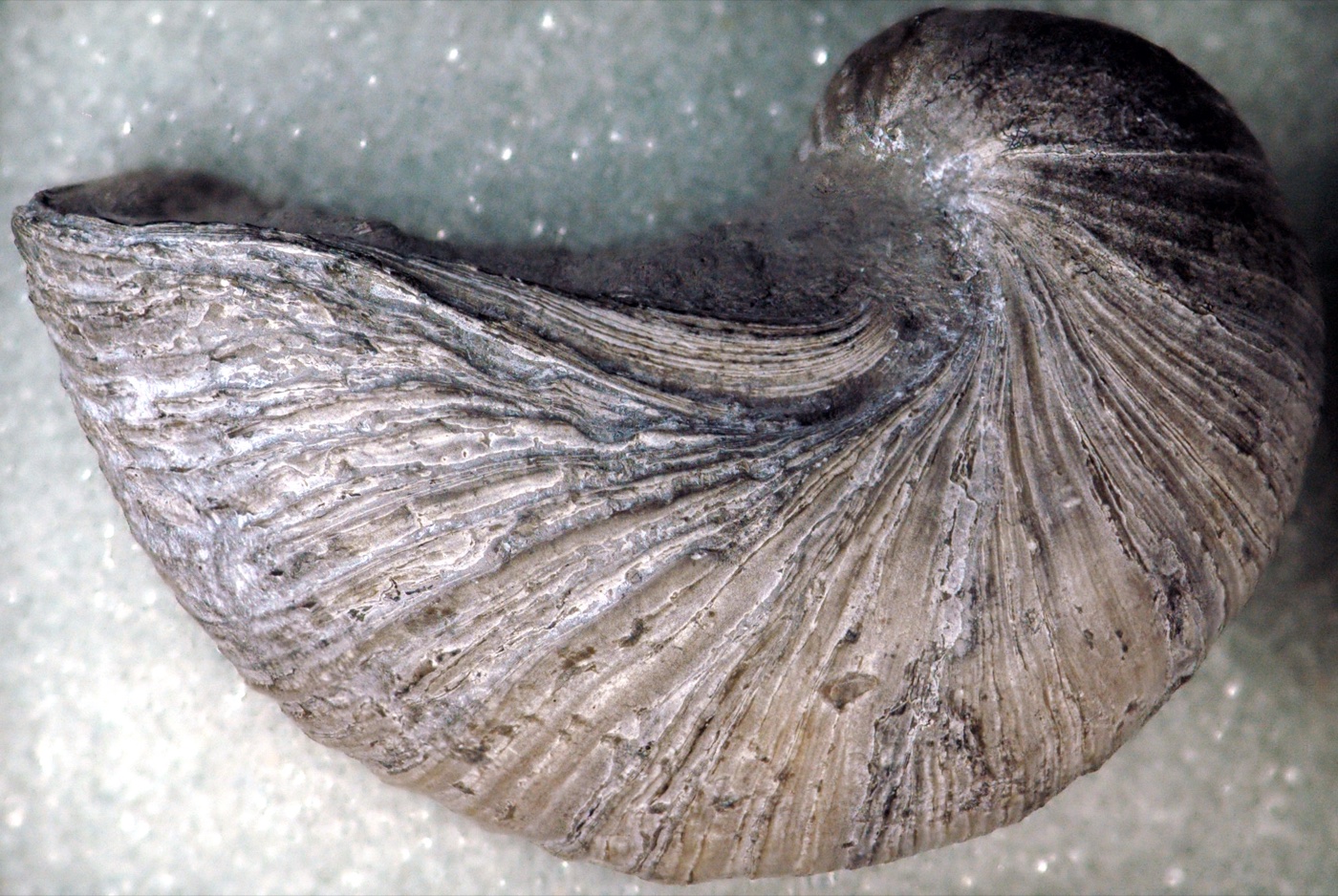
Lyme Regis & Pinhay Bay
The coastal succession near Lyme Regis connects latest Triassic marginal seas with Early Jurassic marine life. Rock layers, ammonites and fish help separate environmental change from the definition of a time boundary.
202 Ma → 199 Ma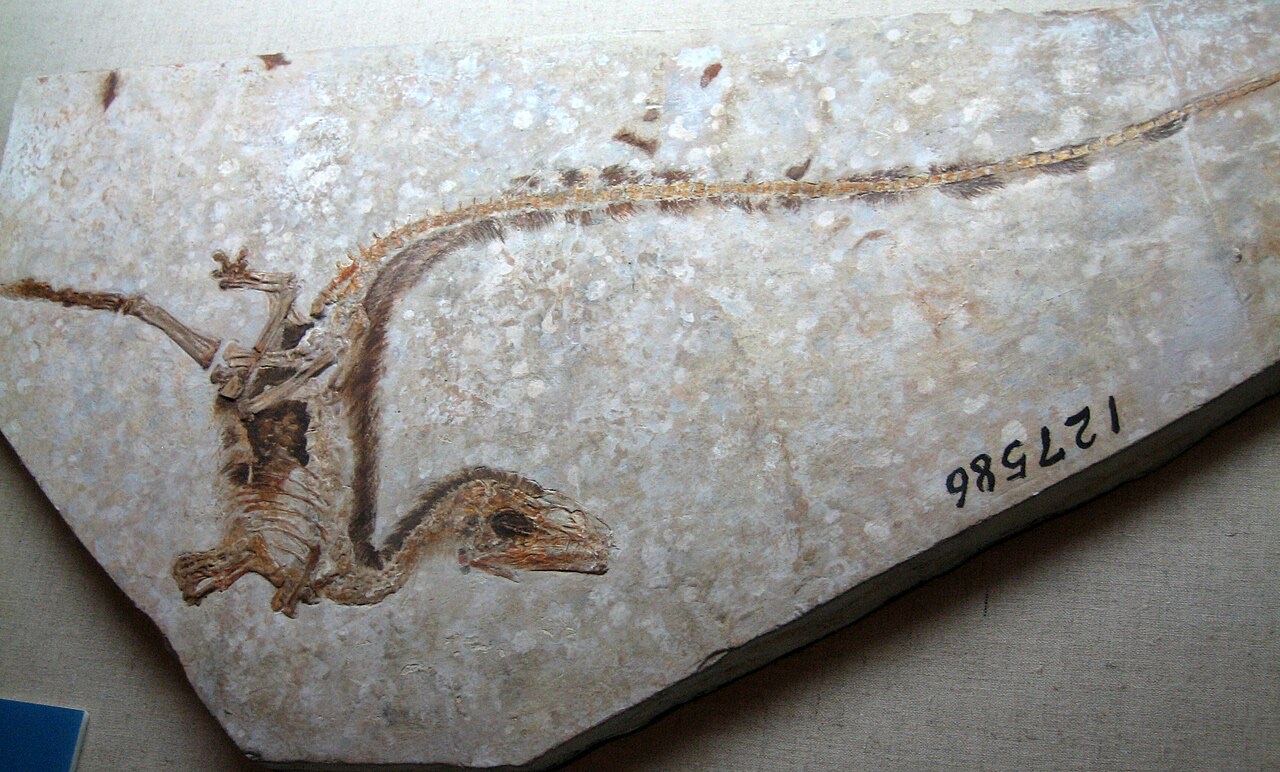 Asia
China ↗
Jehol lake country
The Yixian and Jiufotang formations preserve different Early Cretaceous windows into northeastern China’s lake and terrestrial ecosystems.
125 Ma → 120 Ma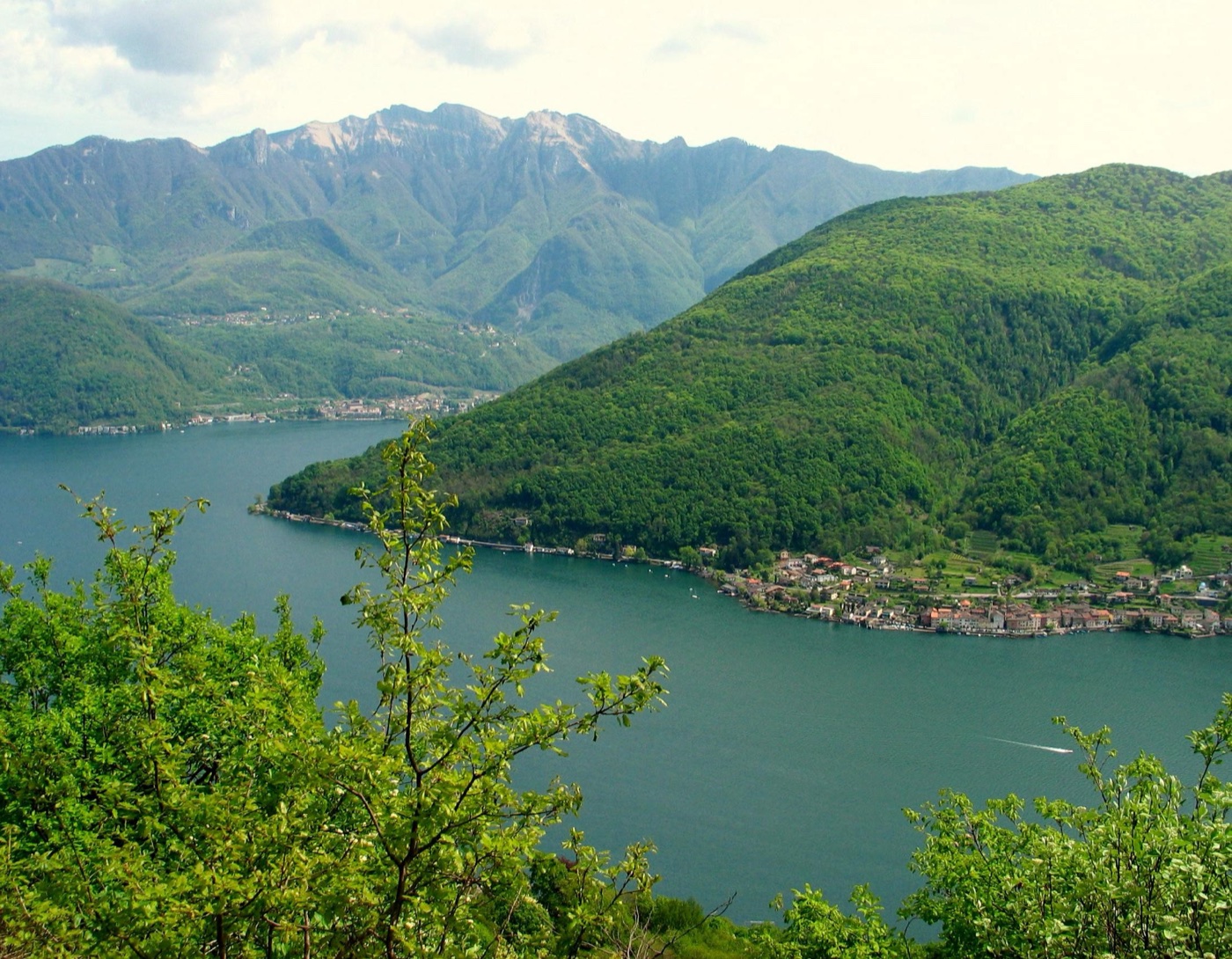 Europe
Switzerland / Italy ↗
Monte San Giorgio, Southern Alps
Middle Triassic marine sediments now form part of the Southern Alpine landscape. Fossils reveal a restricted basin, while the rocks’ present position records a much later geological history.
241 Ma → Today