
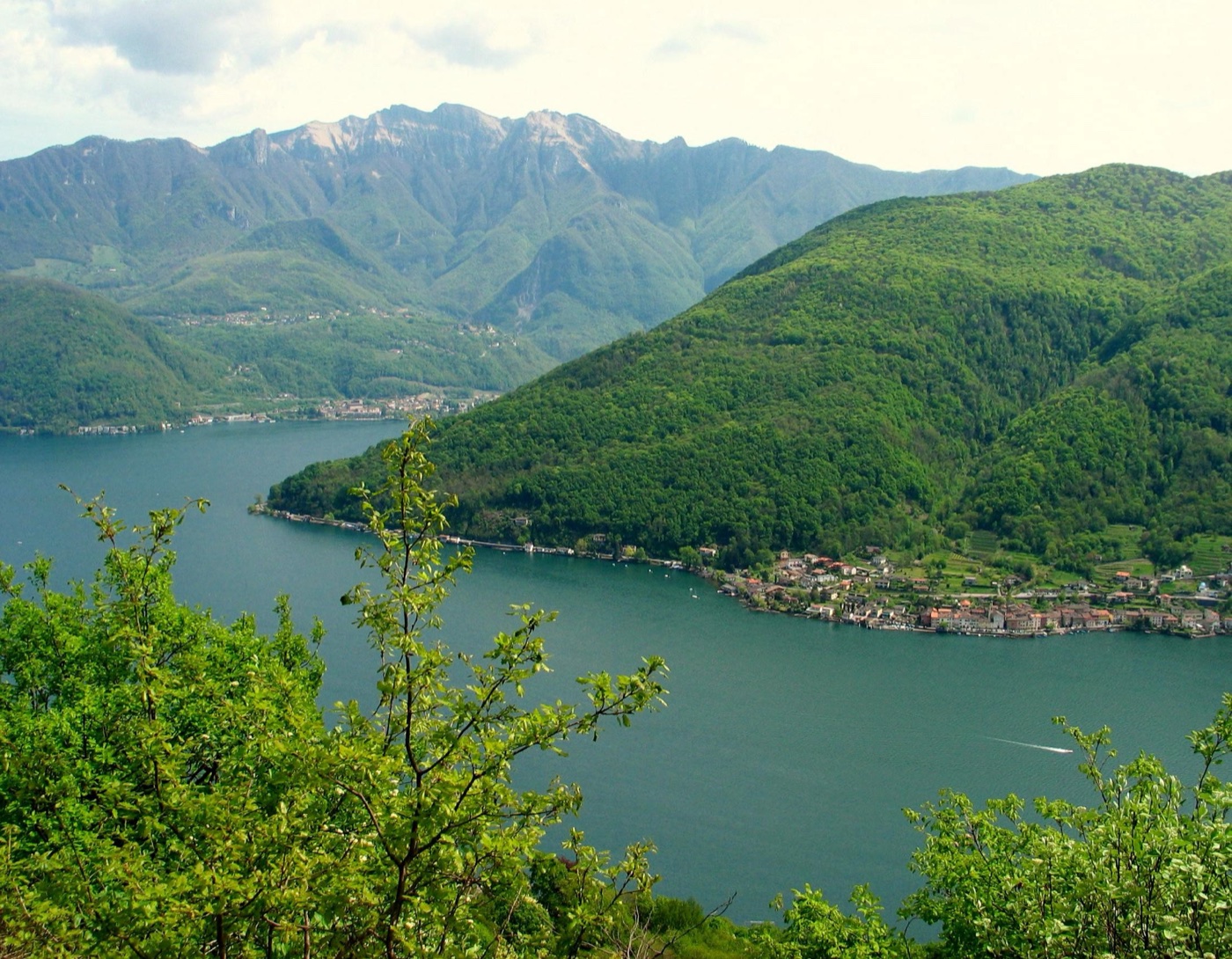
How do marine reptiles end up inside a wooded mountain?
Monte San Giorgio lies beside Lake Lugano, but its celebrated fossils do not belong to that modern lake. They come from Middle Triassic marine deposits formed in the western Tethys region. This distinction matters because the same modern place can contain water bodies separated by hundreds of millions of years and completely different geological histories. The ancient marine basin is reconstructed from its sediments and organisms, not by projecting today’s lake backwards through time.
The fossil-bearing succession includes the Besano Formation and several levels within the Meride Limestone. Fish, marine reptiles, invertebrates and material from nearby land provide complementary clues. Restricted circulation and oxygen-poor bottom conditions favoured preservation in some intervals. They did not make the whole basin permanently uninhabitable: animals could live in oxygenated water or nearby settings before their remains reached the preserving bottom sediment. The difference between life habitat and burial habitat is essential.
The skeletons preserve different answers to life in and around this basin. The ichthyosaur Besanosaurus had fins and an elongated body. Tanystropheus had a long neck built from just 13 cervical vertebrae. Researchers once explained two sizes of Tanystropheus by treating the smaller fossils as young individuals. Skull scans and evidence from limb bones instead support two species. Differences in tooth shape help explain how the two forms may have used different prey.
The later story is exposure on land within the Alpine region. Tectonic deformation and uplift changed the position of the sedimentary rocks, and erosion made them accessible. Marine fossils in elevated rocks do not require the modern mountain to have been submerged at its present height. Instead, both the rock and its environment changed. This comparison keeps the original marine setting and the modern wooded mountain separate, using each to explain a different part of the evidence.
[1] [2] [3] [4] [5] [6]Time windows and evidence
Older ages are on the left. Bars span the dated intervals. A dot marks a single age.
- A restricted Triassic marine basin 239.5–242.5 Ma
- Marine strata on a wooded mountain Today
- Besanosaurus leptorhynchus from the Besano Formation 241–242.5 Ma
- Tanystropheus from Monte San Giorgio 239.5–242.5 Ma
- The fossiliferous horizons of the Meride Limestone 239.5–241 Ma
Researched windowsEvidence records
241 Ma · interval 239.5–242.5 Ma
A restricted Triassic marine basin
The selected interval represents fossil-rich Middle Triassic deposits of Monte San Giorgio and neighbouring Besano. A restricted marine basin lay within a carbonate platform in the Tethys region. The diagram places water and nearby land schematically, without a precise coast or depth. Fossil assemblages came from several horizons, so the scene represents an environmental framework rather than every organism living together at exactly 241 Ma.
[2] [3]Locate this time in the atlas ↗Observed
Marine reptile and fish skeletons occur in the Besano Formation and Meride Limestone succession.
Reconstructed
A partly restricted basin with variable circulation and preservation-favouring bottom conditions.
Uncertain
Exact oxygen conditions and habitat use differ among beds and taxa; a whole-basin reconstruction has limited resolution.
Evidence windows overlapping this state: 3. Overlap does not establish exact coexistence.
body fossil · Monte San Giorgio, Southern Alps ↗
Besanosaurus leptorhynchus from the Besano Formation
Besanosaurus is an ichthyosaur documented from the Besano Formation of the Monte San Giorgio district. Detailed study of the skeleton permits comparisons of body proportions and possible swimming styles with other marine reptiles. Its importance is not simply size: articulated material retains relationships among bones that isolated elements cannot show. Biomechanical interpretation still depends on assumptions about muscles, soft tissues and motion, so a reconstructed swimming style is not treated as a filmed observation.
body fossil · Monte San Giorgio, Southern Alps ↗
Tanystropheus from Monte San Giorgio
Tanystropheus made a remarkably long neck from just 13 vertebrae. At Monte San Giorgio, smaller individuals have teeth with three cusps, while the larger form has single-cusped teeth. Differences in skull anatomy and growth recorded in the limb bones support separate species, including the larger Tanystropheus hydroides. The anatomy supports ecological differences between them without settling how every individual fed.
locality · Monte San Giorgio, Southern Alps ↗
The fossiliferous horizons of the Meride Limestone
The Meride Limestone contains several separately documented fossil-bearing horizons, including the Cassina beds and Kalkschieferzone. Their distinct positions matter: Monte San Giorgio is a succession, not one slab holding the entire Triassic ecosystem. Comparing levels reveals changes in preservation and communities within a basin. The named horizons also connect museum material to excavation history, allowing researchers to ask whether apparent differences reflect age, habitat, collecting practice or a mixture of those factors.
Today · interval Today
Marine strata on a wooded mountain
Today the Triassic deposits are exposed in a mountain landscape on the Switzerland–Italy border. Modern Lake Lugano is a separate geological feature from the ancient sea recorded in those rocks. The drawing shows a generalized elevated exposure, not a measured mountain profile. Fossils in the present rock are evidence of past marine life; their elevation records subsequent geological change and cannot be used as a direct measurement of Triassic sea level.
[1] [3]Locate this time in the atlas ↗Observed
Fossil-bearing marine strata are exposed on Monte San Giorgio and adjacent slopes.
Reconstructed
Later tectonic change and erosion brought the former sedimentary basin into a terrestrial landscape.
Uncertain
The illustration does not provide a detailed Alpine uplift history or restore deformation bed by bed.
Evidence windows overlapping this state: 0. Overlap does not establish exact coexistence.
No curated evidence record overlaps this window. The full notebook for this region appears below.
What this story cannot resolve
The record describes the Monte San Giorgio–Besano district, not the entire Alps. The fossil interval follows the cited 2024 synthesis. Modern country borders have no ancient equivalent.
Keep these ideas handy
Plate tectonics
The movement and interaction of the relatively rigid plates that make up Earth’s lithosphere. Explore the idea ↗
Mountain building
Processes that thicken, deform or raise Earth’s crust, often associated with convergence and collision. Explore the idea ↗
Facies
The observable characteristics of a rock body that help describe and interpret its depositional setting. Explore the idea ↗
The evidence notebook
body fossil · Monte San Giorgio, Southern Alps ↗
Besanosaurus leptorhynchus from the Besano Formation
Besanosaurus is an ichthyosaur documented from the Besano Formation of the Monte San Giorgio district. Detailed study of the skeleton permits comparisons of body proportions and possible swimming styles with other marine reptiles. Its importance is not simply size: articulated material retains relationships among bones that isolated elements cannot show. Biomechanical interpretation still depends on assumptions about muscles, soft tissues and motion, so a reconstructed swimming style is not treated as a filmed observation.
body fossil · Monte San Giorgio, Southern Alps ↗
Tanystropheus from Monte San Giorgio
Tanystropheus made a remarkably long neck from just 13 vertebrae. At Monte San Giorgio, smaller individuals have teeth with three cusps, while the larger form has single-cusped teeth. Differences in skull anatomy and growth recorded in the limb bones support separate species, including the larger Tanystropheus hydroides. The anatomy supports ecological differences between them without settling how every individual fed.
locality · Monte San Giorgio, Southern Alps ↗
The fossiliferous horizons of the Meride Limestone
The Meride Limestone contains several separately documented fossil-bearing horizons, including the Cassina beds and Kalkschieferzone. Their distinct positions matter: Monte San Giorgio is a succession, not one slab holding the entire Triassic ecosystem. Comparing levels reveals changes in preservation and communities within a basin. The named horizons also connect museum material to excavation history, allowing researchers to ask whether apparent differences reflect age, habitat, collecting practice or a mixture of those factors.
Follow the evidence
Sources & credits
- Monte San Giorgio ↗
UNESCO World Heritage Centre · Not stated
Use, credit & modifications
Reference only. No source text, photographs, figures or datasets reproduced. Original factual synthesis; no reuse licence asserted.
Credit: UNESCO World Heritage Centre — Monte San Giorgio. Facts paraphrased into original educational text; ages rounded to declared teaching intervals. No asset reuse requested; territorial permissions not applicable.
- Monte San Giorgio — permanent exhibition ↗
Natural History Museum, University of Zurich · Not stated
Use, credit & modifications
Reference only. No source text, photographs, figures or datasets reproduced. Original factual synthesis; no reuse licence asserted.
Credit: Natural History Museum, University of Zurich — Monte San Giorgio — permanent exhibition. Facts paraphrased into original educational text; ages rounded to declared teaching intervals. No asset reuse requested; territorial permissions not applicable.
- The history of palaeontological research and excavations at Monte San Giorgio ↗
Heinz Furrer / Swiss Journal of Palaeontology · 2024-05-02
Use, credit & modifications
Reference only. No source text, photographs, figures or datasets reproduced. Original factual synthesis; no reuse licence asserted.
Credit: Heinz Furrer / Swiss Journal of Palaeontology — The history of palaeontological research and excavations at Monte San Giorgio. Facts paraphrased into original educational text; ages rounded to declared teaching intervals. No asset reuse requested; territorial permissions not applicable.
- Postcranial anatomy of Besanosaurus leptorhynchus from the Middle Triassic Besano Formation ↗
Bindellini and colleagues / Swiss Journal of Palaeontology · 2024
Use, credit & modifications
Reference only. No source text, photographs, figures or datasets reproduced. Original factual synthesis; no reuse licence asserted.
Credit: Bindellini and colleagues / Swiss Journal of Palaeontology — Postcranial anatomy of Besanosaurus leptorhynchus from the Middle Triassic Besano Formation. Facts paraphrased into original educational text; ages rounded to declared teaching intervals. No asset reuse requested; territorial permissions not applicable.
- Reptiles — Monte San Giorgio ↗
Monte San Giorgio World Heritage Foundation · Not stated
Use, credit & modifications
Reference only. No source text, photographs, figures or datasets reproduced. Original factual synthesis; no reuse licence asserted.
Credit: Monte San Giorgio World Heritage Foundation — Reptiles — Monte San Giorgio. Facts paraphrased into original educational text; ages rounded to declared teaching intervals. No asset reuse requested; territorial permissions not applicable.
- Aquatic habits and niche partitioning in the extraordinarily long-necked Triassic reptile Tanystropheus ↗
Spiekman et al. · Current Biology · 2020
Use, credit & modifications
Reference only. No source text, photographs, figures or datasets reproduced. Original factual synthesis.
Credit: Spiekman et al. · Current Biology — Aquatic habits and niche partitioning in the extraordinarily long-necked Triassic reptile Tanystropheus. Facts paraphrased into original educational text. No asset reuse requested; territorial permissions not applicable.
Follow the connections
 Asia
Nepal / China / India ↗
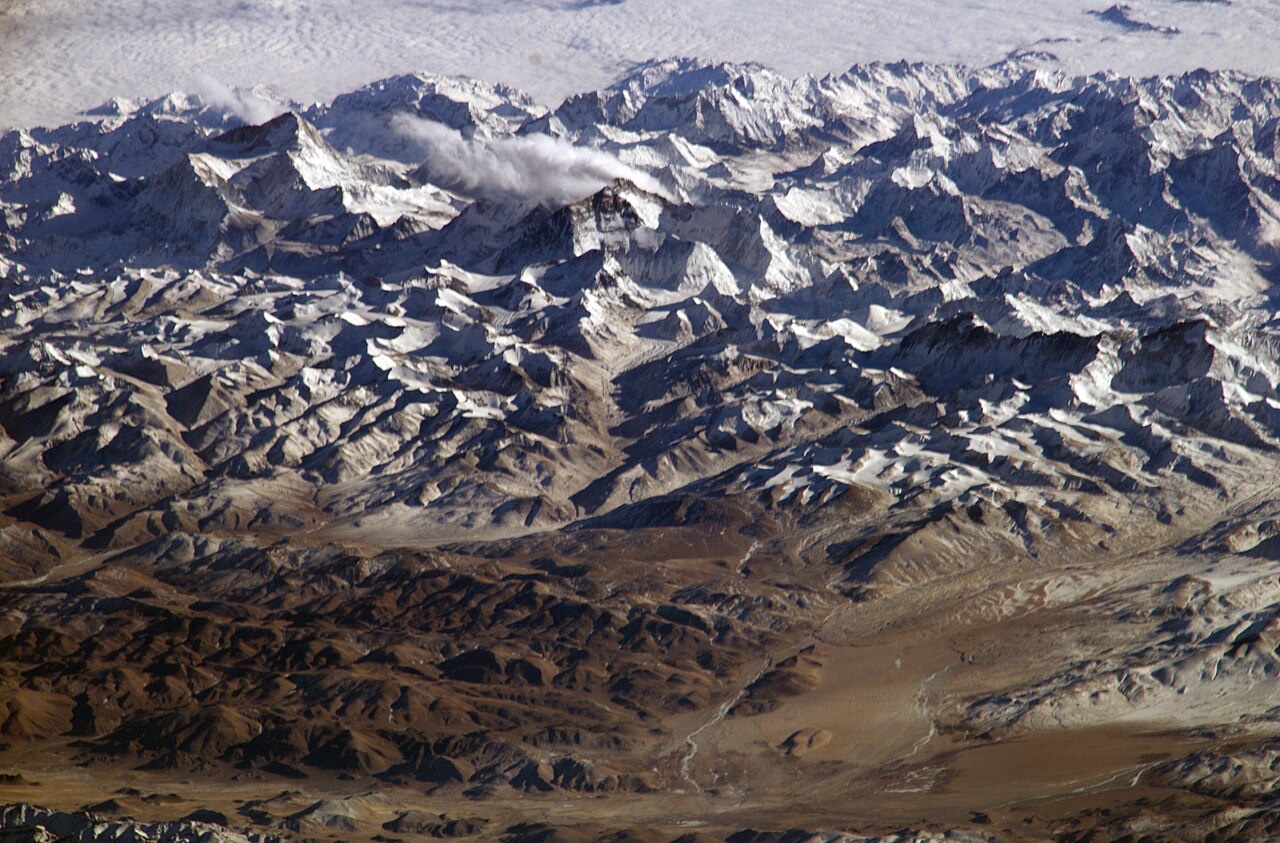
The Tethyan Himalaya
Marine fossils north of Everest belong to a sedimentary history later transformed by India–Asia convergence, deformation and uplift.
52 Ma → Today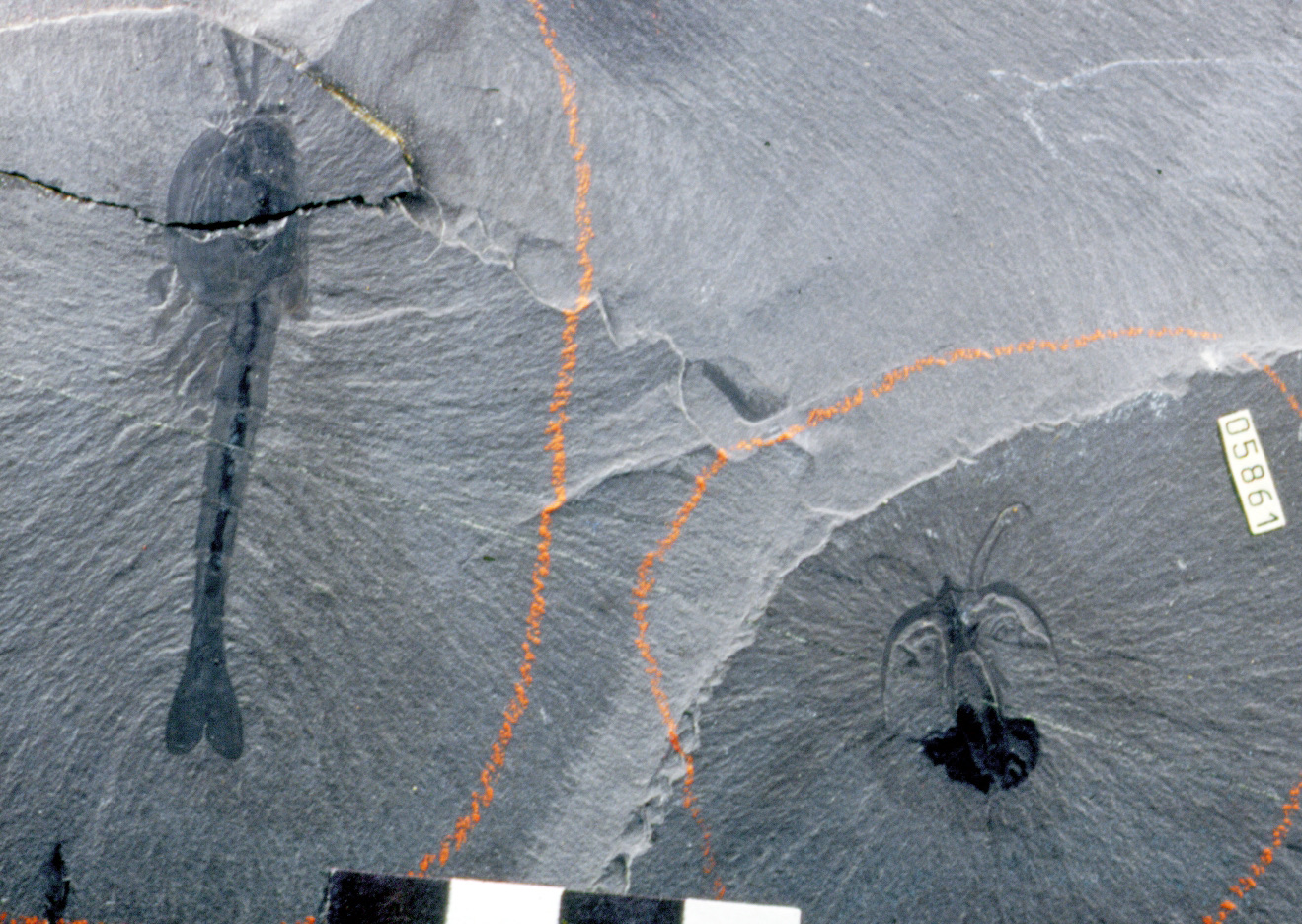 North America
Canada ↗
Burgess Shale
Cambrian mud preserved animals that most fossil sites lose. Today those thin traces are exposed high in the Canadian Rockies, connecting the history of life with the later history of a mountain belt.
508 Ma → Today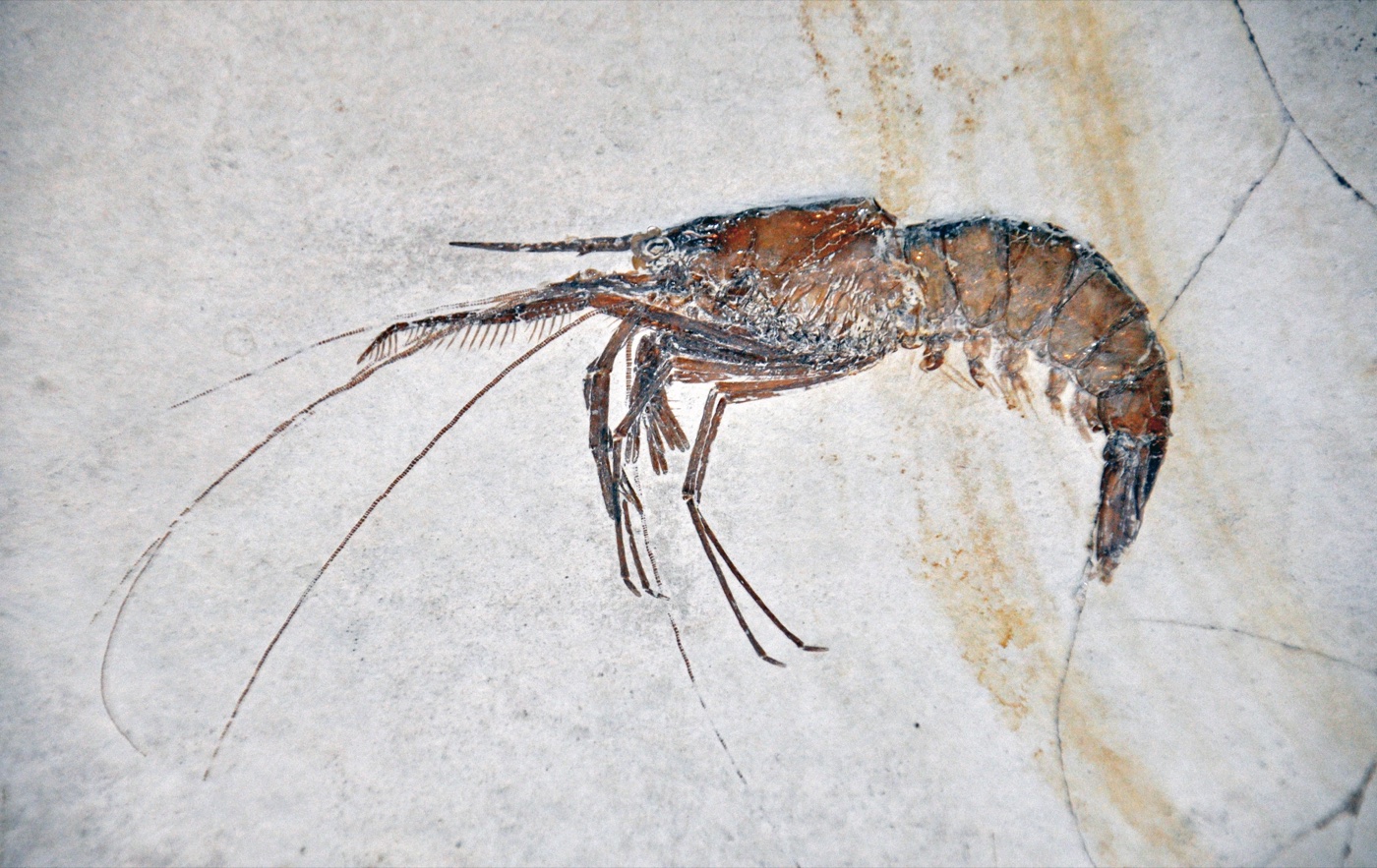 Europe
Germany ↗
Solnhofen–Eichstätt
Fine Jurassic limestone preserves feathered dinosaurs, marine animals and traces of movement. Their shared burial place need not mean a shared habitat or a single cause of death.
150 Ma → Today