
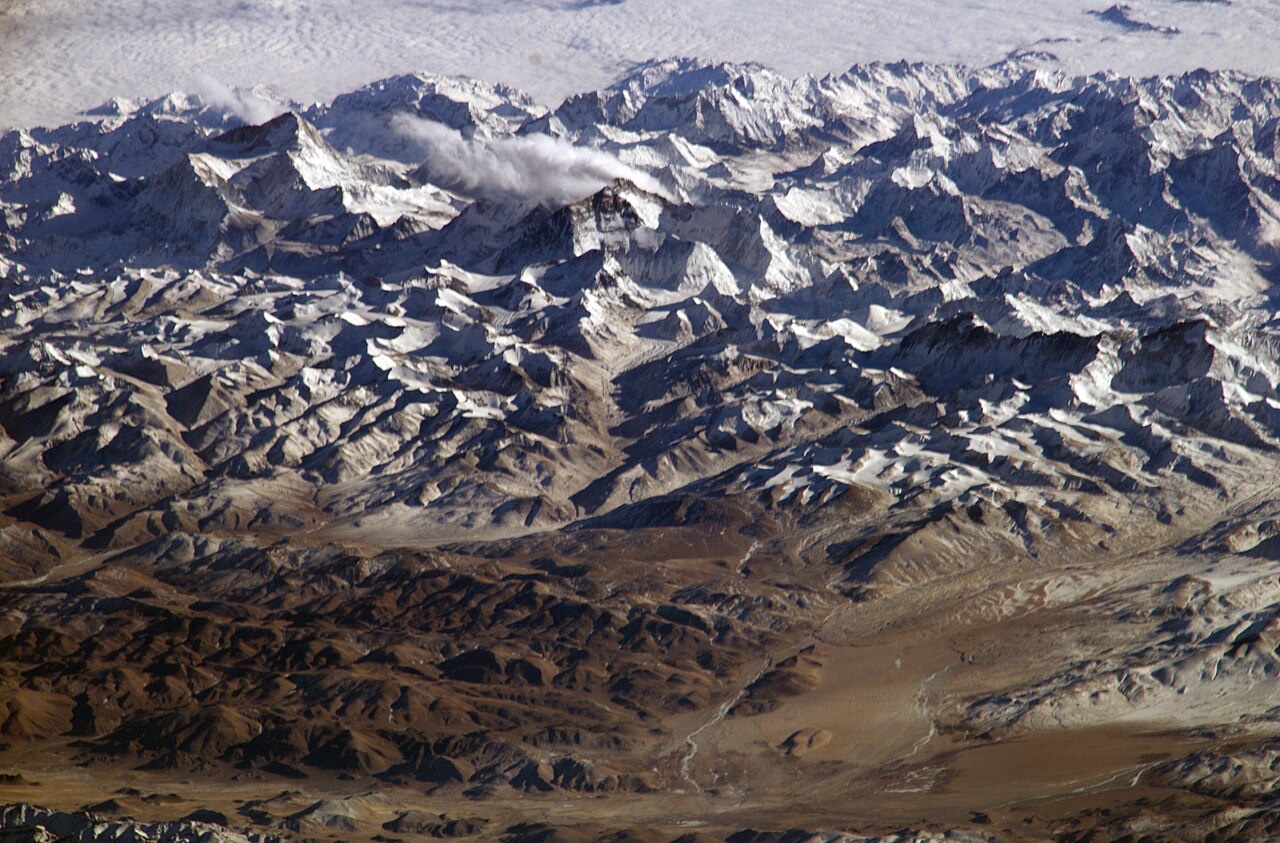
How can rocks formed under a sea become part of the world’s highest mountain system?
The first step is to separate the age of a rock from the age of the mountain that now contains it. Near Tingri and Zhepure Mountain in southern Tibet, fossil-bearing marine strata record environments on the northern Indian margin. Larger foraminifera and other marine microfossils help identify and correlate these deposits. A marine fossil found high above sea level tells us about an older environment; it does not mean the sea once stood at the present height of the Himalaya.
India’s northward movement consumed intervening oceanic space and eventually produced continental collision with Asia. Rocks were shortened, faulted, buried and uplifted over a long sequence of events. Reconstructions must distinguish initial contact, disappearance of local marine basins and the later rise of high topography. These are not one date. Older introductory accounts often place the start of mountain building around 40–50 million years ago; a recent synthesis argues that initial central Himalayan collision began earlier, around 65–59 million years ago, with geographic variation.
The Eocene marine record is valuable precisely because the sequence is complicated. Sediment supplied from different source regions, marine fossil ages and structural relationships test competing histories of basin closure. The atlas contrasts a marine depositional setting with today’s mountain belt, but it does not animate a coastline moving at an invented speed. The explanatory cross-section is a process sketch. It preserves the robust conclusion—marine sediment can be incorporated into a collision belt—while leaving local timing and geometry open to the evidence.
[1] [2] [3] [4] [5]Time windows and evidence
Older ages are on the left. Bars span the dated intervals. A dot marks a single age.
- Marine sedimentation near the closing Tethys 50.5–56 Ma
- Marine rocks within a collision belt Today
- Larger foraminifera in the Zhepure succession 50–56 Ma
- Qumiba marine microfossil assemblages 50.5–54 Ma
- Zhepure Mountain’s changing sedimentary succession 50–66 Ma
Researched windowsEvidence records
52 Ma · interval 50.5–56 Ma
Marine sedimentation near the closing Tethys
Fossil-bearing Eocene marine deposits near Tingri and Zhepure Mountain represent part of the complex northern Indian margin. The snapshot emphasizes a surviving marine basin rather than declaring all of the Tethys open or closed at once. Microfossils constrain deposition; changes in sediment sources bear on connections to Asia. The scene shows an environment, not the precise width of an ocean or a measured ancient coastline.
[2] [3] [4]Locate this time in the atlas ↗Observed
Marine limestones and finer sediments contain age-diagnostic fossil assemblages.
Reconstructed
Marine deposition persisted locally during a broader transition toward collision and suturing.
Uncertain
Different definitions of collision and disputed correlations produce different event dates.
Evidence windows overlapping this state: 3. Overlap does not establish exact coexistence.
body fossil · The Tethyan Himalaya ↗
Larger foraminifera in the Zhepure succession
The Zhepure succession near Tingri includes fossil-bearing carbonates of a Paleocene to early Eocene ramp. Larger bottom-dwelling foraminifera make mineral shells called tests. Fossil assemblages that include Assilina and Nummulites help geologists recognize intervals of shallow marine deposition and compare them with nearby sections. To make those comparisons, researchers check where the tests sit within the beds and whether older material was redeposited.
locality · The Tethyan Himalaya ↗
Qumiba marine microfossil assemblages
The Qumiba section is one of the locations used to investigate the youngest marine sedimentation along the northern Indian margin. Biostratigraphic work and sediment-source studies offer constraints on how the basin changed near collision. The disappearance of marine deposits is a local observation whose meaning depends on structural and stratigraphic context. It cannot by itself provide a unique date for contact along the entire Himalaya.
sediment · The Tethyan Himalaya ↗
Zhepure Mountain’s changing sedimentary succession
Successive formations around Zhepure Mountain preserve changes in sediment type, depositional environment and subsidence. Reading the sequence links fossils to basin history: carbonate deposition, shallowing and later sediment supply need not respond to the same mechanism. This is evidence from the arrangement of rocks rather than from a single spectacular specimen. Its interpretation depends on recognizing faults and gaps before treating the succession as an uninterrupted clock.
Today · interval Today
Marine rocks within a collision belt
The modern Himalaya exposes rocks that experienced different episodes of sedimentation, deformation and uplift. The image therefore combines a present mountain setting with an explanatory structural sketch, not a reconstruction of one instant of uplift. Ancient fossils remain ancient observations in rock; they are not evidence for organisms living in today’s high mountains. Modern coordinates locate the region rather than the material’s Eocene position.
[1] [4]Locate this time in the atlas ↗Observed
Marine strata are now incorporated into the Himalayan mountain system.
Reconstructed
Continental convergence and crustal shortening explain the transformation of the regional setting.
Uncertain
Present altitude cannot be converted directly into a single uplift age or rate.
Evidence windows overlapping this state: 0. Overlap does not establish exact coexistence.
No curated evidence record overlaps this window. The full notebook for this region appears below.
What this story cannot resolve
The region spans multiple sections; it is not a claim that the Everest summit itself contains these particular Eocene fossils. Collision timing is definition- and location-dependent.
Keep these ideas handy
Plate tectonics
The movement and interaction of the relatively rigid plates that make up Earth’s lithosphere. Explore the idea ↗
Mountain building
Processes that thicken, deform or raise Earth’s crust, often associated with convergence and collision. Explore the idea ↗
Facies
The observable characteristics of a rock body that help describe and interpret its depositional setting. Explore the idea ↗
The evidence notebook
body fossil · The Tethyan Himalaya ↗
Larger foraminifera in the Zhepure succession
The Zhepure succession near Tingri includes fossil-bearing carbonates of a Paleocene to early Eocene ramp. Larger bottom-dwelling foraminifera make mineral shells called tests. Fossil assemblages that include Assilina and Nummulites help geologists recognize intervals of shallow marine deposition and compare them with nearby sections. To make those comparisons, researchers check where the tests sit within the beds and whether older material was redeposited.
locality · The Tethyan Himalaya ↗
Qumiba marine microfossil assemblages
The Qumiba section is one of the locations used to investigate the youngest marine sedimentation along the northern Indian margin. Biostratigraphic work and sediment-source studies offer constraints on how the basin changed near collision. The disappearance of marine deposits is a local observation whose meaning depends on structural and stratigraphic context. It cannot by itself provide a unique date for contact along the entire Himalaya.
sediment · The Tethyan Himalaya ↗
Zhepure Mountain’s changing sedimentary succession
Successive formations around Zhepure Mountain preserve changes in sediment type, depositional environment and subsidence. Reading the sequence links fossils to basin history: carbonate deposition, shallowing and later sediment supply need not respond to the same mechanism. This is evidence from the arrangement of rocks rather than from a single spectacular specimen. Its interpretation depends on recognizing faults and gaps before treating the succession as an uninterrupted clock.
Follow the evidence
Sources & credits
- The Himalayas: This Dynamic Earth ↗
United States Geological Survey · 1999
Use, credit & modifications
Reference only. No third-party prose, figures, photographs or datasets reproduced; factual interpretation written originally for this atlas.
Credit: United States Geological Survey — The Himalayas: This Dynamic Earth. Original educational synthesis; geological ages rounded into explicitly labelled teaching intervals. No licensed media incorporated; no territorial reuse permission asserted.
- Timing of India-Asia collision: Geological, biostratigraphic, and palaeomagnetic constraints ↗
Najman et al.; Journal of Geophysical Research · 2010
Use, credit & modifications
Reference only. No third-party prose, figures, photographs or datasets reproduced; factual interpretation written originally for this atlas.
Credit: Najman et al.; Journal of Geophysical Research — Timing of India-Asia collision: Geological, biostratigraphic, and palaeomagnetic constraints. Original educational synthesis; geological ages rounded into explicitly labelled teaching intervals. No licensed media incorporated; no territorial reuse permission asserted.
- Late Cretaceous–Palaeogene stratigraphic and basin evolution in the Zhepure Mountain of southern Tibet ↗
Hu et al.; Basin Research · 2012
Use, credit & modifications
Reference only. No third-party prose, figures, photographs or datasets reproduced; factual interpretation written originally for this atlas.
Credit: Hu et al.; Basin Research — Late Cretaceous–Palaeogene stratigraphic and basin evolution in the Zhepure Mountain of southern Tibet. Original educational synthesis; geological ages rounded into explicitly labelled teaching intervals. No licensed media incorporated; no territorial reuse permission asserted.
- Timing of initial collision and suturing processes in the Himalaya and Zagros ↗
Nature Reviews Earth & Environment · 2025
Use, credit & modifications
Reference only. No third-party prose, figures, photographs or datasets reproduced; factual interpretation written originally for this atlas.
Credit: Nature Reviews Earth & Environment — Timing of initial collision and suturing processes in the Himalaya and Zagros. Original educational synthesis; geological ages rounded into explicitly labelled teaching intervals. No licensed media incorporated; no territorial reuse permission asserted.
- Paleocene–Eocene larger foraminiferal and isotope record from southern Tibet ↗
Wang, Wan and Li; Acta Micropalaeontologica Sinica · 2010
Use, credit & modifications
Reference only. No third-party prose, figures, photographs or datasets reproduced; factual interpretation written originally for this atlas.
Credit: Wang, Wan and Li; Acta Micropalaeontologica Sinica — Paleocene–Eocene larger foraminiferal and isotope record from southern Tibet. Original educational synthesis; geological ages rounded into explicitly labelled teaching intervals. No licensed media incorporated; no territorial reuse permission asserted.
Follow the connections
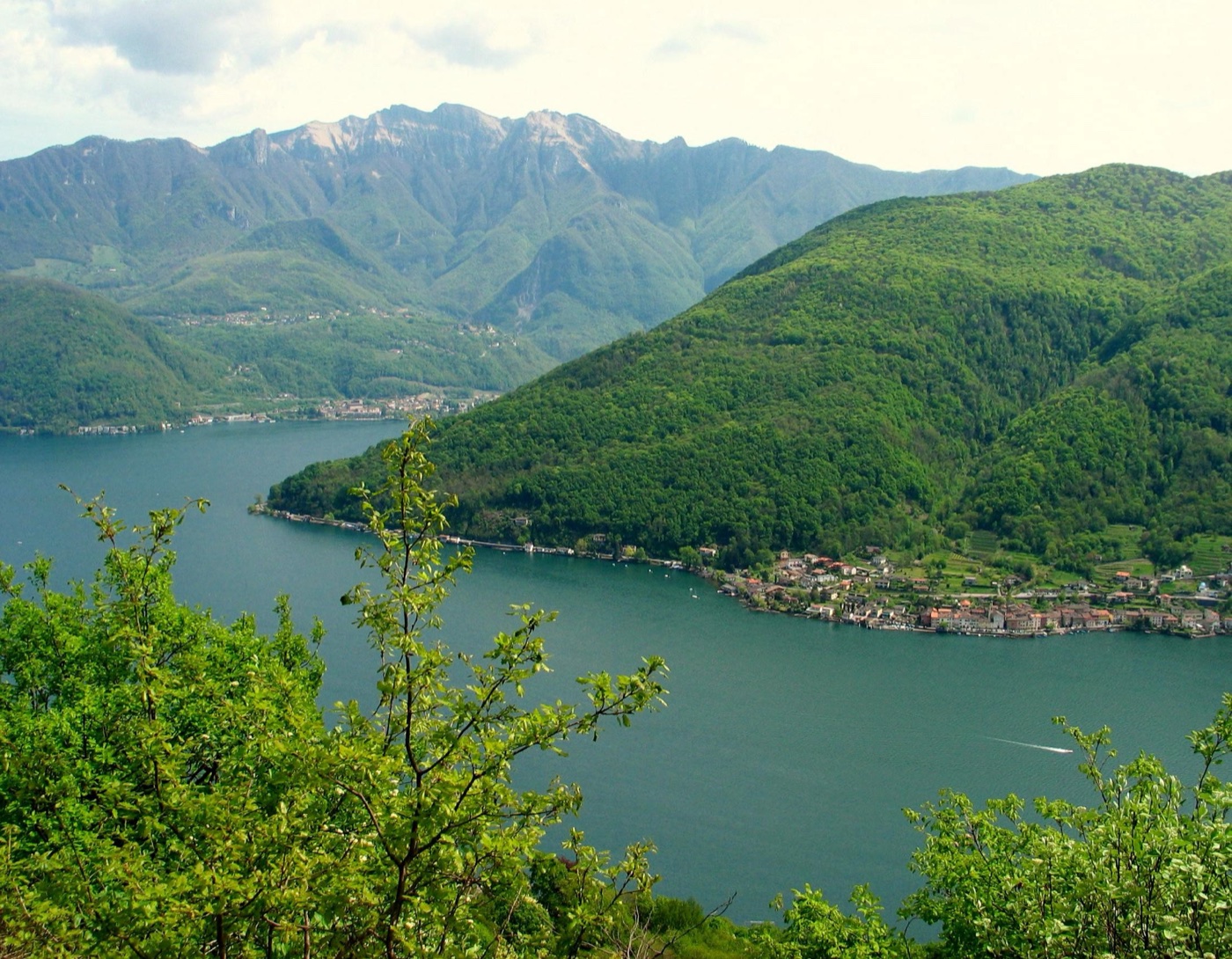 Europe
Switzerland / Italy ↗
Monte San Giorgio, Southern Alps
Middle Triassic marine sediments now form part of the Southern Alpine landscape. Fossils reveal a restricted basin, while the rocks’ present position records a much later geological history.
241 Ma → Today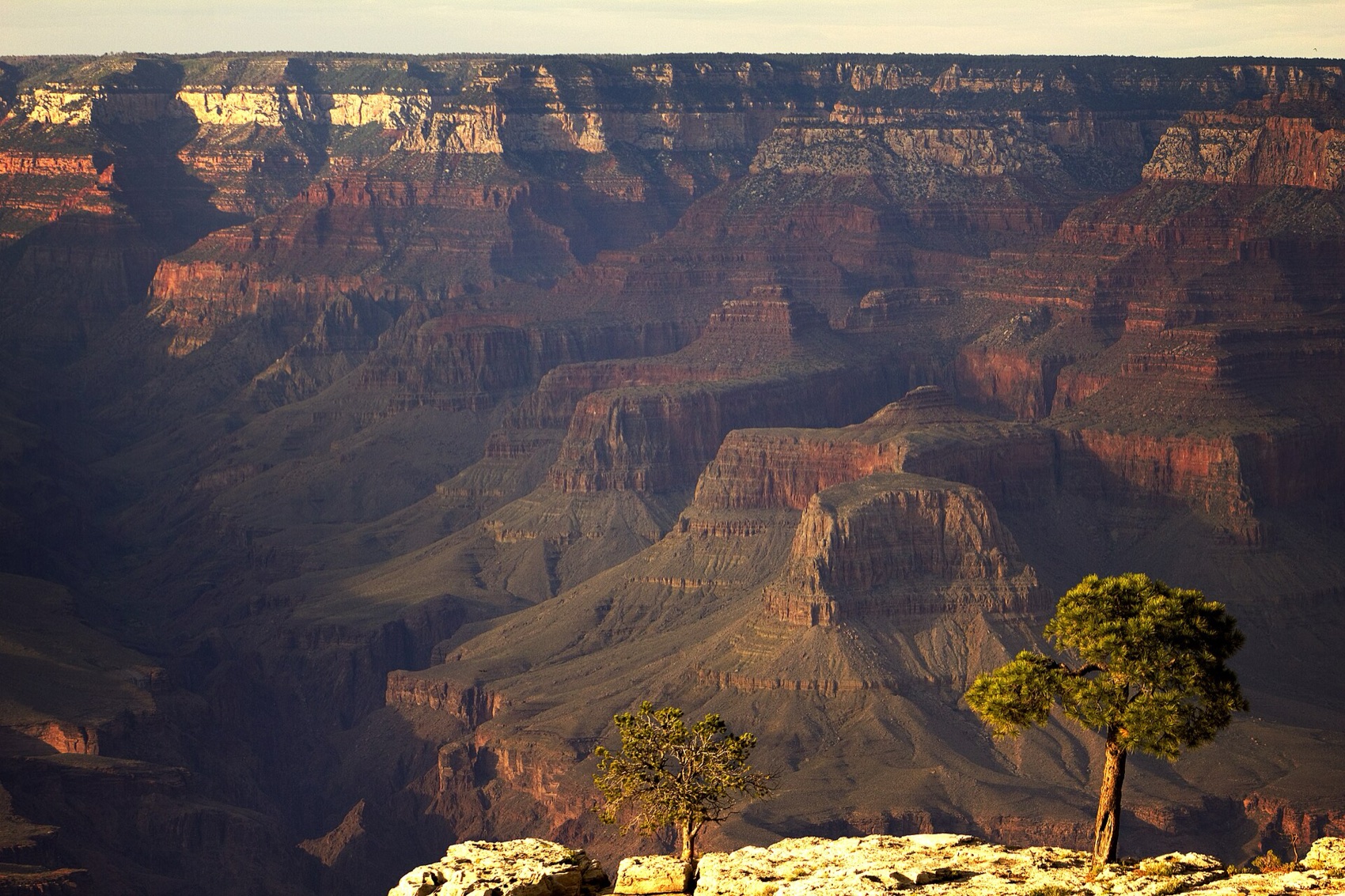 North America
United States ↗
Grand Canyon
The canyon exposes older environments stacked in rock. Cambrian marine deposits and Permian dune sand record different chapters; the much younger canyon is the window through which we read them.
508 Ma → 275 Ma