
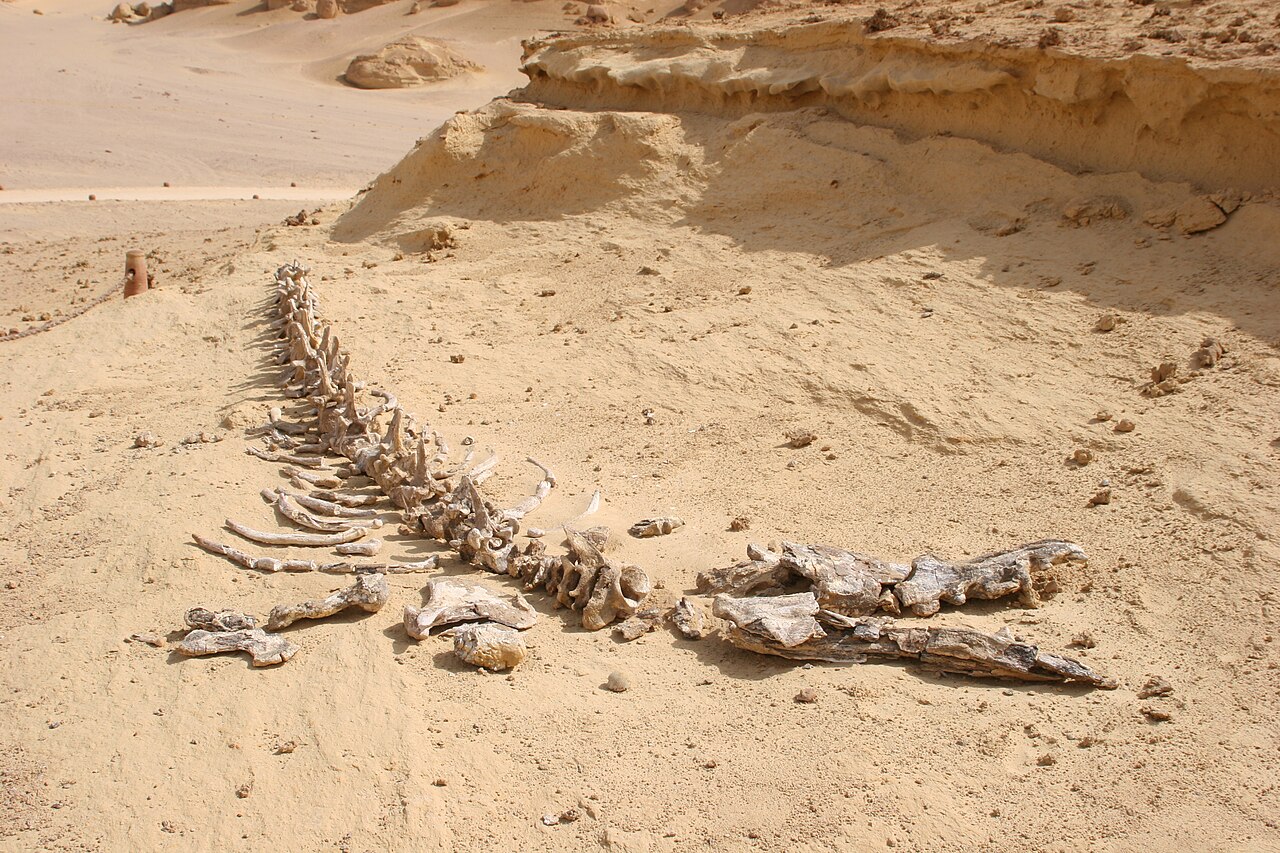
Why do whale skeletons occur in a desert, and what do their neighbours reveal?
The desert floor at Wadi Al-Hitan is a modern window into marine sediment. The whales did not live in dunes, and the present arrangement of exposed bones is not a photograph of an Eocene coastline. Their enclosing rocks, associated marine organisms and stratigraphic position establish the older setting. The story has two linked parts: mammals had already adapted to life in water, and changing sedimentary environments determined which remains entered the fossil record.
The older window follows lower Gehannam deposits around 37.5 million years ago. One Basilosaurus isis skeleton, WH 10001, was excavated with remains interpreted as stomach contents, including juvenile Dorudon atrox and a large fish. This is evidence for a particular feeding event and supports a predatory role for Basilosaurus. It does not mean every nearby bone was prey: the interpretation depends on the remains’ identity, condition and position within the excavated association.
The overlying Birket Qarun Formation records a younger marine interval. It includes more articulated whale skeletons as well as the catfish Qarmoutus hitanensis, described from associated bones of one individual. Fish and other marine remains place the whales within an ecosystem rather than on an evolutionary pedestal. Differences in articulation also ask a practical question: how long did a carcass remain exposed, and what moved it before sediment enclosed it?
These whales retain anatomical evidence of terrestrial ancestry while already being aquatic animals. Reduced hind limbs do not imply that the large basilosaurids were routinely walking onto land. Evolution is inferred through comparisons among many fossils and living mammals; this one valley preserves a particularly informative later chapter. The two snapshots focus on changes within the Eocene sea. The current desert exposes that record after a much longer subsequent history, which is not compressed into a sudden marine-to-desert transformation.
[1] [2] [3] [4]Time windows and evidence
Older ages are on the left. Bars span the dated intervals. A dot marks a single age.
- A whale fall in the Gehannam sea 37.2–38 Ma
- Birket Qarun’s marine community 36.5–37.2 Ma
- Basilosaurus WH 10001 and its meal 37.2–38 Ma
- Dorudon atrox in the younger whale beds 36.5–37.2 Ma
- Qarmoutus hitanensis, a marine catfish 36.5–37.2 Ma
Researched windowsEvidence records
37.5 Ma · interval 37.2–38 Ma
A whale fall in the Gehannam sea
Lower Gehannam siltstone and shale preserve the Basilosaurus specimen WH 10001, assigned an approximate age of 37.5 Ma in the published study. Its bones were disarticulated but remained in a restricted area. Associated juvenile whale and fish remains were interpreted as food. The window is a rounded bracket around that locality and its marine setting, not the complete duration of the Gehannam Formation. The schematic seafloor does not reproduce the measured excavation plan.
[2] [4]Locate this time in the atlas ↗Observed
The Basilosaurus skeleton WH 10001 was found with bones and teeth of juvenile Dorudon and a large fish in lower Gehannam marine deposits.
Reconstructed
An aquatic predator died and its remains underwent disturbance and burial on the seafloor.
Uncertain
Carcass movement, scavenging and the precise timing of burial are reconstructed from taphonomic evidence.
Evidence windows overlapping this state: 1. Overlap does not establish exact coexistence.
37 Ma · interval 36.5–37.2 Ma
Birket Qarun’s marine community
The younger Birket Qarun Formation includes whale skeletons and the marine catfish Qarmoutus, whose type specimen was described from deposits approximately 37 Ma old. Sedimentary changes and intervals of exposure before burial influenced how complete skeletons remained. The chosen time window is deliberately approximate and does not make all Birket Qarun fossils contemporaneous. This is a marine shelf reconstruction, without a precisely traced shoreline or an assumed mangrove forest inferred from ambiguous structures.
[3] [4] [2] [5]Locate this time in the atlas ↗Observed
The Birket Qarun Formation preserves articulated whale skeletons and, in a separate find, associated bones of one catfish.
Reconstructed
A marine ecosystem persisted while local sedimentation and preservation conditions changed.
Uncertain
The extent, depth and timing of individual coastal environments varied across the basin.
Evidence windows overlapping this state: 2. Overlap does not establish exact coexistence.
body fossil · Wadi Al-Hitan ↗
Dorudon atrox in the younger whale beds
The University of Michigan catalogue documents Dorudon atrox vertebra UMMP VP 97512 from Egypt’s Birket Qarun Formation. Teeth and bones from other specimens, including juveniles, let researchers compare growth stages when identifying the smaller whale’s remains. Dorudon was a separate species from Basilosaurus, even though both were basilosaurids. The specimen records a whale in these younger Eocene deposits; its formation assignment does not date the individual or prove it occupied the same patch of seafloor as any other fossil shown here.
body fossil · Wadi Al-Hitan ↗
Qarmoutus hitanensis, a marine catfish
The catfish Qarmoutus hitanensis was described from specimen MUVP 58, an associated set of cranial and other skeletal elements collected in the Birket Qarun Formation. Its anatomical characters support placement among sea catfishes. The specimen broadens the valley’s story beyond mammals and provides a documented member of the surrounding marine ecosystem. Its approximately 37 Ma age comes from geological context; the individual has not been independently dated as though each bone contained its own clock.
What this story cannot resolve
Modern coordinates locate the fossil landscape. The two windows bracket selected Eocene examples, not exact formation boundaries. Displayed fossils have undergone excavation or conservation; a photograph does not replace their original field records.
Keep these ideas handy
Evolutionary tree
A branching hypothesis of relationships among organisms, inferred from shared evidence rather than arranged as a ladder of progress. Explore the idea ↗
Taphonomy
Studying what happens between an organism’s life, death, burial, preservation and eventual discovery. Explore the idea ↗
Facies
The observable characteristics of a rock body that help describe and interpret its depositional setting. Explore the idea ↗
The evidence notebook
body fossil · Wadi Al-Hitan ↗
Basilosaurus WH 10001 and its meal
The excavated Basilosaurus isis skeleton WH 10001 was associated with juvenile Dorudon bones and remains of the fish Pycnodus mokattamensis. Researchers interpreted these as stomach contents, supporting active feeding on other vertebrates. Their analysis considers a particular association rather than assuming that all neighbouring fossils represent prey. The disarticulated skeleton also documents processes after death: scavenging, disturbance and exposure can rearrange a carcass before final burial.
body fossil · Wadi Al-Hitan ↗
Dorudon atrox in the younger whale beds
The University of Michigan catalogue documents Dorudon atrox vertebra UMMP VP 97512 from Egypt’s Birket Qarun Formation. Teeth and bones from other specimens, including juveniles, let researchers compare growth stages when identifying the smaller whale’s remains. Dorudon was a separate species from Basilosaurus, even though both were basilosaurids. The specimen records a whale in these younger Eocene deposits; its formation assignment does not date the individual or prove it occupied the same patch of seafloor as any other fossil shown here.
body fossil · Wadi Al-Hitan ↗
Qarmoutus hitanensis, a marine catfish
The catfish Qarmoutus hitanensis was described from specimen MUVP 58, an associated set of cranial and other skeletal elements collected in the Birket Qarun Formation. Its anatomical characters support placement among sea catfishes. The specimen broadens the valley’s story beyond mammals and provides a documented member of the surrounding marine ecosystem. Its approximately 37 Ma age comes from geological context; the individual has not been independently dated as though each bone contained its own clock.
Follow the evidence
Sources & credits
- Wadi Al-Hitan (Whale Valley) ↗
UNESCO World Heritage Centre · Not stated
Use, credit & modifications
Reference only. No text, photographs, figures or datasets from this source are reproduced; the atlas provides original factual synthesis.
Credit: UNESCO World Heritage Centre. Original educational synthesis. Numerical intervals are explicitly rounded teaching windows, not measured ages for every fossil. No source asset reused; no territorial asset licence asserted.
- Stomach contents of the archaeocete Basilosaurus isis: Apex predator in oceans of the late Eocene ↗
PLOS ONE; Museum für Naturkunde, Egyptian Environmental Affairs Agency and University of Michigan · 2019-01-09
Use, credit & modifications
Reference only. No text, photographs, figures or datasets from this source are reproduced; the atlas provides original factual synthesis.
Credit: Manja Voss, Mohammed Sameh M. Antar, Iyad S. Zalmout and Philip D. Gingerich. Original educational synthesis. Numerical intervals are explicitly rounded teaching windows, not measured ages for every fossil. No source asset reused; no territorial asset licence asserted.
- A new genus and species of marine catfishes from the upper Eocene Birket Qarun Formation, Wadi El-Hitan, Egypt ↗
PLOS ONE; Mansoura University Vertebrate Paleontology Center and collaborators · 2017
Use, credit & modifications
Reference only. No text, photographs, figures or datasets from this source are reproduced; the atlas provides original factual synthesis.
Credit: Sanaa E. El-Sayed and colleagues. Original educational synthesis. Numerical intervals are explicitly rounded teaching windows, not measured ages for every fossil. No source asset reused; no territorial asset licence asserted.
- Sequence stratigraphic control on preservation of late Eocene whales and other vertebrates at Wadi Al-Hitan, Egypt ↗
PALAIOS; University of Wisconsin–Madison author manuscript · 2009
Use, credit & modifications
Reference only. No text, photographs, figures or datasets from this source are reproduced; the atlas provides original factual synthesis.
Credit: Shanan E. Peters, Mohammed Sameh M. Antar, Iyad S. Zalmout and Philip D. Gingerich. Original educational synthesis. Numerical intervals are explicitly rounded teaching windows, not measured ages for every fossil. No source asset reused; no territorial asset licence asserted.
- Dorudon atrox vertebra, UMMP VP 97512 ↗
University of Michigan Museum of Paleontology · Not stated
Use, credit & modifications
Reference only. The specimen description is cited; no photograph or model is reproduced.
Credit: University of Michigan Online Repository of Fossils. Original factual summary of the catalogue record. No third-party media reproduced.
Follow the connections
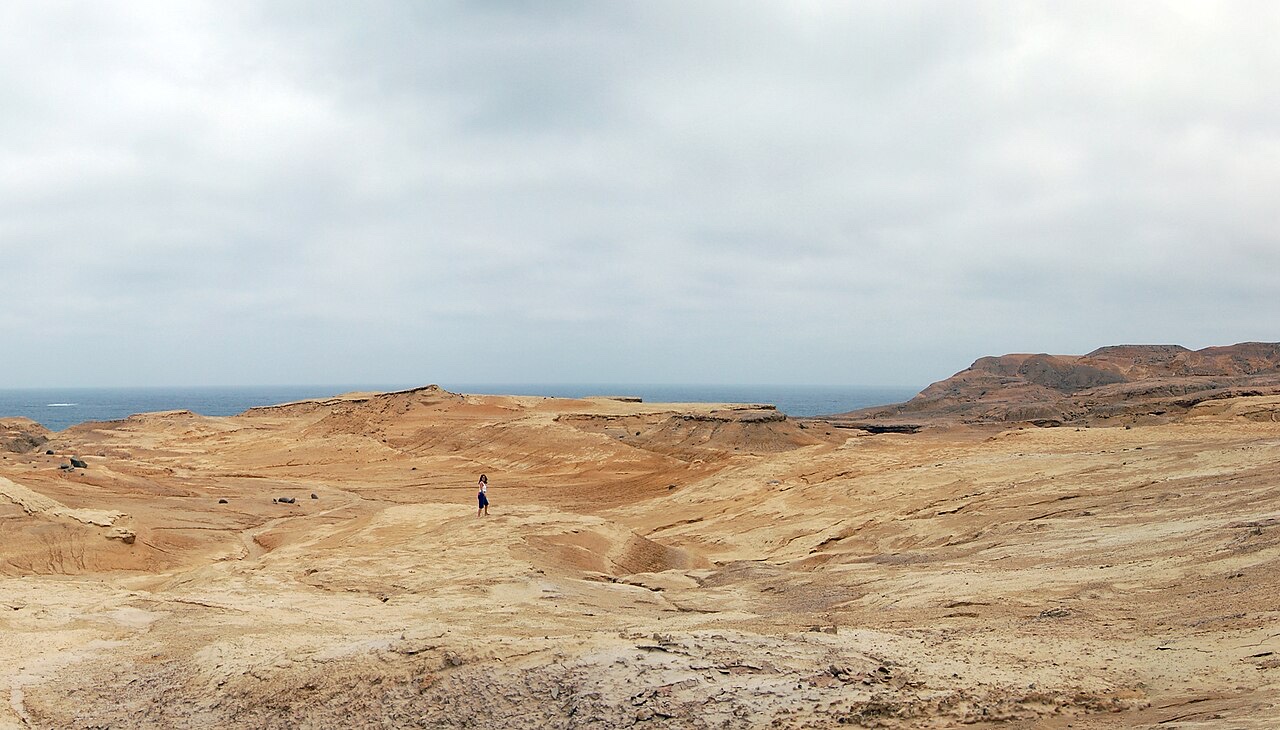 South America
Chile ↗
Atacama’s fossil coast
Cerro Ballena preserves several fossil-rich layers, allowing observed marine mammal remains to be separated from proposed explanations of their deaths.
6.1 Ma → Today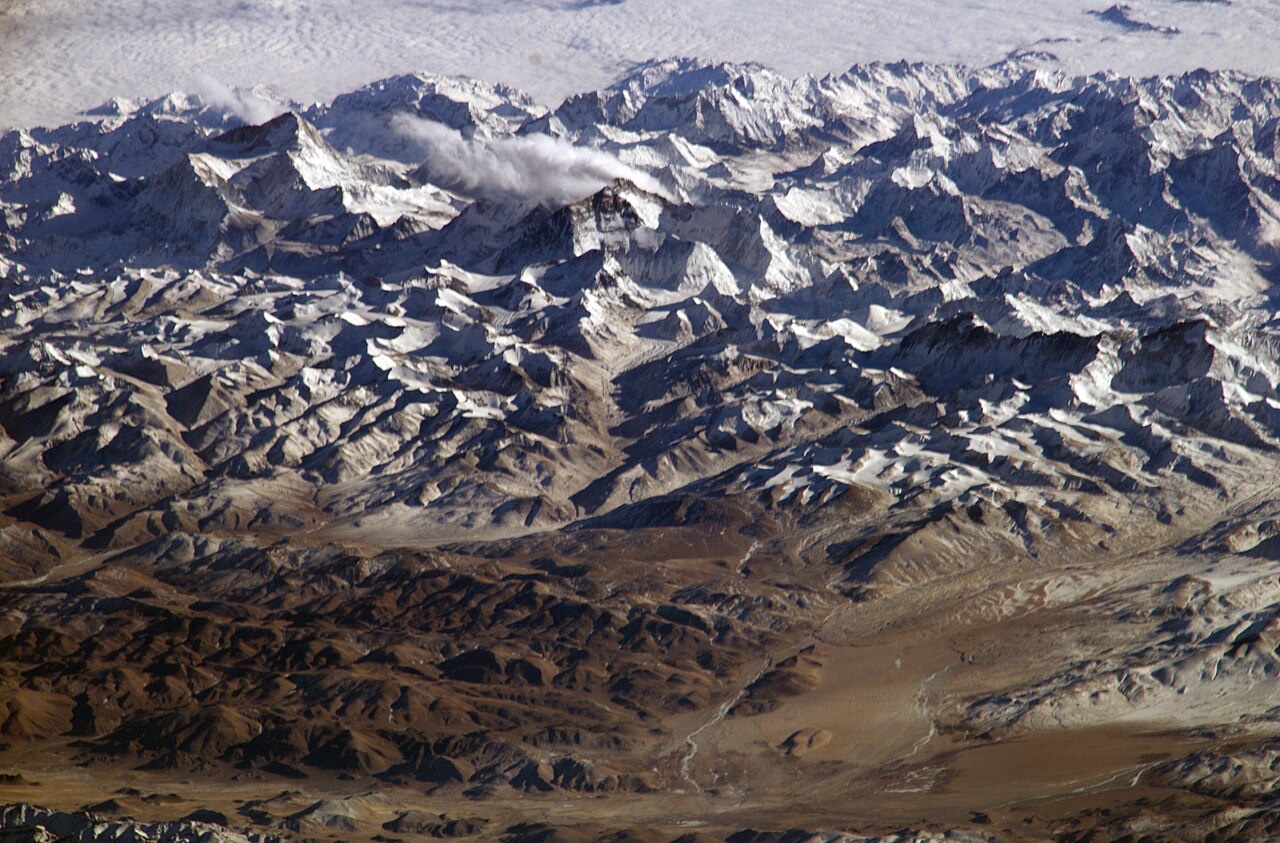 Asia
Nepal / China / India ↗
The Tethyan Himalaya
Marine fossils north of Everest belong to a sedimentary history later transformed by India–Asia convergence, deformation and uplift.
52 Ma → Today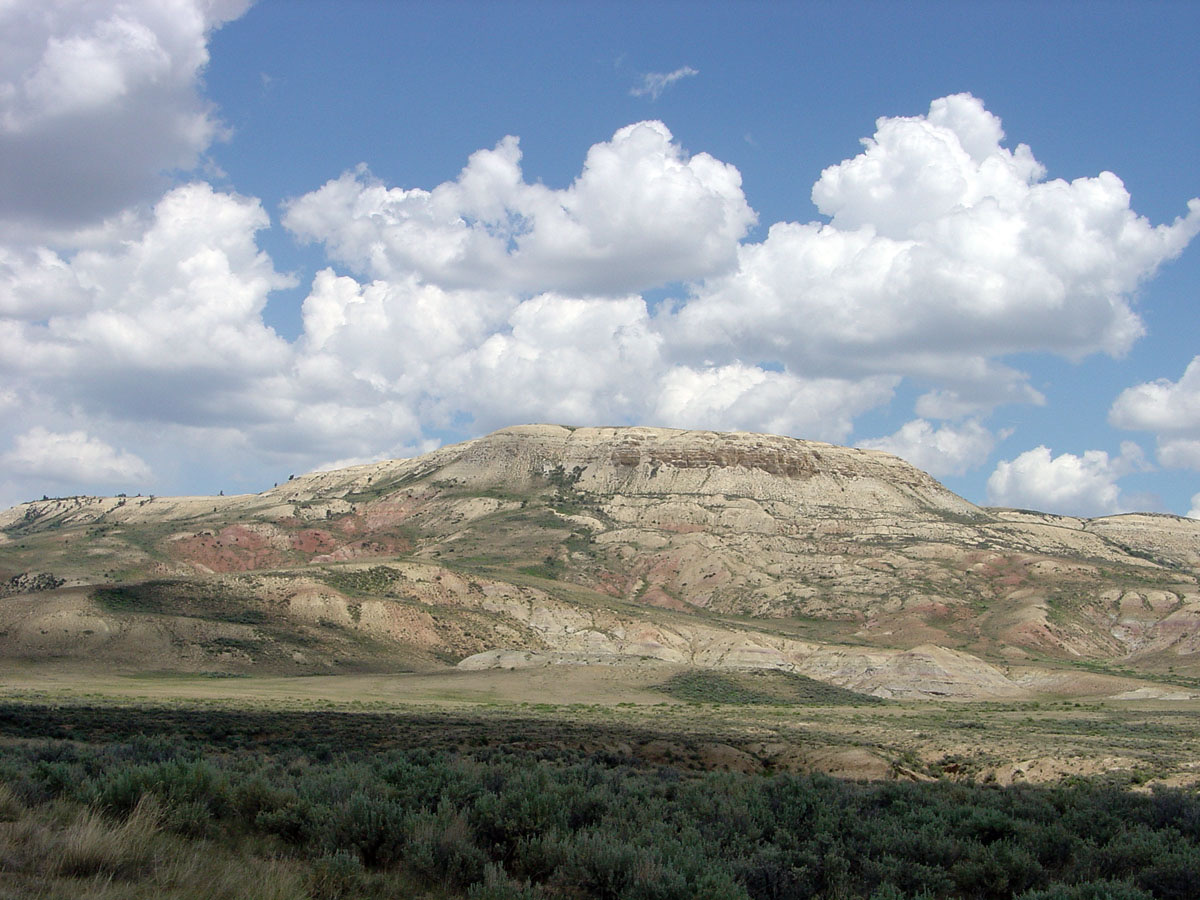 North America
United States ↗
Fossil Lake, Wyoming
The Green River Formation records several Eocene lakes. At Fossil Lake, an expanding lake and its later shrinking, saltier stage left different sediments and different opportunities for preservation.
52 Ma → 51 Ma