
What would distinguish repeated deaths at sea from one enormous catastrophe?
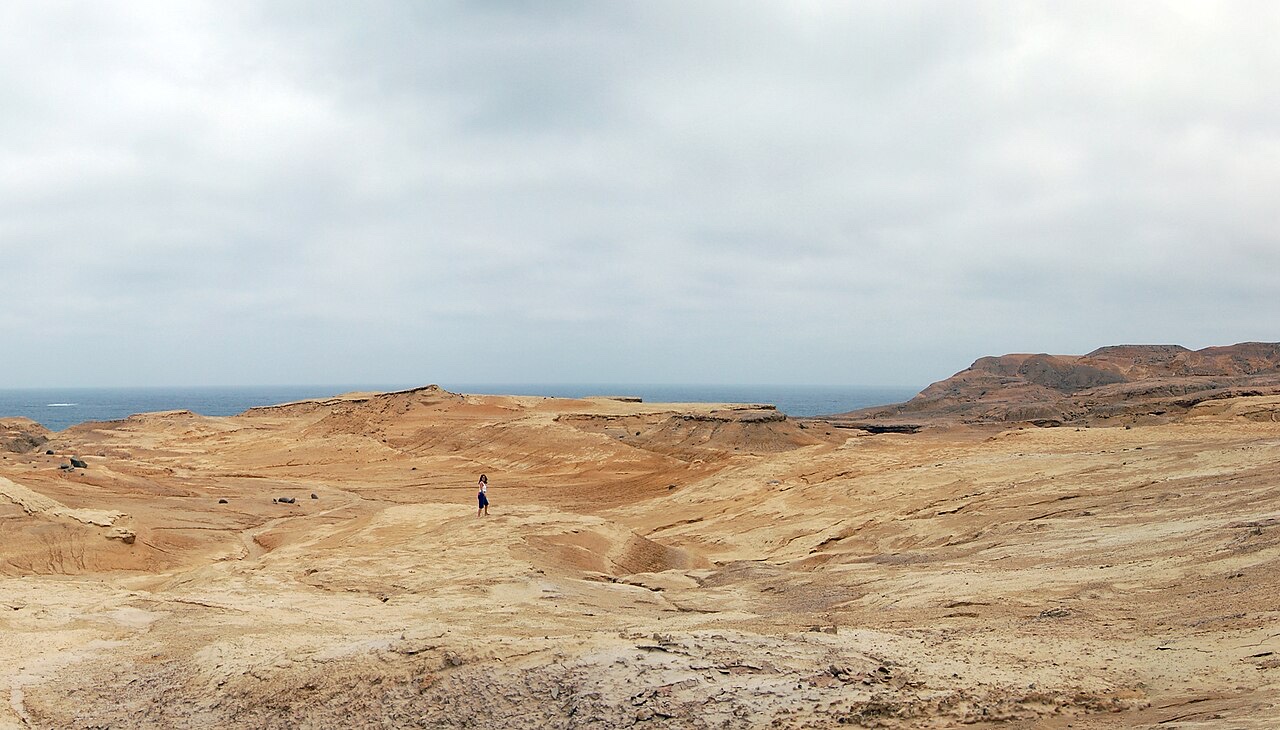
Near Caldera in Chile’s Atacama region, road works exposed an extraordinary marine fossil locality: Cerro Ballena. The remains include baleen whales and other marine vertebrates preserved in several distinct layers. The place is now terrestrial, but the fossil-bearing deposits record a coastal setting. The contrast is between the environment of deposition and the current exposure, not evidence that the entire Atacama Desert was simultaneously covered by one sea.
The arrangement of remains carries the most important argument. A repeated pattern in separate beds requires an explanation that can recur. Articulation, orientation, the variety of animals and the sediment surrounding them can be compared with modern mortality and stranding events. Researchers proposed harmful algal blooms as the best explanation for repeated deaths at sea followed by movement and burial of carcasses. That is an interpretation supported by multiple observations and analogy; a fossilized label identifying a toxin was not found inside each whale. A 2025 study places burial near 6.1 million years ago and favours a sheltered shoreface, revising the earlier age bracket and supratidal-flat model.
The distinction matters beyond this one dramatic site. Counting many skeletons does not directly measure how many animals normally lived offshore, and a multi-layer accumulation is not one instant. Nor should an attractive cause displace alternative mechanisms before the evidence is assessed. The atlas places the observed assemblage, reconstructed coastal setting and proposed mortality mechanism in separate panels. The modern state then shows a different kind of history: a briefly exposed scientific archive documented during an excavation, rather than a permanent open-air scene.
[1] [2] [3] [4] [5]Time windows and evidence
Older ages are on the left. Bars span the dated intervals. A dot marks a single age.
- A Miocene coast receives carcasses 6–6.5 Ma
- A fossil coast within the modern desert Today
- Baleen whale skeletons at Cerro Ballena 6–6.5 Ma
- The wider Cerro Ballena vertebrate assemblage 6–6.5 Ma
- Four fossil-bearing horizons at Cerro Ballena 6–6.5 Ma
Researched windowsEvidence records
6.1 Ma · interval 6–6.5 Ma
A Miocene coast receives carcasses
A 2025 chronostratigraphic study places Cerro Ballena burial near 6.1 million years ago and interprets a sheltered shoreface setting. This revises the original broader biostratigraphic estimate and supratidal interpretation. The 6.5–6 Ma window is an explicitly rounded teaching bracket, not a reported confidence interval. Marine carcasses reached a coastal depositional setting repeatedly; the schematic depicts neither a measured coastline nor a directly observed toxin plume.
[5] [1] [2]Locate this time in the atlas ↗Observed
Marine vertebrate remains occur in four distinct fossil-bearing levels.
Reconstructed
Repeated mortality and coastal burial episodes produced the observed accumulation.
Uncertain
Harmful algal blooms are a proposed explanation; precise event spacing and every carcass history are unresolved.
Evidence windows overlapping this state: 3. Overlap does not establish exact coexistence.
body fossil · Atacama’s fossil coast ↗
Baleen whale skeletons at Cerro Ballena
Articulated and partly articulated baleen whale skeletons dominate the large marine mammal assemblage described at Cerro Ballena. Researchers recorded position, orientation and preservation as well as identity. These observations allow a comparison with modern strandings. The skeleton count refers to a sampled fossil accumulation, not a living population estimate, and should not be used as a direct measure of Miocene whale abundance along the whole coast.
locality · Atacama’s fossil coast ↗
The wider Cerro Ballena vertebrate assemblage
Cerro Ballena includes marine vertebrates beyond its conspicuous baleen whales, with seals, other cetaceans, fishes and an aquatic sloth represented in the documented assemblage. A cause that affects multiple kinds of animals is different from a cause confined to one whale group. That contrast contributes to the mortality investigation, but the presence of several groups does not prove that every individual died simultaneously.
sediment · Atacama’s fossil coast ↗
Four fossil-bearing horizons at Cerro Ballena
The separation of the assemblage into four levels is central to the interpretation of repeated events. A layer is a piece of stratigraphic evidence before it becomes a story about a catastrophe. Comparing similar taphonomic patterns across levels favours a recurring mechanism. Harmful algal blooms were proposed as an explanation compatible with the observations, but the cause remains an inference from patterns and modern analogues.
Today · interval Today
A fossil coast within the modern desert
The modern setting is an arid coastal part of Chile near Caldera. Road expansion temporarily exposed the fossil-bearing deposits, which researchers recorded and excavated. This state illustrates the difference between an ancient environment and the present location of its evidence. It is not a promise that the original excavation remains open or that a visitor will find the skeletons lying where they were documented.
[2] [4]Locate this time in the atlas ↗Observed
Marine fossils were excavated from an exposed terrestrial road-construction site.
Reconstructed
An older coastal sedimentary archive is now accessible through terrestrial exposures.
Uncertain
The interval between burial and exposure is not reconstructed as a continuous uplift curve.
Evidence windows overlapping this state: 0. Overlap does not establish exact coexistence.
No curated evidence record overlaps this window. The full notebook for this region appears below.
What this story cannot resolve
This comparison concerns Cerro Ballena near Caldera, not the entire Atacama Desert. The 6.5–6 Ma bracket is rounded teaching context around the newer ~6.1 Ma interpretation, not a confidence interval. The original study used a 9.03–6.45 Ma biostratigraphic bracket. The 2010–2012 excavation period is a separate observation history.
Keep these ideas handy
Taphonomy
Studying what happens between an organism’s life, death, burial, preservation and eventual discovery. Explore the idea ↗
Radiometric dating
Estimating the time of a geological event from radioactive decay and the isotopic composition of a suitable material. Explore the idea ↗
Uncertainty & reconstruction limits
Explicit limits on what evidence and models allow us to infer, including uncertainty in age, identity, place and process. Explore the idea ↗
The evidence notebook
body fossil · Atacama’s fossil coast ↗
Baleen whale skeletons at Cerro Ballena
Articulated and partly articulated baleen whale skeletons dominate the large marine mammal assemblage described at Cerro Ballena. Researchers recorded position, orientation and preservation as well as identity. These observations allow a comparison with modern strandings. The skeleton count refers to a sampled fossil accumulation, not a living population estimate, and should not be used as a direct measure of Miocene whale abundance along the whole coast.
locality · Atacama’s fossil coast ↗
The wider Cerro Ballena vertebrate assemblage
Cerro Ballena includes marine vertebrates beyond its conspicuous baleen whales, with seals, other cetaceans, fishes and an aquatic sloth represented in the documented assemblage. A cause that affects multiple kinds of animals is different from a cause confined to one whale group. That contrast contributes to the mortality investigation, but the presence of several groups does not prove that every individual died simultaneously.
sediment · Atacama’s fossil coast ↗
Four fossil-bearing horizons at Cerro Ballena
The separation of the assemblage into four levels is central to the interpretation of repeated events. A layer is a piece of stratigraphic evidence before it becomes a story about a catastrophe. Comparing similar taphonomic patterns across levels favours a recurring mechanism. Harmful algal blooms were proposed as an explanation compatible with the observations, but the cause remains an inference from patterns and modern analogues.
Follow the evidence
Sources & credits
- Repeated mass strandings of Miocene marine mammals from Atacama Region of Chile point to sudden death at sea ↗
Pyenson et al.; Proceedings of the Royal Society B · 2014-02-26
Use, credit & modifications
Reference only. No third-party prose, figures, photographs or datasets reproduced; factual interpretation written originally for this atlas.
Credit: Pyenson et al.; Proceedings of the Royal Society B — Repeated mass strandings of Miocene marine mammals from Atacama Region of Chile point to sudden death at sea. Original educational synthesis; geological ages rounded into explicitly labelled teaching intervals. No licensed media incorporated; no territorial reuse permission asserted.
- Cerro Ballena Fact Sheet ↗
Smithsonian Institution · 2014-02-25
Use, credit & modifications
Reference only. No third-party prose, figures, photographs or datasets reproduced; factual interpretation written originally for this atlas.
Credit: Smithsonian Institution — Cerro Ballena Fact Sheet. Original educational synthesis; geological ages rounded into explicitly labelled teaching intervals. No licensed media incorporated; no territorial reuse permission asserted.
- Smithsonian Scientists Solve Sudden Death at Sea Mystery ↗
Smithsonian Institution · 2014-02-25
Use, credit & modifications
Reference only. No third-party prose, figures, photographs or datasets reproduced; factual interpretation written originally for this atlas.
Credit: Smithsonian Institution — Smithsonian Scientists Solve Sudden Death at Sea Mystery. Original educational synthesis; geological ages rounded into explicitly labelled teaching intervals. No licensed media incorporated; no territorial reuse permission asserted.
- Mystery of marine mammal stranding solved ↗
The Royal Society · 2014
Use, credit & modifications
Reference only. No third-party prose, figures, photographs or datasets reproduced; factual interpretation written originally for this atlas.
Credit: The Royal Society — Mystery of marine mammal stranding solved. Original educational synthesis; geological ages rounded into explicitly labelled teaching intervals. No licensed media incorporated; no territorial reuse permission asserted.
- Controls on late Miocene marine vertebrate bonebed genesis in northern Chile ↗
Martinez et al.; Palaeogeography, Palaeoclimatology, Palaeoecology · 2025-02-01
Use, credit & modifications
Reference only. No third-party prose, figures, photographs or datasets reproduced; factual interpretation written originally for this atlas.
Credit: Martinez et al.; Palaeogeography, Palaeoclimatology, Palaeoecology — Controls on late Miocene marine vertebrate bonebed genesis in northern Chile. Original educational synthesis; geological ages rounded into explicitly labelled teaching intervals. No licensed media incorporated; no territorial reuse permission asserted.
Follow the connections
 Antarctica
 ↗
The Antarctic Peninsula
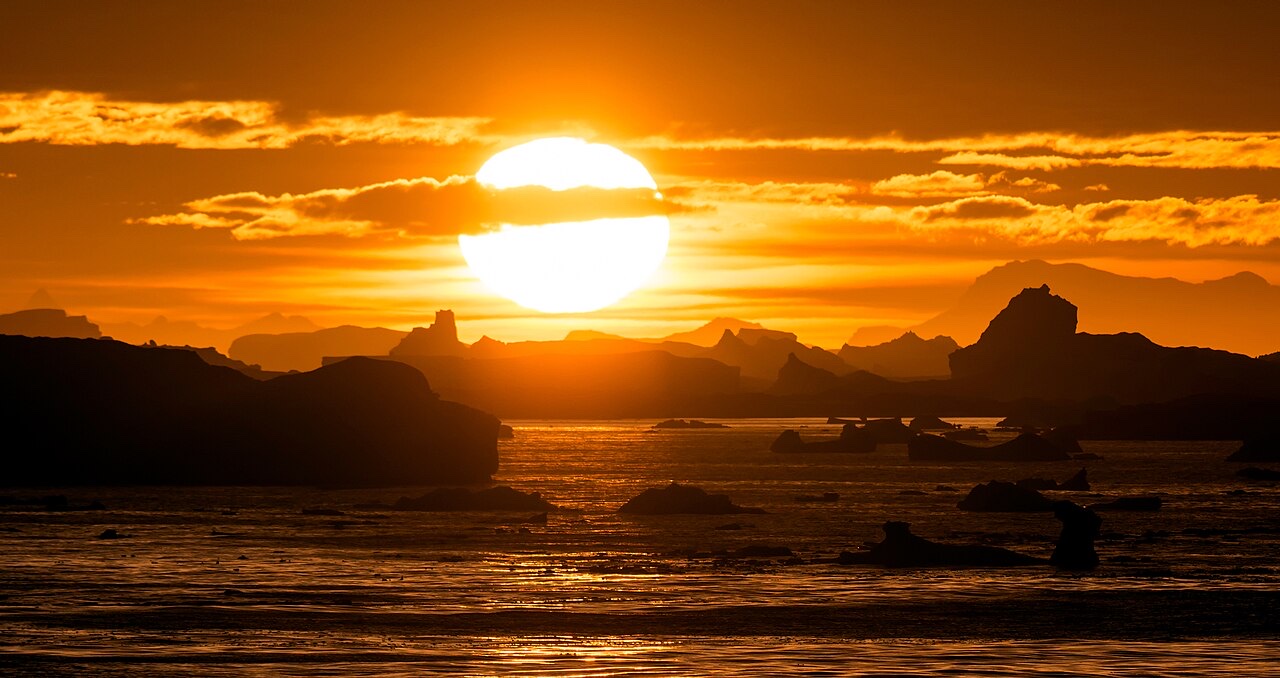
Cretaceous plant fossils and Eocene marine deposits reveal high-latitude environments very different from the familiar ice-covered image of Antarctica.
103 Ma → 40 Ma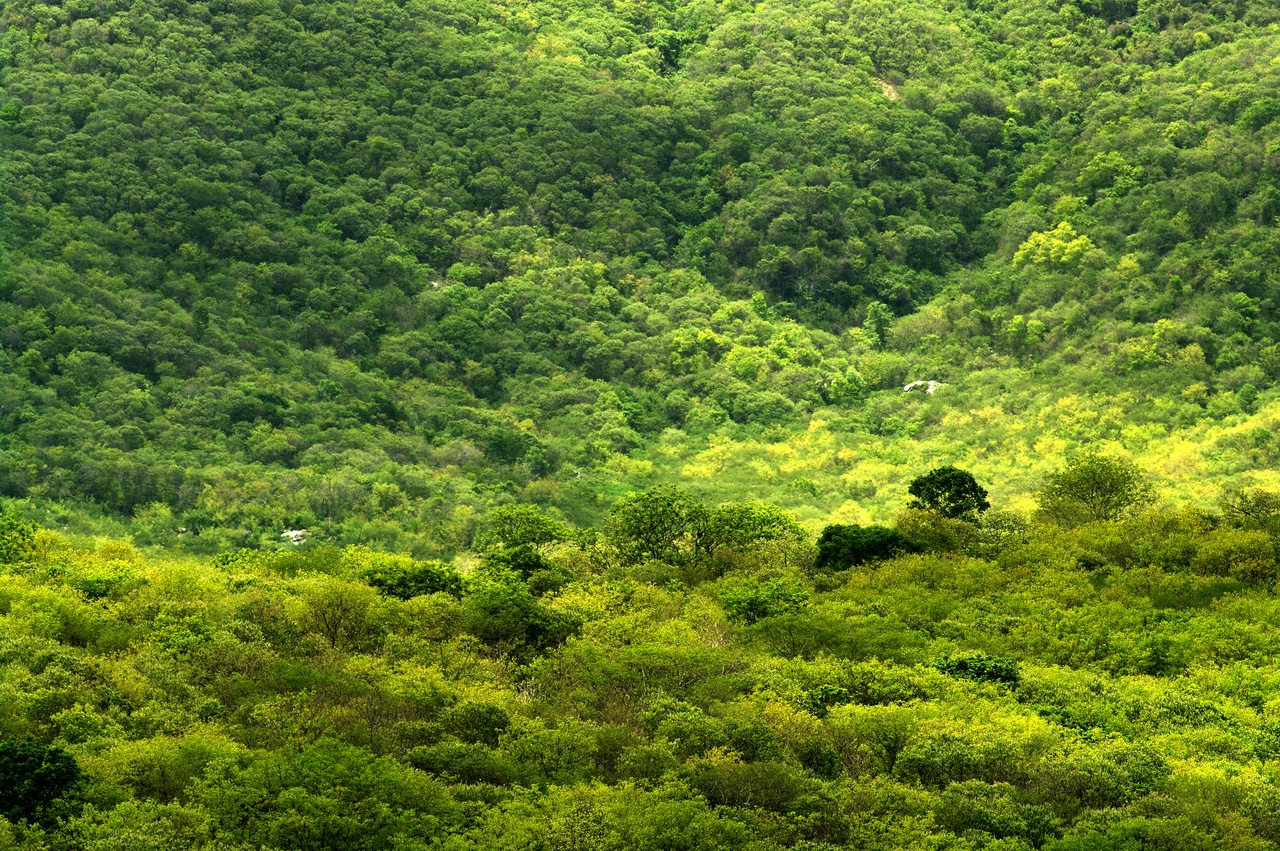 South America
Brazil ↗
The Araripe Basin
The Crato and Romualdo formations preserve contrasting Early Cretaceous depositional settings during the reorganization of northeastern Brazil.
118 Ma → 113 Ma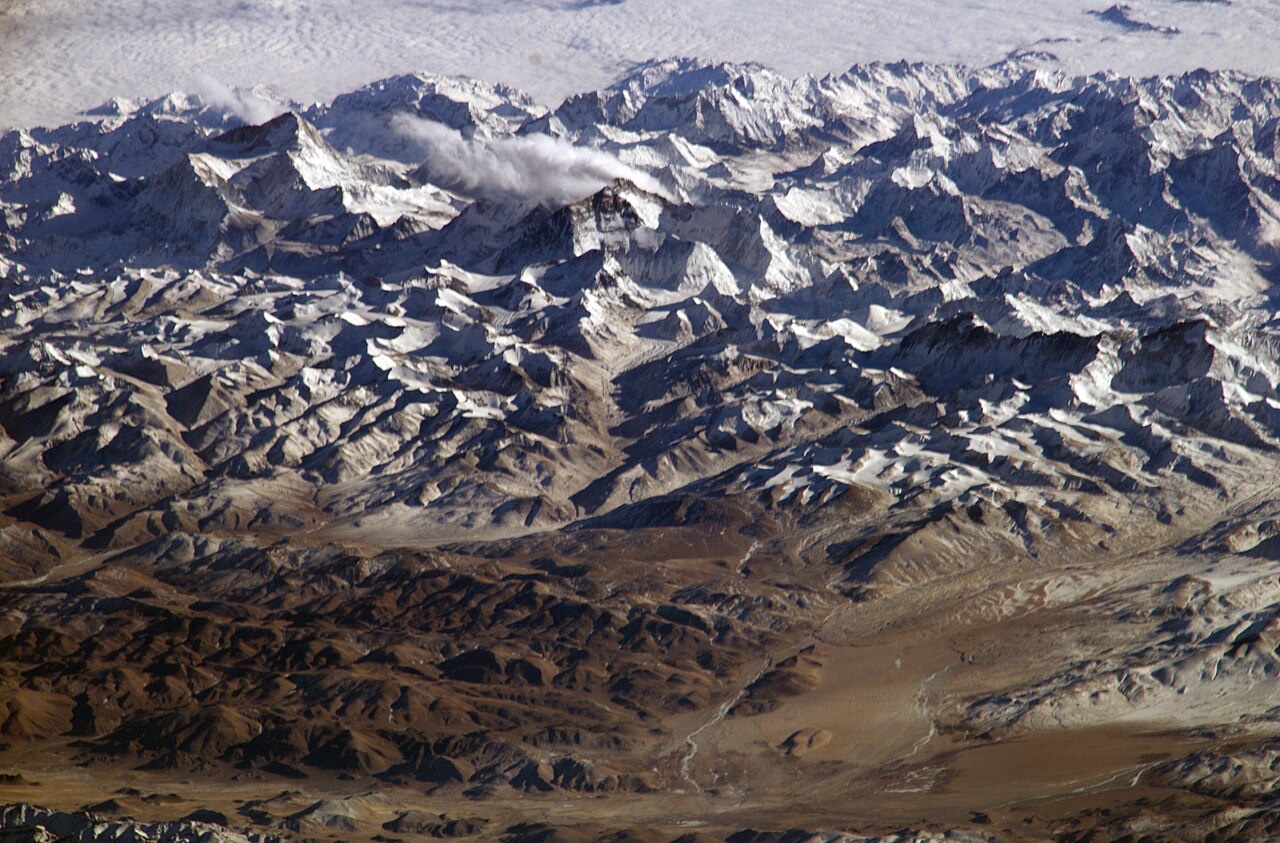 Asia
Nepal / China / India ↗
The Tethyan Himalaya
Marine fossils north of Everest belong to a sedimentary history later transformed by India–Asia convergence, deformation and uplift.
52 Ma → Today