
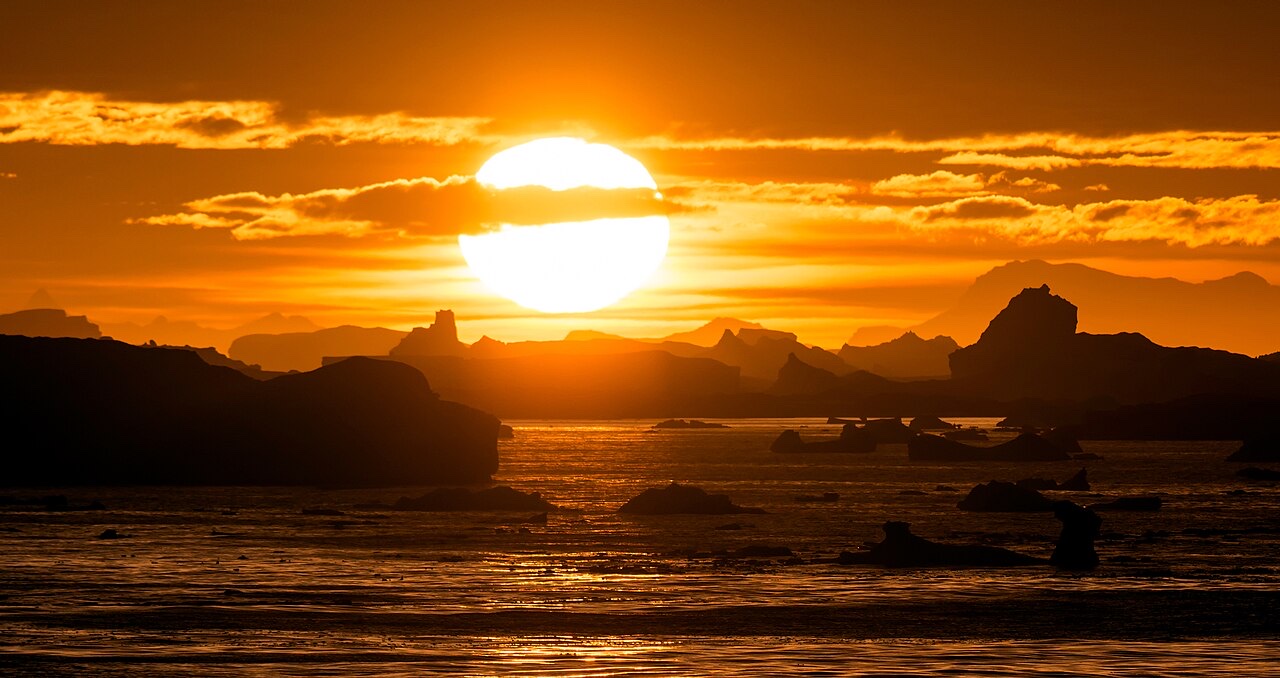
What changes when a polar continent is warm enough for forests?
Alexander Island preserves forest floors and plant-bearing rocks from the Cretaceous. Some of the tree remains are still where the trees grew. Marine molluscs from adjacent layers constrain the age of the studied forest deposits to the Late Albian, represented here by about 103 million years ago. In-place growth and other plant fossils establish a wooded landscape and show how different a high-latitude floodplain could be on a warmer Earth.
The crucial distinction is between warmth and light. A warmer global climate can support vegetation at high latitude, but it does not remove the strong seasonal cycle in daylight. Plants still had to cope with that cycle. The atlas uses a forest schematic to show the environmental contrast, without manufacturing an exact canopy, coastline or numerical paleolatitude. Modern coordinates identify the regional archive. They are not a substitute for a plate reconstruction of where each sampled rock originally lay.
The younger window shifts to Eocene marine deposits on Seymour Island, near the peninsula’s northeastern end. Penguin bones and mollusc shells document marine life, while chemical measurements of well-preserved shells provide indirect evidence about water conditions. A temperature estimate depends on assumptions about seawater chemistry and preservation, not just a reading printed inside a shell. These two windows come from different parts of a broad region. Together they reveal a varied Antarctic history; they are not a continuous local sequence or proof that the whole continent shared one climate.
[1] [2] [3] [4] [5] [6]Time windows and evidence
Older ages are on the left. Bars span the dated intervals. A dot marks a single age.
- Late Albian forests at high latitude 100.5–106 Ma
- Eocene seas around Seymour Island 34–56 Ma
- Cretaceous plants from Alexander Island 100.5–106 Ma
- Penguins of the La Meseta Formation 34–56 Ma
- Cucullaea and Retrotapes shell chemistry 38–48 Ma
Researched windowsEvidence records
103 Ma · interval 100.5–106 Ma
Late Albian forests at high latitude
Alexander Island preserves plants and trees in the Triton Point Formation, part of the Fossil Bluff Group. Fossil molluscs in neighbouring marine strata place the forest deposits in the Late Albian. The 103 Ma snapshot is a representative age within that interval. Plant remains, roots and forest floors help reconstruct the former floodplain.
[1] [5] [6]Locate this time in the atlas ↗Observed
Triton Point Formation rocks preserve plant fossils and traces of tree growth in place. Marine fossils in nearby layers constrain their age.
Reconstructed
Conifers and other plants grew on a high-latitude floodplain with strong seasonal changes in daylight.
Uncertain
The marine fauna helps bracket the forest horizons. The dates and vegetation may differ among other Antarctic plant-bearing deposits.
Evidence windows overlapping this state: 1. Overlap does not establish exact coexistence.
40 Ma · interval 34–56 Ma
Eocene seas around Seymour Island
The younger scene represents the marine shelf record preserved on Seymour Island. Molluscs and penguins add different evidence: shells record marine organisms and potentially water chemistry, while bones reveal birds using the ecosystem. The broad interval includes substantial environmental change within the Eocene. This is a representative marine window, not a claim that one forty-million-year-old shoreline persisted for twenty million years.
[2] [3] [4]Locate this time in the atlas ↗Observed
Eocene marine deposits preserve molluscs and penguin bones.
Reconstructed
A high-latitude shelf ecosystem existed under conditions distinct from the present regional environment.
Uncertain
Shell-based temperatures depend on preservation and seawater assumptions; the Eocene was not climatically uniform.
Evidence windows overlapping this state: 2. Overlap does not establish exact coexistence.
body fossil · The Antarctic Peninsula ↗
Penguins of the La Meseta Formation
Penguin bones from Seymour Island document an Eocene Antarctic marine bird record. Their anatomy and distribution permit comparisons through the formation, but the record contains different ages and sampling histories. The presence of penguins should not be used as an automatic indicator of modern Antarctic cold: penguins occur in a range of water temperatures today, and their ancient ecology must be investigated rather than assumed.
geochemistry · The Antarctic Peninsula ↗
Cucullaea and Retrotapes shell chemistry
Bivalve shells from Seymour Island preserve growth increments that can be sampled sequentially. Researchers measured chemical variation in Cucullaea and Retrotapes to investigate seasonal water conditions. The measured values are observations; temperatures are calculated interpretations that require assumptions about the water in which the shell grew. Comparing multiple shells and preservation indicators helps test whether a pattern is environmental or an alteration artifact.
What this story cannot resolve
This is explicitly a peninsula-region comparison between different localities, not a two-layer section at one coordinate. It does not infer an ice-free continent everywhere at every date in either interval.
Keep these ideas handy
Continental drift
The changing relative positions of continents through time, explained by plate tectonics. Explore the idea ↗
Climate proxy
A measured feature of a natural archive used to infer some aspect of past climate. Explore the idea ↗
Plate reconstruction
A model-based restoration of geological material to estimated past positions using an explicit plate model, age and reference frame. Explore the idea ↗
The evidence notebook
locality · The Antarctic Peninsula ↗
Cretaceous plants from Alexander Island
Plant remains in the Triton Point Formation include evidence of woodland growing on a Cretaceous floodplain. Fossil molluscs in neighbouring rocks help date the forest horizons to the Late Albian. Tree remains preserved where they grew provide stronger evidence for local woodland than driftwood alone. The rounded age interval represents these studied exposures within a more extensive Antarctic plant record.
body fossil · The Antarctic Peninsula ↗
Penguins of the La Meseta Formation
Penguin bones from Seymour Island document an Eocene Antarctic marine bird record. Their anatomy and distribution permit comparisons through the formation, but the record contains different ages and sampling histories. The presence of penguins should not be used as an automatic indicator of modern Antarctic cold: penguins occur in a range of water temperatures today, and their ancient ecology must be investigated rather than assumed.
geochemistry · The Antarctic Peninsula ↗
Cucullaea and Retrotapes shell chemistry
Bivalve shells from Seymour Island preserve growth increments that can be sampled sequentially. Researchers measured chemical variation in Cucullaea and Retrotapes to investigate seasonal water conditions. The measured values are observations; temperatures are calculated interpretations that require assumptions about the water in which the shell grew. Comparing multiple shells and preservation indicators helps test whether a pattern is environmental or an alteration artifact.
Follow the evidence
Sources & credits
- Fossils from the Antarctic ↗
British Antarctic Survey · Not stated
Use, credit & modifications
Reference only. No third-party prose, figures, photographs or datasets reproduced; factual interpretation written originally for this atlas.
Credit: British Antarctic Survey — Fossils from the Antarctic. Original educational synthesis; geological ages rounded into explicitly labelled teaching intervals. No licensed media incorporated; no territorial reuse permission asserted.
- Penguin response to the Eocene climate and ecosystem change in the northern Antarctic Peninsula region ↗
Jadwiszczak; Polar Science · 2010
Use, credit & modifications
Reference only. No third-party prose, figures, photographs or datasets reproduced; factual interpretation written originally for this atlas.
Credit: Jadwiszczak; Polar Science — Penguin response to the Eocene climate and ecosystem change in the northern Antarctic Peninsula region. Original educational synthesis; geological ages rounded into explicitly labelled teaching intervals. No licensed media incorporated; no territorial reuse permission asserted.
- Seasonally Resolved Proxy Data From the Antarctic Peninsula Support a Heterogeneous Middle Eocene Southern Ocean ↗
Paleoceanography and Paleoclimatology · 2019
Use, credit & modifications
Reference only. No third-party prose, figures, photographs or datasets reproduced; factual interpretation written originally for this atlas.
Credit: Paleoceanography and Paleoclimatology — Seasonally Resolved Proxy Data From the Antarctic Peninsula Support a Heterogeneous Middle Eocene Southern Ocean. Original educational synthesis; geological ages rounded into explicitly labelled teaching intervals. No licensed media incorporated; no territorial reuse permission asserted.
- Eocene climate record of a high southern latitude continental shelf: Seymour Island, Antarctica ↗
Ivany et al.; Geological Society of America Bulletin · 2008
Use, credit & modifications
Reference only. No third-party prose, figures, photographs or datasets reproduced; factual interpretation written originally for this atlas.
Credit: Ivany et al.; Geological Society of America Bulletin — Eocene climate record of a high southern latitude continental shelf: Seymour Island, Antarctica. Original educational synthesis; geological ages rounded into explicitly labelled teaching intervals. No licensed media incorporated; no territorial reuse permission asserted.
- Marine molluscan constraints on the age of Cretaceous fossil forests of Alexander Island, Antarctica ↗
Kelly and Moncrieff · Geological Magazine · 1992
Use, credit & modifications
Reference only. No source text, photographs, figures or datasets reproduced. Original factual synthesis.
Credit: Kelly and Moncrieff · Geological Magazine — Marine molluscan constraints on the age of Cretaceous fossil forests of Alexander Island, Antarctica. Facts paraphrased into original educational text. No asset reuse requested; territorial permissions not applicable.
- Biodiversity and terrestrial ecology of a mid-Cretaceous, high-latitude floodplain, Alexander Island, Antarctica ↗
British Antarctic Survey · original research record · 2012
Use, credit & modifications
Reference only. No source text, photographs, figures or datasets reproduced. Original factual synthesis.
Credit: British Antarctic Survey · original research record — Biodiversity and terrestrial ecology of a mid-Cretaceous, high-latitude floodplain, Alexander Island, Antarctica. Facts paraphrased into original educational text. No asset reuse requested; territorial permissions not applicable.
Follow the connections
 Oceania
Australia ↗
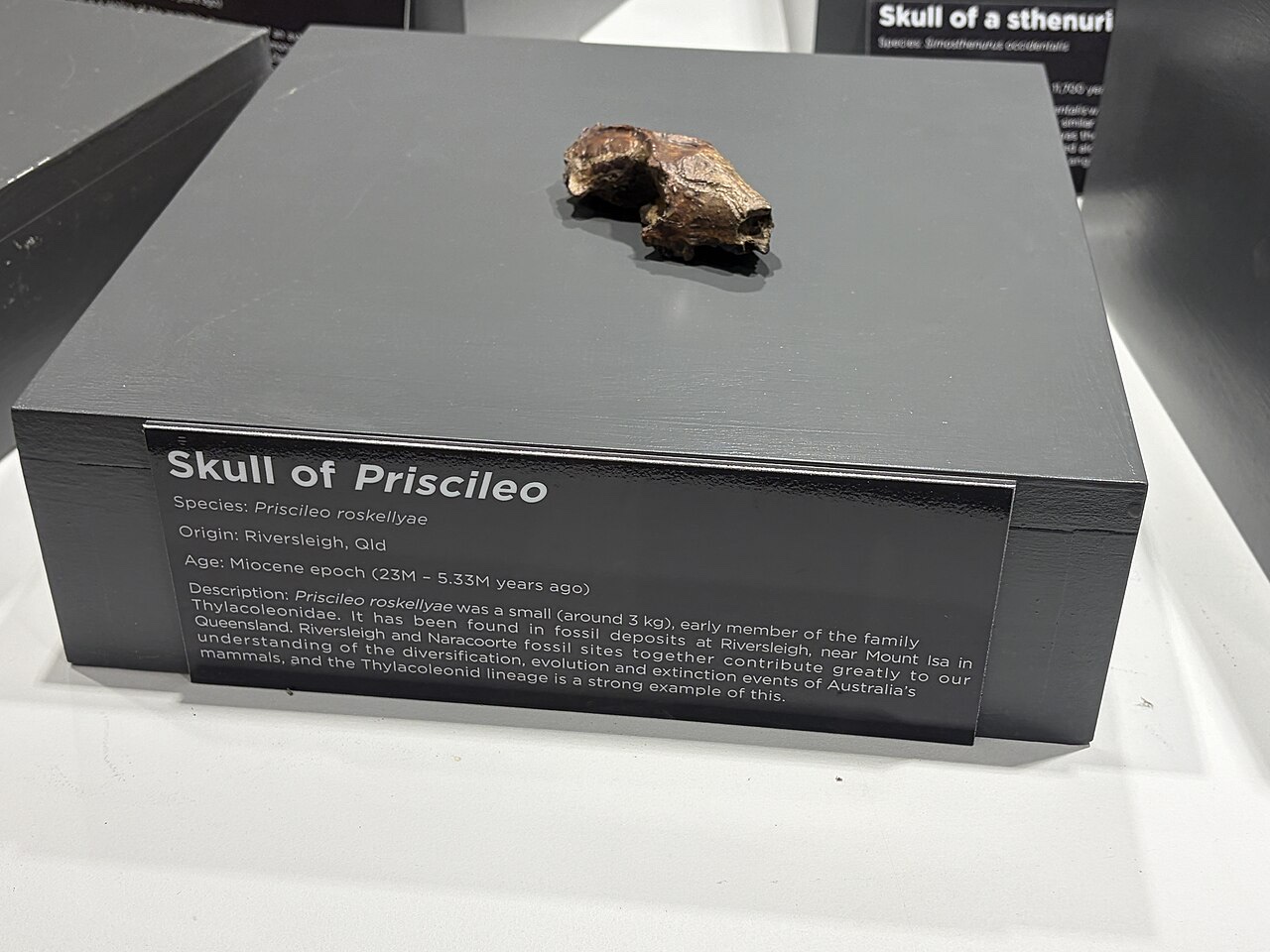
Riversleigh
Riversleigh’s fossil deposits connect wetter Oligocene–Miocene habitats with later faunas, revealing Australian mammals, birds, reptiles and bats.
23 Ma → 2.1 Ma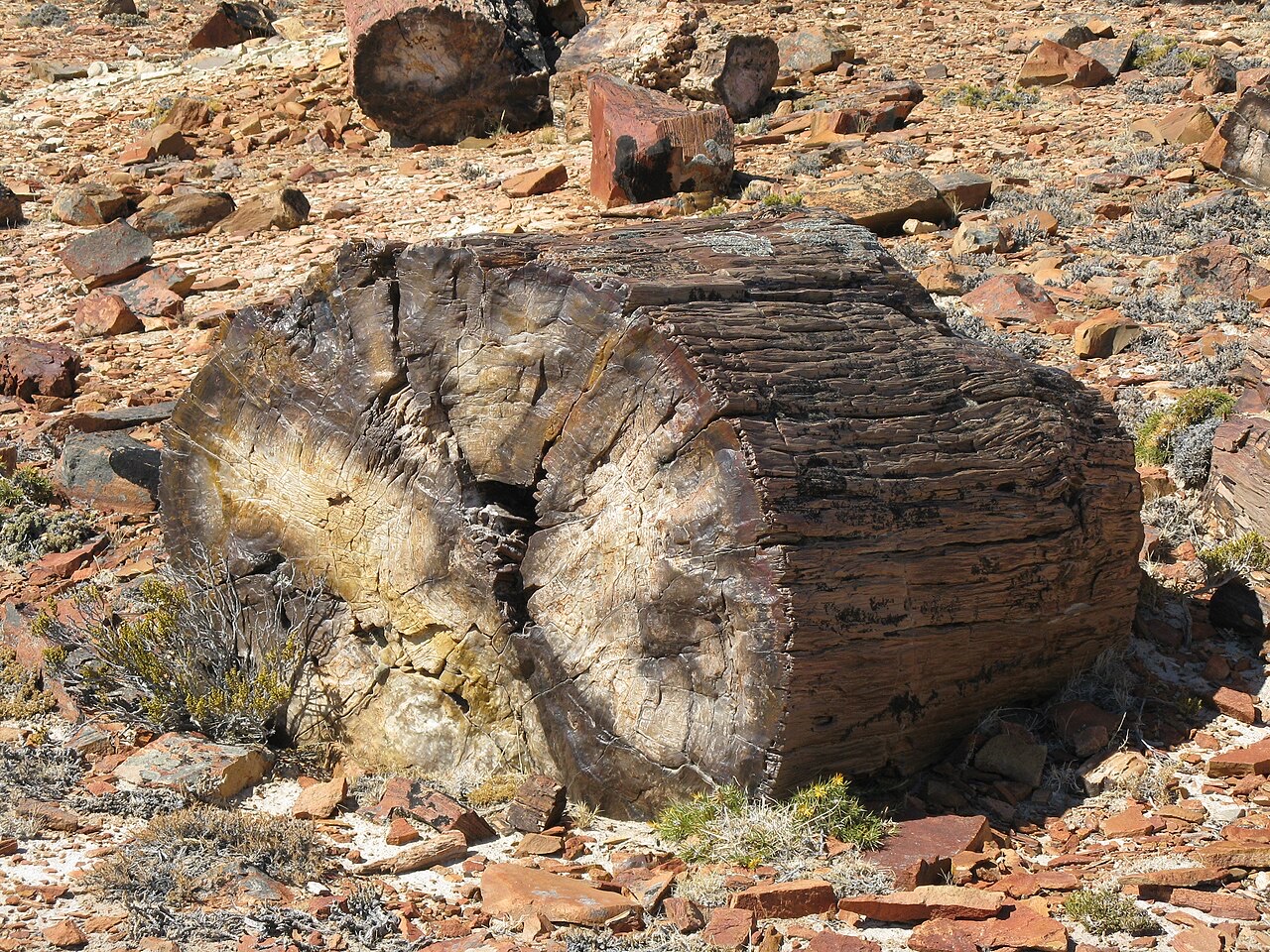 South America
Argentina ↗
Southern Patagonia
Jurassic petrified conifers and Miocene mammals reveal two distinct southern Patagonian ecosystems without treating “forest” as an unchanging habitat.
160 Ma → 17 Ma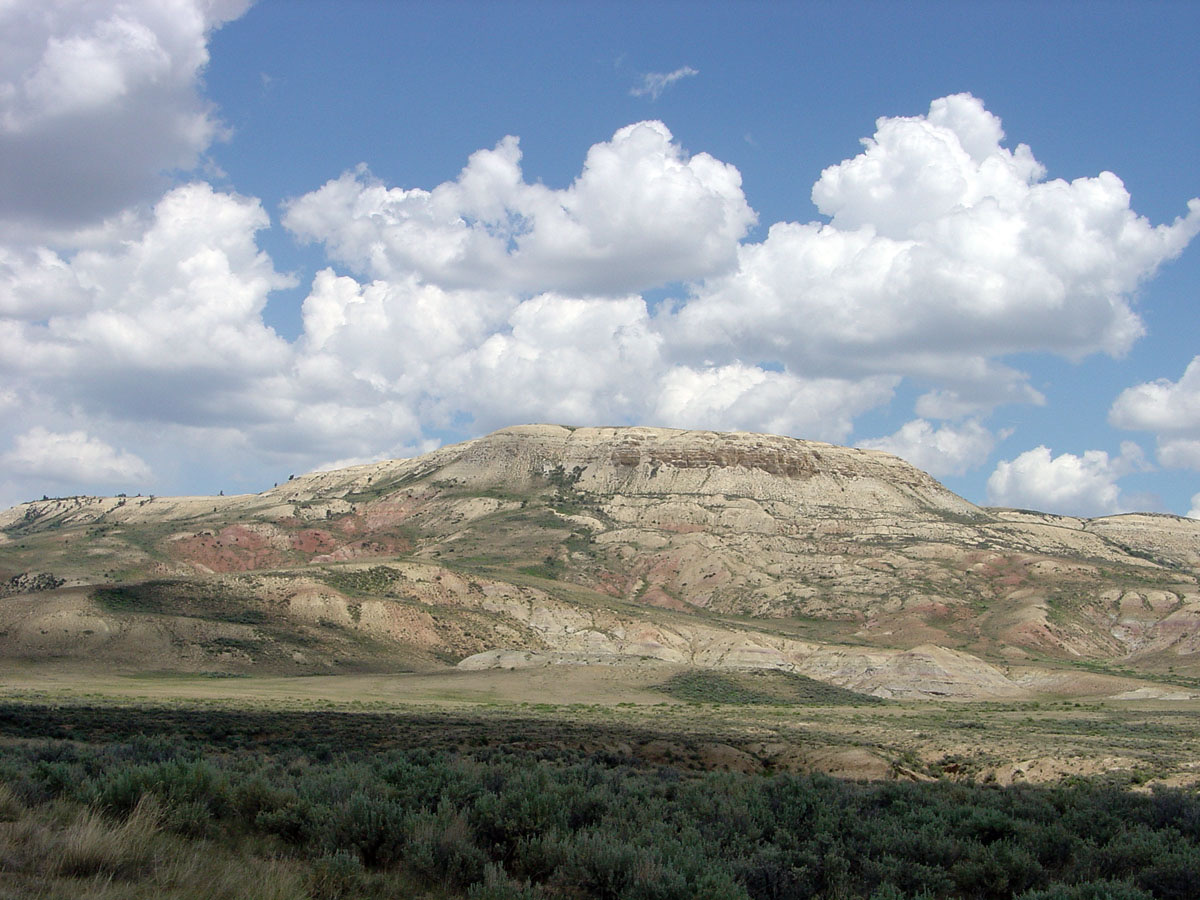 North America
United States ↗
Fossil Lake, Wyoming
The Green River Formation records several Eocene lakes. At Fossil Lake, an expanding lake and its later shrinking, saltier stage left different sediments and different opportunities for preservation.
52 Ma → 51 Ma