
What distinguishes an ancient lake from a basin connected to the sea?
The Crato Formation preserves insects in finely layered limestone from a lake. On one Crato mayfly fossil, delicate gills and bristles remain visible. Researchers compared how similar structures were lost in modern decay experiments. That comparison helps test whether some bodies stayed close to where they lived or broke apart during transport.
The younger Romualdo record has a different emphasis. Fossil-bearing carbonate concretions occur within a sedimentary succession containing evidence for marine influence and transgression into the basin. Fishes, molluscs, sedimentary facies and geochemistry contribute separate tests. A fish by itself is not enough: some fishes tolerate multiple salinities, and bodies can move after death. A coherent environmental reconstruction asks whether biological and sedimentary indicators agree and whether they change upward through the sequence.
This comparison connects a local archive to the opening South Atlantic without drawing a confidently precise marine corridor. The route and extent of flooding remain matters of research, as does detailed numerical correlation within the Aptian–Albian interval. The displayed ages are rounded teaching positions ordered by stratigraphy, not new measured dates. The most reliable picture is a changing basin, with different preservational filters in laminated limestone and concretions. Combining every Araripe fossil into one scene would erase that history.
[1] [2] [3] [4] [5]Time windows and evidence
Older ages are on the left. Bars span the dated intervals. A dot marks a single age.
- Crato’s lake archive 113–121 Ma
- Marine influence in the Romualdo basin 110–116 Ma
- Aquatic insect larvae in the Crato limestone 113–121 Ma
- Vinctifer in controlled Romualdo excavations 110–116 Ma
- Romualdo shell beds and marine facies 110–116 Ma
Researched windowsEvidence records
118 Ma · interval 113–121 Ma
Crato’s lake archive
The older state represents the Aptian Crato lake system. Laminated carbonate sediment preserved aquatic insects and material reaching the basin from surrounding land. The schematic treats water chemistry as variable rather than assuming a perfectly fresh or uniformly hypersaline lake. The broad geological interval is appropriate to a regional overview; individual beds require their own stratigraphic constraints.
[1] [4]Locate this time in the atlas ↗Observed
Aquatic insect remains and laminated limestones occur in the Crato Formation.
Reconstructed
A lake system provided habitats and preservation pathways for diverse organisms.
Uncertain
Salinity, oxygen distribution and the role of microbial films are investigated rather than directly visible.
Evidence windows overlapping this state: 3. Overlap does not establish exact coexistence.
body fossil · The Araripe Basin ↗
Aquatic insect larvae in the Crato limestone
Mayfly and dragonfly fossils from Crato preserve delicate structures whose decay can be investigated experimentally. A recent study compared fossil insects with controlled observations of modern relatives. Retention of structures that usually disarticulate quickly supports limited disturbance in some cases. The reasoning connects preservation to habitat, but does not make the experiment a literal replay of ancient conditions or justify one salinity value for every bed.
body fossil · The Araripe Basin ↗
Vinctifer in controlled Romualdo excavations
Controlled excavation at Parque dos Pterossauros documented fossil fishes within concretions and their positions through the section. Vinctifer was one of the identified genera. Recording apparently ordinary or incomplete specimens is important because a collection of only spectacular fish would distort the sample. The resulting stratigraphic pattern helps distinguish an ecological change from a shift in which concretions preserved identifiable bones.
sediment · The Araripe Basin ↗
Romualdo shell beds and marine facies
Shell-rich beds form part of the Romualdo transgressive-regressive sequence. Together with underlying concretion-bearing shale and other facies, they support an interpretation of marine incursion rather than an isolated lake inferred from fish alone. The evidence comes from how deposits succeed and relate to one another. A shell concentration can also be reworked, so its ecological meaning requires sedimentological examination.
113 Ma · interval 110–116 Ma
Marine influence in the Romualdo basin
The younger window represents marine-influenced Romualdo deposition during an Early Cretaceous transgressive-regressive cycle. Carbonate concretions contain fish remains, and higher shell-rich beds add further marine evidence. The shoreline in the schematic is conceptual and has no coordinate meaning. Numerical age estimates vary among studies; overlap of the broad teaching intervals reflects this uncertainty, while stratigraphy establishes the local order.
[2] [5]Locate this time in the atlas ↗Observed
Marine-influenced facies, fossil-bearing concretions and shell-rich horizons occur in the Romualdo succession.
Reconstructed
The basin developed connections with marine water during regional flooding.
Uncertain
Exact marine-entry routes, shoreline positions and detailed Aptian–Albian correlation remain uncertain.
Evidence windows overlapping this state: 3. Overlap does not establish exact coexistence.
body fossil · The Araripe Basin ↗
Aquatic insect larvae in the Crato limestone
Mayfly and dragonfly fossils from Crato preserve delicate structures whose decay can be investigated experimentally. A recent study compared fossil insects with controlled observations of modern relatives. Retention of structures that usually disarticulate quickly supports limited disturbance in some cases. The reasoning connects preservation to habitat, but does not make the experiment a literal replay of ancient conditions or justify one salinity value for every bed.
body fossil · The Araripe Basin ↗
Vinctifer in controlled Romualdo excavations
Controlled excavation at Parque dos Pterossauros documented fossil fishes within concretions and their positions through the section. Vinctifer was one of the identified genera. Recording apparently ordinary or incomplete specimens is important because a collection of only spectacular fish would distort the sample. The resulting stratigraphic pattern helps distinguish an ecological change from a shift in which concretions preserved identifiable bones.
sediment · The Araripe Basin ↗
Romualdo shell beds and marine facies
Shell-rich beds form part of the Romualdo transgressive-regressive sequence. Together with underlying concretion-bearing shale and other facies, they support an interpretation of marine incursion rather than an isolated lake inferred from fish alone. The evidence comes from how deposits succeed and relate to one another. A shell concentration can also be reworked, so its ecological meaning requires sedimentological examination.
What this story cannot resolve
The apparent overlap of teaching age intervals is deliberate uncertainty, not an assertion that the overlying formation predates the underlying one. No precise ancient corridor is mapped.
Keep these ideas handy
Facies
The observable characteristics of a rock body that help describe and interpret its depositional setting. Explore the idea ↗
Sea level & shorelines
The position of the sea relative to the land, affected by both water-volume changes and movements of the solid Earth. Explore the idea ↗
Taphonomy
Studying what happens between an organism’s life, death, burial, preservation and eventual discovery. Explore the idea ↗
The evidence notebook
body fossil · The Araripe Basin ↗
Aquatic insect larvae in the Crato limestone
Mayfly and dragonfly fossils from Crato preserve delicate structures whose decay can be investigated experimentally. A recent study compared fossil insects with controlled observations of modern relatives. Retention of structures that usually disarticulate quickly supports limited disturbance in some cases. The reasoning connects preservation to habitat, but does not make the experiment a literal replay of ancient conditions or justify one salinity value for every bed.
body fossil · The Araripe Basin ↗
Vinctifer in controlled Romualdo excavations
Controlled excavation at Parque dos Pterossauros documented fossil fishes within concretions and their positions through the section. Vinctifer was one of the identified genera. Recording apparently ordinary or incomplete specimens is important because a collection of only spectacular fish would distort the sample. The resulting stratigraphic pattern helps distinguish an ecological change from a shift in which concretions preserved identifiable bones.
sediment · The Araripe Basin ↗
Romualdo shell beds and marine facies
Shell-rich beds form part of the Romualdo transgressive-regressive sequence. Together with underlying concretion-bearing shale and other facies, they support an interpretation of marine incursion rather than an isolated lake inferred from fish alone. The evidence comes from how deposits succeed and relate to one another. A shell concentration can also be reworked, so its ecological meaning requires sedimentological examination.
Follow the evidence
Sources & credits
- Taphonomy of aquatic insects from the Crato Formation Lagerstätte under an actualistic look ↗
Storari et al.; PLOS ONE · 2025-09-11
Use, credit & modifications
Reference only. No third-party prose, figures, photographs or datasets reproduced; factual interpretation written originally for this atlas.
Credit: Storari et al.; PLOS ONE — Taphonomy of aquatic insects from the Crato Formation Lagerstätte under an actualistic look. Original educational synthesis; geological ages rounded into explicitly labelled teaching intervals. No licensed media incorporated; no territorial reuse permission asserted.
- The transgressive-regressive cycle of the Romualdo Formation ↗
Custódio et al.; Sedimentary Geology / Universidade Estadual Paulista · 2017
Use, credit & modifications
Reference only. No third-party prose, figures, photographs or datasets reproduced; factual interpretation written originally for this atlas.
Credit: Custódio et al.; Sedimentary Geology / Universidade Estadual Paulista — The transgressive-regressive cycle of the Romualdo Formation. Original educational synthesis; geological ages rounded into explicitly labelled teaching intervals. No licensed media incorporated; no territorial reuse permission asserted.
- Controlled excavations in the Romualdo Member of the Santana Formation ↗
Fara et al.; Palaeogeography, Palaeoclimatology, Palaeoecology · 2005
Use, credit & modifications
Reference only. No third-party prose, figures, photographs or datasets reproduced; factual interpretation written originally for this atlas.
Credit: Fara et al.; Palaeogeography, Palaeoclimatology, Palaeoecology — Controlled excavations in the Romualdo Member of the Santana Formation. Original educational synthesis; geological ages rounded into explicitly labelled teaching intervals. No licensed media incorporated; no territorial reuse permission asserted.
- Organic and Isotopic Geochemistry of Evaporites and Shales of the Santana Group ↗
Minerals · 2021
Use, credit & modifications
Reference only. No third-party prose, figures, photographs or datasets reproduced; factual interpretation written originally for this atlas.
Credit: Minerals — Organic and Isotopic Geochemistry of Evaporites and Shales of the Santana Group. Original educational synthesis; geological ages rounded into explicitly labelled teaching intervals. No licensed media incorporated; no territorial reuse permission asserted.
- Fossil-Bearing Concretions of the Araripe Basin Accumulated During Oceanic Anoxic Event 1b ↗
Paleoceanography and Paleoclimatology · 2023
Use, credit & modifications
Reference only. No third-party prose, figures, photographs or datasets reproduced; factual interpretation written originally for this atlas.
Credit: Paleoceanography and Paleoclimatology — Fossil-Bearing Concretions of the Araripe Basin Accumulated During Oceanic Anoxic Event 1b. Original educational synthesis; geological ages rounded into explicitly labelled teaching intervals. No licensed media incorporated; no territorial reuse permission asserted.
Follow the connections
 North America
United States ↗
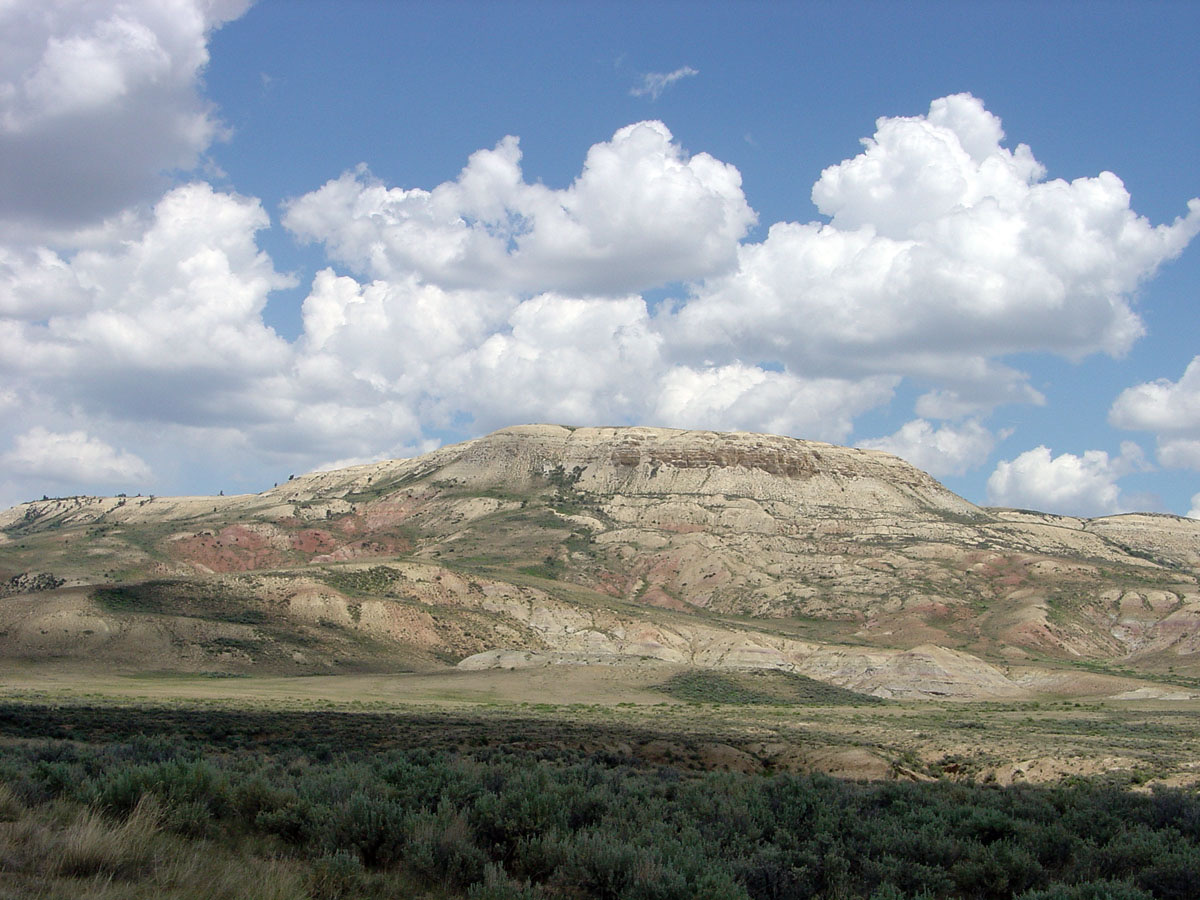
Fossil Lake, Wyoming
The Green River Formation records several Eocene lakes. At Fossil Lake, an expanding lake and its later shrinking, saltier stage left different sediments and different opportunities for preservation.
52 Ma → 51 Ma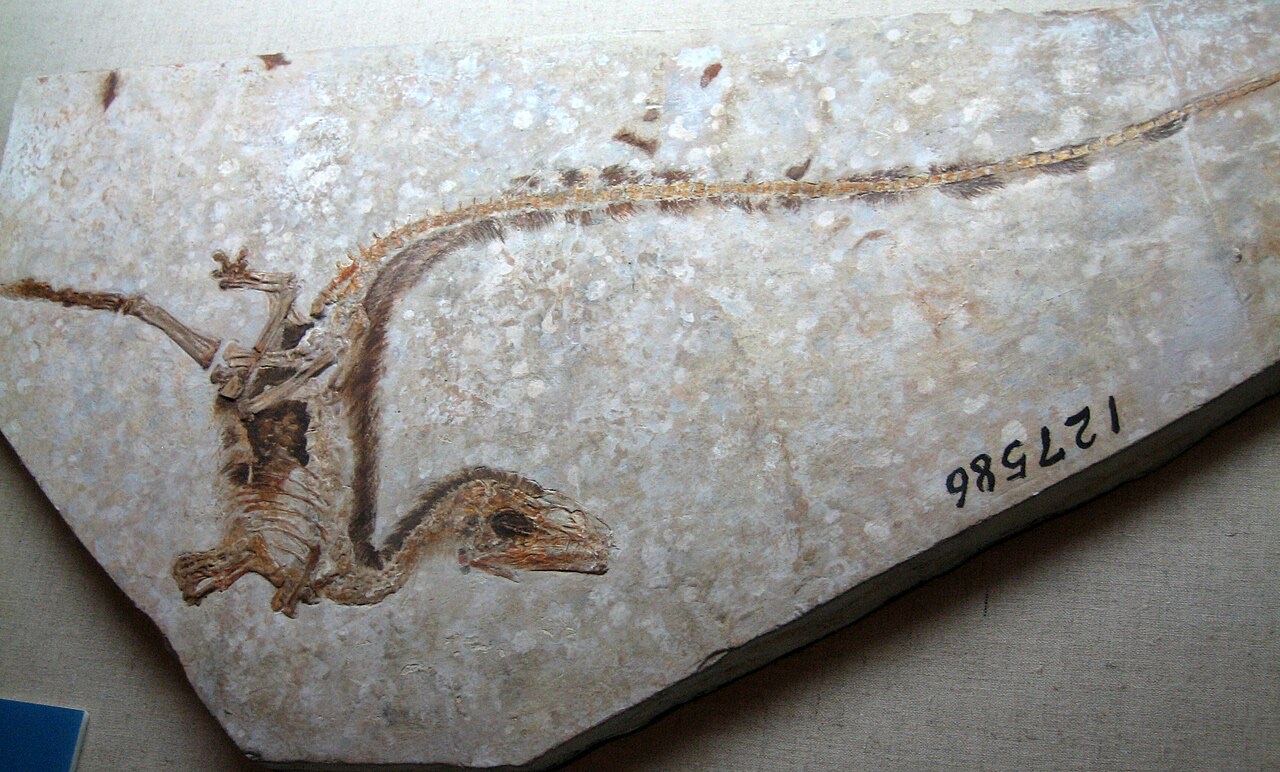 Asia
China ↗
Jehol lake country
The Yixian and Jiufotang formations preserve different Early Cretaceous windows into northeastern China’s lake and terrestrial ecosystems.
125 Ma → 120 Ma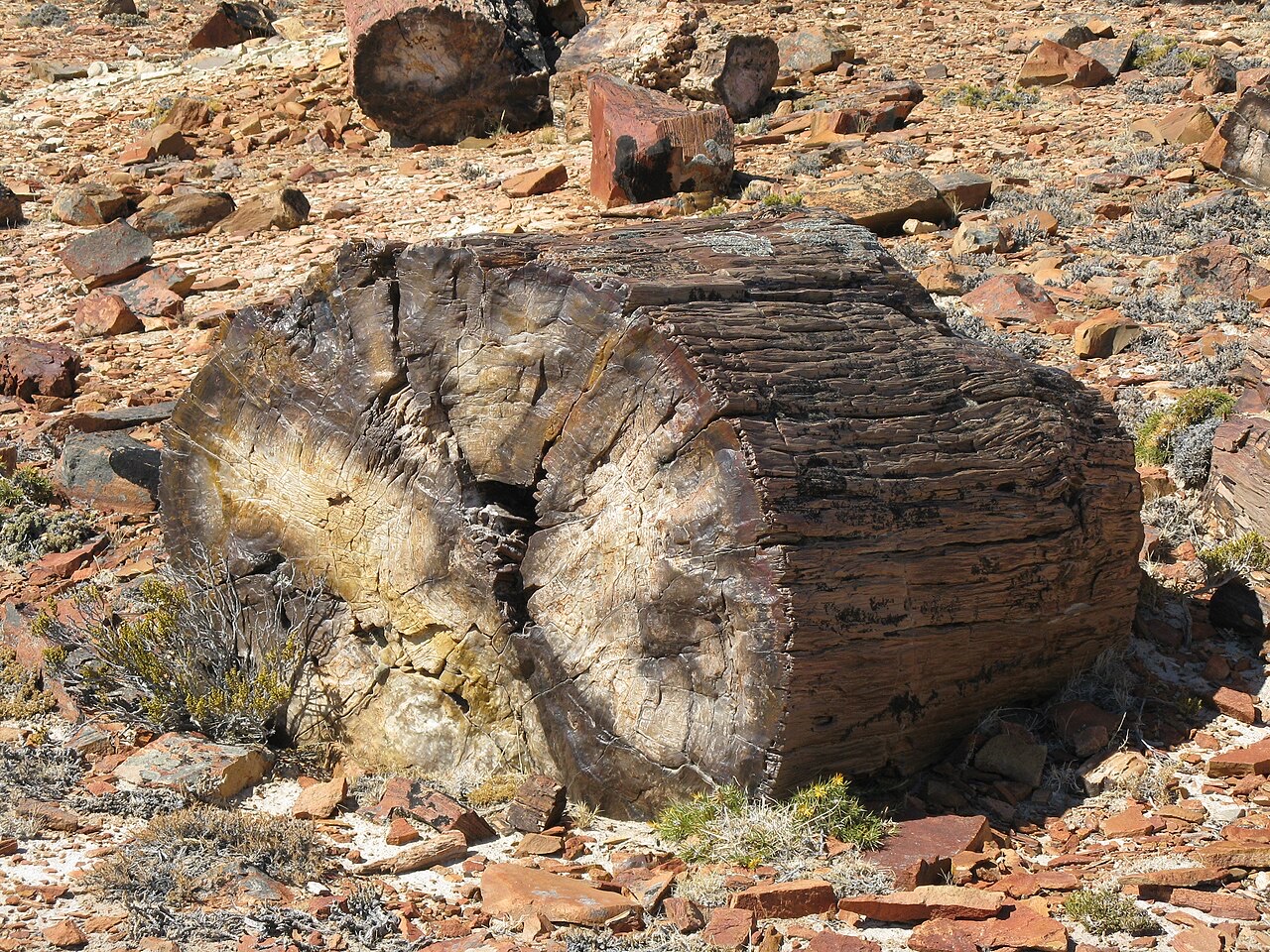 South America
Argentina ↗
Southern Patagonia
Jurassic petrified conifers and Miocene mammals reveal two distinct southern Patagonian ecosystems without treating “forest” as an unchanging habitat.
160 Ma → 17 Ma