
How can today’s dry interior preserve both an Ordovician sea and a Cretaceous river system?
The modern name Morocco groups together rocks with very different histories. This regional journey links Fezouata in the Anti-Atlas with the Kem Kem outcrops farther east. It is not a vertical section through one quarry. The older and younger windows are separated by hundreds of millions of years, and their coordinates must not be blended into an invented ancient locality. Their shared value is that both preserve ecosystems unlike a simple view of today’s dry landscape.
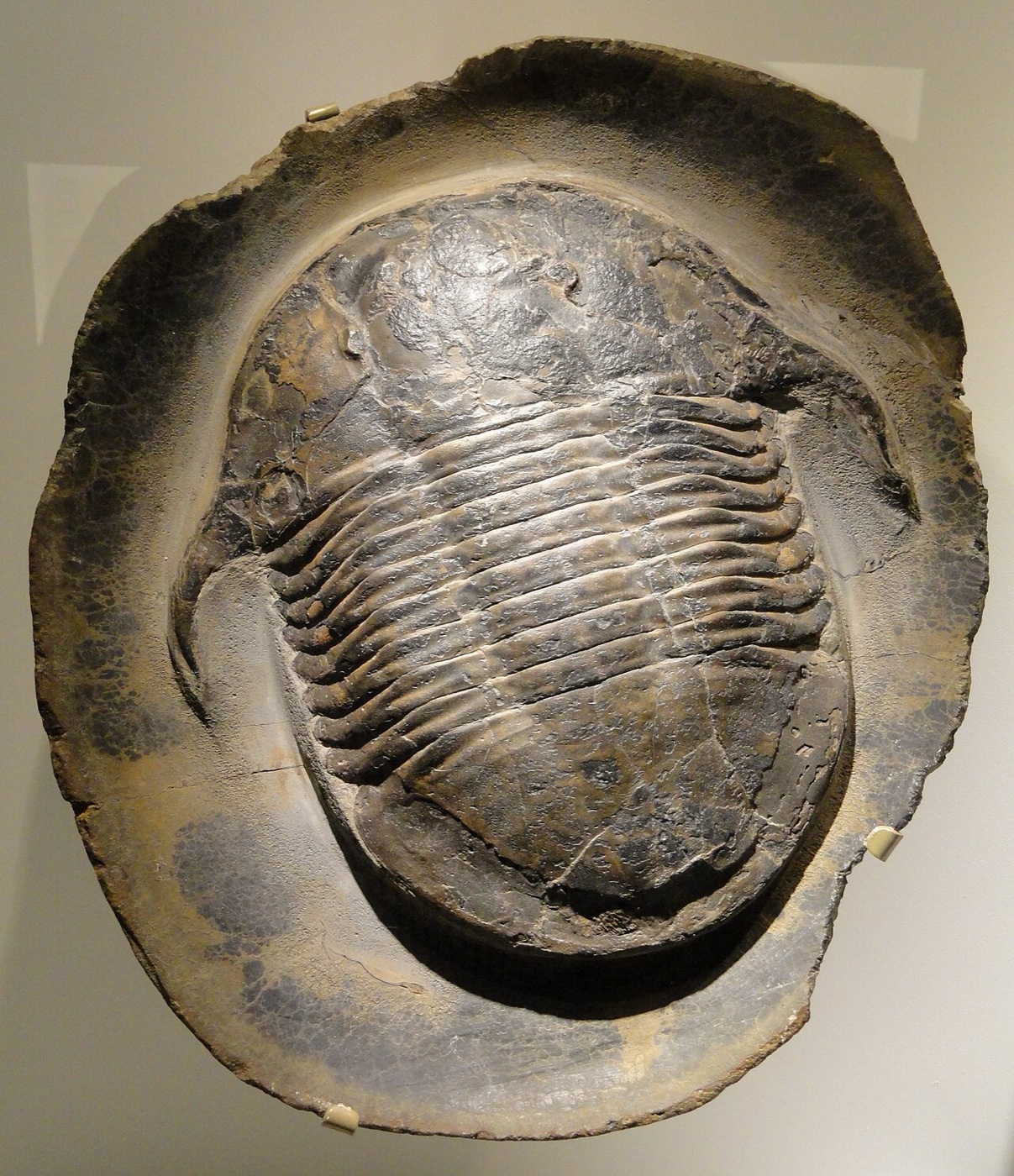
The Early Ordovician Fezouata deposits record a marine world with both familiar shelly fossils and exceptionally preserved organisms. Radiodonts such as Aegirocassis show that animals often associated with Cambrian communities continued into the Ordovician. Their anatomy and occurrence complicate a tidy story in which one period’s entire fauna was replaced at a boundary. Preservation is part of that story: an apparent absence from ordinary shell assemblages can reflect what the rocks failed to retain.
The Cretaceous Kem Kem Group in eastern Morocco preserves river channels and deltas in the Gara Sbaa and Douira formations. Fish and other aquatic organisms are central to the story. Look at the sawfish-like Onchopristis: isolated rostral teeth can establish that the animal was present, but several teeth may come from one animal. Durable remains, transport and collecting outside measured beds all affect counts of the fossils.
The paired scenes ask what remains constant when the setting changes. Sediment, anatomy and geological context are still the means of testing a reconstruction. Fezouata’s aligned trilobites raise a behavioural question; Kem Kem’s water-associated assemblage raises an ecological one. Neither needs an exact invented coastline to be informative. The atlas shows supported environmental relationships while leaving precise geography, population abundance and unresolved age details explicitly open.
[1] [2] [3] [4]Time windows and evidence
Older ages are on the left. Bars span the dated intervals. A dot marks a single age.
- The Fezouata marine ecosystem 470–485 Ma
- Rivers and deltas of the Kem Kem 93.9–100.5 Ma
- Aegirocassis in the Fezouata Biota 477–485 Ma
- Aligned Ampyx priscus trilobites 477–485 Ma
- The Kem Kem aquatic vertebrate assemblage 93.9–100.5 Ma
Researched windowsEvidence records
480 Ma · interval 470–485 Ma
The Fezouata marine ecosystem
The Fezouata Shale preserves an Early Ordovician marine assemblage in what is now the Anti-Atlas. Shelly animals occur alongside exceptional soft-tissue preservation. The scene represents a marine shelf ecosystem rather than a global Ordovician map. Its broad age interval covers the regional formation and preservational windows, while individual studied assemblages can be more tightly constrained. The modern regional marker does not imply this was the ancient position of Morocco.
[1] [2] [3]Locate this time in the atlas ↗Observed
Marine fossils include trilobites and exceptionally preserved radiodont material.
Reconstructed
An open marine ecosystem preserving a mixture of evolutionary lineages and body types.
Uncertain
Detailed water depths, exact coastlines and the contemporaneity of all Fezouata taxa are not established by this overview.
Evidence windows overlapping this state: 2. Overlap does not establish exact coexistence.
body fossil · Southern & eastern Morocco ↗
Aegirocassis in the Fezouata Biota
Aegirocassis material from the Fezouata Biota preserves anatomy relevant to suspension feeding in a large radiodont. Fine structures of the frontal appendages provide the basis for interpreting how food may have been collected from water. Its occurrence also extends the ecological discussion beyond the Cambrian. The evidence is anatomical and stratigraphic; the precise rate of filtering, swimming behaviour and number of animals in the sea cannot be read directly from the fossils.
body fossil · Southern & eastern Morocco ↗
Aligned Ampyx priscus trilobites
Fezouata specimens preserve linear groups of Ampyx priscus oriented in the same direction. Researchers interpret the arrangement as evidence of collective behaviour, assessing it against alternatives involving water movement or postmortem sorting. The distinction is useful: orientation in the rock is directly observed, while the reason for that orientation is an explanation. The fossils cannot reveal the full sequence of actions, the animals’ intentions or a single certain reason for grouping.
99 Ma · interval 93.9–100.5 Ma
Rivers and deltas of the Kem Kem
The Kem Kem Group records Cretaceous river and delta environments in eastern Morocco. Its fish and other aquatic vertebrates are central to the ecosystem, rather than background for large dinosaurs. The illustration shows a river network conceptually, without tracing actual channels. The 99 Ma teaching date is representative; the age and duration of particular units and assemblages remain more nuanced than a single timestamp suggests.
[4]Locate this time in the atlas ↗Observed
Sandstones, conglomerates, mudstones and diverse vertebrate remains occur in the Kem Kem Group.
Reconstructed
A sedimentary system influenced by rivers, deltas and changing marine proximity.
Uncertain
Specimen provenance, time averaging and debated unit ages limit precise ecological reconstruction.
Evidence windows overlapping this state: 1. Overlap does not establish exact coexistence.
What this story cannot resolve
This is explicitly a comparison of two districts within a modern country. The marker is a regional locator, not an occurrence coordinate. Broad intervals are teaching envelopes and do not imply every named taxon spans them.
Keep these ideas handy
Biogeography
Studying how organisms are distributed through space and time and how those patterns developed. Explore the idea ↗
Sampling bias
Differences between the history of life and the subset preserved, exposed, collected, identified and published. Explore the idea ↗
Continental drift
The changing relative positions of continents through time, explained by plate tectonics. Explore the idea ↗
The evidence notebook
body fossil · Southern & eastern Morocco ↗
Aegirocassis in the Fezouata Biota
Aegirocassis material from the Fezouata Biota preserves anatomy relevant to suspension feeding in a large radiodont. Fine structures of the frontal appendages provide the basis for interpreting how food may have been collected from water. Its occurrence also extends the ecological discussion beyond the Cambrian. The evidence is anatomical and stratigraphic; the precise rate of filtering, swimming behaviour and number of animals in the sea cannot be read directly from the fossils.
body fossil · Southern & eastern Morocco ↗
Aligned Ampyx priscus trilobites
Fezouata specimens preserve linear groups of Ampyx priscus oriented in the same direction. Researchers interpret the arrangement as evidence of collective behaviour, assessing it against alternatives involving water movement or postmortem sorting. The distinction is useful: orientation in the rock is directly observed, while the reason for that orientation is an explanation. The fossils cannot reveal the full sequence of actions, the animals’ intentions or a single certain reason for grouping.
locality · Southern & eastern Morocco ↗
The Kem Kem aquatic vertebrate assemblage
The Kem Kem Group includes the Gara Sbaa and Douira formations, which preserve river and delta deposits. Fossils include sawfish-like Onchopristis and other fish alongside terrestrial vertebrates. Isolated sawfish-like rostral teeth are easy to recognize, but a count of durable teeth would give a poor measure of the living fish community. The fossil material and the sediment together show how strongly water shaped the environments in which the remains accumulated.
Follow the evidence
Sources & credits
- The Fezouata Shale (Lower Ordovician, Anti-Atlas, Morocco): A historical review ↗
Lefebvre and colleagues / Palaeogeography, Palaeoclimatology, Palaeoecology · 2016
Use, credit & modifications
Reference only. No source text, photographs, figures or datasets reproduced. Original factual synthesis; no reuse licence asserted.
Credit: Lefebvre and colleagues / Palaeogeography, Palaeoclimatology, Palaeoecology — The Fezouata Shale (Lower Ordovician, Anti-Atlas, Morocco): A historical review. Facts paraphrased into original educational text; ages rounded to declared teaching intervals. No asset reuse requested; territorial permissions not applicable.
- Radiodont frontal appendages from the Fezouata Biota reveal high diversity and ecological adaptations to suspension-feeding ↗
Frontiers in Ecology and Evolution · 2023
Use, credit & modifications
Reference only. No source text, photographs, figures or datasets reproduced. Original factual synthesis; no reuse licence asserted.
Credit: Frontiers in Ecology and Evolution — Radiodont frontal appendages from the Fezouata Biota reveal high diversity and ecological adaptations to suspension-feeding. Facts paraphrased into original educational text; ages rounded to declared teaching intervals. No asset reuse requested; territorial permissions not applicable.
- Collective behaviour in 480-million-year-old trilobite arthropods from Morocco ↗
Vannier and colleagues / Scientific Reports · 2019-10-17
Use, credit & modifications
Reference only. No source text, photographs, figures or datasets reproduced. Original factual synthesis; no reuse licence asserted.
Credit: Vannier and colleagues / Scientific Reports — Collective behaviour in 480-million-year-old trilobite arthropods from Morocco. Facts paraphrased into original educational text; ages rounded to declared teaching intervals. No asset reuse requested; territorial permissions not applicable.
- Geology and paleontology of the Upper Cretaceous Kem Kem Group of eastern Morocco ↗
Ibrahim and colleagues / ZooKeys · 2020-04-21
Use, credit & modifications
Reference only. No source text, photographs, figures or datasets reproduced. Original factual synthesis; no reuse licence asserted.
Credit: Ibrahim and colleagues / ZooKeys — Geology and paleontology of the Upper Cretaceous Kem Kem Group of eastern Morocco. Facts paraphrased into original educational text; ages rounded to declared teaching intervals. No asset reuse requested; territorial permissions not applicable.
Follow the connections
 North America
Canada ↗
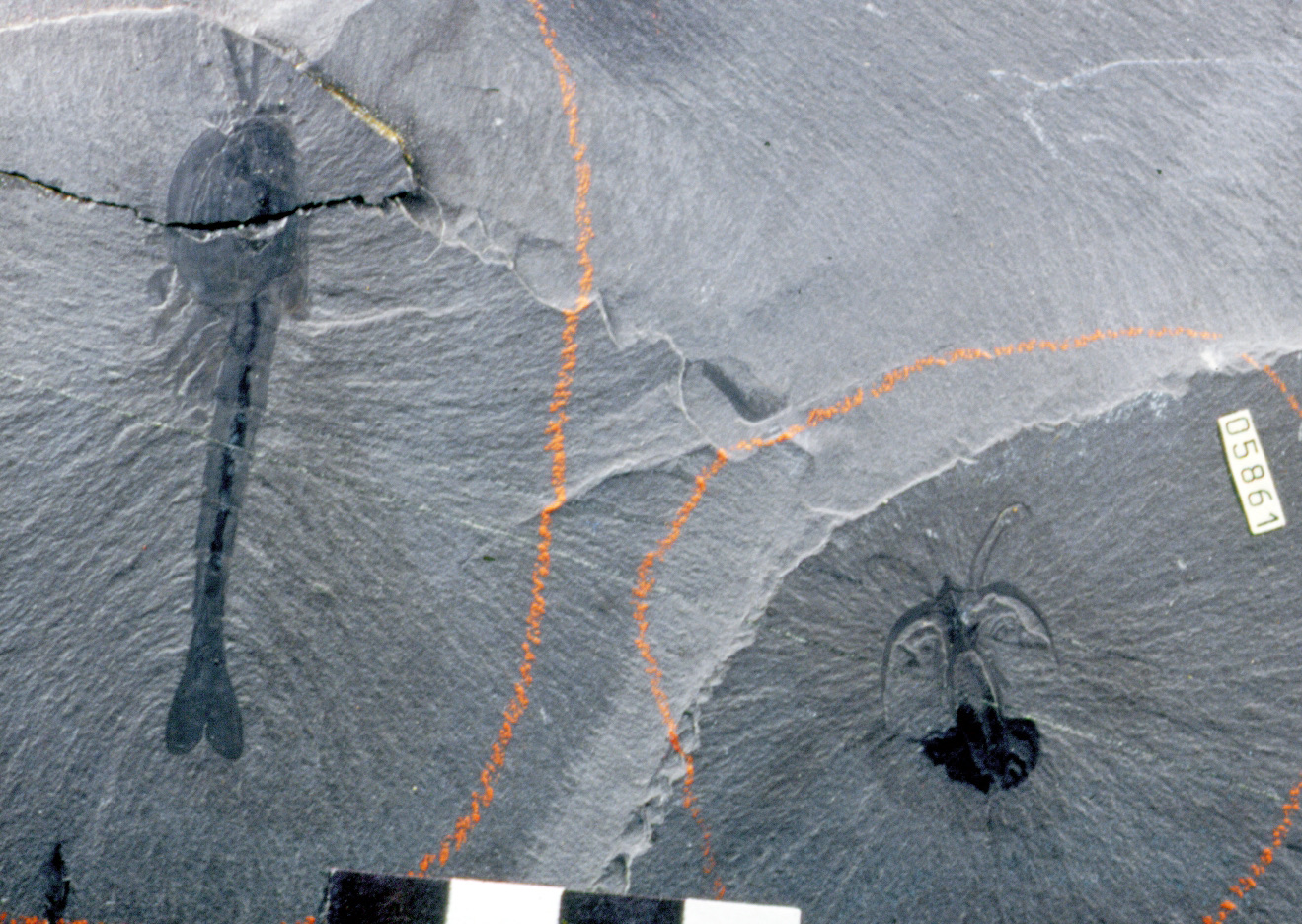
Burgess Shale
Cambrian mud preserved animals that most fossil sites lose. Today those thin traces are exposed high in the Canadian Rockies, connecting the history of life with the later history of a mountain belt.
508 Ma → Today South America
Brazil ↗
The Araripe Basin
The Crato and Romualdo formations preserve contrasting Early Cretaceous depositional settings during the reorganization of northeastern Brazil.
118 Ma → 113 Ma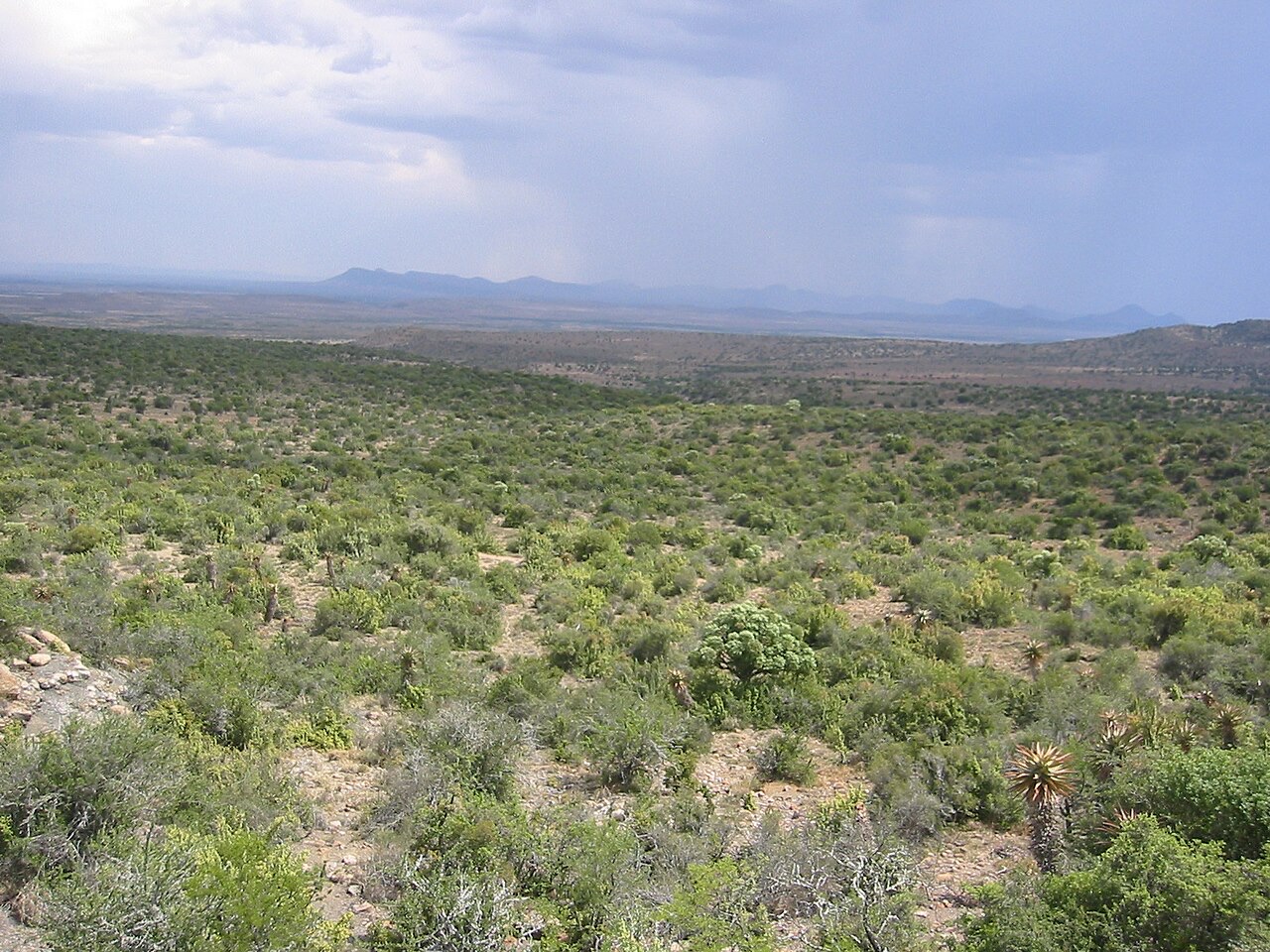 Africa
South Africa ↗
Karoo Basin
Late Permian and Early Triassic terrestrial fossils record profound ecosystem turnover. The Karoo also shows why a fossil assemblage boundary cannot automatically be equated with a precisely dated global extinction.
253 Ma → 251 Ma