
What changes when a familiar fossil boundary turns out to have the wrong date?
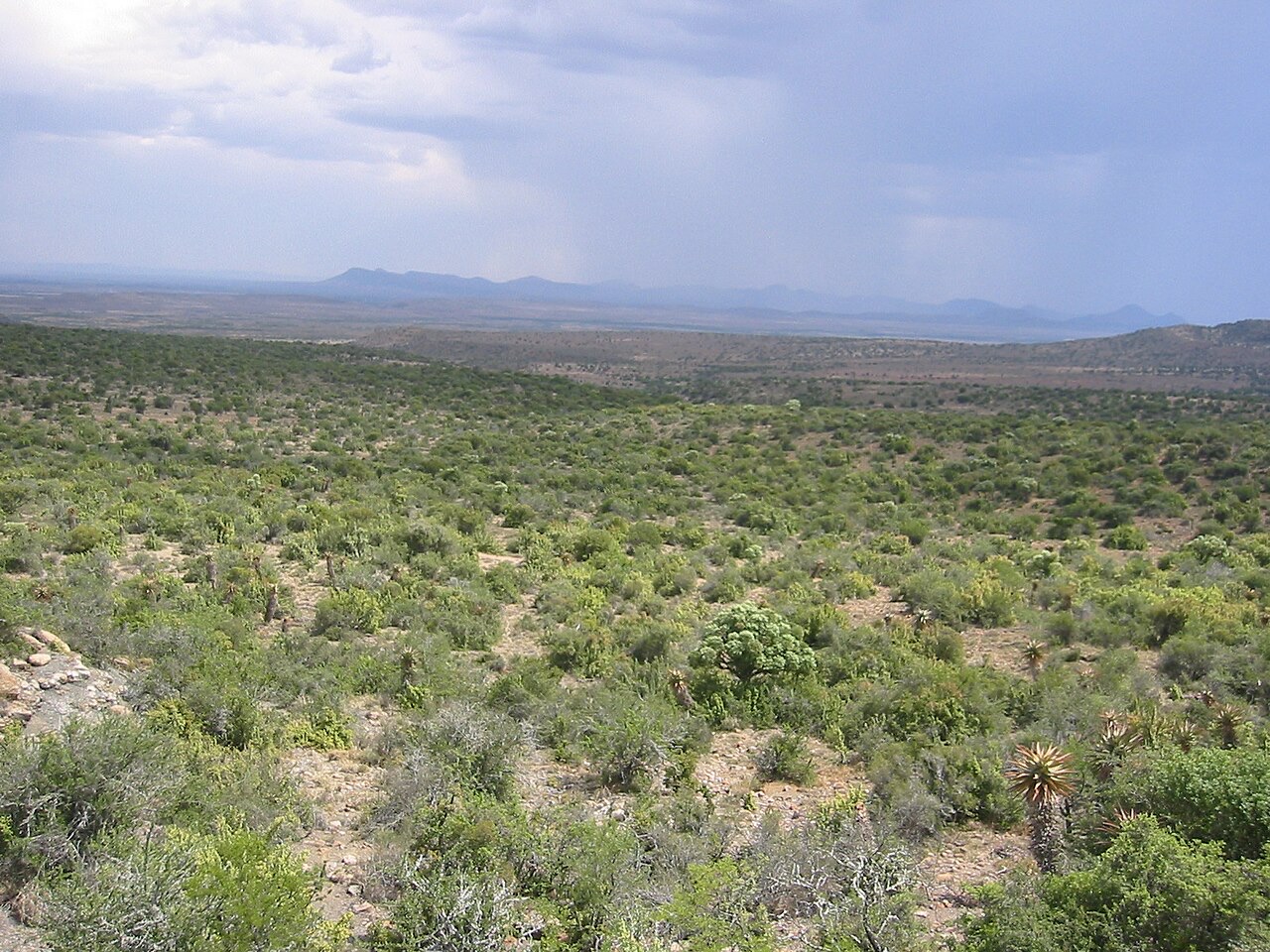
The Karoo Basin preserves a long terrestrial record in sandstone and mudstone, including diverse therapsids and other vertebrates. These fossils are vital to understanding life before and after the end-Permian crisis. They also provide a cautionary lesson in geological correlation. A change in the animals found in successive beds is a real observation, but its timing relative to an extinction documented in marine rocks elsewhere must be established independently.
The transition between the Daptocephalus and Lystrosaurus assemblage zones has often been used as a marker in this discussion. Assemblage zones are named for characteristic fossil associations; they are not automatically precise worldwide time planes. A published radiometric age from ash in the lower Lystrosaurus zone is older than the marine Permian–Triassic boundary. That finding challenges a simple one-to-one alignment without removing the evidence that terrestrial communities changed profoundly.
Another research team compared fossil occurrences across roughly four million years of Karoo deposits. They found elevated regional extinction spread across about one million years. That analysis tracks how the number and identity of vertebrate taxa change through sampled layers. It answers a different question from the zircon date of one ash bed. Both lines of evidence help separate the extent of ecological turnover from the timing of one rock horizon.
The atlas therefore compares a late Permian river-and-floodplain ecosystem with an Early Triassic one while keeping the boundary’s local placement uncertain. The evidence panel separates fossil turnover, radiometric dating and environmental interpretation. Volcanism and climate change are part of the broader explanation for the end-Permian crisis, but a Karoo fossil alone does not prove a particular causal chain. This region is a place to practice asking both what changed and how securely its timing is known.
[1] [2]Time windows and evidence
Older ages are on the left. Bars span the dated intervals. A dot marks a single age.
- Late Permian terrestrial communities 252–255 Ma
- Early Triassic survivors and reorganization 247.2–251.9 Ma
- Daptocephalus–Lystrosaurus assemblage turnover 250–254 Ma
- Lystrosaurus across the crisis interval 247.2–253 Ma
- A dated ash in the lower Lystrosaurus zone 252.13–252.35 Ma
Researched windowsEvidence records
253 Ma · interval 252–255 Ma
Late Permian terrestrial communities
Late Permian Karoo sediments record rivers and floodplains inhabited by diverse terrestrial vertebrates, including therapsids. This scene represents a regional depositional system rather than a single contemporaneous herd. Fossil associations provide relative ordering, and ash dates supply numerical constraints in some sections. The illustration does not show an exact extinction horizon because the relationship between local fossil zones and the globally defined boundary remains a subject of research.
[2] [1]Locate this time in the atlas ↗Observed
Vertebrate fossils occur within late Permian sandstone-and-mudstone successions.
Reconstructed
A varied terrestrial ecosystem supported by a changing fluvial landscape.
Uncertain
Local depositional conditions, sampling and age calibration affect the apparent pace of turnover.
Evidence windows overlapping this state: 3. Overlap does not establish exact coexistence.
locality · Karoo Basin ↗
Daptocephalus–Lystrosaurus assemblage turnover
The Karoo vertebrate succession changes across intervals traditionally organized into Daptocephalus and Lystrosaurus assemblage zones. This is a regional occurrence-based record, not a single fossil proving a global extinction date. Analysis of range data can test whether turnover was concentrated or spread over time, but results depend on sampling and chronology. The named zones are useful tools for comparison while remaining distinct from the formal Permian–Triassic time boundary.
body fossil · Karoo Basin ↗
Lystrosaurus across the crisis interval
Lystrosaurus fossils are central to the Karoo transition, but the genus should not be used as a simple on-off label for the Triassic. Occurrence data and revised age constraints show that parts of the Lystrosaurus assemblage-zone record extend into the latest Permian. Its later prominence is therefore a question about survival, ecological restructuring and preservation, not the sudden creation of an entirely new animal at a boundary.
radiometric · Karoo Basin ↗
A dated ash in the lower Lystrosaurus zone
Gastaldo and colleagues reported a zircon U–Pb age of 252.24 ± 0.11 Ma, at two standard deviations, from an ash deposit in the Karoo Lystrosaurus assemblage zone. This provides a numerical constraint independent of assuming that the fossil-zone boundary equals the marine extinction. The interval shown here is that reported uncertainty envelope. It dates the sampled ash and its geological context, not every fossil in the basin or the entire extinction event.
251 Ma · interval 247.2–251.9 Ma
Early Triassic survivors and reorganization
Early Triassic Karoo deposits contain a reorganized terrestrial community in which Lystrosaurus is a prominent fossil. The continued river setting should not be mistaken for ecological continuity: the identities and relative representation of organisms changed. The scene begins younger than the globally dated Permian–Triassic boundary, but does not equate the base of a local Lystrosaurus assemblage zone with that boundary. Recovery and survivorship are regional interpretations built from many occurrences.
[2] [1]Locate this time in the atlas ↗Observed
Early Triassic assemblages differ from late Permian ones and include abundant Lystrosaurus records.
Reconstructed
Ecological reorganization followed a severe interval of terrestrial turnover.
Uncertain
Fossil abundance is influenced by preservation and collection, while the timing and duration of extinction differ among analyses.
Evidence windows overlapping this state: 2. Overlap does not establish exact coexistence.
locality · Karoo Basin ↗
Daptocephalus–Lystrosaurus assemblage turnover
The Karoo vertebrate succession changes across intervals traditionally organized into Daptocephalus and Lystrosaurus assemblage zones. This is a regional occurrence-based record, not a single fossil proving a global extinction date. Analysis of range data can test whether turnover was concentrated or spread over time, but results depend on sampling and chronology. The named zones are useful tools for comparison while remaining distinct from the formal Permian–Triassic time boundary.
body fossil · Karoo Basin ↗
Lystrosaurus across the crisis interval
Lystrosaurus fossils are central to the Karoo transition, but the genus should not be used as a simple on-off label for the Triassic. Occurrence data and revised age constraints show that parts of the Lystrosaurus assemblage-zone record extend into the latest Permian. Its later prominence is therefore a question about survival, ecological restructuring and preservation, not the sudden creation of an entirely new animal at a boundary.
What this story cannot resolve
The fossil-zone boundary is a change in the local vertebrate record. The ash bed places part of the lower Lystrosaurus zone before the marine extinction. The pace of turnover depends on the correlation of sections and which fossils they preserve.
Keep these ideas handy
Radiometric dating
Estimating the time of a geological event from radioactive decay and the isotopic composition of a suitable material. Explore the idea ↗
Mass extinction
A geologically concentrated increase in extinction affecting many groups and regions, recognizable in the fossil record. Explore the idea ↗
Uncertainty & reconstruction limits
Explicit limits on what evidence and models allow us to infer, including uncertainty in age, identity, place and process. Explore the idea ↗
The evidence notebook
locality · Karoo Basin ↗
Daptocephalus–Lystrosaurus assemblage turnover
The Karoo vertebrate succession changes across intervals traditionally organized into Daptocephalus and Lystrosaurus assemblage zones. This is a regional occurrence-based record, not a single fossil proving a global extinction date. Analysis of range data can test whether turnover was concentrated or spread over time, but results depend on sampling and chronology. The named zones are useful tools for comparison while remaining distinct from the formal Permian–Triassic time boundary.
body fossil · Karoo Basin ↗
Lystrosaurus across the crisis interval
Lystrosaurus fossils are central to the Karoo transition, but the genus should not be used as a simple on-off label for the Triassic. Occurrence data and revised age constraints show that parts of the Lystrosaurus assemblage-zone record extend into the latest Permian. Its later prominence is therefore a question about survival, ecological restructuring and preservation, not the sudden creation of an entirely new animal at a boundary.
radiometric · Karoo Basin ↗
A dated ash in the lower Lystrosaurus zone
Gastaldo and colleagues reported a zircon U–Pb age of 252.24 ± 0.11 Ma, at two standard deviations, from an ash deposit in the Karoo Lystrosaurus assemblage zone. This provides a numerical constraint independent of assuming that the fossil-zone boundary equals the marine extinction. The interval shown here is that reported uncertainty envelope. It dates the sampled ash and its geological context, not every fossil in the basin or the entire extinction event.
Follow the evidence
Sources & credits
- The base of the Lystrosaurus Assemblage Zone, Karoo Basin, predates the end-Permian marine extinction ↗
Gastaldo and colleagues / Nature Communications · 2020-03-18
Use, credit & modifications
Reference only. No source text, photographs, figures or datasets reproduced. Original factual synthesis; no reuse licence asserted.
Credit: Gastaldo and colleagues / Nature Communications — The base of the Lystrosaurus Assemblage Zone, Karoo Basin, predates the end-Permian marine extinction. Facts paraphrased into original educational text; ages rounded to declared teaching intervals. No asset reuse requested; territorial permissions not applicable.
- Evidence from South Africa for a protracted end-Permian extinction on land ↗
Viglietti and colleagues / Proceedings of the National Academy of Sciences · 2021
Use, credit & modifications
Reference only. No source text, photographs, figures or datasets reproduced. Original factual synthesis; no reuse licence asserted.
Credit: Viglietti and colleagues / Proceedings of the National Academy of Sciences — Evidence from South Africa for a protracted end-Permian extinction on land. Facts paraphrased into original educational text; ages rounded to declared teaching intervals. No asset reuse requested; territorial permissions not applicable.
Follow the connections
 North America
United States ↗
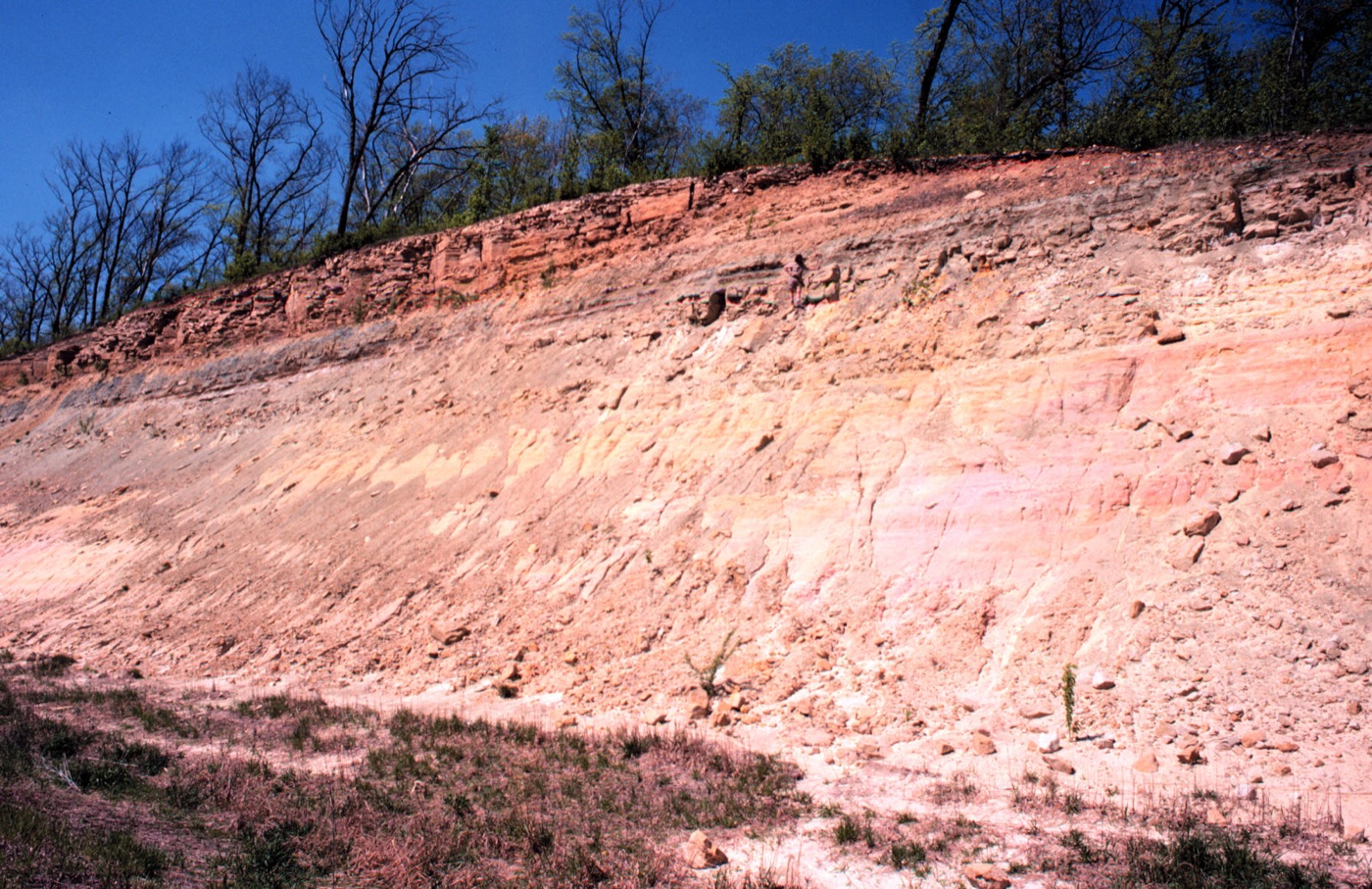
Hell Creek & the Williston Basin
Floodplain fossils on either side of the end-Cretaceous boundary reveal major biological turnover. Pollen and leaves help place the change in time, alongside the more conspicuous dinosaur bones.
67 Ma → 65.5 Ma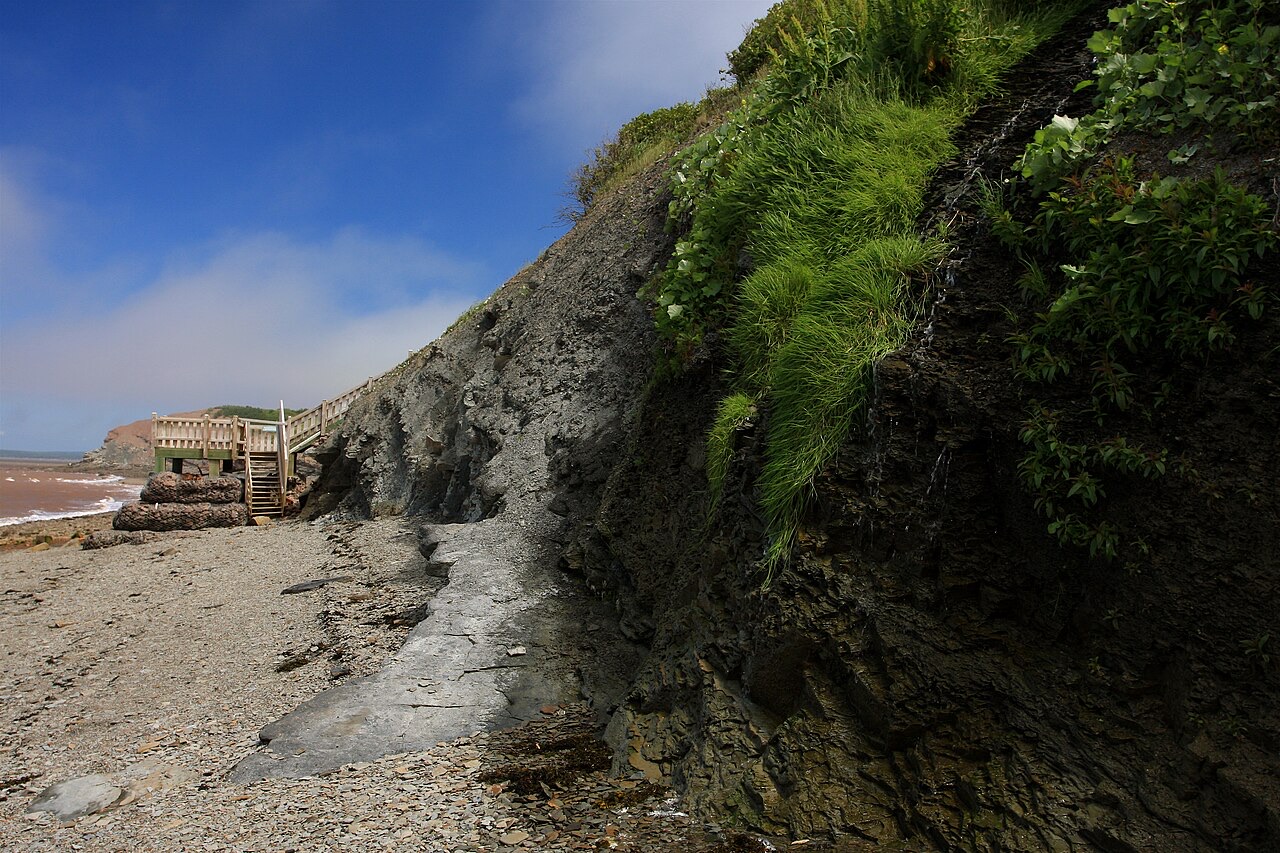 North America
Canada ↗
Joggins Fossil Cliffs
Carboniferous coastal forests, rivers and wetland communities survive in the rocks of a modern tidal cliff. Upright trees preserve the spatial context of an ecosystem as well as its organisms.
315 Ma → Today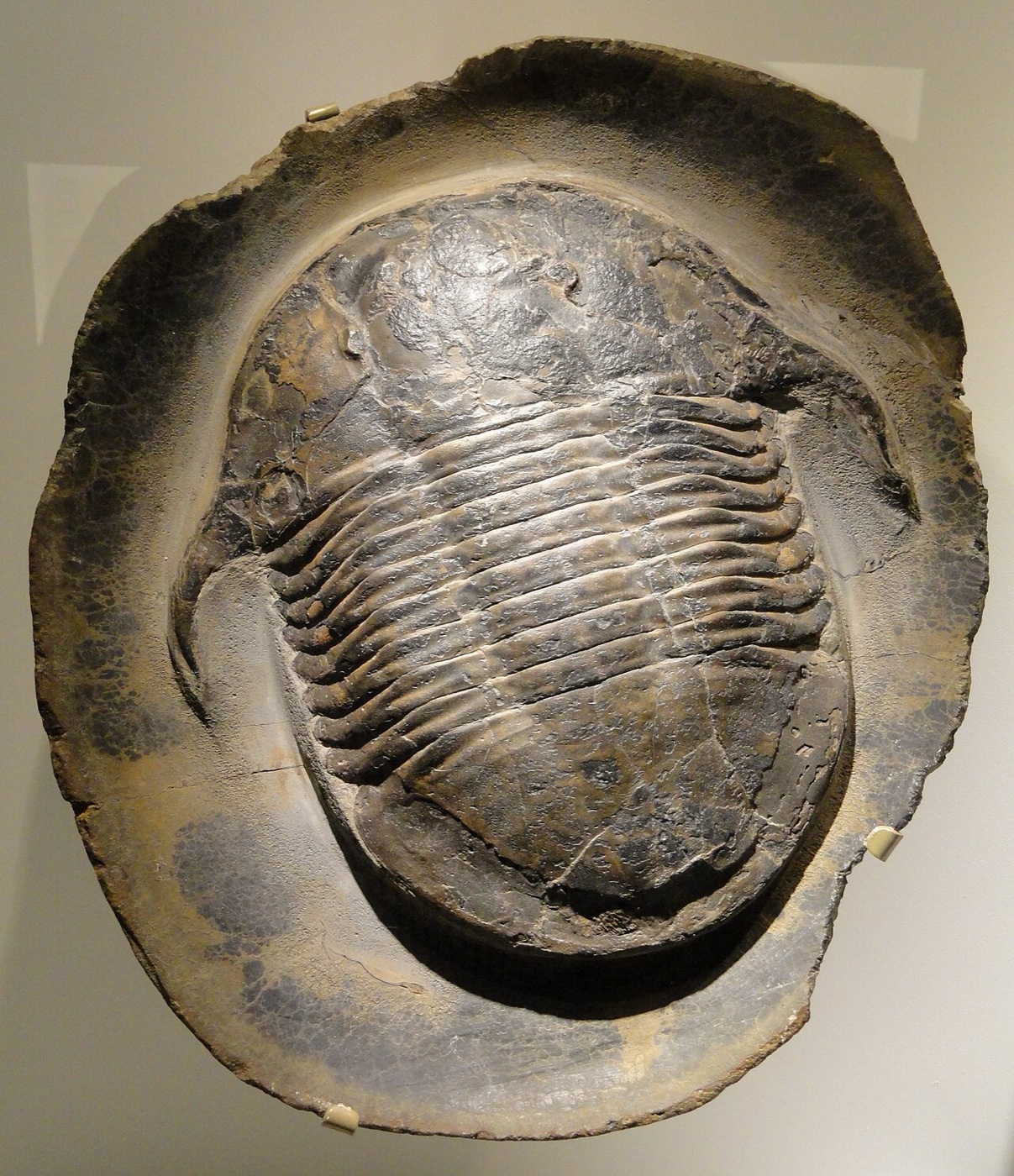 Africa
Morocco ↗
Southern & eastern Morocco
Fezouata’s marine animals and the Kem Kem region’s river deposits reveal widely separated episodes in northern African history. Their contrast is powerful precisely because the localities and times are kept distinct.
480 Ma → 99 Ma