
What can an upright fossil tree tell us that a loose piece of wood cannot?
At Joggins, the relationship between fossils and their surrounding rock is part of the discovery. An upright tree rooted in a former soil records where a plant grew. A log lying in a channel may have travelled. The Carboniferous succession preserves repeated changes among forested wetlands, floodplains and coastal waters, allowing those alternatives to be tested rather than guessed from a single fossil shape. The modern cliff cuts across a succession of environments, not one forest frozen all at once.
Some hollow tree trunks contained the remains of small terrestrial animals. Hylonomus lyelli is a particularly important early reptile, while Dendrerpeton represents another branch of early land vertebrate diversity. Finding animals inside a trunk does not directly reveal why they entered it. A hollow stump might have acted as a trap, shelter or a place where transported remains accumulated. The fossils document the association; the behaviour is a question investigated using anatomy, sediment and the arrangement of the remains.
The plant community also differs from an ordinary modern woodland. Large lycopsids and other Carboniferous plants formed habitats whose durable tissues and burial history strongly shaped the record. Coal layers and rooted horizons connect the biological remains with wet conditions and sediment accumulation. At other levels, aquatic fossils and different sediments show that the coastline and drainage system changed. This repeated alternation is more informative than describing the entire interval simply as a swamp.
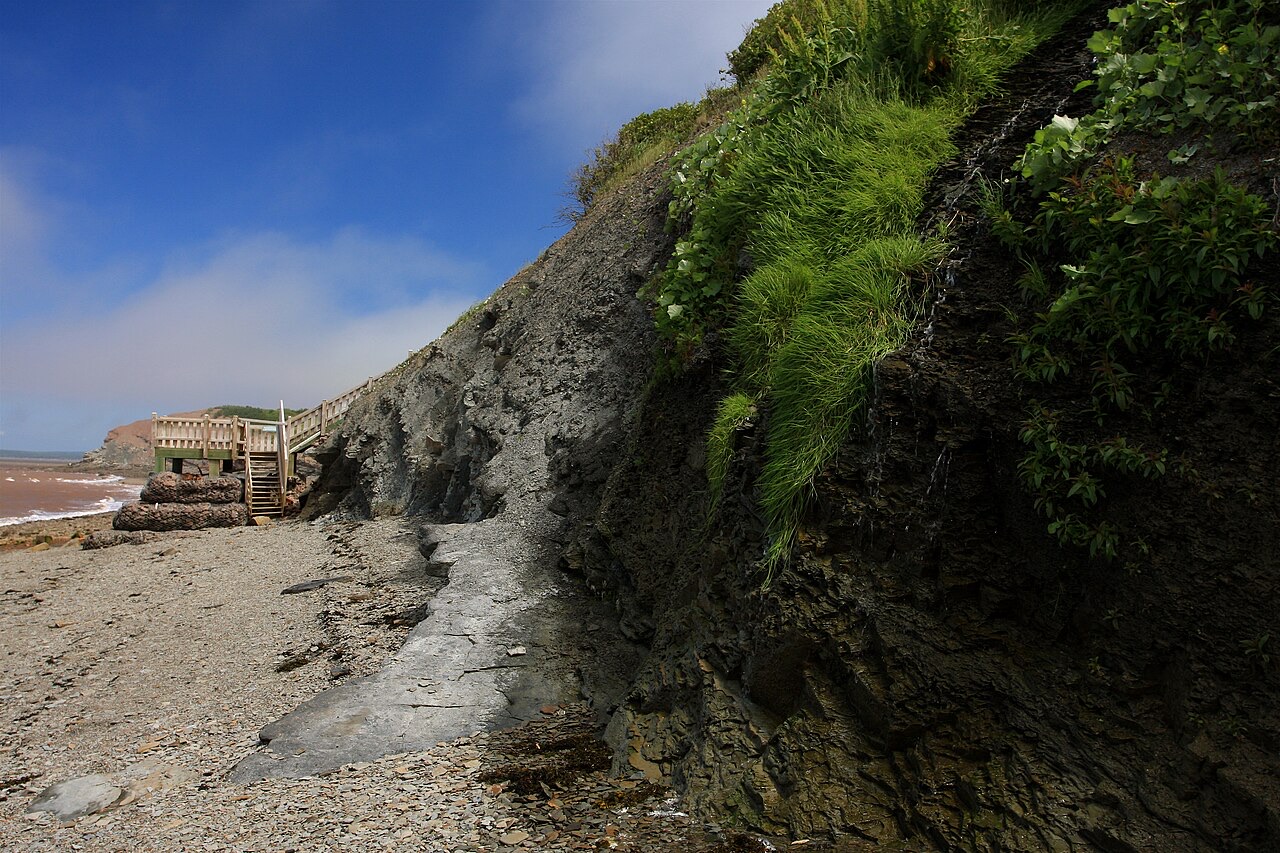
Today, tides and erosion expose the sequence along the Bay of Fundy. The present marine setting is the means of seeing an older terrestrial and coastal archive, not the continuation of its Carboniferous sea. Switching from forest to modern coast therefore distinguishes the ancient depositional environment from the later exposure. The modern scene contains fossils as geological evidence; it does not place their original organisms in the living ecosystem.
[1] [2] [3]Time windows and evidence
Older ages are on the left. Bars span the dated intervals. A dot marks a single age.
- Carboniferous forest and floodplain 314–318 Ma
- A modern coast exposes the archive Today
- Hylonomus lyelli from Joggins 314–318 Ma
- Upright lycopsid trees and rooted horizons 314–318 Ma
- Dendrerpeton in fossil tree hollows 314–318 Ma
Researched windowsEvidence records
315 Ma · interval 314–318 Ma
Carboniferous forest and floodplain
Forested lowlands accumulated sediment near a changing coast during the Carboniferous. Upright fossil trees, rooted surfaces and the remains of small animals allow parts of the ecosystem to be reconstructed together. The illustration highlights a forest patch rather than showing all Joggins environments at once. Its trees are schematic and its animals, if shown, are ecological symbols rather than a measured distribution. The succession also includes aquatic settings beyond this selected scene.
[1] [2]Locate this time in the atlas ↗Observed
Upright tree trunks, root systems, coal and terrestrial animal fossils occur in the succession.
Reconstructed
Repeatedly buried coastal forests with floodplain and wetland habitats.
Uncertain
The cause of each burial event and the reason animals entered hollow trunks are not uniquely established.
Evidence windows overlapping this state: 3. Overlap does not establish exact coexistence.
body fossil · Joggins Fossil Cliffs ↗
Hylonomus lyelli from Joggins
Hylonomus lyelli is an early reptile documented from the Joggins Formation, including specimens recorded in museum collections. Its importance lies in the anatomy of a small animal rather than giant size. The skeleton helps investigate early amniote relationships and life on land. Its presence in fossil tree hollows adds environmental context, but it does not preserve an egg or directly demonstrate a particular reproductive behaviour in the individual specimen.
locality · Joggins Fossil Cliffs ↗
Upright lycopsid trees and rooted horizons
Joggins preserves upright fossil trees associated with the sedimentary surfaces on which vegetation grew. This spatial relationship is powerful evidence because it is harder to explain by long-distance transport than an isolated log. Repeated tree-bearing horizons indicate repeated episodes of forest growth and burial. Their value is not simply that a plant existed, but that part of an ancient landscape retains its original organization within the rock sequence.
body fossil · Joggins Fossil Cliffs ↗
Dendrerpeton in fossil tree hollows
Dendrerpeton acadianum remains were recovered from fossil tree trunks at Joggins. They reveal that the small land-vertebrate community included more than the early reptiles for which the site is famous. The association between skeleton and trunk raises ecological questions about shelter, entrapment and burial. Those alternatives should remain visible rather than being replaced by a single dramatic story about an animal’s last moments.
Today · interval Today
A modern coast exposes the archive
The fossil-bearing succession is now exposed in cliffs and foreshore along the Bay of Fundy. Erosion reveals geological surfaces that were buried long before the present ocean and coast took their form. This scene represents the modern exposure process, not a modern habitat for Carboniferous species. The ancient evidence remains visible in the regional record, but its geological age must be kept distinct from the date at which someone observes it.
[1]Locate this time in the atlas ↗Observed
A coastal cliff and foreshore expose the tilted Carboniferous succession.
Reconstructed
Later geological change and modern coastal erosion made the fossil archive accessible.
Uncertain
The illustration does not model erosion rates, tidal heights or the timing of intermediate landscape changes.
Evidence windows overlapping this state: 0. Overlap does not establish exact coexistence.
No curated evidence record overlaps this window. The full notebook for this region appears below.
What this story cannot resolve
Joggins is a succession of ecosystems. The rounded 315 Ma scene is not a census of one bed. Modern shore geometry and ancient coastal geography must not be equated.
Keep these ideas handy
Fossilization
The varied processes by which remains or traces of past life enter the geological record. Explore the idea ↗
Taphonomy
Studying what happens between an organism’s life, death, burial, preservation and eventual discovery. Explore the idea ↗
Evolutionary tree
A branching hypothesis of relationships among organisms, inferred from shared evidence rather than arranged as a ladder of progress. Explore the idea ↗
The evidence notebook
body fossil · Joggins Fossil Cliffs ↗
Hylonomus lyelli from Joggins
Hylonomus lyelli is an early reptile documented from the Joggins Formation, including specimens recorded in museum collections. Its importance lies in the anatomy of a small animal rather than giant size. The skeleton helps investigate early amniote relationships and life on land. Its presence in fossil tree hollows adds environmental context, but it does not preserve an egg or directly demonstrate a particular reproductive behaviour in the individual specimen.
locality · Joggins Fossil Cliffs ↗
Upright lycopsid trees and rooted horizons
Joggins preserves upright fossil trees associated with the sedimentary surfaces on which vegetation grew. This spatial relationship is powerful evidence because it is harder to explain by long-distance transport than an isolated log. Repeated tree-bearing horizons indicate repeated episodes of forest growth and burial. Their value is not simply that a plant existed, but that part of an ancient landscape retains its original organization within the rock sequence.
body fossil · Joggins Fossil Cliffs ↗
Dendrerpeton in fossil tree hollows
Dendrerpeton acadianum remains were recovered from fossil tree trunks at Joggins. They reveal that the small land-vertebrate community included more than the early reptiles for which the site is famous. The association between skeleton and trunk raises ecological questions about shelter, entrapment and burial. Those alternatives should remain visible rather than being replaced by a single dramatic story about an animal’s last moments.
Follow the evidence
Sources & credits
- Joggins Fossil Cliffs ↗
UNESCO World Heritage Centre · Not stated
Use, credit & modifications
Reference only. No source text, photographs, figures or datasets reproduced. Original factual synthesis; no reuse licence asserted.
Credit: UNESCO World Heritage Centre — Joggins Fossil Cliffs. Facts paraphrased into original educational text; ages rounded to declared teaching intervals. No asset reuse requested; territorial permissions not applicable.
- Joggins Fossil Cliffs — World Heritage Datasheet ↗
UNEP-WCMC · Not stated
Use, credit & modifications
Reference only. No source text, photographs, figures or datasets reproduced. Original factual synthesis; no reuse licence asserted.
Credit: UNEP-WCMC — Joggins Fossil Cliffs — World Heritage Datasheet. Facts paraphrased into original educational text; ages rounded to declared teaching intervals. No asset reuse requested; territorial permissions not applicable.
- Hylonomus lyelli Dawson, 1860 — collection record ↗
Smithsonian Institution · Not stated
Use, credit & modifications
Reference only. No source text, photographs, figures or datasets reproduced. Original factual synthesis; no reuse licence asserted.
Credit: Smithsonian Institution — Hylonomus lyelli Dawson, 1860 — collection record. Facts paraphrased into original educational text; ages rounded to declared teaching intervals. No asset reuse requested; territorial permissions not applicable.
Follow the connections
 Europe
United Kingdom ↗
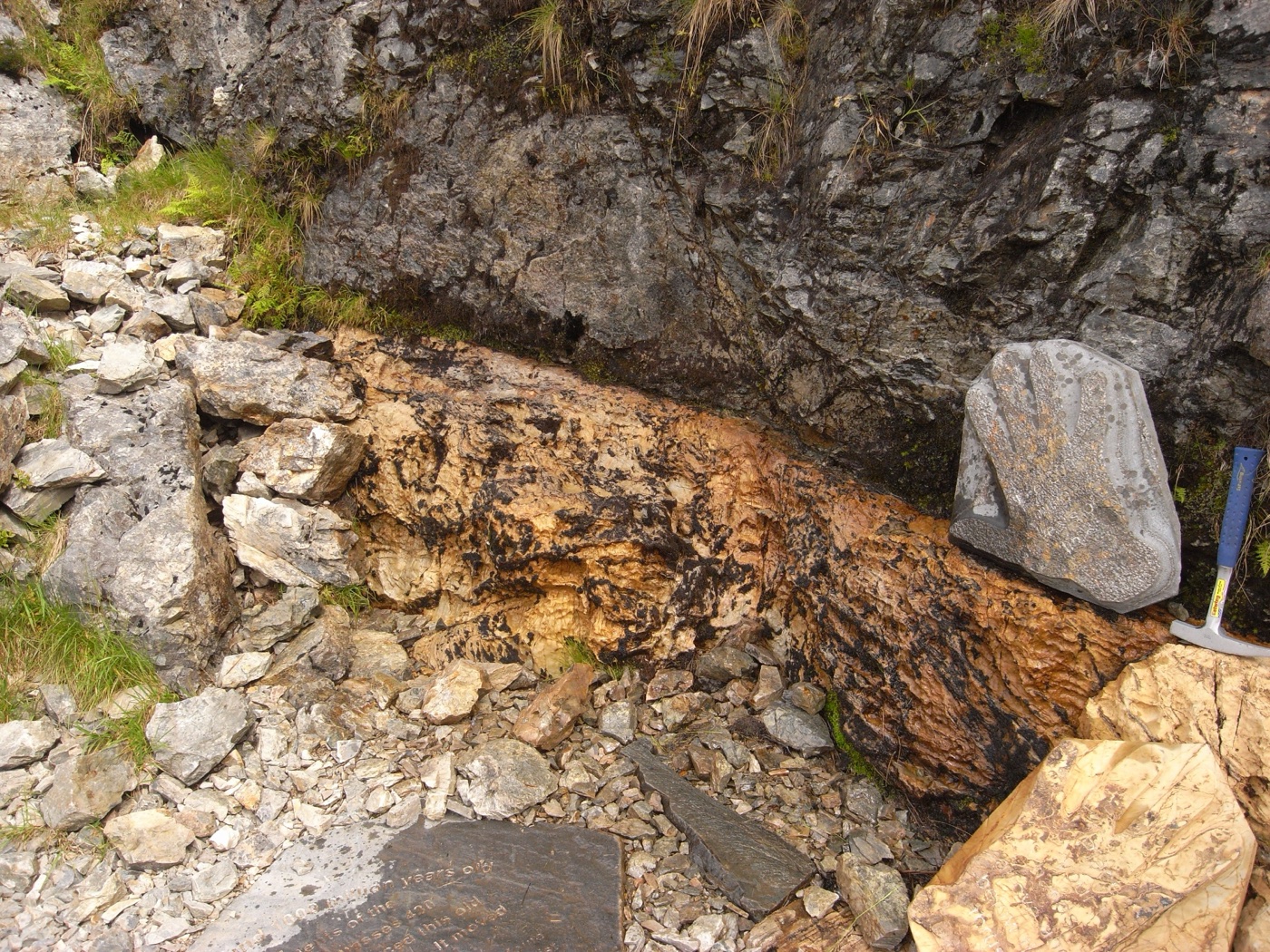
Scottish Highlands & Orcadian Basin
Caledonian structures record continental collision. Younger Devonian basins preserve the sediment and ecosystems of a landscape developing after that mountain-building episode.
430 Ma → 390 Ma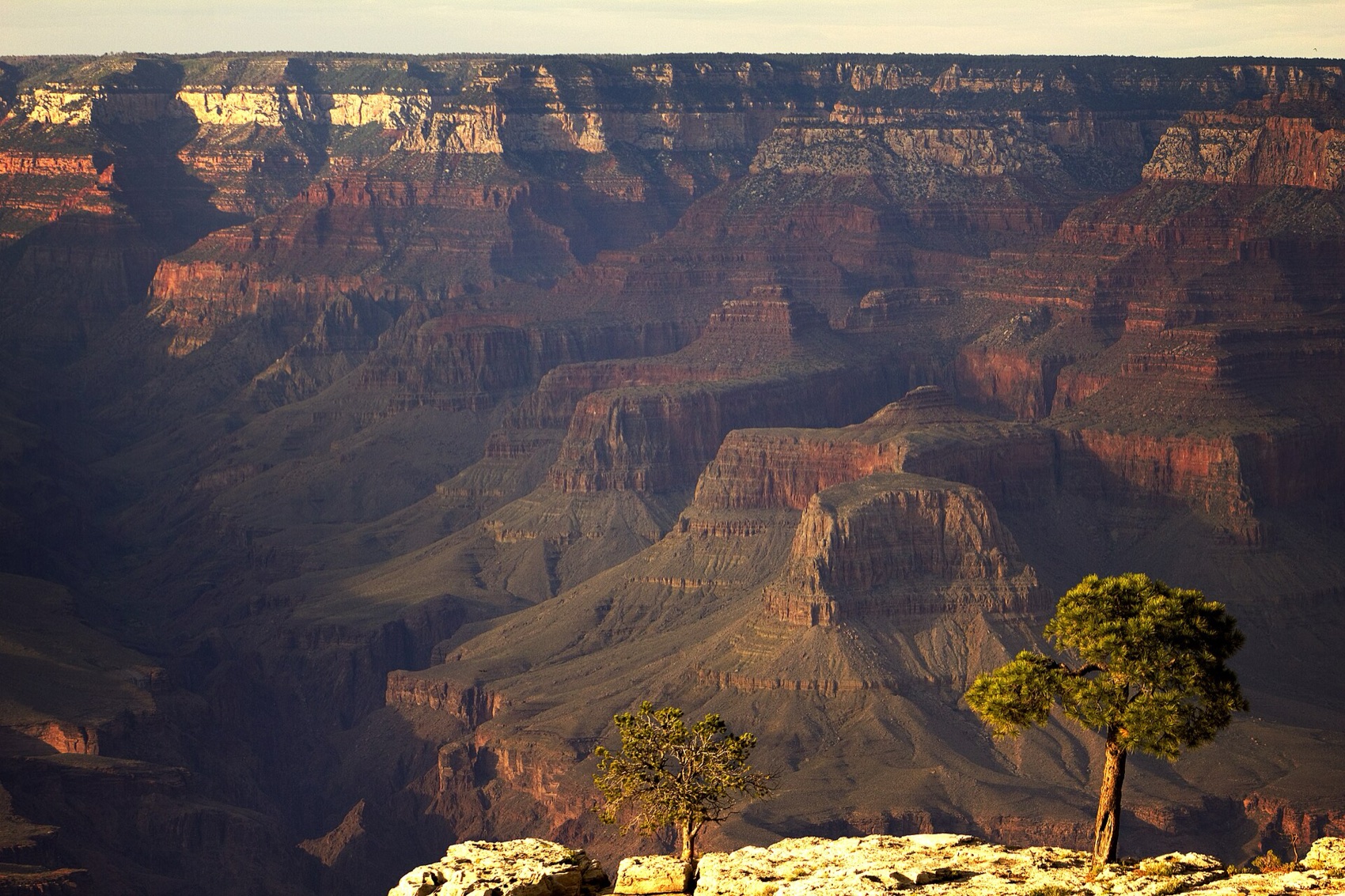 North America
United States ↗
Grand Canyon
The canyon exposes older environments stacked in rock. Cambrian marine deposits and Permian dune sand record different chapters; the much younger canyon is the window through which we read them.
508 Ma → 275 Ma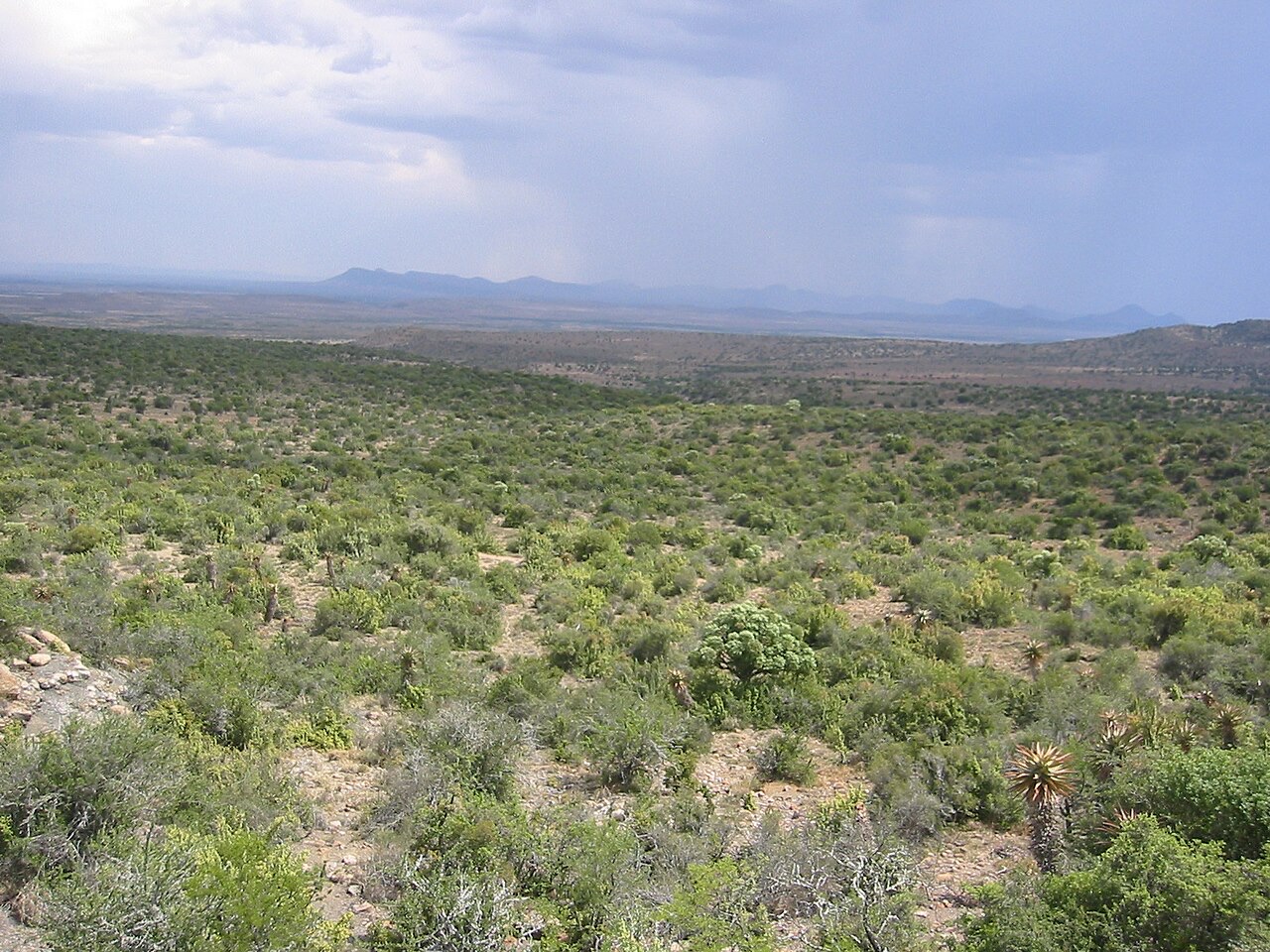 Africa
South Africa ↗
Karoo Basin
Late Permian and Early Triassic terrestrial fossils record profound ecosystem turnover. The Karoo also shows why a fossil assemblage boundary cannot automatically be equated with a precisely dated global extinction.
253 Ma → 251 Ma