
Where does a mountain belt’s history go after its peaks are worn away?
The Scottish Highlands contain a history older than their present peaks. The Caledonian mountain-building events involved collisions and the closure of the Iapetus Ocean, assembling parts of the crust that now lie together. Folding, metamorphism and thrust faults preserve that process at depth. The rocks do not directly preserve the height or skyline of the ancient mountains. A modern ridge can expose the roots of a vanished range without reproducing its former shape.
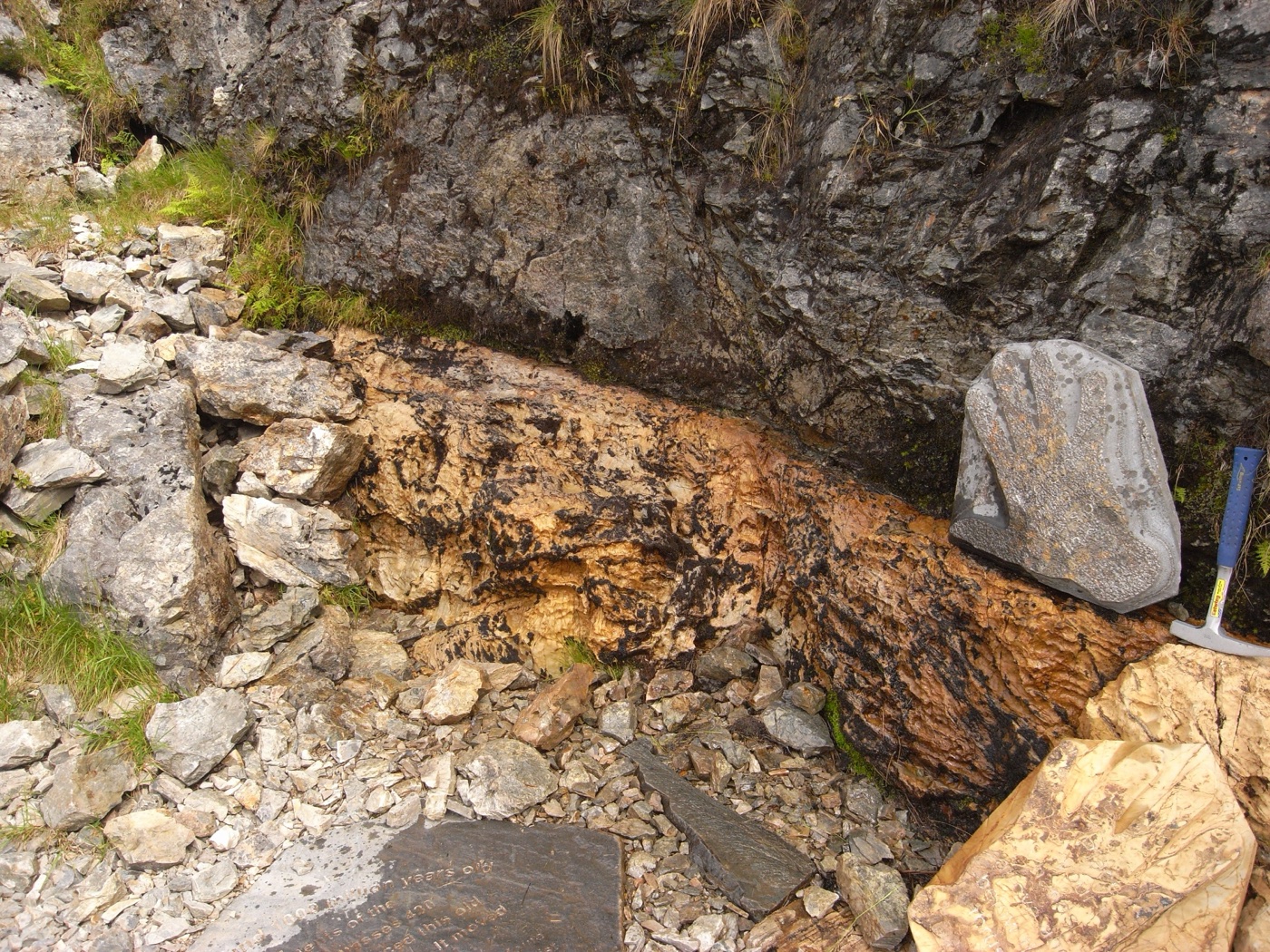
At Knockan Crag, older Moine rocks lie above younger Durness limestone. The rock order makes sense once movement is included: thrusting carried sheets of rock over one another. Intrusions that cut some of the thrusts near Loch Borralan help date part of the regional sequence. The rounded 430 Ma scene places the thrust belt within that history without assigning one date to all the movement.
Later, Devonian basins collected sediment from the surrounding land. In the north, lakes of the Orcadian Basin preserved fish, including the well-known Achanarras assemblage. Elsewhere, the Rhynie chert preserved an older Devonian hot-spring ecosystem with small land plants and associated organisms. These localities are not the same lake or date. They provide different windows into continental environments developing after major collision, and demonstrate why a regional narrative needs explicit spatial and temporal limits.
The comparison moves from a mountain-building system to a younger lake basin. Sediment links them conceptually: erosion transfers material from exposed rock into basins where new layers form. The atlas does not trace every grain to a specific ancient summit. It uses structural evidence and fossil-bearing deposits to show that the continental landscape kept changing after collision, and that its biological history is recorded in places quite different from the rocks that record crustal deformation.
[1] [2] [3] [4] [5]Time windows and evidence
Older ages are on the left. Bars span the dated intervals. A dot marks a single age.
- Caledonian crust is shortened 420–435 Ma
- Devonian lakes occupy northern basins 383–393 Ma
- The Moine Thrust at Knockan Crag 420–435 Ma
- Dipterus in the Achanarras fish beds 383–393 Ma
- Rhynie chert land plants and associated organisms 405–413 Ma
Researched windowsEvidence records
430 Ma · interval 420–435 Ma
Caledonian crust is shortened
Continental convergence produced deformation and thrusting in the Scottish Caledonian system. The scene uses a conceptual mountain belt to show crustal shortening; no ancient summit elevations are supplied. At localities such as Knockan Crag, structures demonstrate the transport of older rocks over younger units. The chosen interval emphasizes the later collision and thrusting history of the northwestern Highlands rather than treating every Caledonian event as a single moment.
[1] [2]Locate this time in the atlas ↗Observed
Thrust faults juxtapose rock units and deformation fabrics record shortening.
Reconstructed
Continental collision and transport within a mountain-building system.
Uncertain
The former topographic height and the timing of every structural episode are not reconstructed here.
Evidence windows overlapping this state: 1. Overlap does not establish exact coexistence.
390 Ma · interval 383–393 Ma
Devonian lakes occupy northern basins
The younger scene represents Middle Devonian lake environments of the Orcadian Basin, including the Achanarras fish-bearing interval. Fine sediments and fossil fish document standing-water habitats within a continental region. The lake outline is conceptual, with no precise paleolatitude or shoreline assigned. Water coverage and chemistry changed through time. This state is later than the Rhynie hot-spring evidence listed for the wider region, so those fossils are not shown as contemporaneous lake residents.
[3] [4]Locate this time in the atlas ↗Observed
Laminated lake deposits and diverse fish fossils occur in the Achanarras succession.
Reconstructed
A continental lake ecosystem within the Orcadian basin system.
Uncertain
Extent, depth and connectivity varied; the rounded age does not date each mortality layer.
Evidence windows overlapping this state: 1. Overlap does not establish exact coexistence.
What this story cannot resolve
This is a regional history linking distinct localities, not one outcrop through time. The marker is an editorial regional locator. Rhynie is older than the selected Orcadian lake scene.
Keep these ideas handy
Mountain building
Processes that thicken, deform or raise Earth’s crust, often associated with convergence and collision. Explore the idea ↗
Relative dating
Determining which event came first without necessarily assigning a numerical age. Explore the idea ↗
Sedimentary basin
An area in which sediment can accumulate and be preserved over time. Explore the idea ↗
The evidence notebook
locality · Scottish Highlands & Orcadian Basin ↗
The Moine Thrust at Knockan Crag
At Knockan Crag, the contact between Moine rocks and younger limestone records tectonic transport. The ordering of the units cannot be explained by undisturbed deposition alone. Mapping the contact and associated deformation turns an apparent contradiction into evidence of crustal shortening. This locality is included as structural evidence rather than a fossil occurrence. It anchors the older regional time state without pretending that a preserved ancient mountain skyline can be read from the contact.
body fossil · Scottish Highlands & Orcadian Basin ↗
Dipterus in the Achanarras fish beds
The lungfish Dipterus is a familiar component of the Achanarras fossil assemblage in Caithness. The fish occur in a lake-deposited sequence that can be compared with other parts of the Orcadian Basin. Preserved skeletons record both animal anatomy and episodes of deposition or mortality. Their concentration does not imply that the entire Devonian region was one permanent lake with a uniform community. The lake system expanded, contracted and changed its environmental conditions.
locality · Scottish Highlands & Orcadian Basin ↗
Rhynie chert land plants and associated organisms
The Rhynie chert preserves small Early Devonian land plants and associated fungi and animals in exceptional microscopic detail. Silica-rich hot-spring processes played a central role in preservation. The deposit is a separate, older window from the Middle Devonian Orcadian lake scene. Keeping that distinction prevents a compelling collection of Scottish fossils from becoming an imaginary single ecosystem. Radiometric and spore-based dating constrain the interval but rely on different geological materials and assumptions.
Follow the evidence
Sources & credits
- Lewisian, Torridonian and Moine rocks of Scotland: an introduction ↗
British Geological Survey / Geological Conservation Review · 2009
Use, credit & modifications
Reference only. No source text, photographs, figures or datasets reproduced. Original factual synthesis; no reuse licence asserted.
Credit: British Geological Survey / Geological Conservation Review — Lewisian, Torridonian and Moine rocks of Scotland: an introduction. Facts paraphrased into original educational text; ages rounded to declared teaching intervals. No asset reuse requested; territorial permissions not applicable.
- Knockan Crag ↗
Scottish Geology Trust / GeoGuide · Not stated
Use, credit & modifications
Reference only. No source text, photographs, figures or datasets reproduced. Original factual synthesis; no reuse licence asserted.
Credit: Scottish Geology Trust / GeoGuide — Knockan Crag. Facts paraphrased into original educational text; ages rounded to declared teaching intervals. No asset reuse requested; territorial permissions not applicable.
- Devonian Fish ↗
Scottish Geology Trust · Not stated
Use, credit & modifications
Reference only. No source text, photographs, figures or datasets reproduced. Original factual synthesis; no reuse licence asserted.
Credit: Scottish Geology Trust — Devonian Fish. Facts paraphrased into original educational text; ages rounded to declared teaching intervals. No asset reuse requested; territorial permissions not applicable.
- Achanarras Quarry — Site of Special Scientific Interest citation ↗
NatureScot · Not stated
Use, credit & modifications
Reference only. No source text, photographs, figures or datasets reproduced. Original factual synthesis; no reuse licence asserted.
Credit: NatureScot — Achanarras Quarry — Site of Special Scientific Interest citation. Facts paraphrased into original educational text; ages rounded to declared teaching intervals. No asset reuse requested; territorial permissions not applicable.
- History and contemporary significance of the Rhynie cherts—our earliest preserved terrestrial ecosystem ↗
Edwards, Kenrick and Dolan / Philosophical Transactions of the Royal Society B · 2018
Use, credit & modifications
Reference only. No source text, photographs, figures or datasets reproduced. Original factual synthesis; no reuse licence asserted.
Credit: Edwards, Kenrick and Dolan / Philosophical Transactions of the Royal Society B — History and contemporary significance of the Rhynie cherts—our earliest preserved terrestrial ecosystem. Facts paraphrased into original educational text; ages rounded to declared teaching intervals. No asset reuse requested; territorial permissions not applicable.
Follow the connections
 Europe
United Kingdom ↗
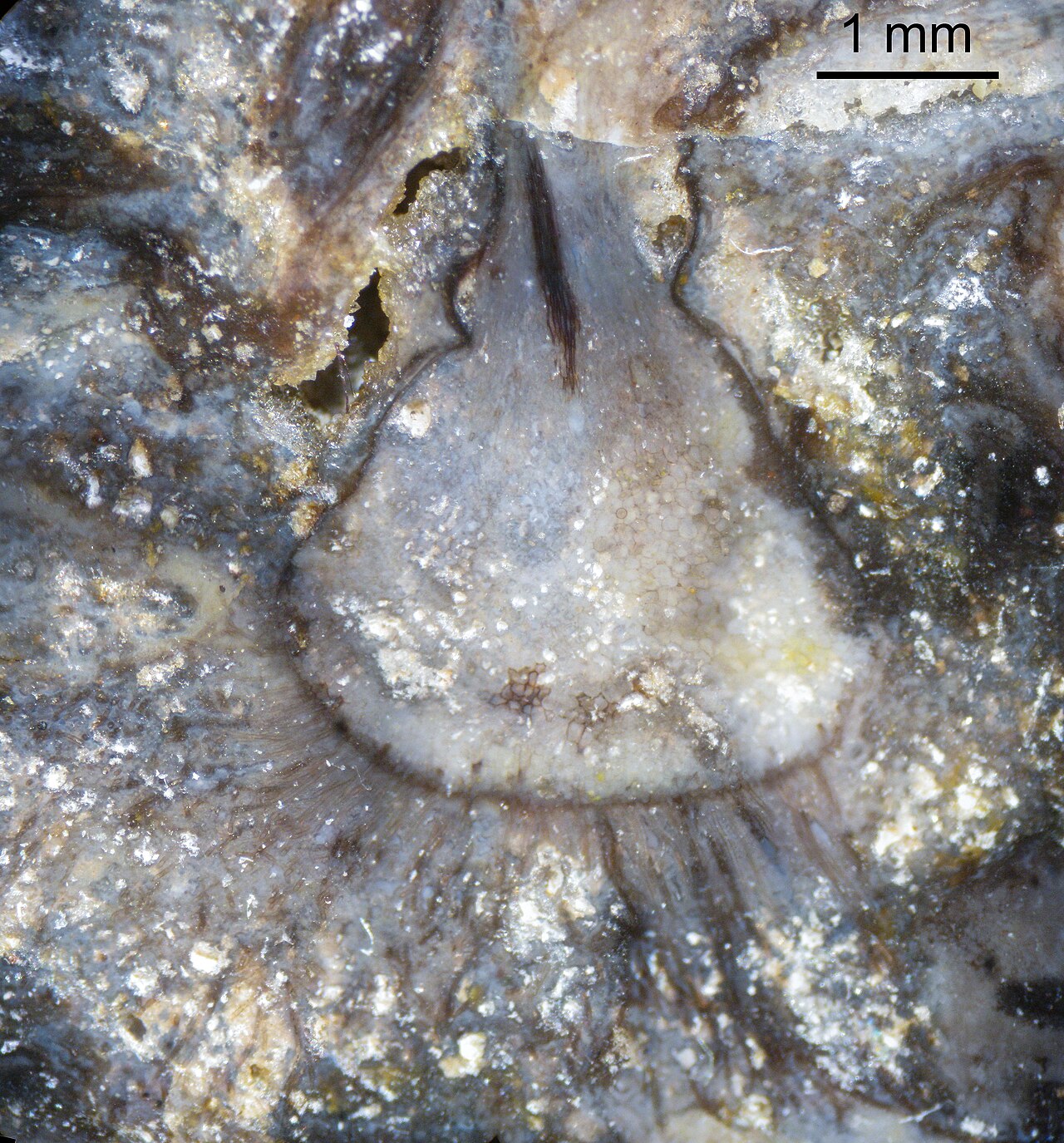
Rhynie Chert
Silica deposited in an Early Devonian hot-spring system preserved plants and other organisms in extraordinary detail. Modern sections through the chert reveal tissues, connections and preservation biases.
410 Ma → Today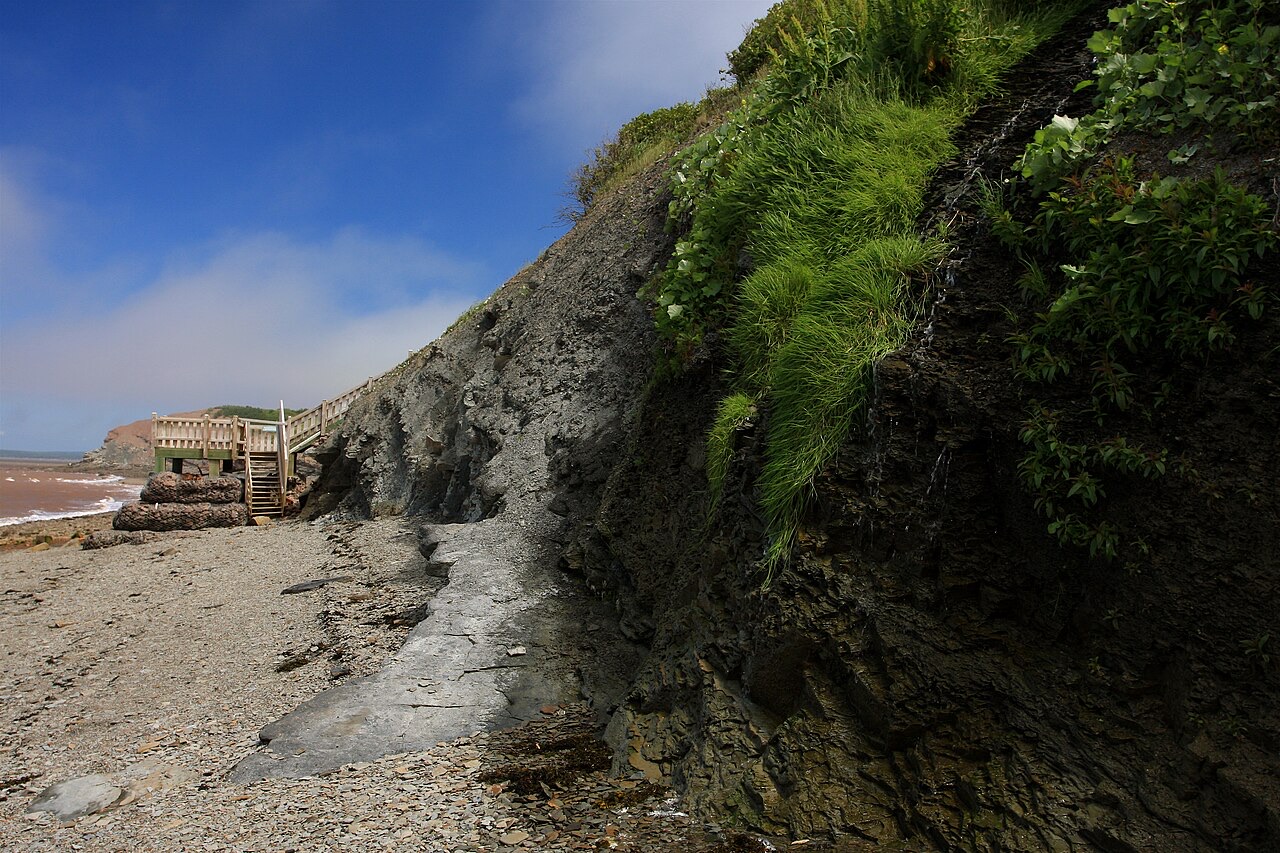 North America
Canada ↗
Joggins Fossil Cliffs
Carboniferous coastal forests, rivers and wetland communities survive in the rocks of a modern tidal cliff. Upright trees preserve the spatial context of an ecosystem as well as its organisms.
315 Ma → Today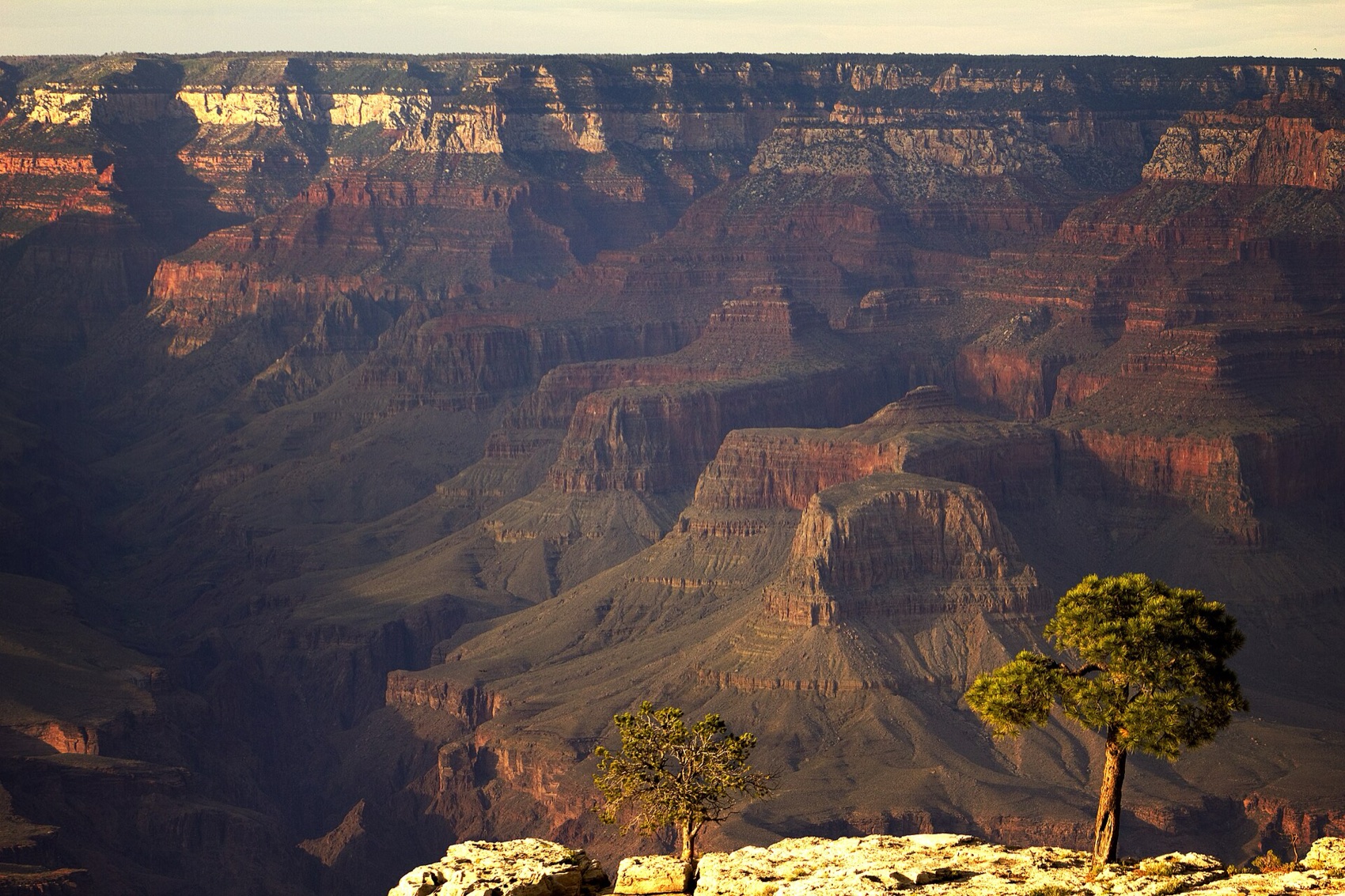 North America
United States ↗
Grand Canyon
The canyon exposes older environments stacked in rock. Cambrian marine deposits and Permian dune sand record different chapters; the much younger canyon is the window through which we read them.
508 Ma → 275 Ma