
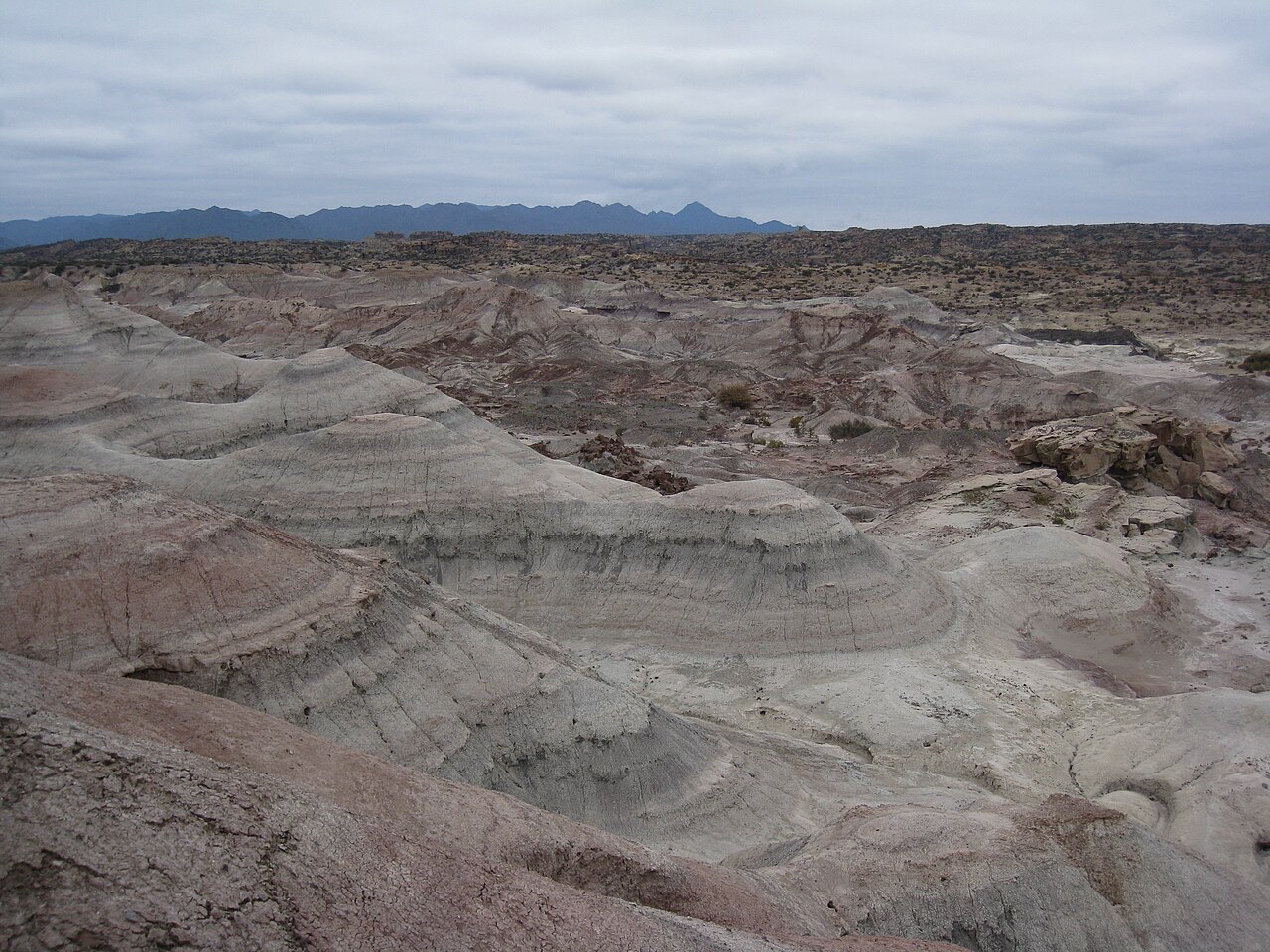
What did the landscape look like before dinosaurs became dominant?
The bare badlands of Ischigualasto expose an older landscape that was neither permanently bare nor uniformly dry. Before the famous dinosaur-bearing floodplains developed, the Los Rastros Formation accumulated in a lake-and-delta system. Fine dark sediment settled offshore, while incoming rivers delivered coarser material. Plant remains, invertebrates and track-bearing surfaces distinguish parts of the lake margin and its surrounding lowlands. The succession records a landscape with internal variety, rather than one habitat stretching unbroken across the basin.
A dated volcanic ash in the lower Los Rastros Formation places part of this history near 234.5 million years ago. Sedimentary and geochemical evidence has been linked to the wetter Carnian Pluvial Episode. That association supplies a testable environmental context, but it does not prove that one climatic event directly caused the origin of dinosaurs. The ages of rock units, the preservation of footprints and the appearance of body fossils are different kinds of observation, with different uncertainties.
In the younger Ischigualasto Formation, river channels crossed soils and floodplains occupied by diverse vertebrates. Early dinosaurs such as Herrerasaurus shared the region with abundant non-dinosaurian animals. A fossil collection is not a census of a living community: body size, burial, erosion and collecting effort all affect its proportions. Large burrows in the Cancha de Bochas Member offer a complementary record of behaviour below the surface, even when the identity of the excavator remains unresolved.
The two states compare distinct parts of the regional succession. Published ash ages and correlations have changed as dating methods improved, and the thick Cerro Las Lajas section cannot simply be assigned the same schedule as every exposure in the provincial park. A broad chronology preserves the environmental contrast without pretending that all fossils appeared simultaneously or that the present desert is a faithful picture of the Triassic.
[1] [2] [3] [4] [5] [6] [7]Time windows and evidence
Older ages are on the left. Bars span the dated intervals. A dot marks a single age.
- A Los Rastros lake and its deltas 231.7–235.4 Ma
- Rivers across a populated floodplain 226–231.7 Ma
- Los Rastros lake deposits at Río Gualo 231.7–235.4 Ma
- Herrerasaurus in the Ischigualasto fauna 228.5–231.7 Ma
- Cancha de Bochas large-diameter burrows 228–231.7 Ma
Researched windowsEvidence records
234.5 Ma · interval 231.7–235.4 Ma
A Los Rastros lake and its deltas
The older state represents the Los Rastros lacustrine-deltaic system in the Ischigualasto–Villa Unión Basin. Fine lake mud alternates with deposits carried in by deltas, while transported leaves, invertebrates and tracks record activity around the margins. A lower-formation ash date of about 234.47 Ma anchors part of the succession. The broad teaching window allows for published analytical uncertainties and the duration of surrounding beds; it is not the measured lifetime of a single lake. Shoreline vegetation and water depth varied across the basin.
[1] [2]Locate this time in the atlas ↗Observed
Black shales, siltstones, sandstones and fossils occur in repeated lacustrine-deltaic successions.
Reconstructed
A vegetated lake basin receiving sediment from rivers and advancing deltas.
Uncertain
The ash dates one horizon; regional climatic links and exact depositional durations are less tightly constrained.
Evidence windows overlapping this state: 1. Overlap does not establish exact coexistence.
229 Ma · interval 226–231.7 Ma
Rivers across a populated floodplain
This younger state focuses on fossil-bearing lower and middle parts of the Ischigualasto Formation. Channel deposits, developed soils, vertebrate remains and burrows support a floodplain with local differences in drainage and vegetation. Early dinosaurs were present alongside many other reptiles and synapsids. The interval is deliberately broad: older argon-based age frameworks and newer uranium–lead correlations do not give identical ages for all horizons. It describes the fossil-bearing environments used in this comparison, rather than the complete duration of the formation across the basin.
[3] [4] [5] [6]Locate this time in the atlas ↗Observed
Fluvial sandstones, palaeosols, early dinosaur bones and large burrows are preserved in the Ischigualasto succession.
Reconstructed
Seasonal river and floodplain habitats supported diverse communities and burrowing animals.
Uncertain
Species abundances are filtered by preservation; correlations and fossil horizons vary between sections.
Evidence windows overlapping this state: 2. Overlap does not establish exact coexistence.
body fossil · Ischigualasto Basin ↗
Herrerasaurus in the Ischigualasto fauna
Herrerasaurus fossils form part of the diverse lower Ischigualasto vertebrate record. Their association with other early dinosaurs and abundant non-dinosaurian tetrapods makes the assemblage informative about an early stage of dinosaur ecosystems. Stratigraphically organized collections place occurrences within a fossil-rich interval rather than treating the entire formation as a single event. The broad age envelope accommodates changes in the numerical calibration of those beds. A carnivorous animal’s presence also does not reveal exactly which prey it ate or how abundant it was while alive.
trace fossil · Ischigualasto Basin ↗
Cancha de Bochas large-diameter burrows
Large burrow systems in the Cancha de Bochas Member occur within developed soils between river-channel deposits. Their architecture records excavation and use of the subsurface, providing behavioural information not supplied by isolated bones. The original study compared possible vertebrate makers and discussed ecological functions, including shelter under seasonally stressful conditions. The traces are retained as evidence of burrowing without naming a certain builder. They also sample particular floodplain soils, so their presence should not be extended to every habitat across the Ischigualasto Basin.
What this story cannot resolve
The modern marker represents the regional basin near the park. Los Rastros and Ischigualasto are different formations. Broad ages summarize a correlation problem; they are not a claim that every section shares the same boundaries.
Keep these ideas handy
Facies
The observable characteristics of a rock body that help describe and interpret its depositional setting. Explore the idea ↗
Taphonomy
Studying what happens between an organism’s life, death, burial, preservation and eventual discovery. Explore the idea ↗
Radiometric dating
Estimating the time of a geological event from radioactive decay and the isotopic composition of a suitable material. Explore the idea ↗
The evidence notebook
sediment · Ischigualasto Basin ↗
Los Rastros lake deposits at Río Gualo
Measured Los Rastros sections at Río Gualo and nearby basin localities combine fine lacustrine deposits with delta-fed sandstones. Fossil preservation and sedimentary relationships help distinguish offshore water, advancing delta fronts and inhabited margins. A lower-formation zircon date near 234.47 Ma constrains the regional framework, while multiproxy evidence supports relatively humid conditions during part of the sequence. The entire succession is not dated by that one ash, and this record does not by itself establish a direct climatic cause for dinosaur diversification.
body fossil · Ischigualasto Basin ↗
Herrerasaurus in the Ischigualasto fauna
Herrerasaurus fossils form part of the diverse lower Ischigualasto vertebrate record. Their association with other early dinosaurs and abundant non-dinosaurian tetrapods makes the assemblage informative about an early stage of dinosaur ecosystems. Stratigraphically organized collections place occurrences within a fossil-rich interval rather than treating the entire formation as a single event. The broad age envelope accommodates changes in the numerical calibration of those beds. A carnivorous animal’s presence also does not reveal exactly which prey it ate or how abundant it was while alive.
trace fossil · Ischigualasto Basin ↗
Cancha de Bochas large-diameter burrows
Large burrow systems in the Cancha de Bochas Member occur within developed soils between river-channel deposits. Their architecture records excavation and use of the subsurface, providing behavioural information not supplied by isolated bones. The original study compared possible vertebrate makers and discussed ecological functions, including shelter under seasonally stressful conditions. The traces are retained as evidence of burrowing without naming a certain builder. They also sample particular floodplain soils, so their presence should not be extended to every habitat across the Ischigualasto Basin.
Follow the evidence
Sources & credits
- Evidence for the Carnian Pluvial Episode in Gondwana: New multiproxy climate records and their bearing on early dinosaur diversification ↗
Mancuso et al.; Gondwana Research · 2020
Use, credit & modifications
Reference only. No third-party prose, figures or media reproduced in the regional narrative; original factual synthesis.
Credit: Mancuso et al.; Gondwana Research — Evidence for the Carnian Pluvial Episode in Gondwana: New multiproxy climate records and their bearing on early dinosaur diversification. Original educational synthesis. Age envelopes are explicitly rounded teaching intervals, not new analytical uncertainties. No media licence or territorial reuse permission asserted for this reference. Photographs have separate item-level credits.
- Paleoenvironments and taphonomy of a Triassic lacustrine system (Los Rastros Formation, central-western Argentina) ↗
Mancuso and Marsicano; PALAIOS / Universidad de Buenos Aires · 2008
Use, credit & modifications
Reference only. No third-party prose, figures or media reproduced in the regional narrative; original factual synthesis.
Credit: Mancuso and Marsicano; PALAIOS / Universidad de Buenos Aires — Paleoenvironments and taphonomy of a Triassic lacustrine system (Los Rastros Formation, central-western Argentina). Original educational synthesis. Age envelopes are explicitly rounded teaching intervals, not new analytical uncertainties. No media licence or territorial reuse permission asserted for this reference. Photographs have separate item-level credits.
- A basal dinosaur from the dawn of the dinosaur era in southwestern Pangaea ↗
Martínez et al.; Science / University of Chicago · 2011-01-14
Use, credit & modifications
Reference only. No third-party prose, figures or media reproduced in the regional narrative; original factual synthesis.
Credit: Martínez et al.; Science / University of Chicago — A basal dinosaur from the dawn of the dinosaur era in southwestern Pangaea. Original educational synthesis. Age envelopes are explicitly rounded teaching intervals, not new analytical uncertainties. No media licence or territorial reuse permission asserted for this reference. Photographs have separate item-level credits.
- Large-Diameter Burrows of the Triassic Ischigualasto Basin, NW Argentina: Paleoecological and Paleoenvironmental Implications ↗
Colombi et al.; PLOS ONE · 2012
Use, credit & modifications
Reference only. No third-party prose, figures or media reproduced in the regional narrative; original factual synthesis.
Credit: Colombi et al.; PLOS ONE — Large-Diameter Burrows of the Triassic Ischigualasto Basin, NW Argentina: Paleoecological and Paleoenvironmental Implications. Original educational synthesis. Age envelopes are explicitly rounded teaching intervals, not new analytical uncertainties. No media licence or territorial reuse permission asserted for this reference. Photographs have separate item-level credits.
- The Late Triassic Ischigualasto Formation at Cerro Las Lajas: fossil tetrapods, high-resolution chronostratigraphy, and faunal correlations ↗
Desojo et al.; Scientific Reports · 2020
Use, credit & modifications
Reference only. No third-party prose, figures or media reproduced in the regional narrative; original factual synthesis.
Credit: Desojo et al.; Scientific Reports — The Late Triassic Ischigualasto Formation at Cerro Las Lajas: fossil tetrapods, high-resolution chronostratigraphy, and faunal correlations. Original educational synthesis. Age envelopes are explicitly rounded teaching intervals, not new analytical uncertainties. No media licence or territorial reuse permission asserted for this reference. Photographs have separate item-level credits.
- A high-precision U–Pb zircon age constraints the timing of the faunistic and palynofloristic events of the Carnian Ischigualasto Formation ↗
Colombi et al.; Journal of South American Earth Sciences · 2021
Use, credit & modifications
Reference only. No third-party prose, figures or media reproduced in the regional narrative; original factual synthesis.
Credit: Colombi et al.; Journal of South American Earth Sciences — A high-precision U–Pb zircon age constraints the timing of the faunistic and palynofloristic events of the Carnian Ischigualasto Formation. Original educational synthesis. Age envelopes are explicitly rounded teaching intervals, not new analytical uncertainties. No media licence or territorial reuse permission asserted for this reference. Photographs have separate item-level credits.
- Ischigualasto / Talampaya Natural Parks ↗
UNESCO World Heritage Centre · Not stated
Use, credit & modifications
Reference only. No third-party prose, figures or media reproduced in the regional narrative; original factual synthesis.
Credit: UNESCO World Heritage Centre — Ischigualasto / Talampaya Natural Parks. Original educational synthesis. Age envelopes are explicitly rounded teaching intervals, not new analytical uncertainties. No media licence or territorial reuse permission asserted for this reference. Photographs have separate item-level credits.
Follow the connections
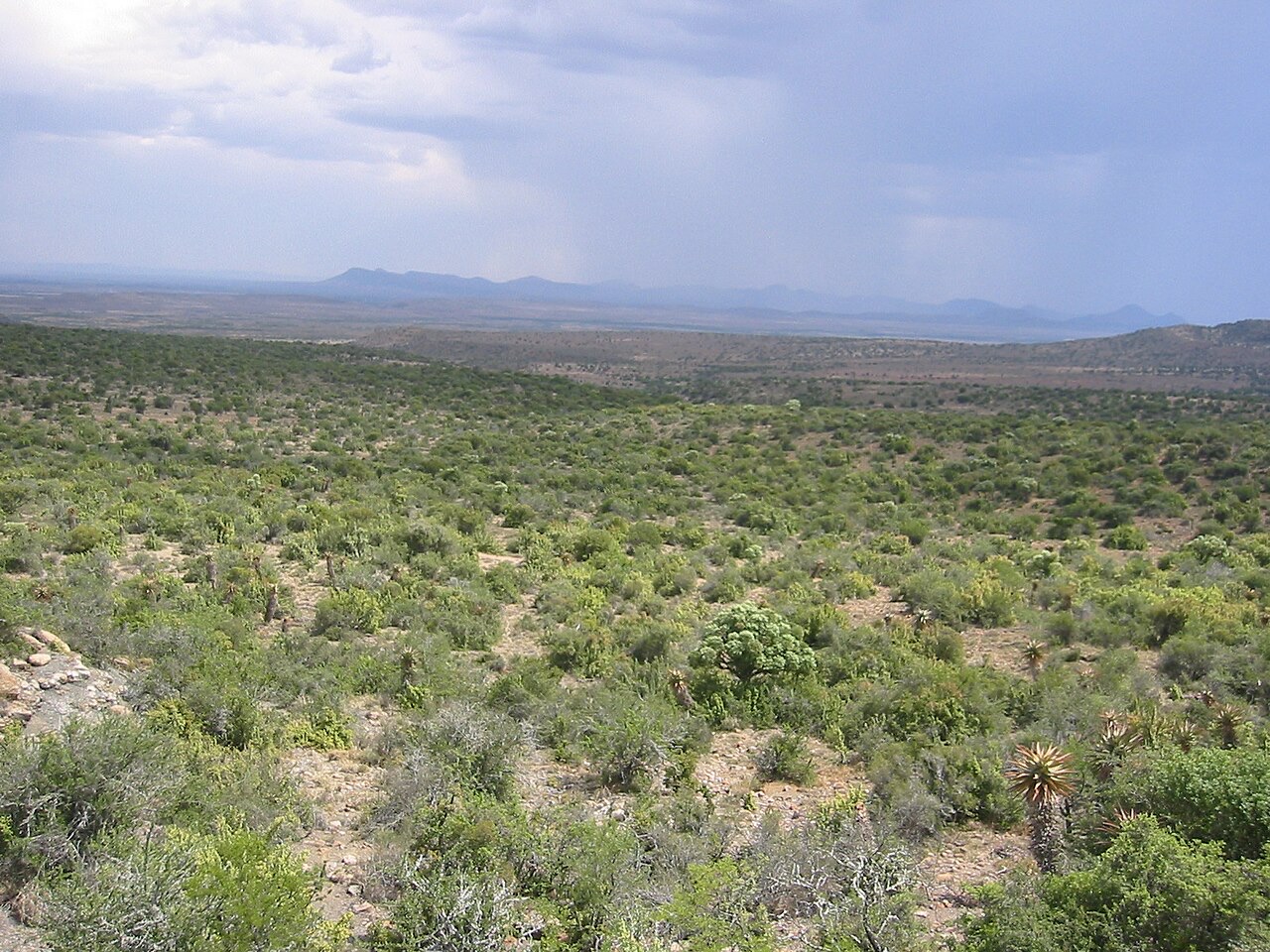 Africa
South Africa ↗
Karoo Basin
Late Permian and Early Triassic terrestrial fossils record profound ecosystem turnover. The Karoo also shows why a fossil assemblage boundary cannot automatically be equated with a precisely dated global extinction.
253 Ma → 251 Ma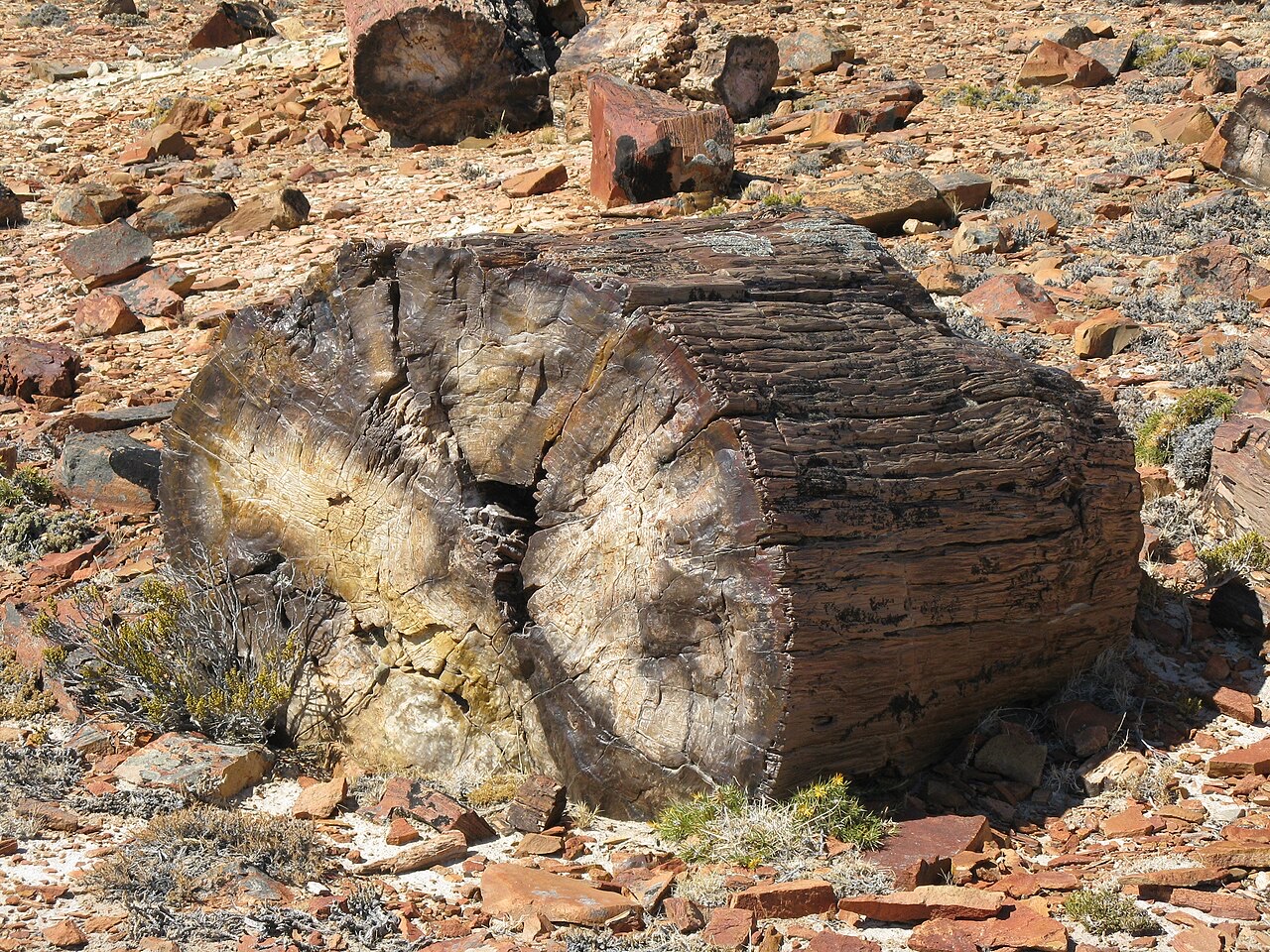 South America
Argentina ↗
Southern Patagonia
Jurassic petrified conifers and Miocene mammals reveal two distinct southern Patagonian ecosystems without treating “forest” as an unchanging habitat.
160 Ma → 17 Ma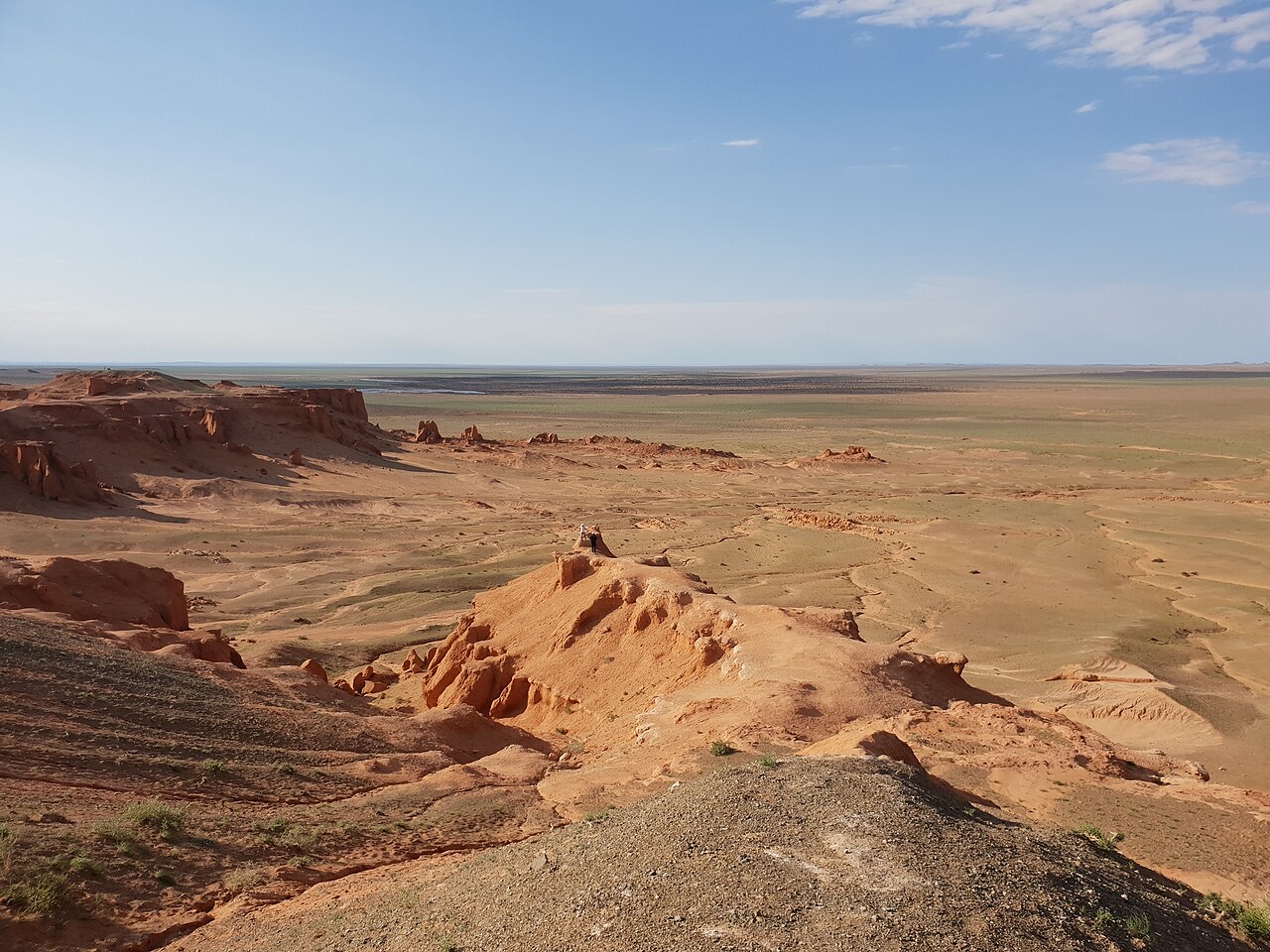 Asia
Mongolia ↗
The Mongolian Gobi
Late Cretaceous Gobi formations preserve contrasting environments and unusually direct clues to dinosaur behaviour.
75 Ma → 70 Ma