
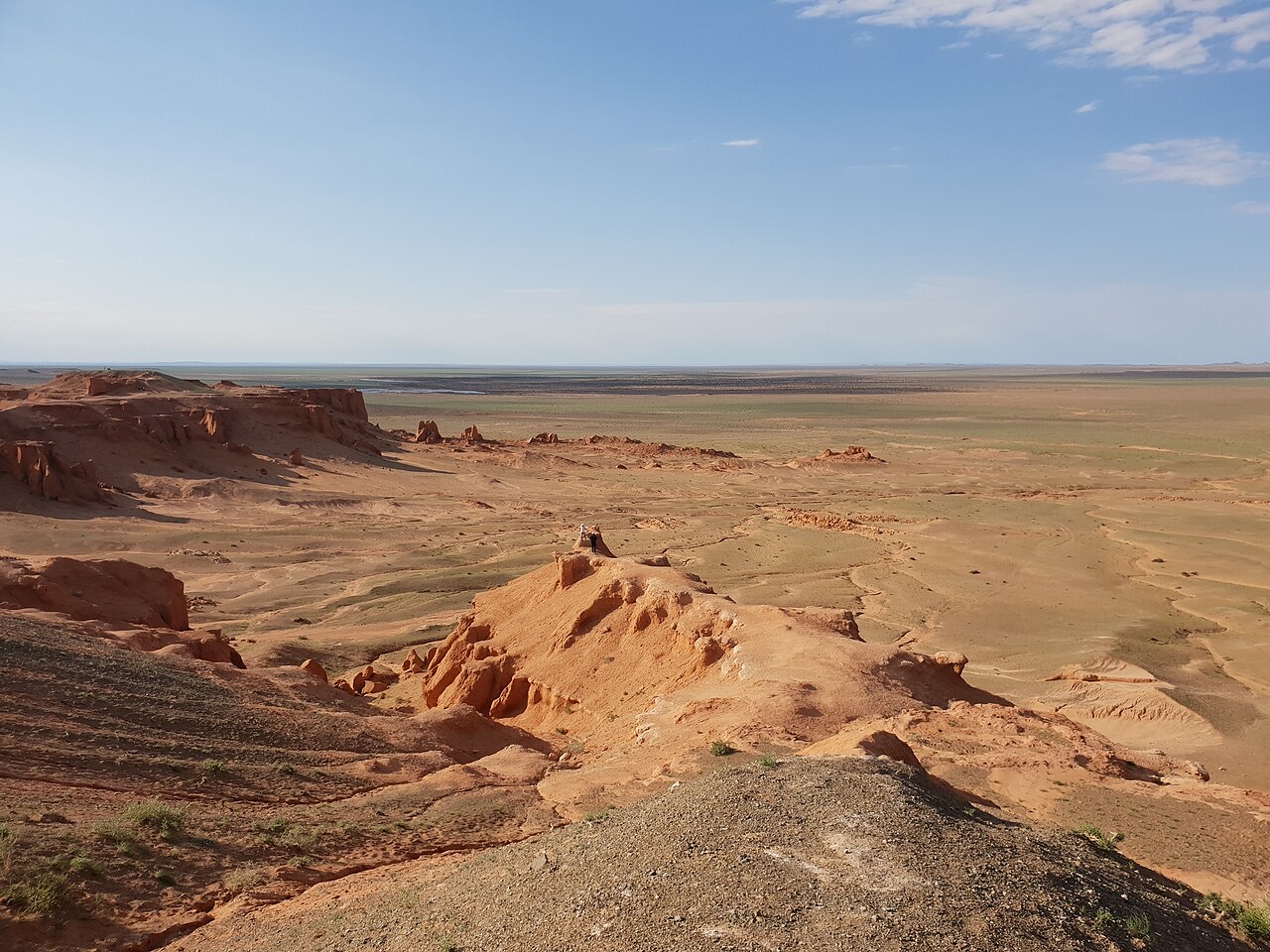
Was the Gobi always a desert—and how do we know whose eggs were in a nest?
Today’s desert exposes rocks formed in more than one kind of ancient landscape. Djadokhta deposits are associated with sandy, relatively arid settings, while the Nemegt Formation preserves river and floodplain environments. Treating “the Gobi” as one timeless desert mixes geography with geology. The regional comparison here follows two fossil-bearing formations, using rounded representative ages of 75 and 70 million years. Their boundaries and correlations are less precise than those numbers might suggest.
Common Protoceratops skeletons near the Flaming Cliffs once made that dinosaur seem a plausible source of the eggs there. At Ukhaa Tolgod, a different Gobi locality, researchers found an oviraptorid embryo inside a similar egg. The bones inside the shell connect a type of egg to oviraptorids. Other fossils place adult oviraptorids over nests, providing separate evidence for how those dinosaurs reproduced.
Other discoveries answer different questions. The famous paired Protoceratops and Velociraptor skeletons preserve an interaction; they are not an average day in a whole ecosystem. Perinatal Saurolophus remains from the Nemegt add evidence about young dinosaurs in a floodplain setting. Comparing such records requires attention to preservation and locality, not just species names. The atlas presents the Gobi as a changing collection of habitats and records, with no implication that every featured animal met every other one.
[1] [2] [3] [4] [5]Time windows and evidence
Older ages are on the left. Bars span the dated intervals. A dot marks a single age.
- Djadokhta sandy habitats 71–80 Ma
- Nemegt rivers and floodplains 66–72 Ma
- An oviraptorid embryo inside a Gobi egg 71–80 Ma
- The Protoceratops–Velociraptor pair 71–80 Ma
- Perinatal Saurolophus from the Nemegt 66–72 Ma
Researched windowsEvidence records
75 Ma · interval 71–80 Ma
Djadokhta sandy habitats
The older scene represents the broadly Campanian Djadokhta fossil record in the Mongolian Gobi. Sandy deposits and fossil associations support relatively arid habitats, with local events capable of burying articulated animals. The schematic is a regional environmental summary rather than an exact reconstruction of the Flaming Cliffs at a single measured age. Water, vegetation and local topography varied within this setting.
[3] [5]Locate this time in the atlas ↗Observed
Djadokhta sandstones preserve articulated dinosaurs, nests and other vertebrate remains.
Reconstructed
Sandy, relatively arid environments supported a diverse terrestrial community.
Uncertain
Correlations and numerical ages vary; a fossil association is not a complete community census.
Evidence windows overlapping this state: 3. Overlap does not establish exact coexistence.
body fossil · The Mongolian Gobi ↗
An oviraptorid embryo inside a Gobi egg
An embryo preserved inside a Late Cretaceous egg supplied direct anatomical evidence for the identity of eggs previously associated with Protoceratops. The finding changed interpretation of nearby adults and nests. It is a clear example of stronger evidence revising an attractive earlier story. The specimen establishes an egg–animal connection; it does not mean every superficially similar fossil egg can be identified without examination.
body fossil · The Mongolian Gobi ↗
The Protoceratops–Velociraptor pair
Two articulated dinosaurs from the Djadokhta Formation preserve an unusually close physical interaction. Their positions support an interpretation involving conflict between predator and prey or defensive struggle. The observation is rare and powerful, but it is still one event filtered by burial. It cannot establish how often such encounters occurred, which species usually prevailed or the exact sequence of movements before death.
body fossil · The Mongolian Gobi ↗
Perinatal Saurolophus from the Nemegt
Very young Saurolophus remains and associated eggshell from the Nemegt Formation provide a view of dinosaur development distinct from adult skeletons. The sedimentary setting is interpreted as a floodplain crossed by rivers. The remains help investigate growth and early life, but the location where bones were buried must not automatically be read as a nest site or as the exact place where the animals lived.
70 Ma · interval 66–72 Ma
Nemegt rivers and floodplains
The Nemegt record adds meandering channels, tributaries and floodplain deposits to the regional story. Saurolophus fossils, including very young individuals, occur in this river-influenced setting. Choosing this state changes the habitat, not merely the date label. The broad age interval acknowledges that formation correlations are imperfect and may overlap neighbouring units; the two scenes are not a continuous movie of one point.
[4] [5]Locate this time in the atlas ↗Observed
Nemegt sedimentary facies indicate channels and floodplains, with associated dinosaur remains.
Reconstructed
A better-watered regional environment supported habitats different from the sandy older window.
Uncertain
The comparison does not resolve how contemporaneous nearby facies or diachronous formation boundaries were.
Evidence windows overlapping this state: 3. Overlap does not establish exact coexistence.
body fossil · The Mongolian Gobi ↗
An oviraptorid embryo inside a Gobi egg
An embryo preserved inside a Late Cretaceous egg supplied direct anatomical evidence for the identity of eggs previously associated with Protoceratops. The finding changed interpretation of nearby adults and nests. It is a clear example of stronger evidence revising an attractive earlier story. The specimen establishes an egg–animal connection; it does not mean every superficially similar fossil egg can be identified without examination.
body fossil · The Mongolian Gobi ↗
The Protoceratops–Velociraptor pair
Two articulated dinosaurs from the Djadokhta Formation preserve an unusually close physical interaction. Their positions support an interpretation involving conflict between predator and prey or defensive struggle. The observation is rare and powerful, but it is still one event filtered by burial. It cannot establish how often such encounters occurred, which species usually prevailed or the exact sequence of movements before death.
body fossil · The Mongolian Gobi ↗
Perinatal Saurolophus from the Nemegt
Very young Saurolophus remains and associated eggshell from the Nemegt Formation provide a view of dinosaur development distinct from adult skeletons. The sedimentary setting is interpreted as a floodplain crossed by rivers. The remains help investigate growth and early life, but the location where bones were buried must not automatically be read as a nest site or as the exact place where the animals lived.
What this story cannot resolve
The modern marker is regional. UNESCO’s cited page is a tentative-list nomination, not an assertion that the sites have been inscribed as a World Heritage property.
Keep these ideas handy
Facies
The observable characteristics of a rock body that help describe and interpret its depositional setting. Explore the idea ↗
Trace fossils
Preserved evidence of an organism’s activity, such as a footprint, burrow, feeding mark or coprolite. Explore the idea ↗
Sedimentary basin
An area in which sediment can accumulate and be preserved over time. Explore the idea ↗
The evidence notebook
body fossil · The Mongolian Gobi ↗
An oviraptorid embryo inside a Gobi egg
An embryo preserved inside a Late Cretaceous egg supplied direct anatomical evidence for the identity of eggs previously associated with Protoceratops. The finding changed interpretation of nearby adults and nests. It is a clear example of stronger evidence revising an attractive earlier story. The specimen establishes an egg–animal connection; it does not mean every superficially similar fossil egg can be identified without examination.
body fossil · The Mongolian Gobi ↗
The Protoceratops–Velociraptor pair
Two articulated dinosaurs from the Djadokhta Formation preserve an unusually close physical interaction. Their positions support an interpretation involving conflict between predator and prey or defensive struggle. The observation is rare and powerful, but it is still one event filtered by burial. It cannot establish how often such encounters occurred, which species usually prevailed or the exact sequence of movements before death.
body fossil · The Mongolian Gobi ↗
Perinatal Saurolophus from the Nemegt
Very young Saurolophus remains and associated eggshell from the Nemegt Formation provide a view of dinosaur development distinct from adult skeletons. The sedimentary setting is interpreted as a floodplain crossed by rivers. The remains help investigate growth and early life, but the location where bones were buried must not automatically be read as a nest site or as the exact place where the animals lived.
Follow the evidence
Sources & credits
- Dinosaur Eggs ↗
American Museum of Natural History · Not stated
Use, credit & modifications
Reference only. No third-party prose, figures, photographs or datasets reproduced; factual interpretation written originally for this atlas.
Credit: American Museum of Natural History — Dinosaur Eggs. Original educational synthesis; geological ages rounded into explicitly labelled teaching intervals. No licensed media incorporated; no territorial reuse permission asserted.
- A theropod dinosaur embryo and the affinities of the Flaming Cliffs dinosaur eggs ↗
Norell et al.; Science · 1994
Use, credit & modifications
Reference only. No third-party prose, figures, photographs or datasets reproduced; factual interpretation written originally for this atlas.
Credit: Norell et al.; Science — A theropod dinosaur embryo and the affinities of the Flaming Cliffs dinosaur eggs. Original educational synthesis; geological ages rounded into explicitly labelled teaching intervals. No licensed media incorporated; no territorial reuse permission asserted.
- Fighting Dinosaurs ↗
American Museum of Natural History · Not stated
Use, credit & modifications
Reference only. No third-party prose, figures, photographs or datasets reproduced; factual interpretation written originally for this atlas.
Credit: American Museum of Natural History — Fighting Dinosaurs. Original educational synthesis; geological ages rounded into explicitly labelled teaching intervals. No licensed media incorporated; no territorial reuse permission asserted.
- Perinatal Specimens of Saurolophus angustirostris from the Upper Cretaceous of Mongolia ↗
Dewaele et al.; PLOS ONE · 2015
Use, credit & modifications
Reference only. No third-party prose, figures, photographs or datasets reproduced; factual interpretation written originally for this atlas.
Credit: Dewaele et al.; PLOS ONE — Perinatal Specimens of Saurolophus angustirostris from the Upper Cretaceous of Mongolia. Original educational synthesis; geological ages rounded into explicitly labelled teaching intervals. No licensed media incorporated; no territorial reuse permission asserted.
- Cretaceous Dinosaur Fossil Sites in the Mongolian Gobi ↗
Government of Mongolia nomination; UNESCO tentative list · 2014
Use, credit & modifications
Reference only. No third-party prose, figures, photographs or datasets reproduced; factual interpretation written originally for this atlas.
Credit: Government of Mongolia nomination; UNESCO tentative list — Cretaceous Dinosaur Fossil Sites in the Mongolian Gobi. Original educational synthesis; geological ages rounded into explicitly labelled teaching intervals. No licensed media incorporated; no territorial reuse permission asserted.
Follow the connections
 Asia
China ↗
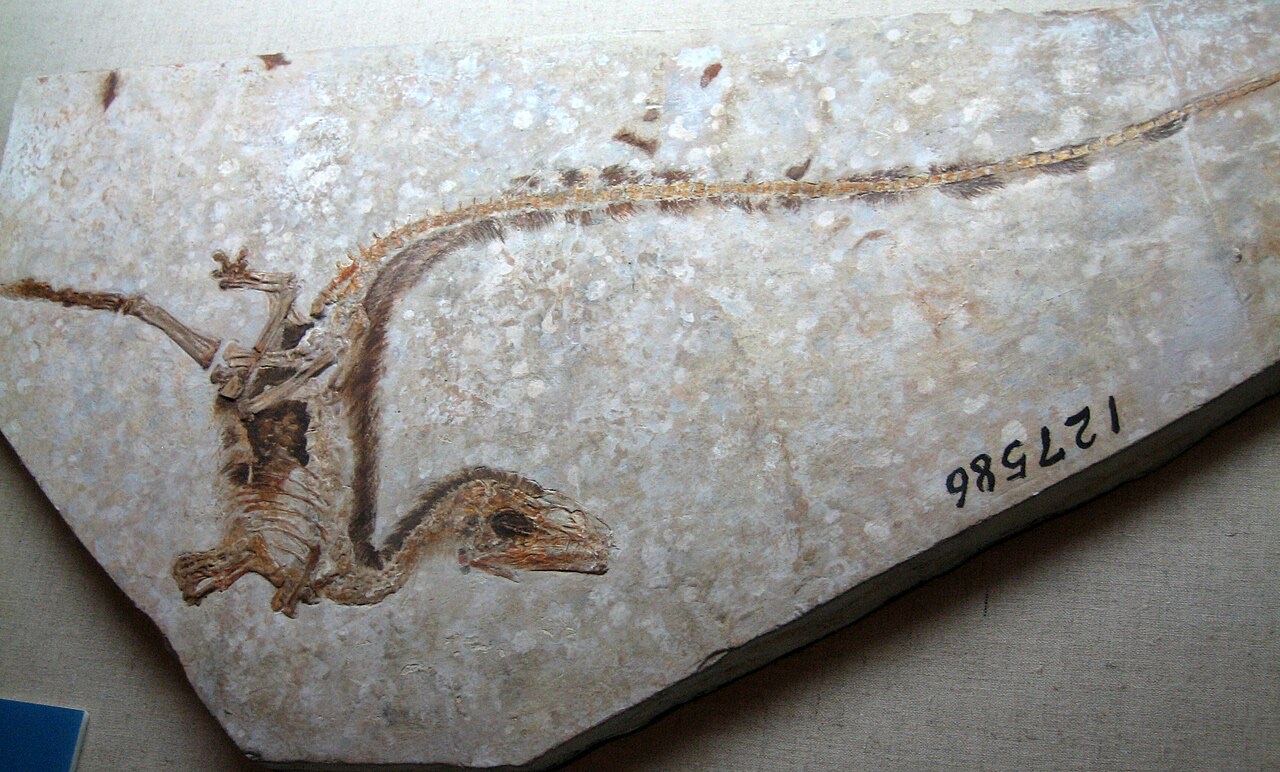
Jehol lake country
The Yixian and Jiufotang formations preserve different Early Cretaceous windows into northeastern China’s lake and terrestrial ecosystems.
125 Ma → 120 Ma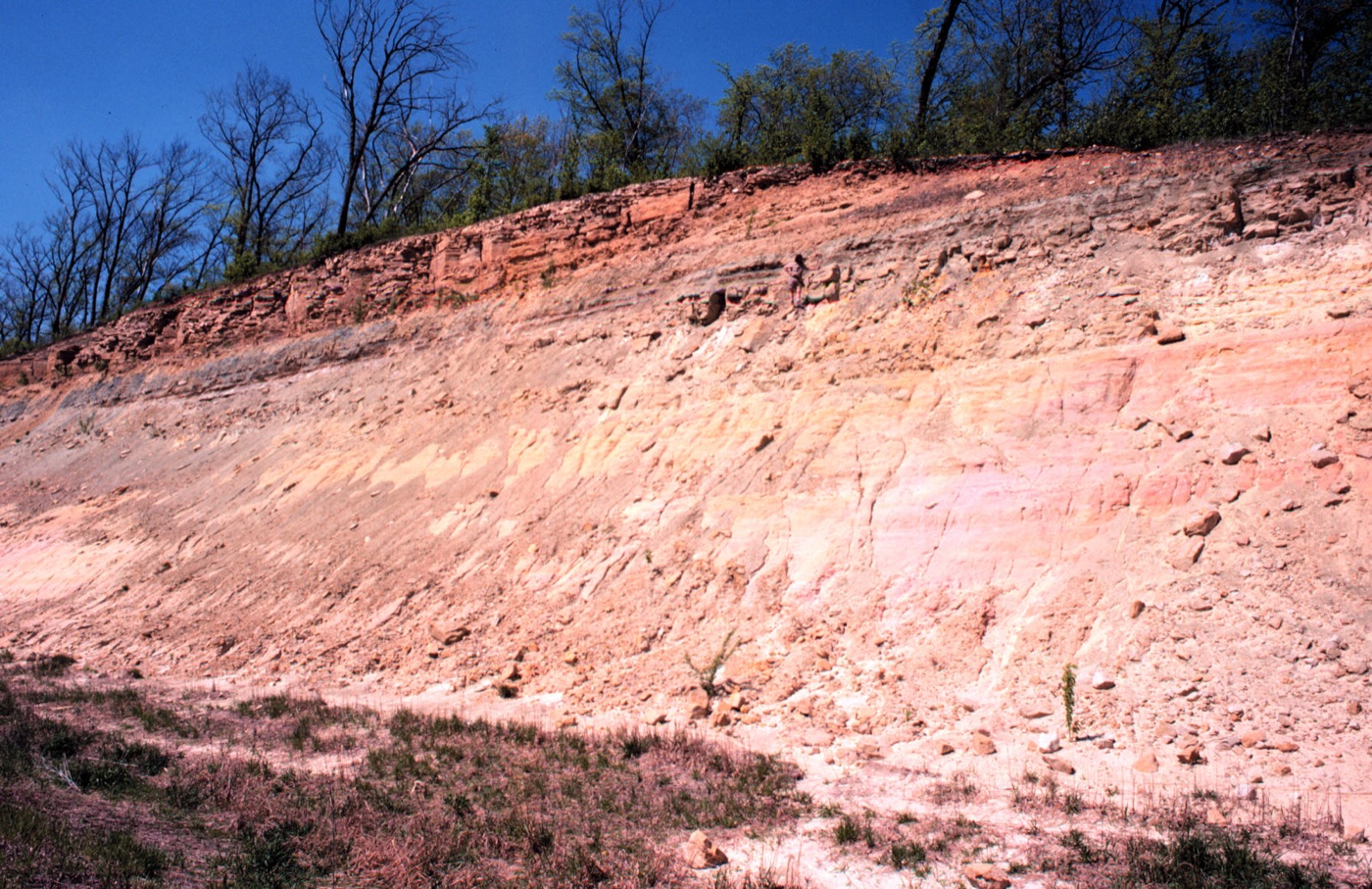 North America
United States ↗
Hell Creek & the Williston Basin
Floodplain fossils on either side of the end-Cretaceous boundary reveal major biological turnover. Pollen and leaves help place the change in time, alongside the more conspicuous dinosaur bones.
67 Ma → 65.5 Ma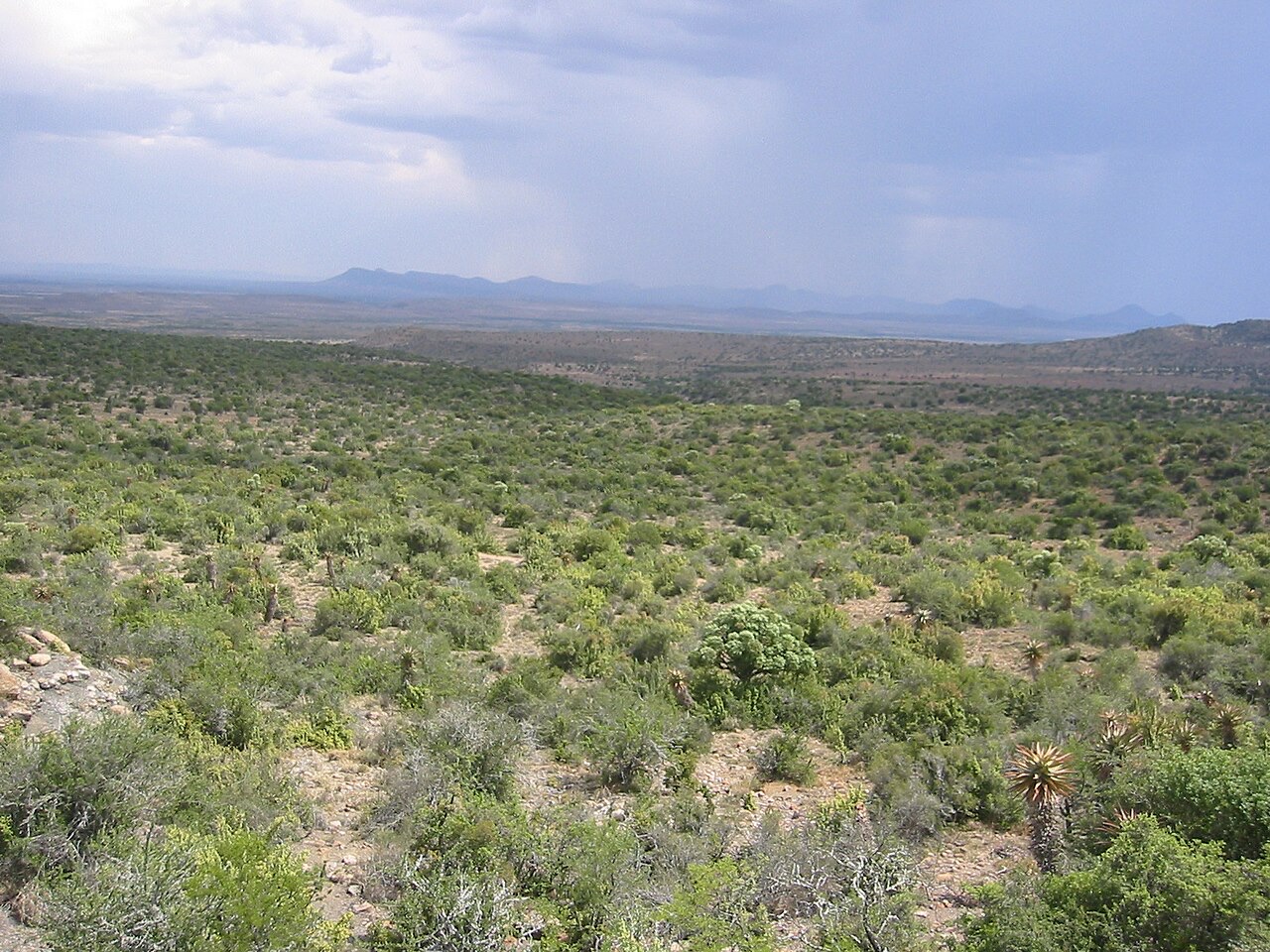 Africa
South Africa ↗
Karoo Basin
Late Permian and Early Triassic terrestrial fossils record profound ecosystem turnover. The Karoo also shows why a fossil assemblage boundary cannot automatically be equated with a precisely dated global extinction.
253 Ma → 251 Ma