
Diversifying marine communities filled a variety of habitats, before severe environmental disruption near the end of the period.
Ordovician seas supported an expanding variety of suspension feeders, predators, swimmers and bottom dwellers. Brachiopods, bryozoans, echinoderms, molluscs and other groups occupied different positions in marine food webs. The important change is not simply a larger list of names. A community can become more structurally complex when organisms exploit different foods, water depths or positions above and within the sediment. [2]
Morocco’s Fezouata deposits preserve unusually informative fossils from early in the period. They help test the idea that all Cambrian-style organisms disappeared at a single boundary. Some lineages persisted alongside groups that became more familiar components of later Paleozoic seas. A formal period boundary is a tool for correlation, not an instruction telling every organism to change at once. [4] [5]
Near the end of the Ordovician, glaciation, changing sea level and changes to the oceans accompanied a major extinction. On Anticosti Island, researchers follow brachiopod assemblages through the crisis and into the early Silurian. The fossils supply a regional sequence. Testing extinction mechanisms and their global timing requires comparable evidence from other basins. [6] [7]
A turning point
Marine diversification was followed by one of the major extinction intervals of the Phanerozoic.
Reading this chapter carefully
Fezouata samples the early Ordovician. Anticosti records the boundary interval in another setting. The two places resolve different parts of the period.
Ma means millions of years before the present. The international chart gives the estimated boundary ages. [1]
Where to see this chapter in the rocks
These places preserve selected windows from the chapter. Find all overlapping regional histories.
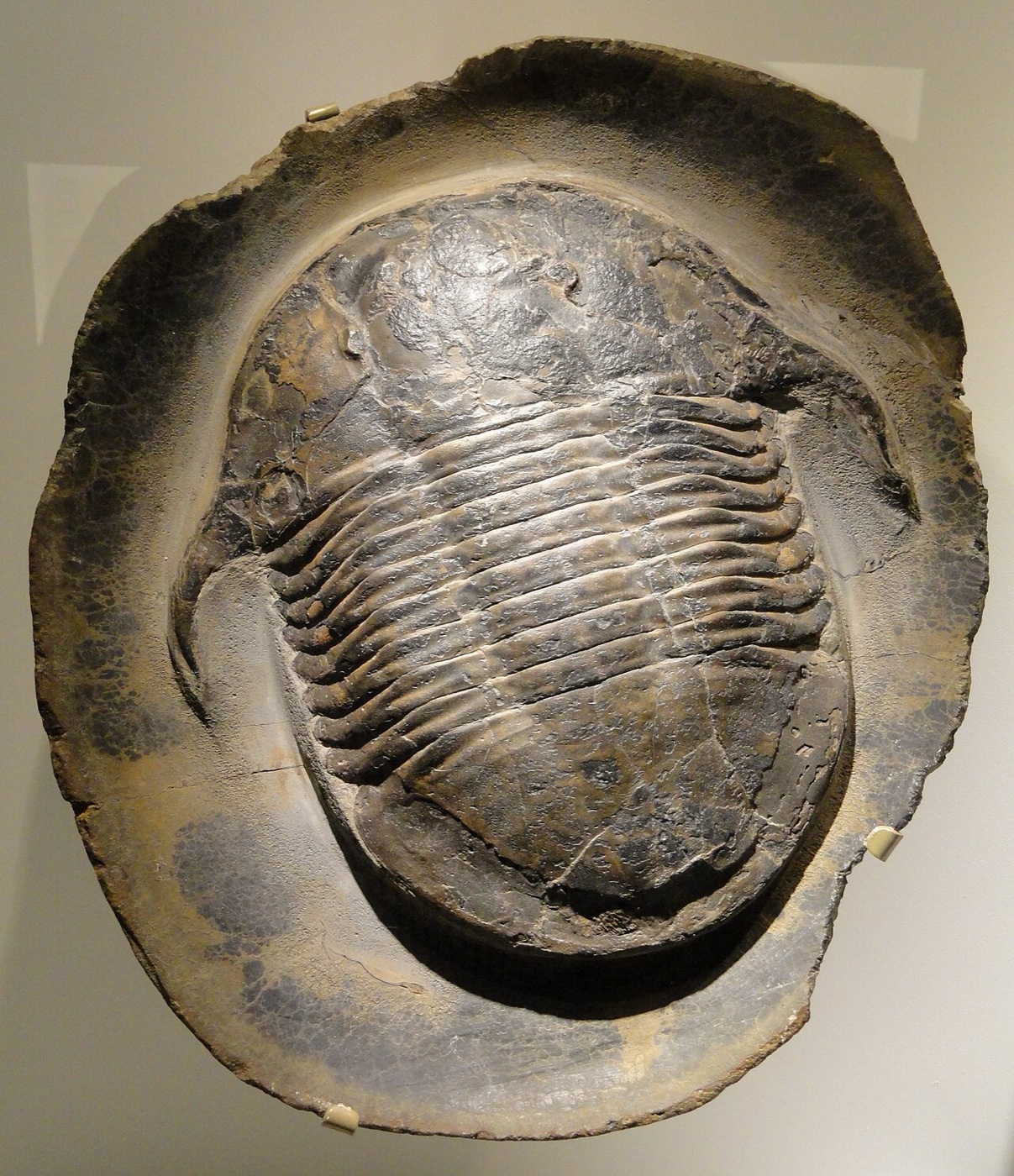 Africa
Morocco ↗
Southern & eastern Morocco
Fezouata’s marine animals and the Kem Kem region’s river deposits reveal widely separated episodes in northern African history. Their contrast is powerful precisely because the localities and times are kept distinct.
480 Ma → 99 Ma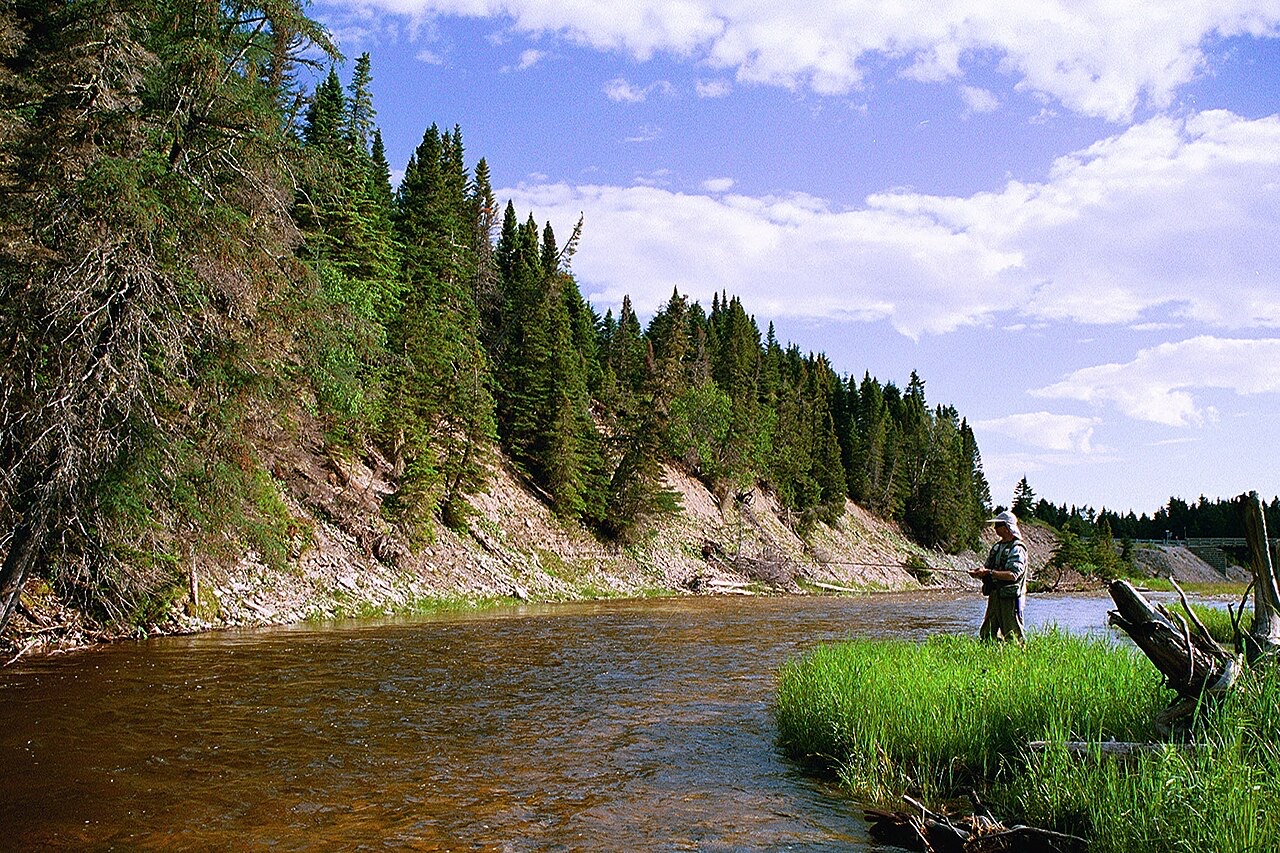 North America
Canada ↗
Anticosti
Anticosti preserves an unusually extensive marine record across the end-Ordovician crisis. Shell communities, carbonate beds and isotope measurements reveal environmental disturbance and a changing Silurian recovery.
444.5 Ma → 442 MaFollow the evidence
Sources & credits
- International Chronostratigraphic Chart, version 2026/06 ↗
International Commission on Stratigraphy · 2026-06
Use, credit & modifications
Reference only. No source text, photographs, charts or other assets reproduced; original factual synthesis.
Credit: International Commission on Stratigraphy. Original explanatory synthesis; geological boundary ages normalized to ICS 2026/06 where relevant. No third-party asset reuse; no territorial asset licence asserted.
- The Ordovician Period ↗
University of California Museum of Paleontology · 2011 compilation; older underlying material
Use, credit & modifications
Reference only. No source text, photographs, charts or other assets reproduced; original factual synthesis.
Credit: University of California Museum of Paleontology. Original explanatory synthesis; geological boundary ages normalized to ICS 2026/06 where relevant. No third-party asset reuse; no territorial asset licence asserted.
- Across space and time: A review of sampling, preservational, analytical, and anthropogenic biases in fossil data across macroecological scales ↗
Earth-Science Reviews · 2023
Use, credit & modifications
Reference only. No source text, photographs, charts or other assets reproduced; original factual synthesis.
Credit: Earth-Science Reviews. Original explanatory synthesis; geological boundary ages normalized to ICS 2026/06 where relevant. No third-party asset reuse; no territorial asset licence asserted.
- The Fezouata Shale (Lower Ordovician, Anti-Atlas, Morocco): A historical review ↗
Lefebvre and colleagues / Palaeogeography, Palaeoclimatology, Palaeoecology · 2016
Use, credit & modifications
Reference only. No source text, photographs, figures or datasets reproduced. Original factual synthesis; no reuse licence asserted.
Credit: Lefebvre and colleagues / Palaeogeography, Palaeoclimatology, Palaeoecology — The Fezouata Shale (Lower Ordovician, Anti-Atlas, Morocco): A historical review. Facts paraphrased into original educational text; ages rounded to declared teaching intervals. No asset reuse requested; territorial permissions not applicable.
- Radiodont frontal appendages from the Fezouata Biota reveal high diversity and ecological adaptations to suspension-feeding ↗
Frontiers in Ecology and Evolution · 2023
Use, credit & modifications
Reference only. No source text, photographs, figures or datasets reproduced. Original factual synthesis; no reuse licence asserted.
Credit: Frontiers in Ecology and Evolution — Radiodont frontal appendages from the Fezouata Biota reveal high diversity and ecological adaptations to suspension-feeding. Facts paraphrased into original educational text; ages rounded to declared teaching intervals. No asset reuse requested; territorial permissions not applicable.
- Mass Extinctions Through Geologic Time ↗
US National Park Service · Not stated
Use, credit & modifications
Reference only. No source text, photographs, charts or other assets reproduced; original factual synthesis.
Credit: US National Park Service. Original explanatory synthesis; geological boundary ages normalized to ICS 2026/06 where relevant. No third-party asset reuse; no territorial asset licence asserted.
- Early athyride brachiopod evolution through the Ordovician–Silurian mass extinction and recovery ↗
Journal of Paleontology / Cambridge University Press · 2017
Use, credit & modifications
Reference only. No source text, photographs, figures or datasets reproduced. Original factual synthesis; no reuse licence asserted.
Credit: Journal of Paleontology / Cambridge University Press — Early athyride brachiopod evolution through the Ordovician–Silurian mass extinction and recovery. Facts synthesized in original educational language; numerical ranges are identified as stage envelopes, published dating bounds, or approximate teaching intervals. No source assets reused; territorial permissions not applicable.