
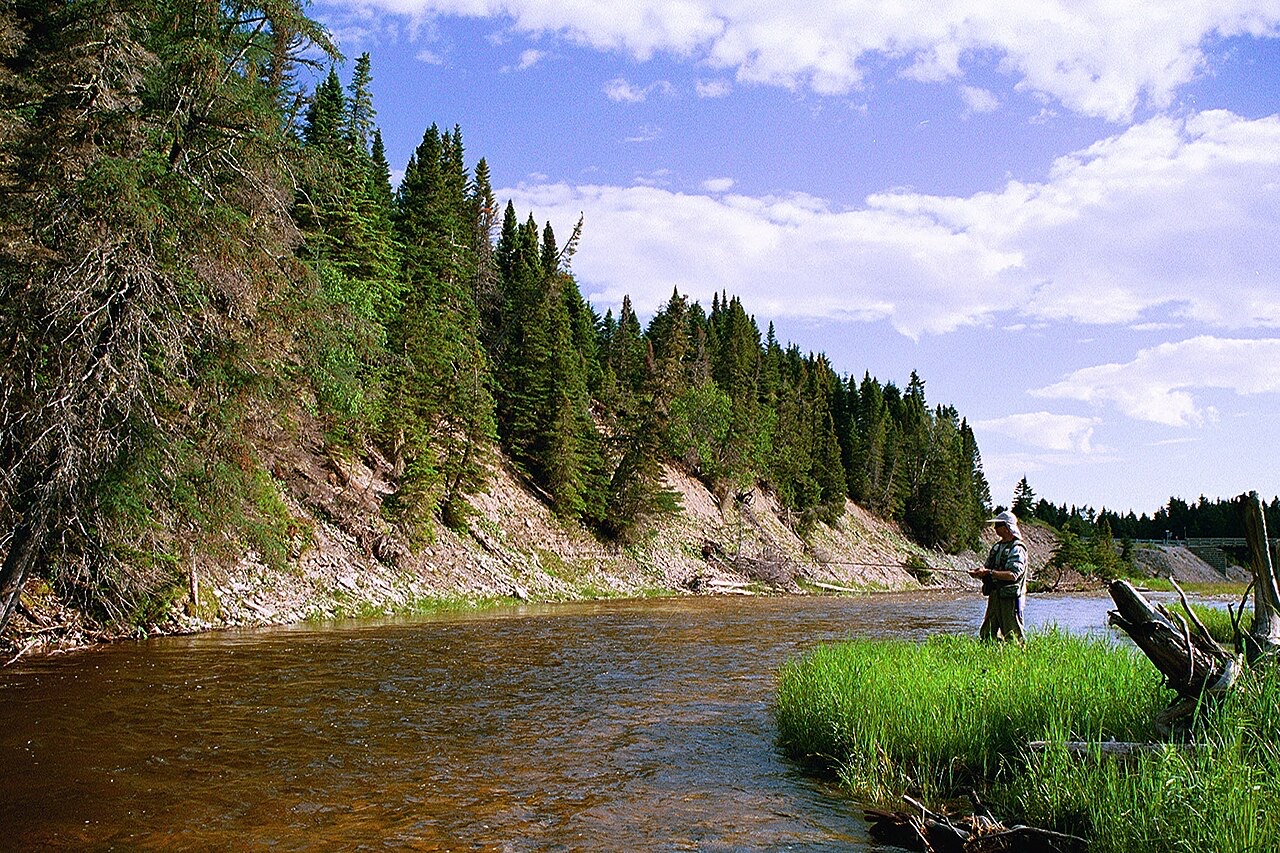
How do we distinguish a global extinction from a local change in the seafloor?
Anticosti is a forested island in the Gulf of St. Lawrence today, but the rocks that make it important formed on an ancient tropical marine shelf. Its long succession lets researchers compare life before, during and after the end-Ordovician extinction. The value lies in the relationship between fossils and layers: a collection of shells alone cannot show whether an animal disappeared everywhere, moved to another habitat or simply failed to be preserved in one bed.
The Hirnantian Ellis Bay Formation contains brachiopods, including Hirnantia, alongside carbonate deposits that record changing shelf conditions. Carbon-isotope measurements provide another line of comparison between sections. These chemical changes help correlate the succession with records elsewhere, but they are not a direct count of extinctions. Erosion and pauses in deposition interrupt some exposures, especially in the shallower eastern part of the island. A visually continuous cliff need not preserve continuous time.
In the early Silurian, the upper Becscie Formation records communities that differed from the older assemblages. Large Virgiana brachiopods became conspicuous in the Chabot Member. This was a living marine ecosystem, not an empty ocean waiting to be refilled. Recovery involved changes in abundance, body size and ecological composition; it did not mean that every lost species returned or that every group recovered at the same speed.
The comparison therefore keeps both snapshots marine. Dramatic biological change can occur without a landscape changing from sea to land. The exact position of the Ordovician–Silurian boundary has also been debated and revised: recent work places some basal Becscie beds in the latest Ordovician. Formation names are useful rock labels, but they should not automatically be treated as global time boundaries.
[1] [2] [3] [4] [5] [6]Time windows and evidence
Older ages are on the left. Bars span the dated intervals. A dot marks a single age.
- A Hirnantian shelf under stress 443.1–445.2 Ma
- New communities on the Silurian shelf 440.5–443.1 Ma
- Hirnantia in the Ellis Bay Formation 443.1–445.2 Ma
- The Ellis Bay carbon-isotope excursion 443.1–445.2 Ma
- Virgiana beds of the Chabot Member 440.5–443.1 Ma
Researched windowsEvidence records
444.5 Ma · interval 443.1–445.2 Ma
A Hirnantian shelf under stress
The Ellis Bay interval records a carbonate shelf during the Hirnantian, the final Ordovician stage. Shelly communities lived through changing sea level and environmental conditions associated with a global extinction interval. The diagram represents a shallow marine setting rather than an exact coastline or a single extinction day. The numerical bounds are the published stage boundaries used for correlation; they are not a measured duration for every exposed section.
[2] [3] [6]Locate this time in the atlas ↗Observed
Hirnantia and other brachiopods occur in Ellis Bay carbonate beds; carbon-isotope values vary through the sequence.
Reconstructed
A tropical shelf with shifting habitats and biological turnover.
Uncertain
Small gaps and lateral facies changes complicate the timing of individual losses.
Evidence windows overlapping this state: 2. Overlap does not establish exact coexistence.
body fossil · Anticosti ↗
Hirnantia in the Ellis Bay Formation
Brachiopods assigned to Hirnantia occur in the Ellis Bay succession and help connect Anticosti with the final Ordovician interval elsewhere. Their significance depends on associated species and stratigraphic position, rather than a single shell acting as an infallible clock. The assemblage is also ecological evidence: these were bottom-dwelling marine animals. Changes in their occurrence must be compared with sedimentary changes before interpreting absence as extinction.
geochemistry · Anticosti ↗
The Ellis Bay carbon-isotope excursion
Measurements from brachiopod shells and surrounding carbonate record changes in carbon-isotope composition through the Ellis Bay Formation. Comparing these records with other sections helps researchers align events during the Hirnantian. The signal adds an independent test alongside fossils and sedimentology. It does not by itself identify the cause of every biological loss, and chemical alteration after burial or missing beds can complicate a simple reading of the curve.
442 Ma · interval 440.5–443.1 Ma
New communities on the Silurian shelf
The Rhuddanian upper Becscie succession records marine communities after the end-Ordovician crisis. In the Chabot Member, abundant larger Virgiana brachiopods contrast with small-shelled assemblages lower in the succession. Carbonate beds indicate continued shelf sedimentation with changing energy and depth. This snapshot uses the Rhuddanian stage as a broad age envelope and deliberately does not assign the entire Becscie Formation to the Silurian.
[4] [5] [6]Locate this time in the atlas ↗Observed
Virgiana-rich beds and associated marine fossils occur in the Chabot Member of the Becscie Formation.
Reconstructed
An inhabited shallow shelf with a different community structure during recovery.
Uncertain
Local abundance is affected by habitat and preservation; it is not a measure of global recovery speed.
Evidence windows overlapping this state: 1. Overlap does not establish exact coexistence.
What this story cannot resolve
Coordinates locate the modern island. Stage-wide numerical envelopes are not bed-by-bed dates. The basal Becscie may include latest Ordovician strata, so the younger snapshot specifically represents its Rhuddanian upper succession.
Keep these ideas handy
Mass extinction
A geologically concentrated increase in extinction affecting many groups and regions, recognizable in the fossil record. Explore the idea ↗
Ecological recovery
The re-establishment or reorganization of biological communities after disturbance, measured in more than one possible way. Explore the idea ↗
Facies
The observable characteristics of a rock body that help describe and interpret its depositional setting. Explore the idea ↗
Uncertainty & reconstruction limits
Explicit limits on what evidence and models allow us to infer, including uncertainty in age, identity, place and process. Explore the idea ↗
The evidence notebook
body fossil · Anticosti ↗
Hirnantia in the Ellis Bay Formation
Brachiopods assigned to Hirnantia occur in the Ellis Bay succession and help connect Anticosti with the final Ordovician interval elsewhere. Their significance depends on associated species and stratigraphic position, rather than a single shell acting as an infallible clock. The assemblage is also ecological evidence: these were bottom-dwelling marine animals. Changes in their occurrence must be compared with sedimentary changes before interpreting absence as extinction.
geochemistry · Anticosti ↗
The Ellis Bay carbon-isotope excursion
Measurements from brachiopod shells and surrounding carbonate record changes in carbon-isotope composition through the Ellis Bay Formation. Comparing these records with other sections helps researchers align events during the Hirnantian. The signal adds an independent test alongside fossils and sedimentology. It does not by itself identify the cause of every biological loss, and chemical alteration after burial or missing beds can complicate a simple reading of the curve.
body fossil · Anticosti ↗
Virgiana beds of the Chabot Member
Virgiana brachiopods became prominent in the upper Becscie Formation, where the Chabot Member records a later part of early Silurian marine recovery. Their larger shells and abundance contrast with some small-shelled assemblages lower in the succession. This is a concrete biological change within a continuing marine system. It illustrates why recovery can involve ecological replacement and changing community structure, rather than a return to the exact assemblage present before a crisis.
Follow the evidence
Sources & credits
- Anticosti: World Heritage inscription decision ↗
UNESCO World Heritage Committee · 2023
Use, credit & modifications
Reference only. No source text, photographs, figures or datasets reproduced. Original factual synthesis; no reuse licence asserted.
Credit: UNESCO World Heritage Committee — Anticosti: World Heritage inscription decision. Facts synthesized in original educational language; numerical ranges are identified as stage envelopes, published dating bounds, or approximate teaching intervals. No source assets reused; territorial permissions not applicable.
- A new species of Hirnantia and the Hirnantian age of the Ellis Bay Formation ↗
Journal of Paleontology / Cambridge University Press · 2023
Use, credit & modifications
Reference only. No source text, photographs, figures or datasets reproduced. Original factual synthesis; no reuse licence asserted.
Credit: Journal of Paleontology / Cambridge University Press — A new species of Hirnantia and the Hirnantian age of the Ellis Bay Formation. Facts synthesized in original educational language; numerical ranges are identified as stage envelopes, published dating bounds, or approximate teaching intervals. No source assets reused; territorial permissions not applicable.
- Hirnantian chemostratigraphy of Anticosti Island: brachiopod shells and bulk carbonate ↗
Palaeogeography, Palaeoclimatology, Palaeoecology · 2025
Use, credit & modifications
Reference only. No source text, photographs, figures or datasets reproduced. Original factual synthesis; no reuse licence asserted.
Credit: Palaeogeography, Palaeoclimatology, Palaeoecology — Hirnantian chemostratigraphy of Anticosti Island: brachiopod shells and bulk carbonate. Facts synthesized in original educational language; numerical ranges are identified as stage envelopes, published dating bounds, or approximate teaching intervals. No source assets reused; territorial permissions not applicable.
- Early athyride brachiopod evolution through the Ordovician–Silurian mass extinction and recovery ↗
Journal of Paleontology / Cambridge University Press · 2017
Use, credit & modifications
Reference only. No source text, photographs, figures or datasets reproduced. Original factual synthesis; no reuse licence asserted.
Credit: Journal of Paleontology / Cambridge University Press — Early athyride brachiopod evolution through the Ordovician–Silurian mass extinction and recovery. Facts synthesized in original educational language; numerical ranges are identified as stage envelopes, published dating bounds, or approximate teaching intervals. No source assets reused; territorial permissions not applicable.
- Early Silurian virgianid brachiopods of Anticosti Island ↗
Bollettino della Società Paleontologica Italiana · 2010
Use, credit & modifications
Reference only. No source text, photographs, figures or datasets reproduced. Original factual synthesis; no reuse licence asserted.
Credit: Jisuo Jin and Paul Copper — Early Silurian virgianid brachiopods. Facts synthesized in original educational language; numerical ranges are identified as stage envelopes, published dating bounds, or approximate teaching intervals. No source assets reused; territorial permissions not applicable.
- International Chronostratigraphic Chart, December 2024 ↗
International Commission on Stratigraphy · 2024-12
Use, credit & modifications
Reference only. No source text, photographs, figures or datasets reproduced. Original factual synthesis; no reuse licence asserted.
Credit: International Commission on Stratigraphy — International Chronostratigraphic Chart, December 2024. Facts synthesized in original educational language; numerical ranges are identified as stage envelopes, published dating bounds, or approximate teaching intervals. No source assets reused; territorial permissions not applicable.
Follow the connections
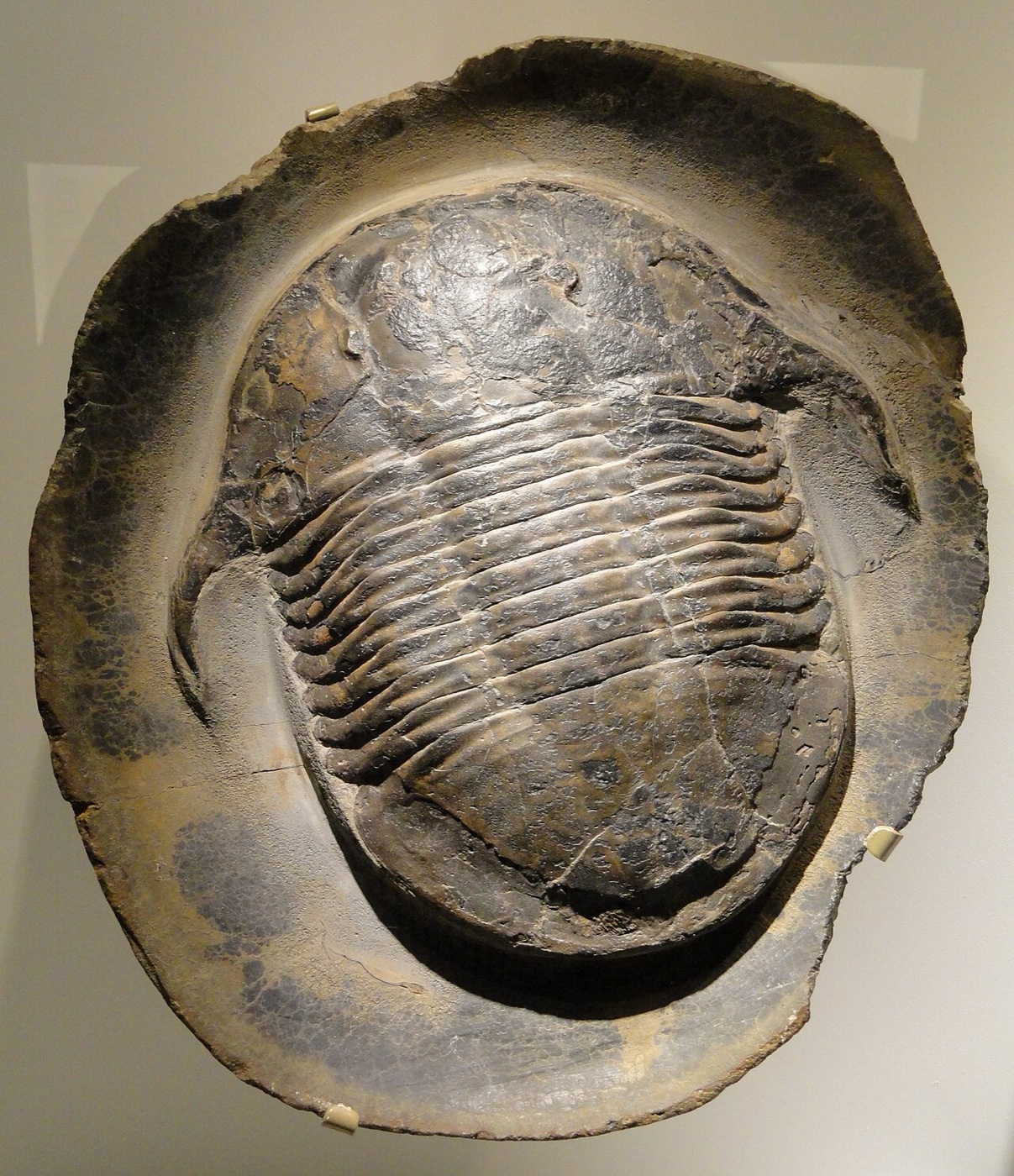 Africa
Morocco ↗
Southern & eastern Morocco
Fezouata’s marine animals and the Kem Kem region’s river deposits reveal widely separated episodes in northern African history. Their contrast is powerful precisely because the localities and times are kept distinct.
480 Ma → 99 Ma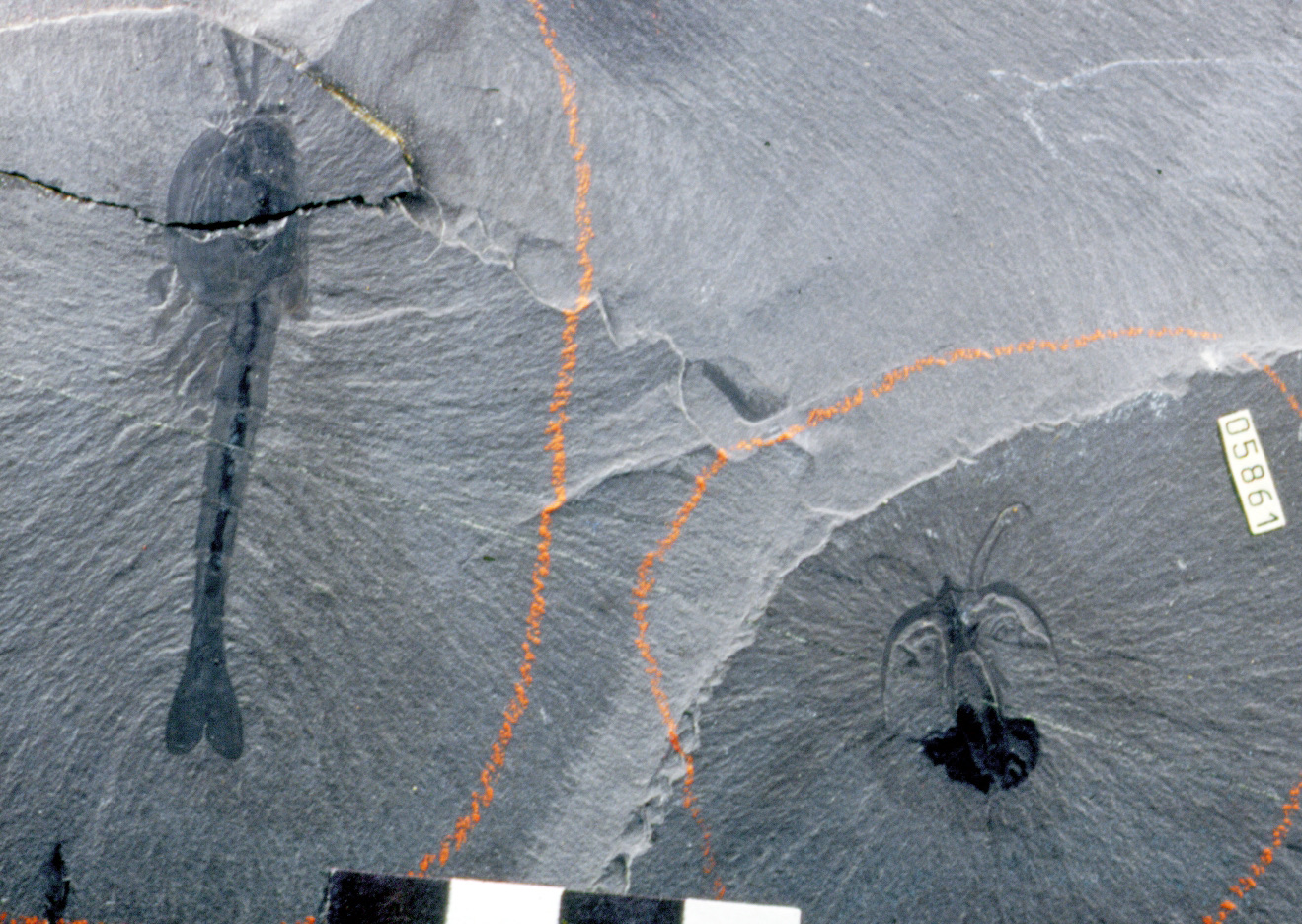 North America
Canada ↗
Burgess Shale
Cambrian mud preserved animals that most fossil sites lose. Today those thin traces are exposed high in the Canadian Rockies, connecting the history of life with the later history of a mountain belt.
508 Ma → Today