
How can a change in formation name improve the history attached to a fossil?
The Ténéré’s modern aridity exposes rocks deposited in very different environments. Dinosaur and crocodyliform remains occur within Cretaceous river-associated deposits, but they do not all belong to one fauna. The older Gadoufaoua record and younger fossil areas around Iguidi are separate in geography and time. This regional page groups them to compare environmental evidence while keeping their collection localities distinct.
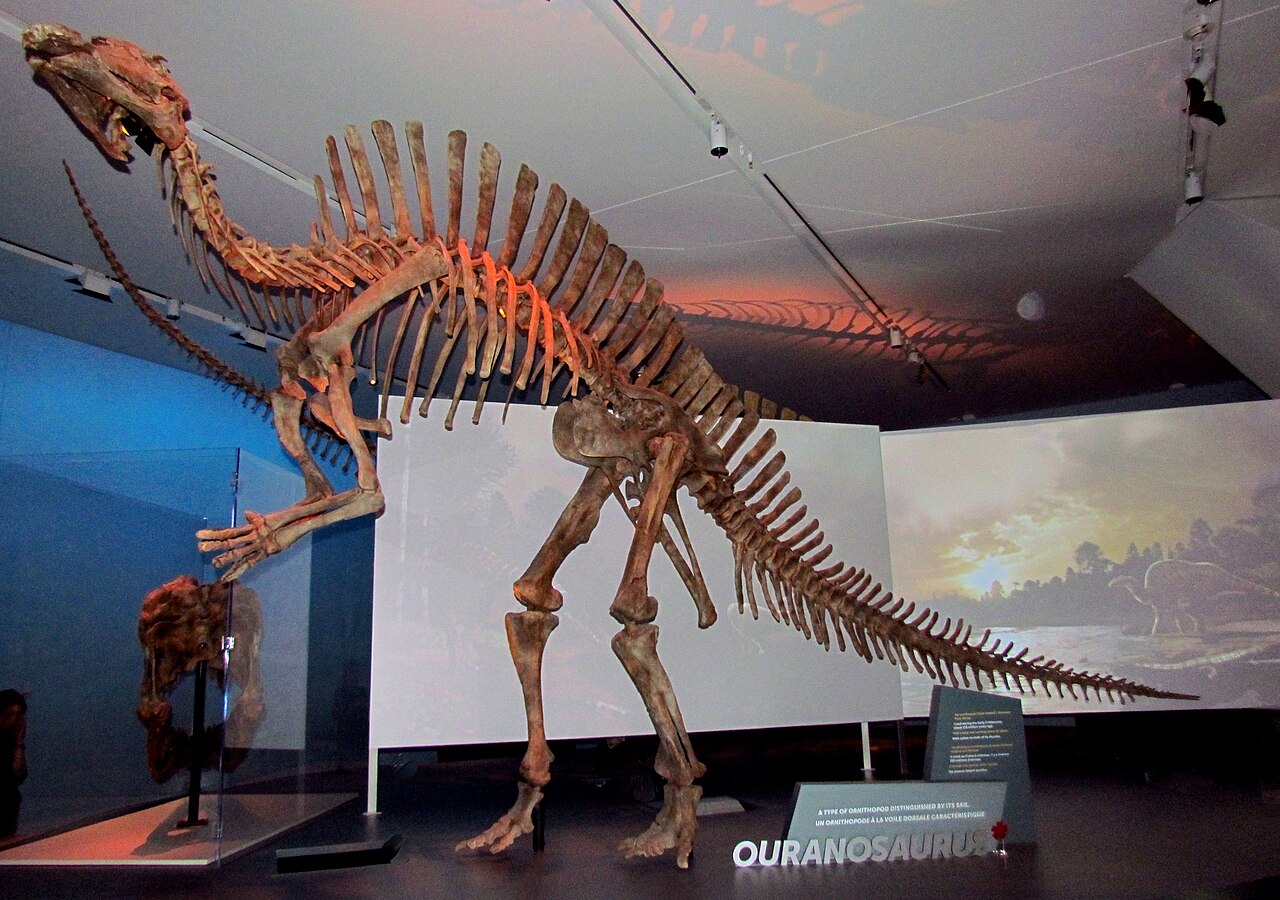
The older window follows the Elrhaz Formation at Gadoufaoua, traditionally assigned a broad Aptian–Albian age. Nigersaurus, Ouranosaurus and Sarcosuchus are among its documented vertebrates. Their anatomy offers complementary ecological clues: a specialized herbivore’s teeth address feeding, while crocodyliform remains contribute to understanding the river-associated fauna. Neither supplies a complete food web, and co-occurrence is not direct proof that one particular animal ate another.
The younger window concerns early to middle Cenomanian fossil areas including Iguidi. Carcharodontosaurus iguidensis was originally described from deposits assigned to the Echkar Formation. A 2026 reassessment of regional sections instead places those exposures in the Farak Formation. That change is not cosmetic. A formation name connects specimens to a geological framework, and revising the correlation can alter how comparisons with other African faunas are made.
The atlas therefore retains the original specimen reference and the newer stratigraphic interpretation together. Its ages are broad teaching windows, not exact timestamps for every bone. Modern coordinates anchor a large region rather than a single continuous palaeoriver. The contrast between ancient fluvial sediment and today’s desert is secure; the detailed course of each river, the abundance of animals and the resolution of regional correlations remain subjects for field evidence.
[1] [2] [3] [4]Time windows and evidence
Older ages are on the left. Bars span the dated intervals. A dot marks a single age.
- Gadoufaoua’s Elrhaz river ecosystem 105–121 Ma
- Farak rivers in northern Niger 95–100 Ma
- Nigersaurus from Gadoufaoua 105–121 Ma
- Sarcosuchus in the Elrhaz fauna 105–121 Ma
- Carcharodontosaurus at Iguidi 95–100 Ma
Researched windowsEvidence records
112 Ma · interval 105–121 Ma
Gadoufaoua’s Elrhaz river ecosystem
River-associated sediment preserved a diverse vertebrate fauna at Gadoufaoua. The representative age is a rounded value within the traditionally broad Aptian–Albian assignment; no direct age is asserted for every skeleton. Herbivore and crocodyliform remains offer different ecological information. The conceptual river is not a restored channel map, and the surrounding vegetation is not assigned an exact composition.
[1] [2] [4]Locate this time in the atlas ↗Observed
Elrhaz deposits contain documented dinosaur and crocodyliform remains.
Reconstructed
A terrestrial and aquatic ecosystem occupied an active fluvial landscape.
Uncertain
Detailed formation age, channel geometry and local ecological abundance remain uncertain.
Evidence windows overlapping this state: 2. Overlap does not establish exact coexistence.
body fossil · Ténéré fossil rivers ↗
Nigersaurus from Gadoufaoua
Nigersaurus taqueti is a sauropod known from Gadoufaoua’s Elrhaz deposits. Its unusual skull and numerous replacement teeth support investigation of feeding adaptations. Those structures do not specify the exact plant eaten in every meal, and a reconstructed posture remains an anatomical interpretation. The fossil establishes a distinctive herbivore within an older Cretaceous river system rather than a dinosaur living in today’s desert.
body fossil · Ténéré fossil rivers ↗
Sarcosuchus in the Elrhaz fauna
The long-snouted crocodyliform Sarcosuchus imperator occurs in the Gadoufaoua assemblage. Its remains contribute evidence for a river-associated ecosystem containing large aquatic and terrestrial vertebrates. Size estimates depend on preserved anatomy and comparison, so an exact length is not imposed here. The presence of a large crocodyliform does not establish that every nearby dinosaur bone represents its prey.
97 Ma · interval 95–100 Ma
Farak rivers in northern Niger
Younger fossil-bearing exposures at Iguidi record another terrestrial river-associated ecosystem. The 2026 study correlates these rocks with the Farak Formation and compares their fauna with early to middle Cenomanian assemblages elsewhere in North Africa. Earlier papers used the Echkar name. Both references remain available so the revision is transparent. This is a regional comparison, not a claim that the same river persisted from Gadoufaoua time.
[3] [4]Locate this time in the atlas ↗Observed
Younger northern Niger deposits contain diagnostic theropod and other vertebrate material.
Reconstructed
A later fluvial ecosystem developed within the wider sedimentary basin.
Uncertain
The age is based on regional correlation and formation interpretation, not a direct clock in each fossil.
Evidence windows overlapping this state: 1. Overlap does not establish exact coexistence.
What this story cannot resolve
The page combines distinct fossil areas within northern Niger. Elrhaz ages are broad; younger Iguidi deposits are labelled Farak following the cited 2026 reassessment, while the original Echkar attribution is documented.
Keep these ideas handy
Stratigraphy
Studying the order, relationships and distribution of rock layers and the events they preserve. Explore the idea ↗
Relative dating
Determining which event came first without necessarily assigning a numerical age. Explore the idea ↗
Biogeography
Studying how organisms are distributed through space and time and how those patterns developed. Explore the idea ↗
The evidence notebook
body fossil · Ténéré fossil rivers ↗
Nigersaurus from Gadoufaoua
Nigersaurus taqueti is a sauropod known from Gadoufaoua’s Elrhaz deposits. Its unusual skull and numerous replacement teeth support investigation of feeding adaptations. Those structures do not specify the exact plant eaten in every meal, and a reconstructed posture remains an anatomical interpretation. The fossil establishes a distinctive herbivore within an older Cretaceous river system rather than a dinosaur living in today’s desert.
body fossil · Ténéré fossil rivers ↗
Sarcosuchus in the Elrhaz fauna
The long-snouted crocodyliform Sarcosuchus imperator occurs in the Gadoufaoua assemblage. Its remains contribute evidence for a river-associated ecosystem containing large aquatic and terrestrial vertebrates. Size estimates depend on preserved anatomy and comparison, so an exact length is not imposed here. The presence of a large crocodyliform does not establish that every nearby dinosaur bone represents its prey.
body fossil · Ténéré fossil rivers ↗
Carcharodontosaurus at Iguidi
Carcharodontosaurus iguidensis was described from material in the Iguidi area. The original study assigned its deposits to the Echkar Formation; a 2026 stratigraphic reassessment places these exposures in the Farak Formation, with an early to middle Cenomanian comparison. This revision changes the geological label while retaining the specimen’s documented origin. It demonstrates why references and stratigraphic interpretations should remain visible together.
Follow the evidence
Sources & credits
- Supporting information: structural extremes in a Cretaceous dinosaur ↗
PLOS ONE / author research archive · 2007
Use, credit & modifications
Reference only; no source text, figures or photographs reproduced. Original educational synthesis.
Credit: PLOS ONE / author research archive. Original synthesis with explicit approximate teaching windows. No source asset reuse; territorial permissions not applicable.
- Basal abelisaurid and carcharodontosaurid theropods from the Lower Cretaceous Elrhaz Formation ↗
Acta Palaeontologica Polonica · 2008
Use, credit & modifications
Reference only; no source text, figures or photographs reproduced. Original educational synthesis.
Credit: Acta Palaeontologica Polonica. Original synthesis with explicit approximate teaching windows. No source asset reuse; territorial permissions not applicable.
- A new species of Carcharodontosaurus from the Cenomanian of Niger ↗
Journal of Vertebrate Paleontology · 2007
Use, credit & modifications
Reference only; no source text, figures or photographs reproduced. Original educational synthesis.
Credit: Journal of Vertebrate Paleontology. Original synthesis with explicit approximate teaching windows. No source asset reuse; territorial permissions not applicable.
- Scimitar-crested Spinosaurus species from the Sahara caps stepwise spinosaurid radiation ↗
Science · 2026-02-19
Use, credit & modifications
Reference only; no source text, figures or photographs reproduced. Original educational synthesis.
Credit: Science. Original synthesis with explicit approximate teaching windows. No source asset reuse; territorial permissions not applicable.
Follow the connections
 Africa
Morocco ↗
Southern & eastern Morocco
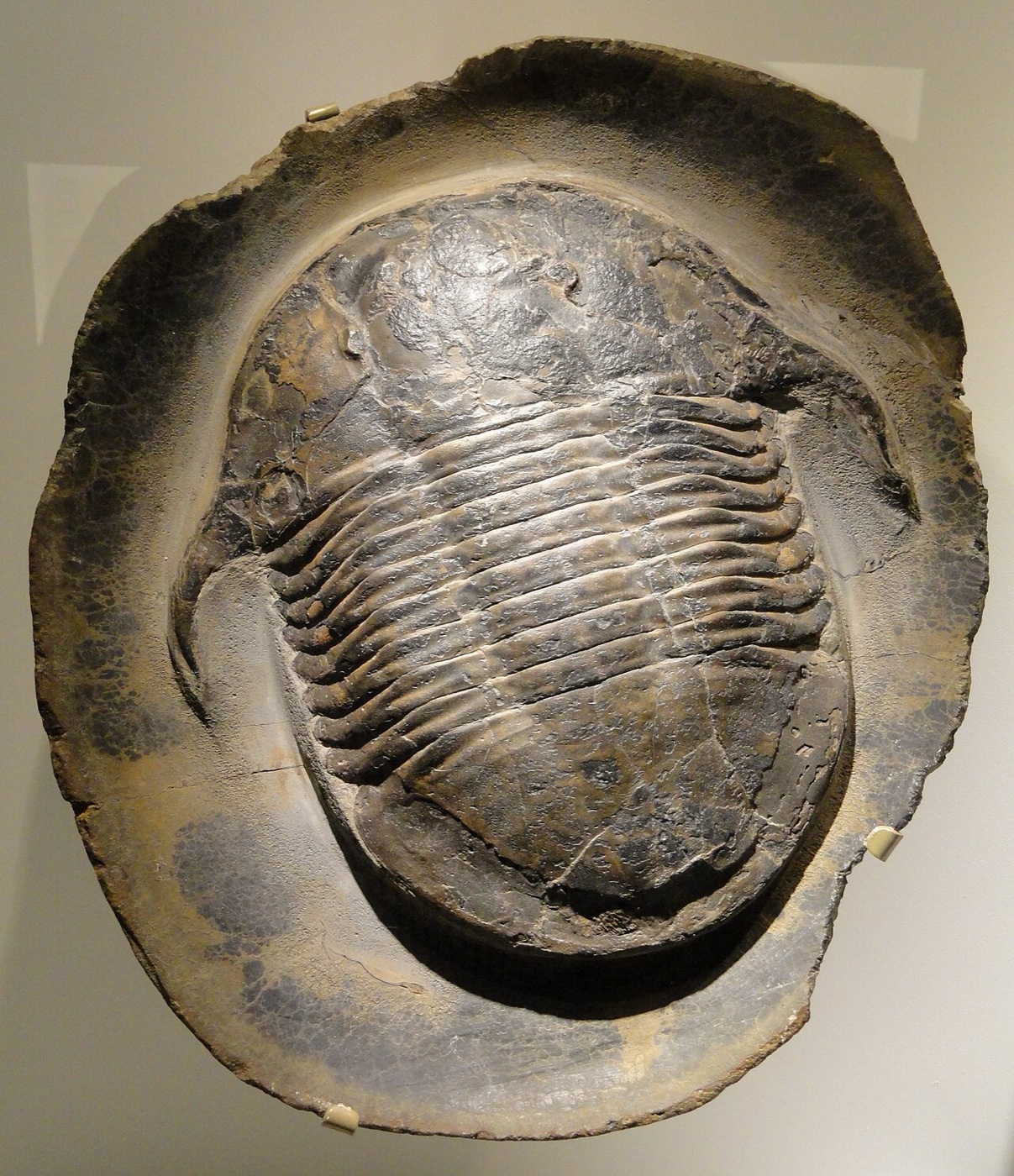
Fezouata’s marine animals and the Kem Kem region’s river deposits reveal widely separated episodes in northern African history. Their contrast is powerful precisely because the localities and times are kept distinct.
480 Ma → 99 Ma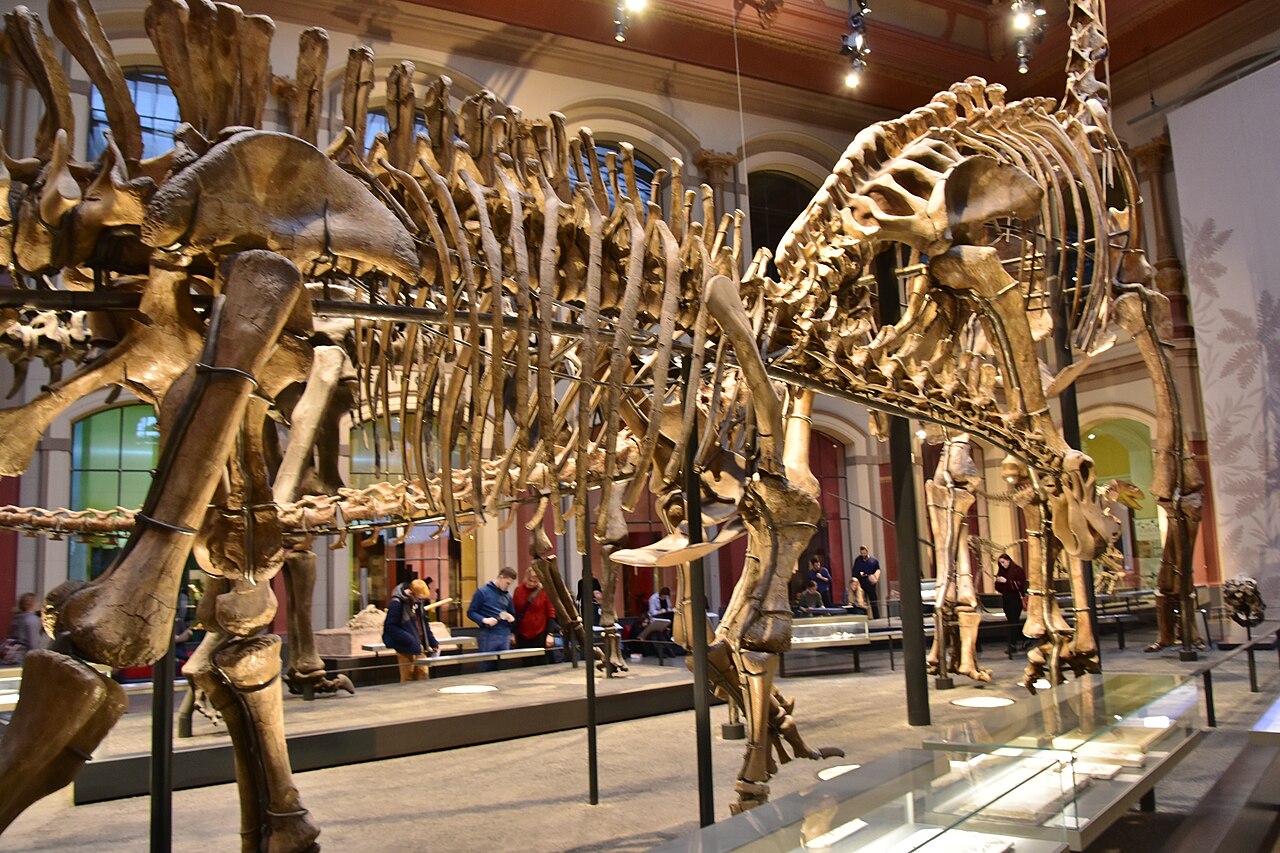 Africa
Tanzania ↗
Tendaguru
Alternating dinosaur-bearing and marine units record a changing Late Jurassic coastal system. Fossils and excavation archives connect terrestrial animals to a landscape repeatedly influenced by the sea.
152 Ma → 147 Ma