
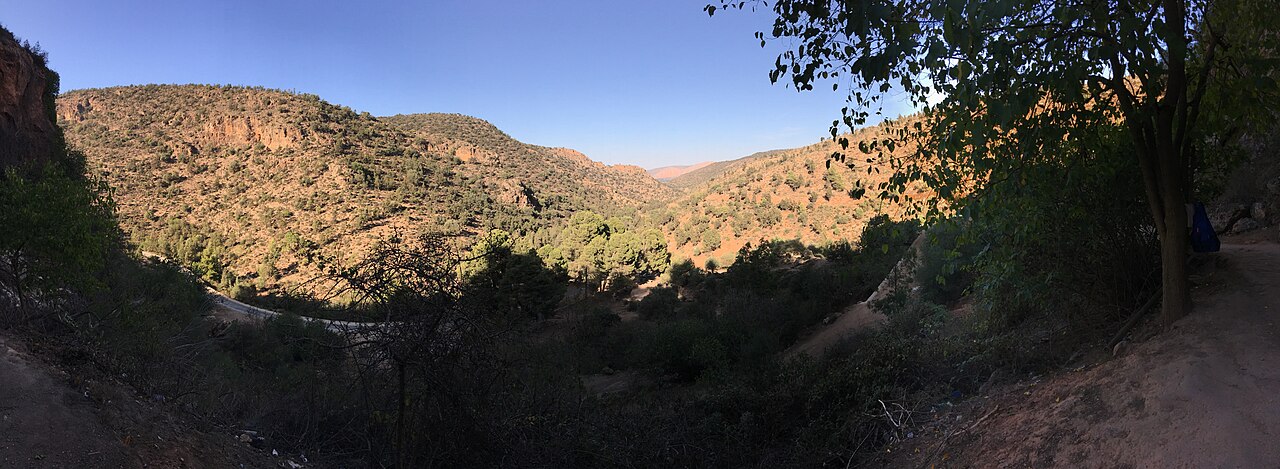
When does an animal remain record human transport rather than a local environment?
A marine shell found inland can tell more than one story. It might record an ancient sea, but at Taforalt selected shells belong to an archaeological cave assemblage. Their geological and cultural context changes the interpretation: people transported them. This distinction is essential in an atlas of past environments, where an attractive fossil can otherwise be mistaken for proof that its burial location was its original habitat.
The older window follows a shell-bead assemblage commonly dated to around 82,000 years ago. Perforation, wear and associated evidence support use as ornaments. The shells provide a connection to the coast without turning the inland cave into a marine setting. They also leave questions open. An object can preserve evidence of handling without preserving its exact social meaning, the route by which it travelled or the identity of its owner.
The younger window concerns late Pleistocene occupation and burials around 15,000 years ago. Human dental remains and plant evidence indicate substantial use of wild starchy foods and challenge the assumption that serious tooth decay began only with farming. The inference depends on several observations together. A cavity is a record of disease, not a complete menu, while a charred plant remain may survive because of processing or accidental burning.
The cave was used in different ways across widely separated intervals. Its burial record adds evidence about treatment of the dead and has also supported molecular research on selected individuals. None of these samples represents the entire population of a continent. Taforalt shows why human action must be considered alongside natural transport and burial: people can move biological material, modify it and create assemblages that require a different environmental reading.
[1] [2] [3] [4]Time windows and evidence
Older ages are on the left. Bars span the dated intervals. A dot marks a single age.
- Shell ornaments reach an inland cave 0.075–0.09 Ma
- Food processing and burial at Taforalt 0.0139–0.0155 Ma
- Marine shell beads in an inland cave 0.075–0.09 Ma
- Teeth and the evidence of diet 0.0139–0.0155 Ma
- The late Pleistocene burial assemblage 0.0139–0.0155 Ma
Researched windowsEvidence records
0.082 Ma · interval 0.075–0.09 Ma
Shell ornaments reach an inland cave
People used the cave within a terrestrial landscape and brought marine shells into it. The approximately 82,000-year example is bracketed broadly rather than treated as an exact date for each object. The cave is drawn schematically; the scene does not reconstruct its ancient interior or surrounding vegetation. The coast was a source of objects, not the cave’s depositional environment.
[1]Locate this time in the atlas ↗Observed
Perforated marine shells occur in an inland archaeological assemblage.
Reconstructed
Human selection and transport explain their presence.
Uncertain
Exact transport routes, vegetation and symbolic meanings are not established here.
Evidence windows overlapping this state: 1. Overlap does not establish exact coexistence.
0.015 Ma · interval 0.0139–0.0155 Ma
Food processing and burial at Taforalt
The later cave record includes human remains, wild plant foods and a documented burial context. Different activities contributed different materials to the deposit. Teeth provide evidence about health and diet, while burial context informs interpretation of the human assemblage. This window is separated from the shell-bead record by many tens of thousands of years and is not a continuous occupation sequence. The displayed interval selects the burial context; plant-bearing occupational deposits studied alongside the teeth extend to about 13,700 calibrated years before present, so all samples are not exactly coeval.
[2] [3] [4]Locate this time in the atlas ↗Observed
Dental, botanical and burial evidence occurs in the later levels.
Reconstructed
The cave supported repeated practical and social activities.
Uncertain
Year-round residence and a complete diet cannot be demonstrated from the selected evidence alone.
Evidence windows overlapping this state: 2. Overlap does not establish exact coexistence.
body fossil · Taforalt ↗
Teeth and the evidence of diet
Human teeth from the later Taforalt record show substantial dental disease. Combined with plant evidence, the findings support frequent use of starchy wild foods before agriculture. The teeth provide a record of lived experience, but diet is inferred from several lines of evidence rather than read from a cavity alone. Individual age, wear and preservation also affect what can be concluded.
locality · Taforalt ↗
The late Pleistocene burial assemblage
Human remains from the later burial context preserve evidence that can be studied anatomically and, in selected specimens, molecularly. Their archaeological setting distinguishes intentional treatment of the dead from ordinary sedimentary accumulation. The sample represents particular individuals and preservation conditions. It does not stand for all people in North Africa or establish the full social organization of the community that used the cave.
What this story cannot resolve
The marine shells were transported into an inland context. The two archaeological windows are distinct; the landscape is schematic, and individual samples cannot represent all North African communities.
Keep these ideas handy
Taphonomy
Studying what happens between an organism’s life, death, burial, preservation and eventual discovery. Explore the idea ↗
Sampling bias
Differences between the history of life and the subset preserved, exposed, collected, identified and published. Explore the idea ↗
Relative dating
Determining which event came first without necessarily assigning a numerical age. Explore the idea ↗
The evidence notebook
body fossil · Taforalt ↗
Marine shell beads in an inland cave
Perforated marine shells from Taforalt were analysed for evidence of selection, use and transport. Their presence inland is not evidence that a sea filled the cave during occupation. They were brought into a terrestrial human context. This record therefore uses animal remains to investigate behaviour as well as environment. The interpretation of personal ornamentation depends on wear, modification and association, not simply on finding a shell.
body fossil · Taforalt ↗
Teeth and the evidence of diet
Human teeth from the later Taforalt record show substantial dental disease. Combined with plant evidence, the findings support frequent use of starchy wild foods before agriculture. The teeth provide a record of lived experience, but diet is inferred from several lines of evidence rather than read from a cavity alone. Individual age, wear and preservation also affect what can be concluded.
locality · Taforalt ↗
The late Pleistocene burial assemblage
Human remains from the later burial context preserve evidence that can be studied anatomically and, in selected specimens, molecularly. Their archaeological setting distinguishes intentional treatment of the dead from ordinary sedimentary accumulation. The sample represents particular individuals and preservation conditions. It does not stand for all people in North Africa or establish the full social organization of the community that used the cave.
Follow the evidence
Sources & credits
- 82,000-year-old shell beads from North Africa and implications for modern human behaviour ↗
Proceedings of the National Academy of Sciences · 2007
Use, credit & modifications
Reference only; no source text, figures or photographs reproduced. Original educational synthesis.
Credit: Proceedings of the National Academy of Sciences. Original synthesis with explicit approximate teaching windows. No source asset reuse; territorial permissions not applicable.
- Earliest evidence for caries and exploitation of starchy plant foods in Pleistocene hunter-gatherers from Morocco ↗
Proceedings of the National Academy of Sciences · 2014
Use, credit & modifications
Reference only; no source text, figures or photographs reproduced. Original educational synthesis.
Credit: Proceedings of the National Academy of Sciences. Original synthesis with explicit approximate teaching windows. No source asset reuse; territorial permissions not applicable.
- Pleistocene North African genomes link Near Eastern and sub-Saharan African human populations ↗
Science · 2018
Use, credit & modifications
Reference only; no source text, figures or photographs reproduced. Original educational synthesis.
Credit: Science. Original synthesis with explicit approximate teaching windows. No source asset reuse; territorial permissions not applicable.
- Taforalt site: fieldwork update ↗
University of Oxford School of Archaeology · 2018
Use, credit & modifications
Reference only; no source text, figures or photographs reproduced. Original educational synthesis.
Credit: University of Oxford School of Archaeology. Original synthesis with explicit approximate teaching windows. No source asset reuse; territorial permissions not applicable.
Follow the connections
 Europe
Spain ↗
Atapuerca
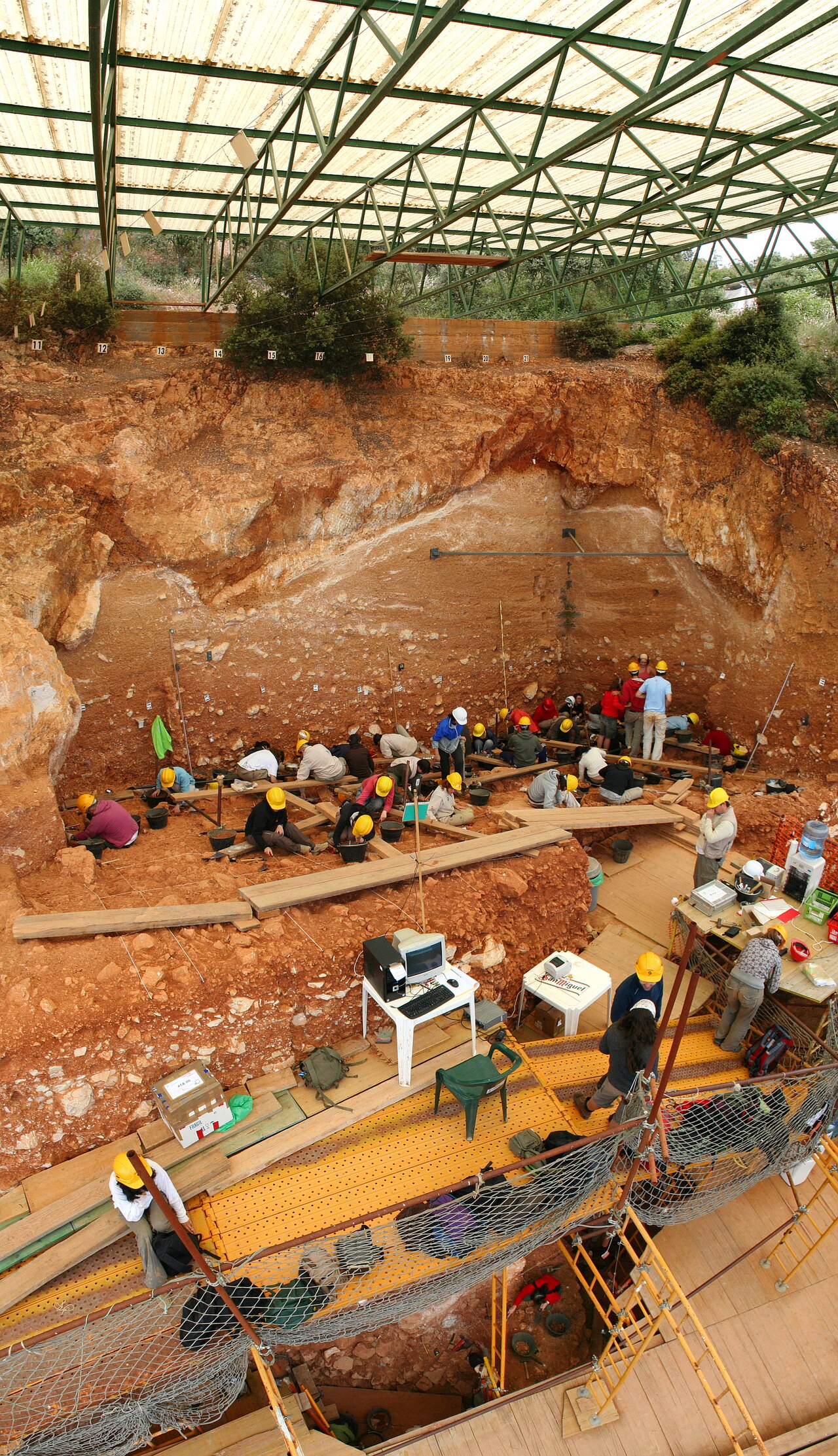
Sima del Elefante and Gran Dolina preserve distinct Early Pleistocene human records. Their fossils, sedimentary context and age estimates reveal a sequence rather than a single population frozen in time.
1.25 Ma → 0.85 Ma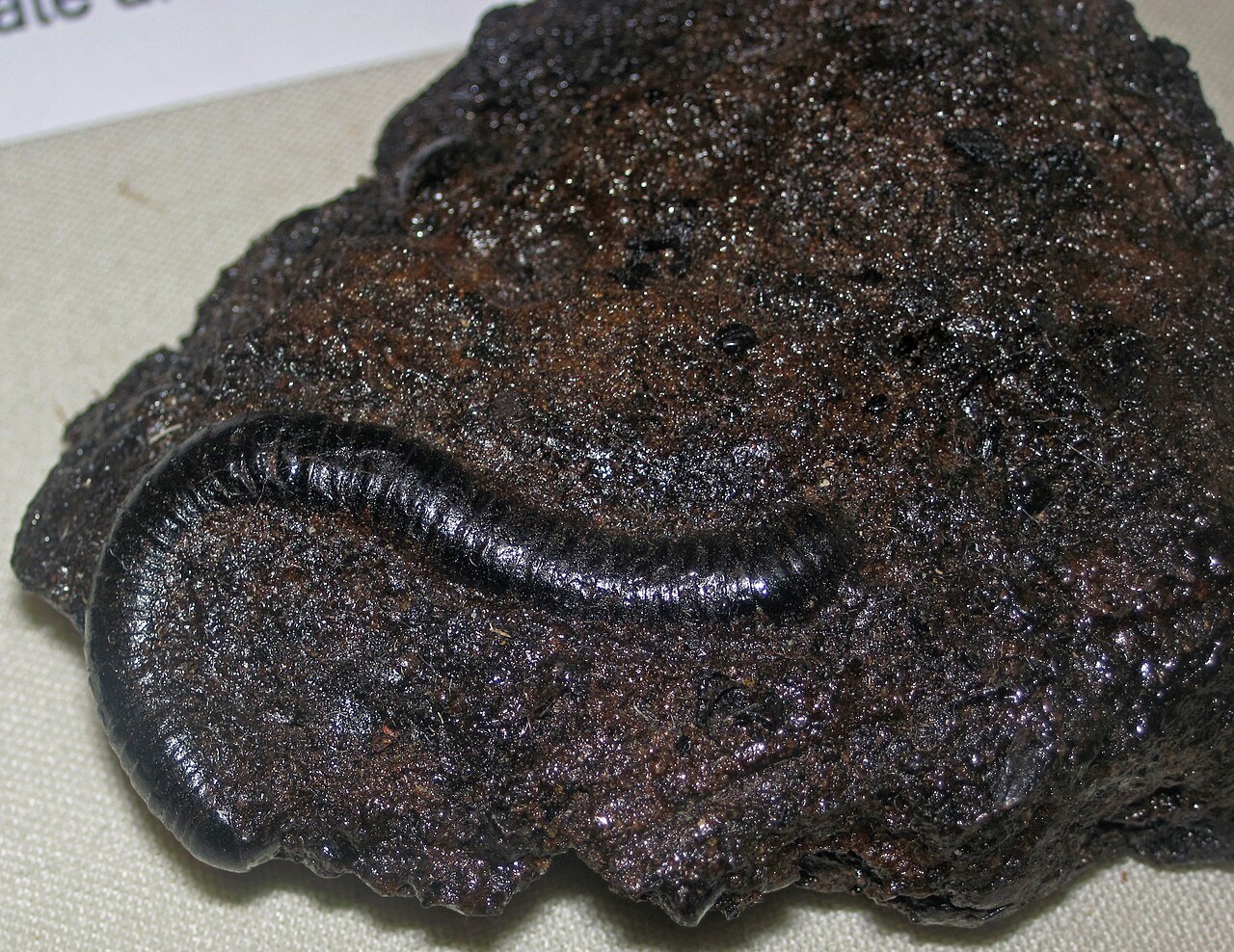 North America
United States ↗
La Brea
Natural asphalt seeps in the Los Angeles Basin trapped and preserved organisms through the late Pleistocene. Pit 91 reveals small organisms alongside large mammals, while directly dated bones help test the timing of regional megafaunal disappearance.
0.025 Ma → 0.0132 Ma