
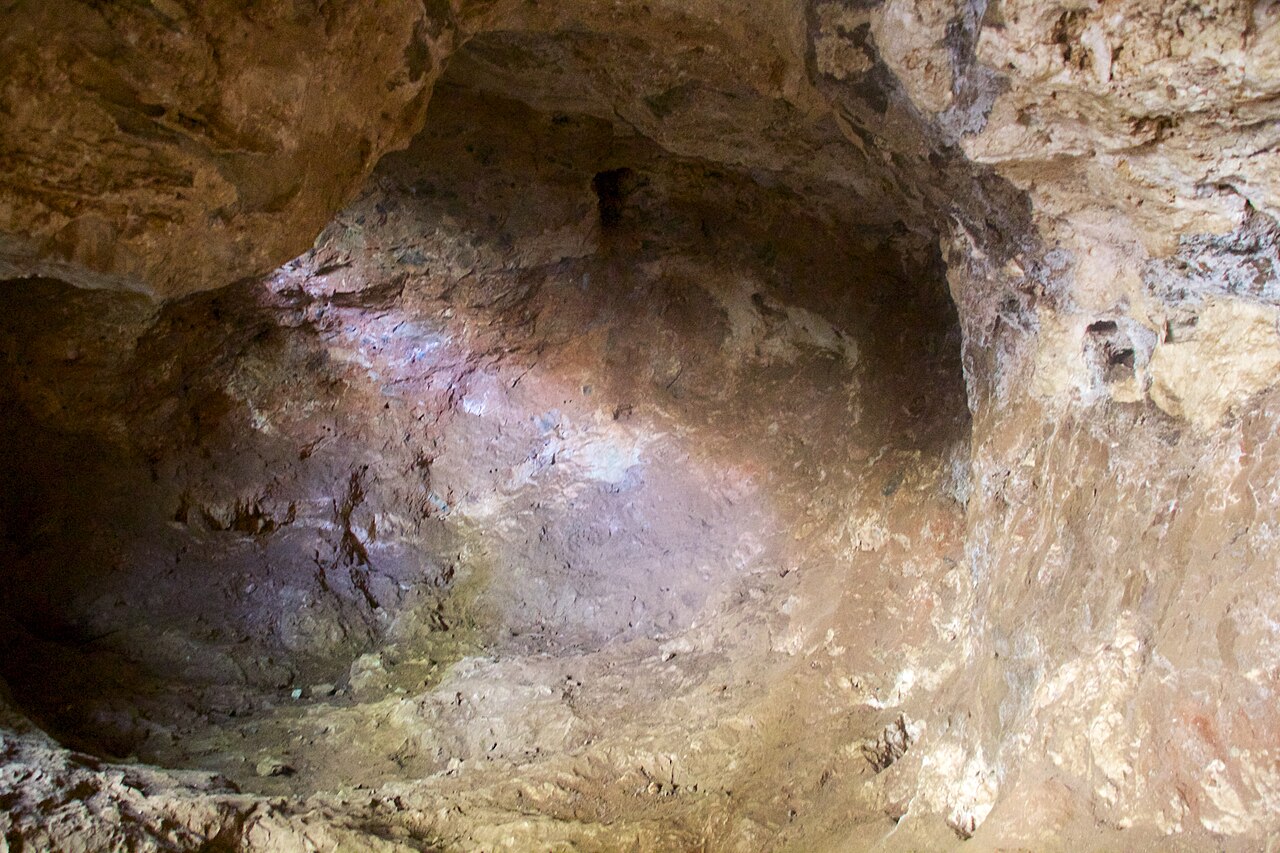
How do scientists test the age of fossils preserved in a complex cave?
A cave is an effective collector, but rarely a simple container. Sediment and bones can enter through different openings, be disturbed, and become cemented into breccia. At Sterkfontein those processes produced an exceptionally important human-evolution record. They also make dating difficult. A layer’s position, associated fauna, mineral formations and the exposure history of sediment can each constrain time, but they do not always measure precisely the same event.
The older window centres on Little Foot, the substantially complete skeleton StW 573 from Member 2. Its completeness makes it valuable for studying anatomy beyond the skull. A cosmogenic burial study placed the associated deposit around 3.67 million years ago, while other interpretations of the chronology have differed. This page uses that published age framework openly and retains a broad interval rather than presenting the date as uncontested.
The younger window concerns Member 5, which includes stone-tool assemblages and modified animal bones. Recent work uses a conservative age bracket for the butchery-related material. The evidence addresses activities and accumulation history; it does not automatically identify the species responsible for every tool or mark. A fossil hominin somewhere in the cave system is not sufficient proof of the maker of an artefact from another deposit.
The two records are connected through place but separated by time, context and the kinds of questions they answer. Little Foot informs anatomical comparison; Member 5 adds evidence about behaviour. The cave’s geological complexity is therefore part of the story rather than an inconvenience to conceal. An honest reconstruction shows what was found, how its context was interpreted and which conclusions remain sensitive to the chronology.
[1] [2] [3] [4]Time windows and evidence
Older ages are on the left. Bars span the dated intervals. A dot marks a single age.
- Member 2 and Little Foot 3.3–3.9 Ma
- Member 5 records animal processing 1.4–2.18 Ma
- StW 573, Little Foot 3.3–3.9 Ma
- Quartz burial ages beside Little Foot 3.3–3.9 Ma
- Member 5’s butchered animal bones 1.4–2.18 Ma
Researched windowsEvidence records
3.67 Ma · interval 3.3–3.9 Ma
Member 2 and Little Foot
The older scene represents cave accumulation when the Member 2 fossil record accumulated under the approximately 3.67 Ma burial-age interpretation. The cave geometry is schematic, not a measured reconstruction of its ancient entrances. The cave retained a substantially complete australopith skeleton. The broad interval acknowledges uncertainty and does not imply agreement among every published dating approach.
[1] [2]Locate this time in the atlas ↗Observed
Little Foot occurs in the Member 2 cave infill.
Reconstructed
A hominin entered a cave accumulation system within a terrestrial landscape.
Uncertain
Chronology, route into the cave and species assignment remain debated.
Evidence windows overlapping this state: 2. Overlap does not establish exact coexistence.
body fossil · Sterkfontein ↗
StW 573, Little Foot
The unusually complete skeleton known as Little Foot provides anatomical evidence across much more of one individual than an isolated skull can supply. It comes from Member 2 of the Sterkfontein infill. The approximately 3.67 Ma interpretation uses cosmogenic burial dating and is supported by some subsequent comparisons, but the site’s chronology remains debated. Anatomy and geological age must therefore be assessed as connected but distinct questions.
radiometric · Sterkfontein ↗
Quartz burial ages beside Little Foot
Quartz from the Member 2 breccia contains aluminium-26 and beryllium-10 produced during exposure to cosmic radiation. Their concentrations constrain how long the sediment has been shielded underground. The 2015 study obtained a burial age of approximately 3.67 Ma for the deposit associated with Little Foot. This is a clock for sediment history, so prior exposure, reworking and later disturbance affect its interpretation. The displayed interval is a broad context around that published chronology, not the measurement error or a continuous sequence through younger cave deposits.
1.8 Ma · interval 1.4–2.18 Ma
Member 5 records animal processing
Later cave assemblages contain stone tools and animal bones analysed for butchery traces. The cave is a place of accumulation, not a complete sample of the surrounding habitats. Its schematic shape does not reproduce an excavated chamber. The numerical range follows the conservative bracket used for the studied Member 5 material. It should not be interpreted as a continuous occupation lasting the whole interval.
[3] [4]Locate this time in the atlas ↗Observed
Tool-bearing deposits and modified animal bones occur in Member 5 contexts.
Reconstructed
Early hominins processed animals within the regional landscape.
Uncertain
The identity of particular toolmakers and the timing of individual activities remain unresolved.
Evidence windows overlapping this state: 1. Overlap does not establish exact coexistence.
What this story cannot resolve
The older state explicitly follows one published chronology rather than claiming consensus. Cave infill, fossil deposition and mineral growth may date different events; the cave scene is schematic.
Keep these ideas handy
Radiometric dating
Estimating the time of a geological event from radioactive decay and the isotopic composition of a suitable material. Explore the idea ↗
Taphonomy
Studying what happens between an organism’s life, death, burial, preservation and eventual discovery. Explore the idea ↗
Uncertainty & reconstruction limits
Explicit limits on what evidence and models allow us to infer, including uncertainty in age, identity, place and process. Explore the idea ↗
The evidence notebook
body fossil · Sterkfontein ↗
StW 573, Little Foot
The unusually complete skeleton known as Little Foot provides anatomical evidence across much more of one individual than an isolated skull can supply. It comes from Member 2 of the Sterkfontein infill. The approximately 3.67 Ma interpretation uses cosmogenic burial dating and is supported by some subsequent comparisons, but the site’s chronology remains debated. Anatomy and geological age must therefore be assessed as connected but distinct questions.
radiometric · Sterkfontein ↗
Quartz burial ages beside Little Foot
Quartz from the Member 2 breccia contains aluminium-26 and beryllium-10 produced during exposure to cosmic radiation. Their concentrations constrain how long the sediment has been shielded underground. The 2015 study obtained a burial age of approximately 3.67 Ma for the deposit associated with Little Foot. This is a clock for sediment history, so prior exposure, reworking and later disturbance affect its interpretation. The displayed interval is a broad context around that published chronology, not the measurement error or a continuous sequence through younger cave deposits.
body fossil · Sterkfontein ↗
Member 5’s butchered animal bones
Animal bones from Member 5 contexts show modifications analysed as evidence of butchery. These observations complement the site’s stone-tool record without identifying a specific toolmaker from every mark. The assemblage accumulated through processes that must be distinguished from human activity. Comparing cut marks, breakage and geological context is necessary before assigning the entire deposit to one behaviour or one occupation event.
Follow the evidence
Sources & credits
- New cosmogenic burial ages for Sterkfontein Member 2 Australopithecus and Member 5 Oldowan ↗
Nature · 2015
Use, credit & modifications
Reference only; no source text, figures or photographs reproduced. Original educational synthesis.
Credit: Nature. Original synthesis with explicit approximate teaching windows. No source asset reuse; territorial permissions not applicable.
- A biochronological date of 3.6 million years for Little Foot ↗
Evolutionary Anthropology · 2024
Use, credit & modifications
Reference only; no source text, figures or photographs reproduced. Original educational synthesis.
Credit: Evolutionary Anthropology. Original synthesis with explicit approximate teaching windows. No source asset reuse; territorial permissions not applicable.
- Butchery activities associated with Member 5 at Sterkfontein, South Africa ↗
Archaeological and Anthropological Sciences · 2024
Use, credit & modifications
Reference only; no source text, figures or photographs reproduced. Original educational synthesis.
Credit: Archaeological and Anthropological Sciences. Original synthesis with explicit approximate teaching windows. No source asset reuse; territorial permissions not applicable.
- Stratigraphy, artefact industries and hominid associations for Sterkfontein, Member 5 ↗
Journal of Human Evolution · 2000
Use, credit & modifications
Reference only; no source text, figures or photographs reproduced. Original educational synthesis.
Credit: Journal of Human Evolution. Original synthesis with explicit approximate teaching windows. No source asset reuse; territorial permissions not applicable.
Follow the connections
 Africa
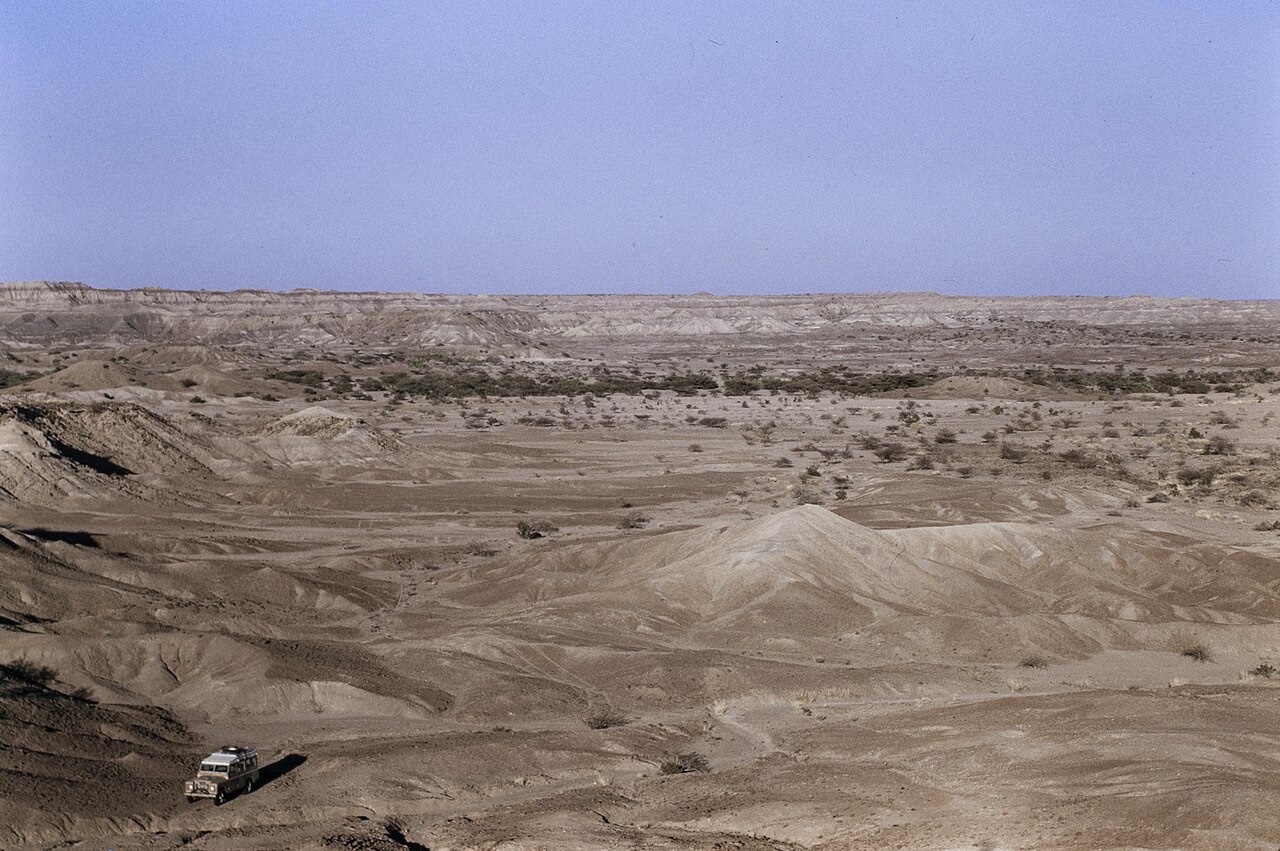
Ethiopia ↗
Hadar & the Afar Rift
Lucy’s skeleton belongs within a wider Pliocene record of lakes, river margins, pollen and changing vegetation in the Afar basin.
3.2 Ma → Today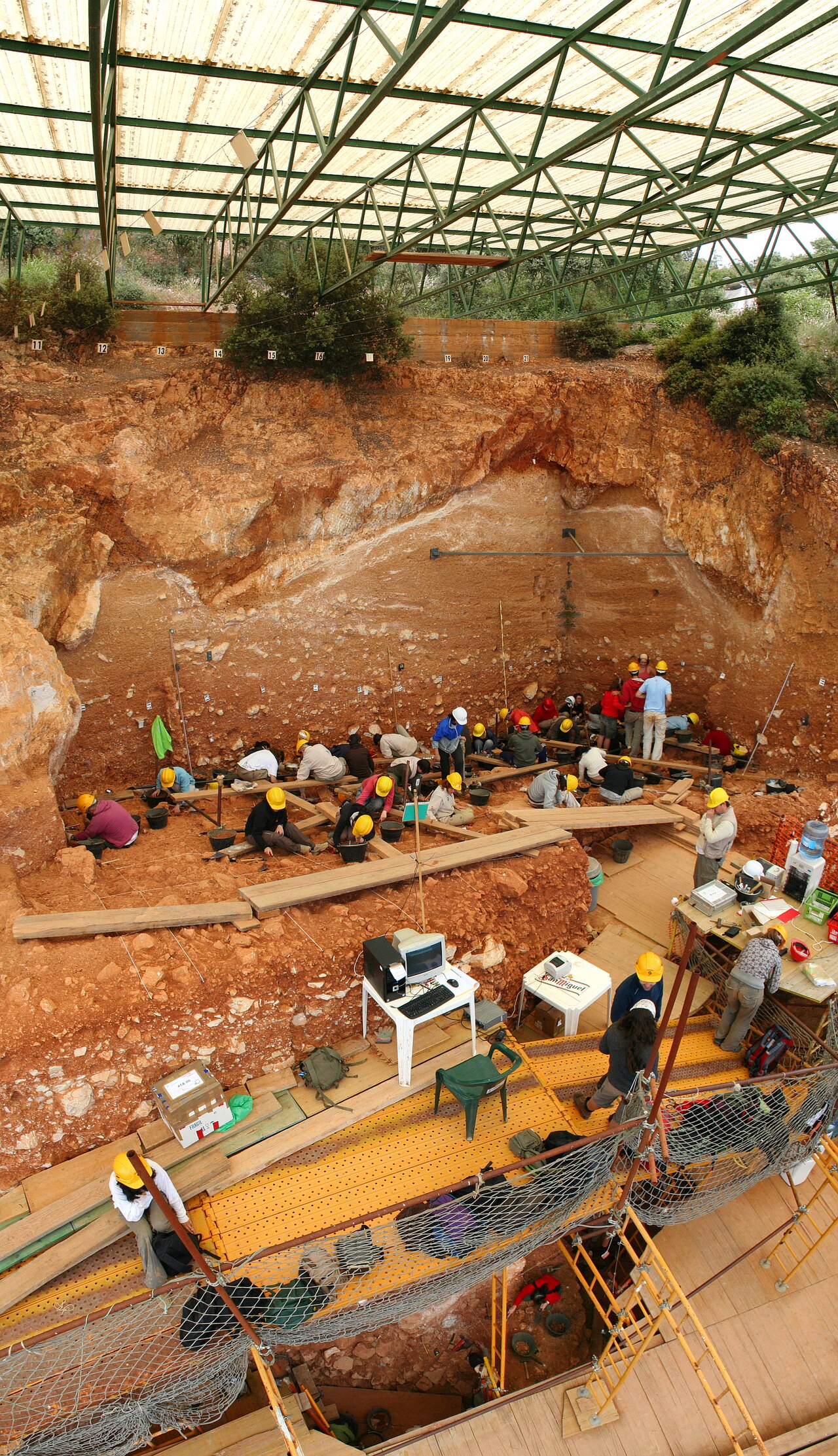 Europe
Spain ↗
Atapuerca
Sima del Elefante and Gran Dolina preserve distinct Early Pleistocene human records. Their fossils, sedimentary context and age estimates reveal a sequence rather than a single population frozen in time.
1.25 Ma → 0.85 Ma