
Why is dating sediment different from dating art or human activity?
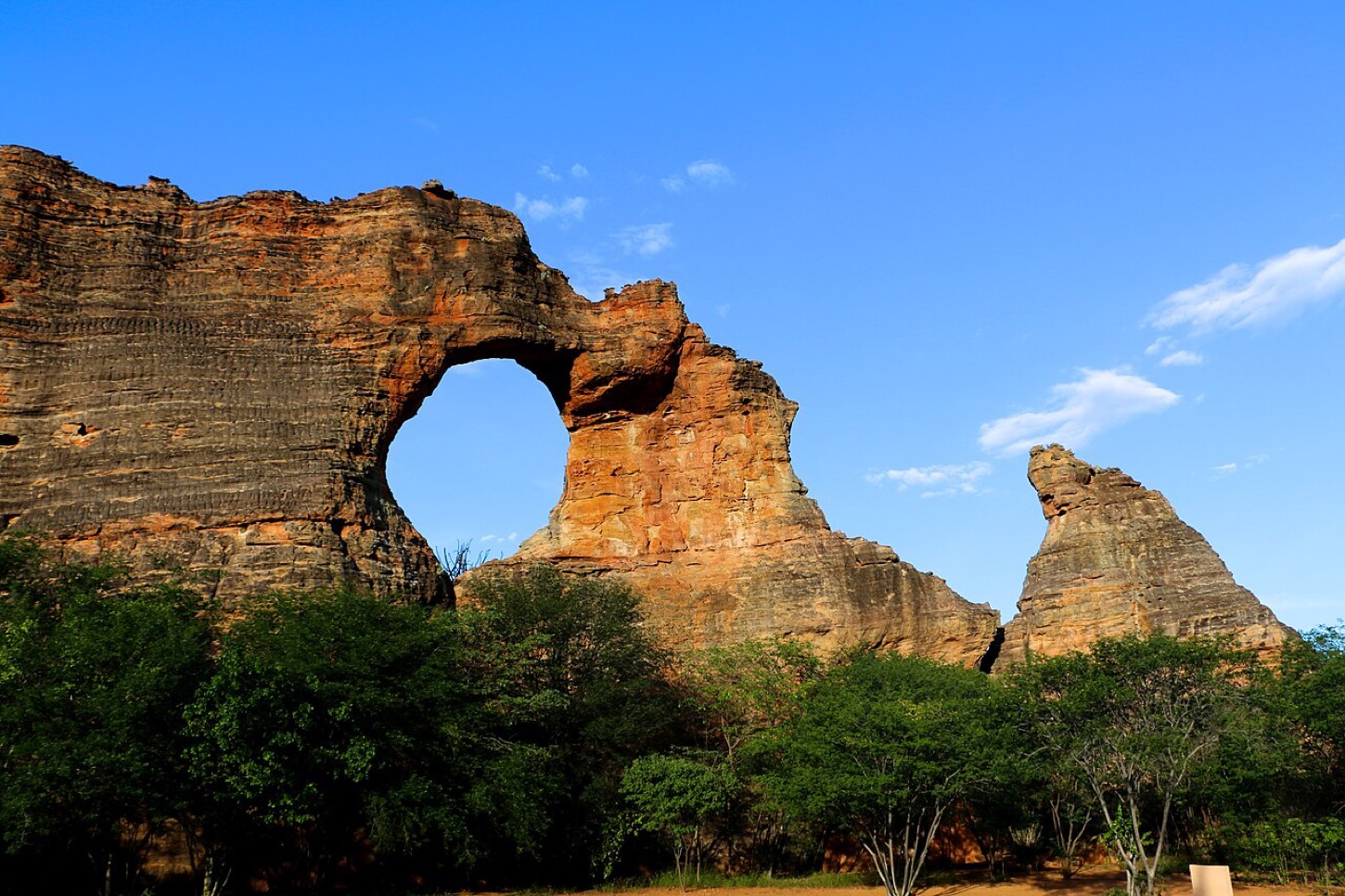
The sandstone cliffs of Serra da Capivara contain overhangs and shelters in which sediment and traces of human activity can survive. A rock face, a fallen block and a layer of sand each have their own history. This makes a shelter a good place to ask what a date actually measures. The age of the sandstone wall does not tell us when a person visited, when a stone was moved or when a pigment was applied.
At Toca da Tira Peia, just outside the park, researchers examined stone pieces from dated sediment layers. Luminescence estimates when small quartz grains were last exposed to enough sunlight to reset their signal. Approximate dates near 22,000 years ago contribute to a proposed early occupation. The result concerns a dated sediment context, while whether the stone pieces record human action has to be argued from their shapes, surfaces and distribution. Early chronology in the broader district remains debated.
The protected park today contains painted surfaces and a network of different localities. The paintings survive on rock exposed to changing moisture, temperature and weathering. They are a distinct record from stones dug from a sediment layer at another site. Keeping these observations separate allows us to appreciate both the archaeological richness of the area and the work needed to establish the age of a specific human action.
[1] [2] [3]Time windows and evidence
Older ages are on the left. Bars span the dated intervals. A dot marks a single age.
- Quartz and stone pieces at Toca da Tira Peia 0.0205–0.0235 Ma
- Painted shelters preserved in the modern park Today
- Stone pieces from layer C7 at Toca da Tira Peia 0.0205–0.0235 Ma
- Luminescence dating of Tira Peia sediment 0.0205–0.0235 Ma
- Painted shelters of the national park Today
Researched windowsEvidence records
0.022 Ma · interval 0.0205–0.0235 Ma
Quartz and stone pieces at Toca da Tira Peia
A Pleistocene layer at Toca da Tira Peia, near the park, contains stone pieces interpreted by its excavators as artifacts. The dating method used quartz in surrounding sediment. The association is interesting precisely because determining human modification and sediment age requires separate observations.
[1] [2]Locate this time in the atlas ↗Observed
Layer C7 contains documented stone pieces and an optically stimulated luminescence age.
Reconstructed
The excavators interpret human occupation at this site in the late Pleistocene.
Uncertain
Sediment age, layer integrity and whether pieces are cultural should be appraised separately.
Evidence windows overlapping this state: 2. Overlap does not establish exact coexistence.
locality · Serra da Capivara rock shelters ↗
Stone pieces from layer C7 at Toca da Tira Peia
The excavation report describes chipped stone pieces from a late Pleistocene sediment level at the shelter and illustrates technical features used in their interpretation. The excavators infer that some pieces are artifacts and use their context to argue for early activity in northeastern Brazil. Sedimentary association and the agent responsible for flaking require independent support, especially for a very early proposed age.
radiometric · Serra da Capivara rock shelters ↗
Luminescence dating of Tira Peia sediment
Optically stimulated luminescence was applied to quartz grains from the Tira Peia layers. The age estimates follow stratigraphic order in the sampled sequence. The method constrains when the grains were buried after their last sufficient exposure to light. An age from sediment cannot directly specify who changed a nearby stone, when that stone was flaked or how old wall art is.
Today · interval Today
Painted shelters preserved in the modern park
The present protected landscape contains numerous painted shelter walls and archaeological deposits. The Pedra Furada landform and painted sites help orient the reader to the wider setting. The modern window describes preservation and observation, not the date the paintings were made.
[3] [2]Locate this time in the atlas ↗Observed
Numerous decorated shelters are documented within the national park.
Reconstructed
Shelter walls provided surfaces that enabled traces of pigment and use to survive.
Uncertain
Observing paintings today does not date them. Individual panels can reflect multiple periods.
Evidence windows overlapping this state: 1. Overlap does not establish exact coexistence.
What this story cannot resolve
The older state presents the researchers’ disputed interpretation of a specific excavated layer. No blanket age is assigned to painted panels. The modern region marker is a rounded geographic locator.
Keep these ideas handy
Radiometric dating
Estimating the time of a geological event from radioactive decay and the isotopic composition of a suitable material. Explore the idea ↗
Uncertainty & reconstruction limits
Explicit limits on what evidence and models allow us to infer, including uncertainty in age, identity, place and process. Explore the idea ↗
Relative dating
Determining which event came first without necessarily assigning a numerical age. Explore the idea ↗
The evidence notebook
locality · Serra da Capivara rock shelters ↗
Stone pieces from layer C7 at Toca da Tira Peia
The excavation report describes chipped stone pieces from a late Pleistocene sediment level at the shelter and illustrates technical features used in their interpretation. The excavators infer that some pieces are artifacts and use their context to argue for early activity in northeastern Brazil. Sedimentary association and the agent responsible for flaking require independent support, especially for a very early proposed age.
radiometric · Serra da Capivara rock shelters ↗
Luminescence dating of Tira Peia sediment
Optically stimulated luminescence was applied to quartz grains from the Tira Peia layers. The age estimates follow stratigraphic order in the sampled sequence. The method constrains when the grains were buried after their last sufficient exposure to light. An age from sediment cannot directly specify who changed a nearby stone, when that stone was flaked or how old wall art is.
locality · Serra da Capivara rock shelters ↗
Painted shelters of the national park
The World Heritage record documents numerous rock shelters displaying paintings across Serra da Capivara. Their survival depends on the shelter surfaces and their long exposure history. The panels preserve traces of human activity that can be studied alongside, but separately from, excavation deposits. There is no single published age that can be safely applied here to every painting or locality.
Follow the evidence
Sources & credits
- Human occupation in South America by 20,000 BC: the Toca da Tira Peia site, Piauí, Brazil ↗
Lahaye et al. · Journal of Archaeological Science · 2013
Use, credit & modifications
Reference only. No source text, figures or photographs reproduced in this record.
Credit: Lahaye et al. · Journal of Archaeological Science. Facts paraphrased in original text; teaching intervals distinguished from measurement uncertainty. Reference use; no media rights asserted.
- A Serra da Capivara e os primeiros povoamentos sul-americanos: uma revisão bibliográfica ↗
Lourdeau · Boletim do Museu Paraense Emílio Goeldi · 2019
Use, credit & modifications
Reference only. No source text, figures or photographs reproduced in this record.
Credit: Lourdeau · Boletim do Museu Paraense Emílio Goeldi. Facts paraphrased in original text; teaching intervals distinguished from measurement uncertainty. Reference use; no media rights asserted.
- Serra da Capivara National Park ↗
UNESCO World Heritage Centre · Not stated
Use, credit & modifications
Reference only. No source text, figures or photographs reproduced in this record.
Credit: UNESCO World Heritage Centre. Facts paraphrased in original text; teaching intervals distinguished from measurement uncertainty. Reference use; no media rights asserted.
Follow the connections
 South America
Argentina ↗
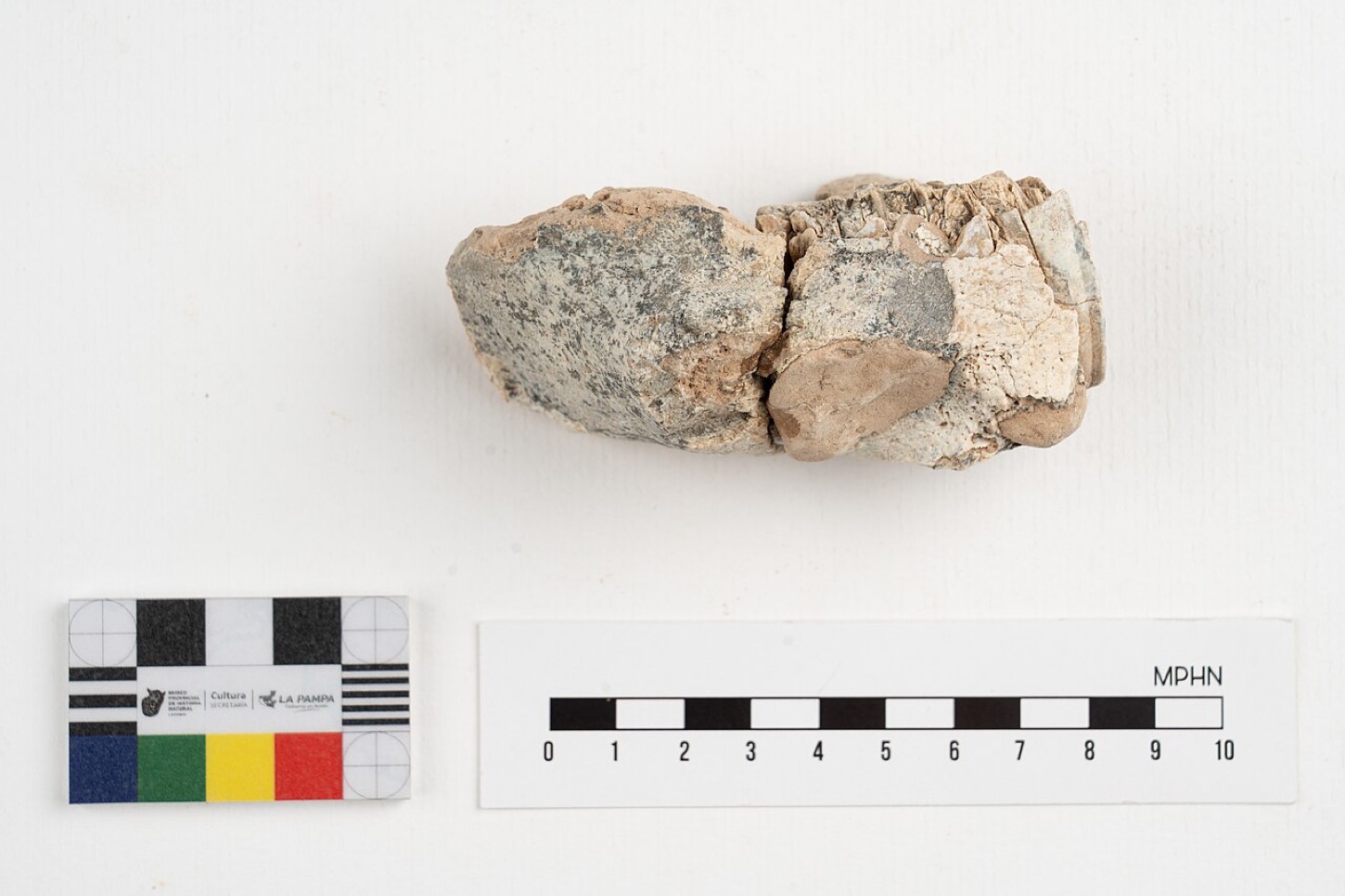
The Pampas at Arroyo Seco 2
Dated bones and tools at Arroyo Seco 2 document late Pleistocene activity. Later burials cut down into some older layers.
0.014 Ma → 0.0086 Ma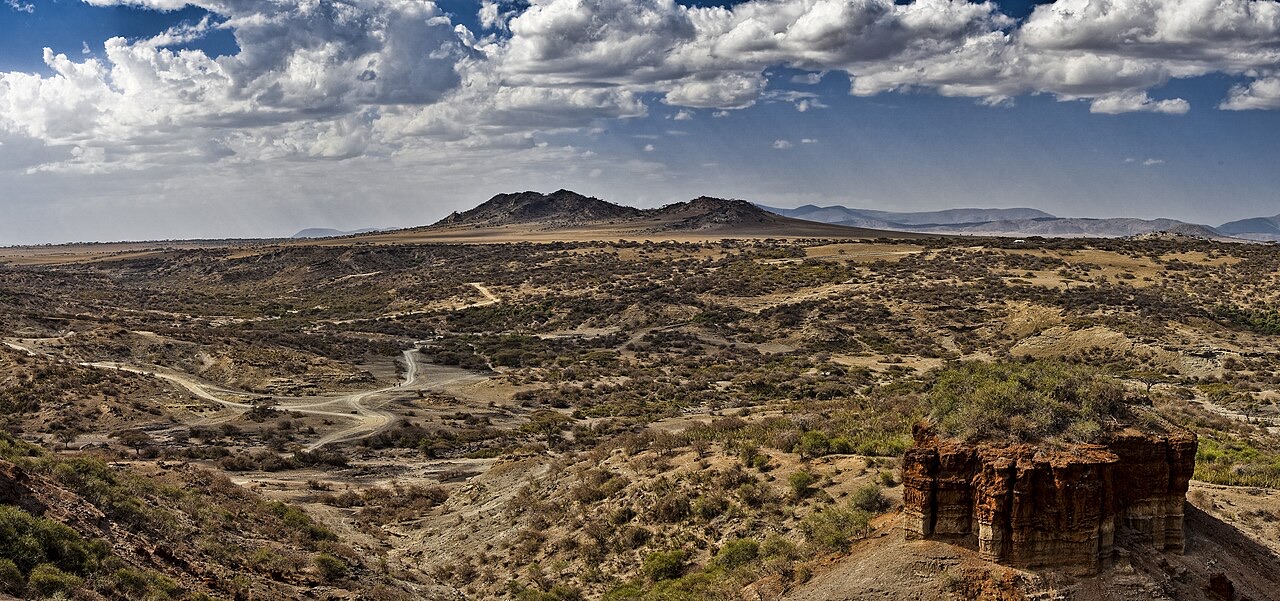 Africa
Tanzania ↗
Olduvai Gorge
Post-eruption rivers at Ewass Oldupa and younger spring-fed woodland at FLK Zinj reveal local habitat changes within an Early Pleistocene rift basin.
2.03 Ma → 1.84 Ma