
Why can two objects at the same depth be thousands of years apart?
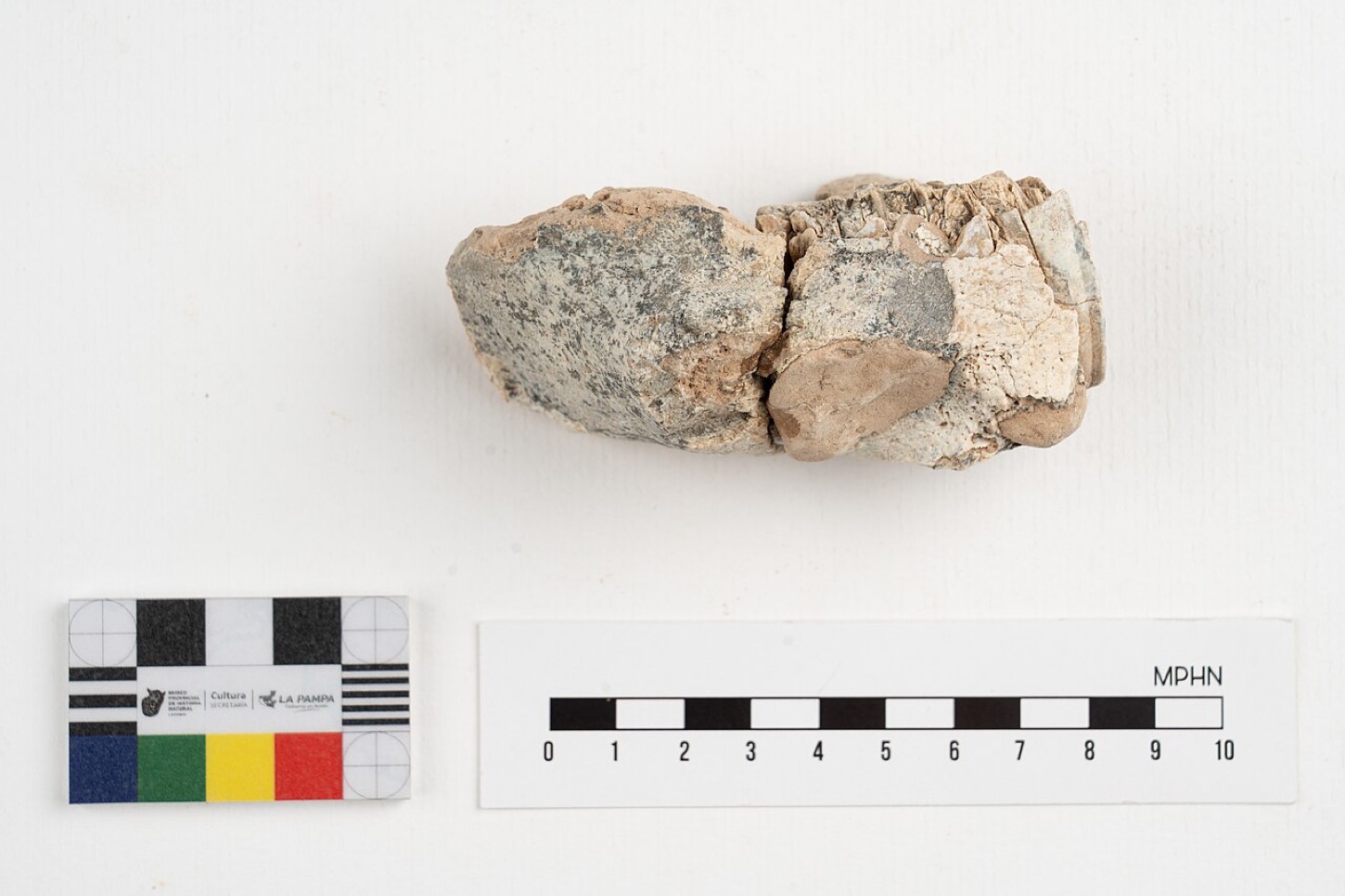
The grasslands of southeastern Buenos Aires Province hold evidence of large mammals that disappeared from much of South America near the end of the Ice Age. Arroyo Seco 2 preserves fossils on a low rise in this landscape. Excavated bones include extinct horses and ground sloths. Stone pieces interpreted as tools were recorded in relation to the surfaces and sediment in which they occurred. Position matters because the excavated ground contains the products of several distinct processes and episodes.
Researchers tested the site's chronology with radiocarbon dates on multiple specimens. They also compared results from different laboratories and tried to detect altered or contaminated samples. Ages from the better supported group of dates establish a terminal Pleistocene component. A concentration of large bones and modified stones is interpreted by the excavators as evidence for human processing, although individual associations differ in certainty. The dates do not establish a single hunting episode or the fate of every species.
Later, people used parts of the rise for burials. Grave cuts can descend through much older sediment, leaving younger objects at depths normally associated with older material. Burials and stone tools should therefore be compared using their disturbed or undisturbed context rather than depth alone. At Arroyo Seco, the geological problem of how a deposit accumulated is inseparable from the archaeological problem of how people used that landscape.
[1] [2]Time windows and evidence
Older ages are on the left. Bars span the dated intervals. A dot marks a single age.
- Late Pleistocene mammals and stone tools 0.0134–0.0145 Ma
- Holocene burial episodes on the same rise 0.0082–0.009 Ma
- Dated extinct horse bones at Arroyo Seco 2 0.0134–0.0145 Ma
- Lower Unit Y stone and bone association 0.0134–0.0145 Ma
- The earliest Holocene burial group at Arroyo Seco 2 0.0082–0.009 Ma
Researched windowsEvidence records
0.014 Ma · interval 0.0134–0.0145 Ma
Late Pleistocene mammals and stone tools
The late Pleistocene component contains dated bones of extinct animals and nearby modified stone. Its age derives from radiocarbon analyses and their context. Some bones and tools were moved after deposition, so the excavators distinguish a relatively coherent central group from material whose relationship is less clear.
[1] [2]Locate this time in the atlas ↗Observed
Extinct mammal bones and flaked stone were documented in the lower part of Unit Y.
Reconstructed
Humans used the area during the late Ice Age, alongside evidence of extinct large mammals.
Uncertain
Co-location alone does not prove that a particular animal was killed by people.
Evidence windows overlapping this state: 2. Overlap does not establish exact coexistence.
body fossil · The Pampas at Arroyo Seco 2 ↗
Dated extinct horse bones at Arroyo Seco 2
Several extinct horse specimens from the site were dated, including a lower Unit Y determination reported at about 12,170 radiocarbon years before present. Calibration and agreement across samples place some of the fossil assembly near the terminal Pleistocene. Radiocarbon years differ from calendar years, and the bone date does not date every nearby object.
locality · The Pampas at Arroyo Seco 2 ↗
Lower Unit Y stone and bone association
Large pieces of modified rhyolite and mudstone were recorded near a concentration of large mammal limb bones in the central excavation area. The excavators infer some animal processing from the tools, bone positions and other evidence. Secondary movement and natural breakage affect parts of the assemblage. An association is strongest where the context is intact.
0.0086 Ma · interval 0.0082–0.009 Ma
Holocene burial episodes on the same rise
The earliest of several burial groups belongs to the Holocene. Graves reached older deposits, creating younger features inside units with older bones. The teaching interval is rounded around the first group rather than applied to every burial at the site.
[1] [2]Locate this time in the atlas ↗Observed
Direct dates on burials are younger than the oldest dated extinct mammal bones.
Reconstructed
People reused the rise for burial after the late Pleistocene activity.
Uncertain
Disturbed older sediment can be incorporated into younger events.
Evidence windows overlapping this state: 1. Overlap does not establish exact coexistence.
What this story cannot resolve
The ancient place marker is a rounded regional location. Ages below are rounded calendar teaching envelopes. The source tabulates radiocarbon determinations and discusses calibration, intrusive burials and conflicting analyses.
Keep these ideas handy
Taphonomy
Studying what happens between an organism’s life, death, burial, preservation and eventual discovery. Explore the idea ↗
Radiometric dating
Estimating the time of a geological event from radioactive decay and the isotopic composition of a suitable material. Explore the idea ↗
Stratigraphy
Studying the order, relationships and distribution of rock layers and the events they preserve. Explore the idea ↗
The evidence notebook
body fossil · The Pampas at Arroyo Seco 2 ↗
Dated extinct horse bones at Arroyo Seco 2
Several extinct horse specimens from the site were dated, including a lower Unit Y determination reported at about 12,170 radiocarbon years before present. Calibration and agreement across samples place some of the fossil assembly near the terminal Pleistocene. Radiocarbon years differ from calendar years, and the bone date does not date every nearby object.
locality · The Pampas at Arroyo Seco 2 ↗
Lower Unit Y stone and bone association
Large pieces of modified rhyolite and mudstone were recorded near a concentration of large mammal limb bones in the central excavation area. The excavators infer some animal processing from the tools, bone positions and other evidence. Secondary movement and natural breakage affect parts of the assemblage. An association is strongest where the context is intact.
locality · The Pampas at Arroyo Seco 2 ↗
The earliest Holocene burial group at Arroyo Seco 2
Radiocarbon dating separates directly dated human burials from the older extinct animal record. Some burials penetrate stratigraphic units that also hold older remains. They reveal a later use of the same landform and demonstrate that depth alone cannot safely identify age. The ages shown are a rounded teaching range for the first burial episode, not all burials.
Follow the evidence
Sources & credits
- The arrival of Homo sapiens into the Southern Cone at 14,000 years ago ↗
Politis et al. · PLOS ONE · 2016
Use, credit & modifications
Reference only. No source text, figures or photographs reproduced in this record.
Credit: Politis et al. · PLOS ONE. Facts paraphrased in original text; teaching intervals distinguished from measurement uncertainty. Reference use; no media rights asserted.
- Ancient mitochondrial genomes from the Argentinian Pampas inform the early peopling of the Southern Cone of South America ↗
Roca-Rada et al. · iScience · 2021
Use, credit & modifications
Reference only. No source text, figures or photographs reproduced in this record.
Credit: Roca-Rada et al. · iScience. Facts paraphrased in original text; teaching intervals distinguished from measurement uncertainty. Reference use; no media rights asserted.
Follow the connections
 North America
United States ↗
La Brea
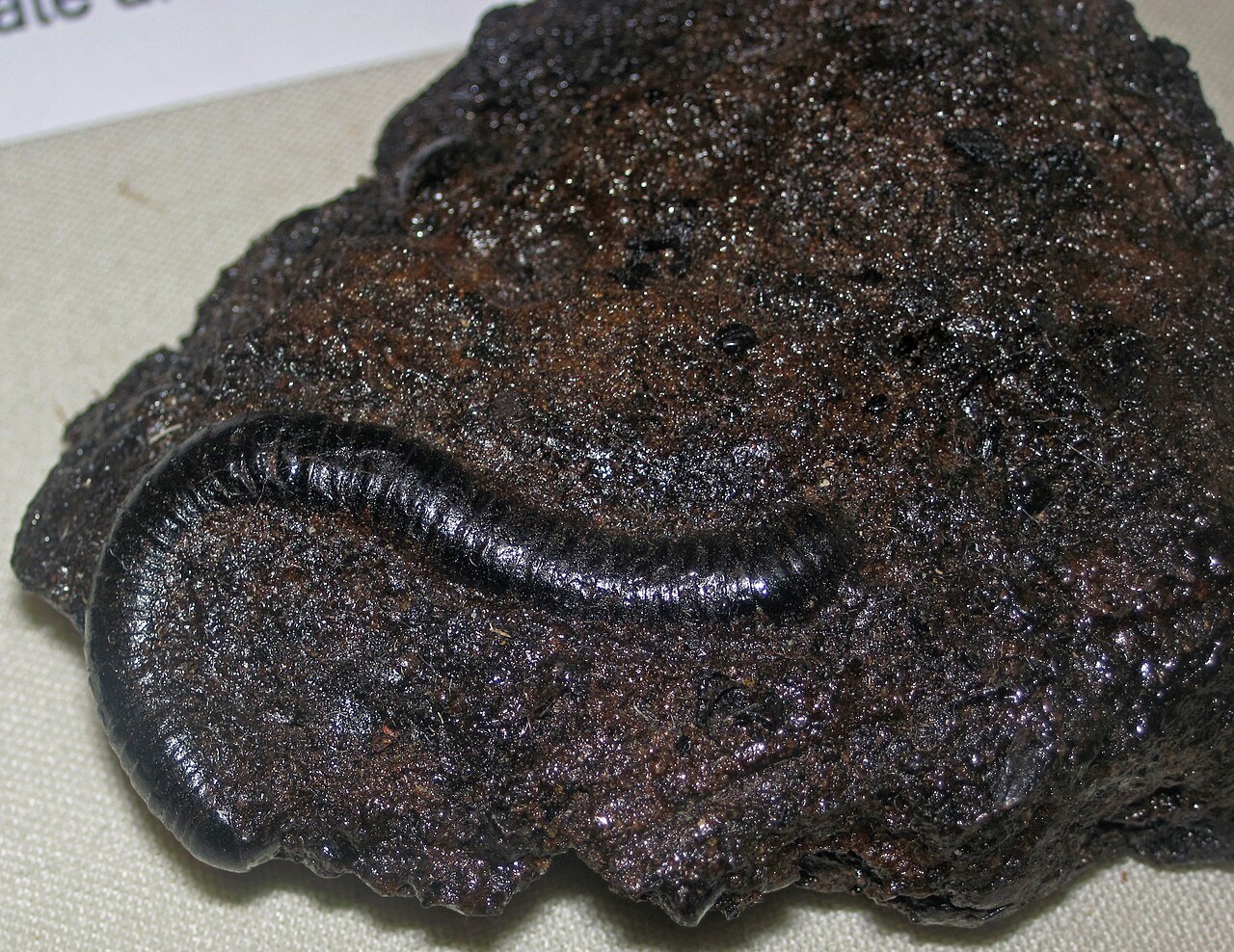
Natural asphalt seeps in the Los Angeles Basin trapped and preserved organisms through the late Pleistocene. Pit 91 reveals small organisms alongside large mammals, while directly dated bones help test the timing of regional megafaunal disappearance.
0.025 Ma → 0.0132 Ma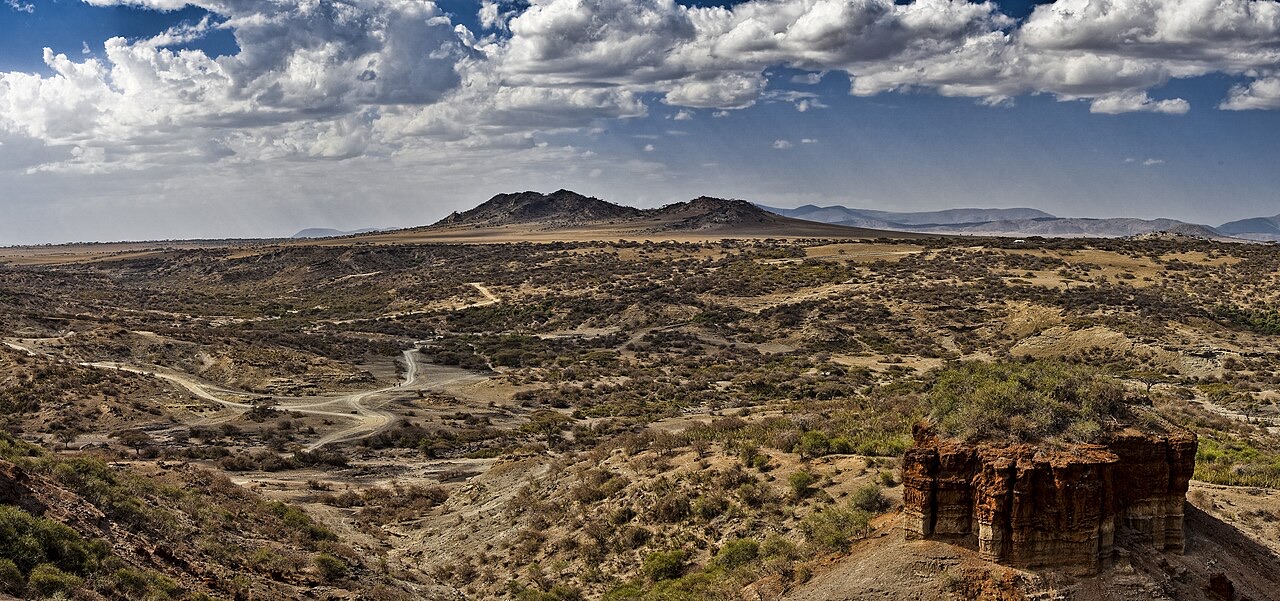 Africa
Tanzania ↗
Olduvai Gorge
Post-eruption rivers at Ewass Oldupa and younger spring-fed woodland at FLK Zinj reveal local habitat changes within an Early Pleistocene rift basin.
2.03 Ma → 1.84 Ma