
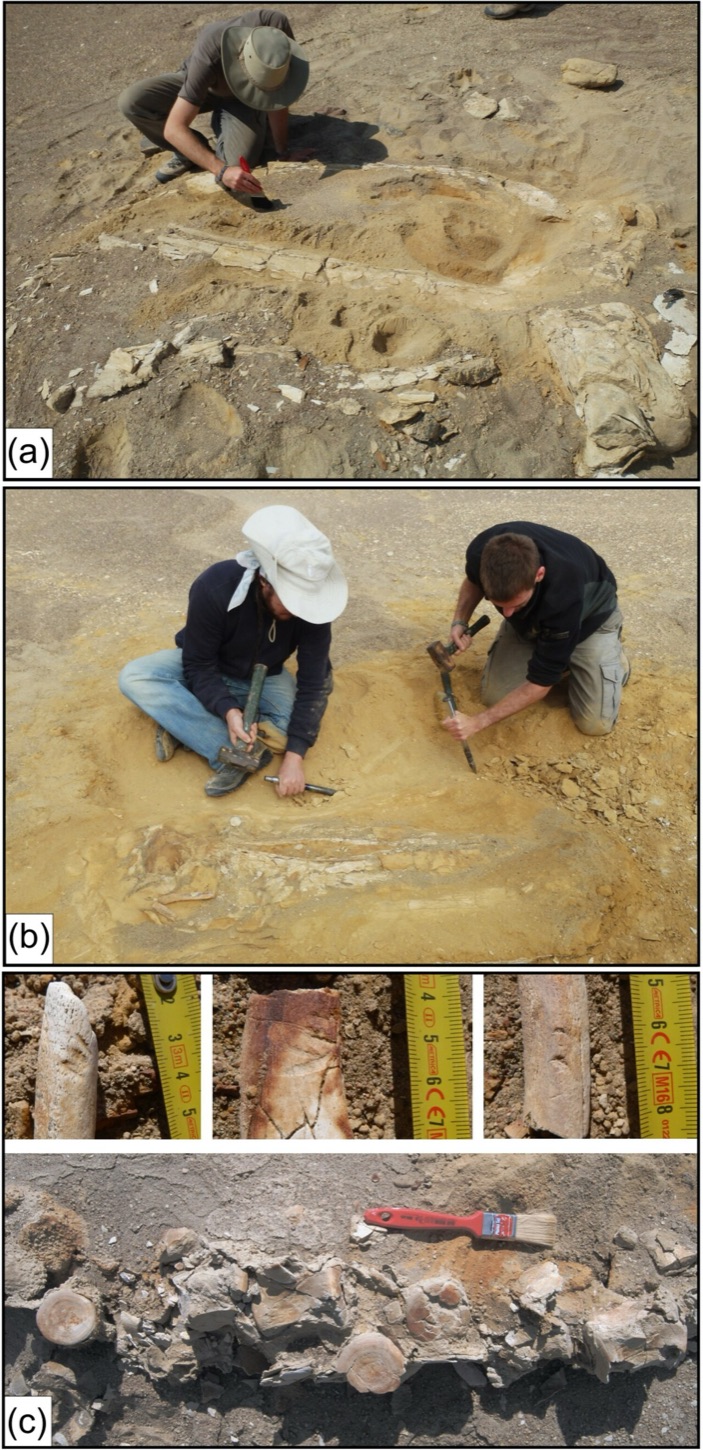
How do whales found in a desert tell us about more than one ancient ocean?
In the desert near Ocucaje, a whale can emerge from a hill of dry sediment. Its presence is evidence of an older shore and shelf, not of a whale crossing a desert. The Pisco Formation covers a considerable interval of marine history. Marking all its fossils with one date would remove the changes that make the succession scientifically valuable.
The beds are divided into packages separated by surfaces that represent interruptions and, in some places, erosion. The packages informally designated P1 and P2 are each made up of many beds. Ash interlayered with the sediments can be dated, and marine microfossils in the rock provide a separate way to align the sequence. At Cerro Colorado, early fossil-bearing horizons lie in P1. Much of the later archive at Cerro Los Quesos is in P2. These localities can be compared without assuming each rock unit covers the same number of years or the same extent of coastline.
Whales, sharks, other fish, marine reptiles, seabirds and related remains contribute different clues about the food webs. At higher levels, forms of baleen-bearing whales differ from some in the older package. Entire skeletons are striking, but concentration also reflects where bodies accumulated, what buried them and whether hard parts survived weathering. Changes in the record invite hypotheses about ecology and deposition. The relative number of photographed skeletons alone cannot identify the size of living populations.
[1] [2] [3]Time windows and evidence
Older ages are on the left. Bars span the dated intervals. A dot marks a single age.
- Cerro Colorado’s older marine beds 8.6–9.5 Ma
- Whales at Cerro Los Quesos 6.71–8.4 Ma
- P1 fossil-bearing succession at Cerro Colorado 8.6–9.5 Ma
- An interruption at the PE0.2 surface 8.4–8.6 Ma
- Baleen whales of the younger Pisco package 6.71–8.4 Ma
Researched windowsEvidence records
9.2 Ma · interval 8.6–9.5 Ma
Cerro Colorado’s older marine beds
Marine beds of P1 include diverse vertebrate fossils and tephra dated alongside diatom evidence. The nearshore to shelf succession and its fauna are reconstructed by comparing facies and levels. Cerro Colorado is one of several exposures that give us a view into this part of the older package.
[1] [2]Locate this time in the atlas ↗Observed
Mapped beds at Cerro Colorado contain marine vertebrates, diatoms and ash layers.
Reconstructed
Repeated accumulation on a marine margin preserved bones and teeth.
Uncertain
An individual ecological assemblage may cover just one bed within this time window.
Evidence windows overlapping this state: 1. Overlap does not establish exact coexistence.
7.7 Ma · interval 6.71–8.4 Ma
Whales at Cerro Los Quesos
In the younger P2 package, Cerro Los Quesos exposes levels rich in marine vertebrate remains, including several kinds of baleen whale. Diatom-rich sediment can help identify and correlate horizons. Dating of different levels connects the later fauna with the history of the coastal basin.
[1] [2]Locate this time in the atlas ↗Observed
Fossil concentrations and conspicuous diatom-rich layers occur in the mapped succession.
Reconstructed
Later marine communities used the shelf and nearshore waters.
Uncertain
The youngest date used here bounds selected evidence in the study area, not the complete end of all P2 deposition.
Evidence windows overlapping this state: 1. Overlap does not establish exact coexistence.
What this story cannot resolve
The markers cover a coastal district; individual fossil occurrences have bed-level contexts. The two teaching ages are rounded from dated portions of packages, not synchronous maps of each exposed section.
Keep these ideas handy
Stratigraphy
Studying the order, relationships and distribution of rock layers and the events they preserve. Explore the idea ↗
Taphonomy
Studying what happens between an organism’s life, death, burial, preservation and eventual discovery. Explore the idea ↗
Unconformity
A surface representing a break in the preserved geological record, caused by nondeposition, erosion or both. Explore the idea ↗
The evidence notebook
locality · Pisco Basin near Ocucaje ↗
P1 fossil-bearing succession at Cerro Colorado
At Cerro Colorado, researchers locate marine vertebrate specimens within separately mapped beds of the older P1 package. Ash beds and diatoms provide independent age constraints. The section allows fossil comparisons by horizon rather than merging the entire coastal desert into one fossil community. Even beds traced across an outcrop need caution when correlated between widely separated sites.
sediment · Pisco Basin near Ocucaje ↗
An interruption at the PE0.2 surface
A surface labelled PE0.2 separates mapped packages P1 and P2 in the Pisco Formation. At some outcrops it truncates older rock and marks a change in sedimentation. Relative sea-level change and associated erosion or non-deposition help account for the break. The selected bound ages bracket packages; they do not give the duration of erosion at every outcrop.
body fossil · Pisco Basin near Ocucaje ↗
Baleen whales of the younger Pisco package
Cerro Los Quesos and correlated P2 exposures preserve a range of mysticete skeletons, including specimens identified as different kinds of balaenopterids. The material supports an expanded picture of baleen whale diversity on the Miocene marine margin. Similarity to a living whale does not identify the fossil as the same species, and sampled beds differ in age.
Follow the evidence
Sources & credits
- Towards deciphering the Cenozoic evolution of the East Pisco Basin (southern Peru) ↗
Di Celma et al. · Journal of Maps · 2022
Use, credit & modifications
Reference only. No source text, figures or photographs reproduced in this record.
Credit: Di Celma et al. · Journal of Maps. Facts paraphrased in original text; teaching intervals distinguished from measurement uncertainty. Reference use; no media rights asserted.
- Vertebrate palaeoecology of the Pisco Formation (Miocene, Peru) ↗
Bianucci et al. · Journal of Marine Science and Engineering · 2021
Use, credit & modifications
Reference only. No source text, figures or photographs reproduced in this record.
Credit: Bianucci et al. · Journal of Marine Science and Engineering. Facts paraphrased in original text; teaching intervals distinguished from measurement uncertainty. Reference use; no media rights asserted.
- Intraformational unconformities in the Pisco Formation ↗
Di Celma et al. · Journal of Maps · 2018
Use, credit & modifications
Reference only. No source text, figures or photographs reproduced in this record.
Credit: Di Celma et al. · Journal of Maps. Facts paraphrased in original text; teaching intervals distinguished from measurement uncertainty. Reference use; no media rights asserted.
Follow the connections
 South America
Chile ↗
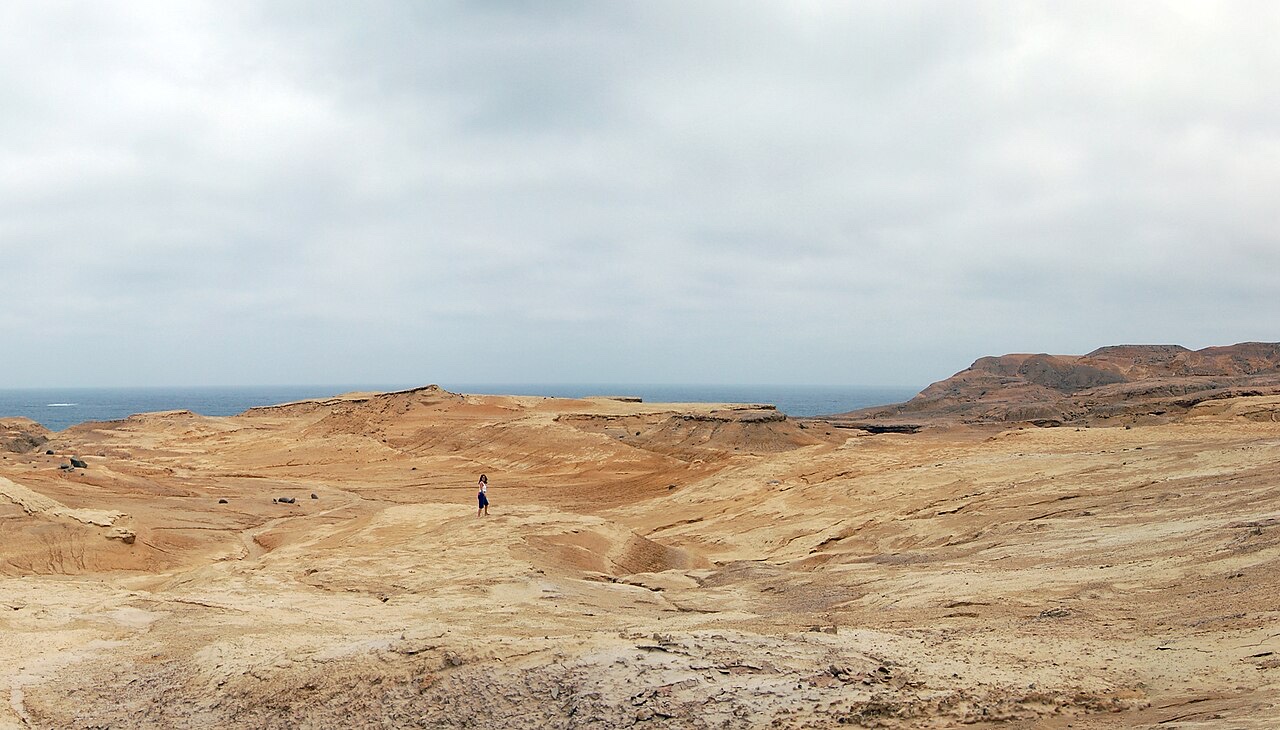
Atacama’s fossil coast
Cerro Ballena preserves several fossil-rich layers, allowing observed marine mammal remains to be separated from proposed explanations of their deaths.
6.1 Ma → Today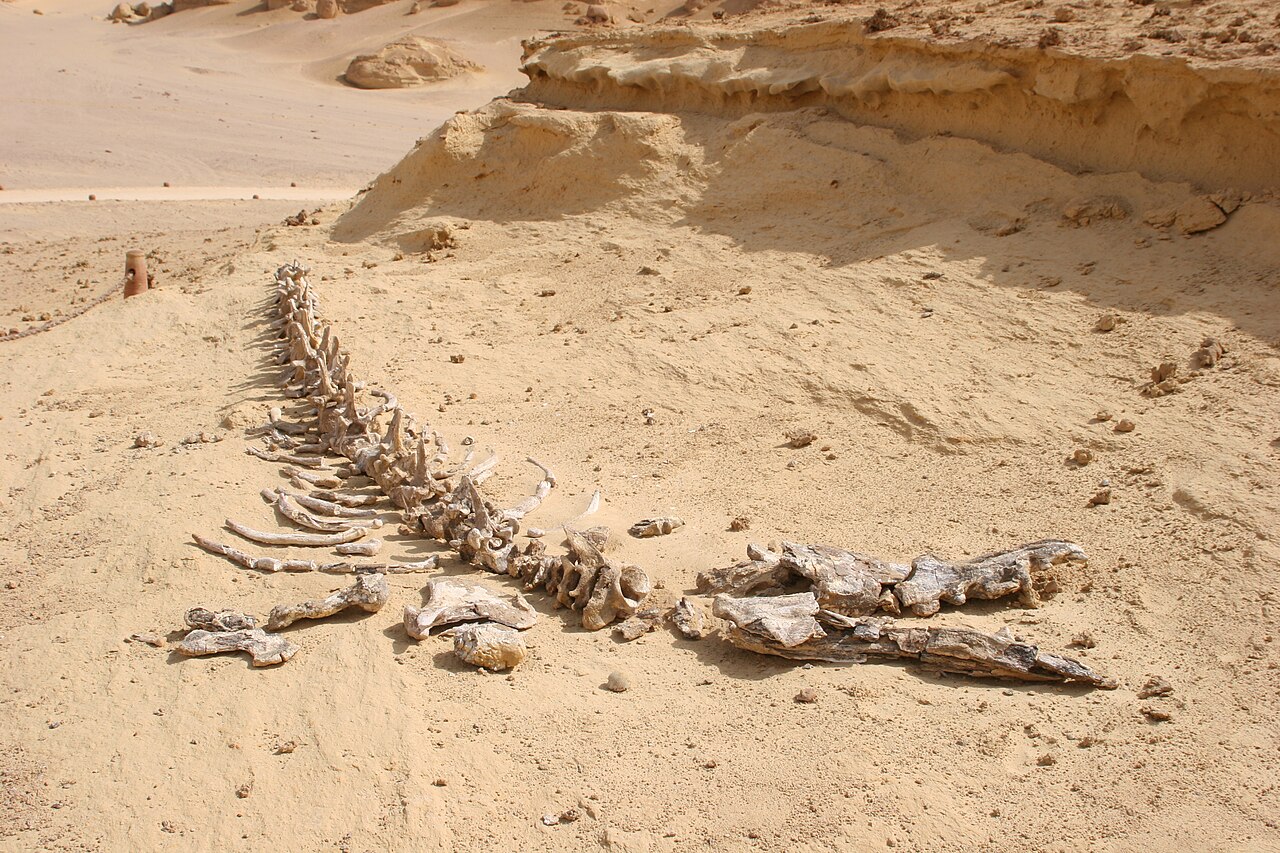 Africa
Egypt ↗
Wadi Al-Hitan
Whale Valley preserves late Eocene marine deposits now exposed in Egypt’s Western Desert. Successive Gehannam and Birket Qarun environments record aquatic whales, their prey and changing conditions of burial.
37.5 Ma → 37 Ma