
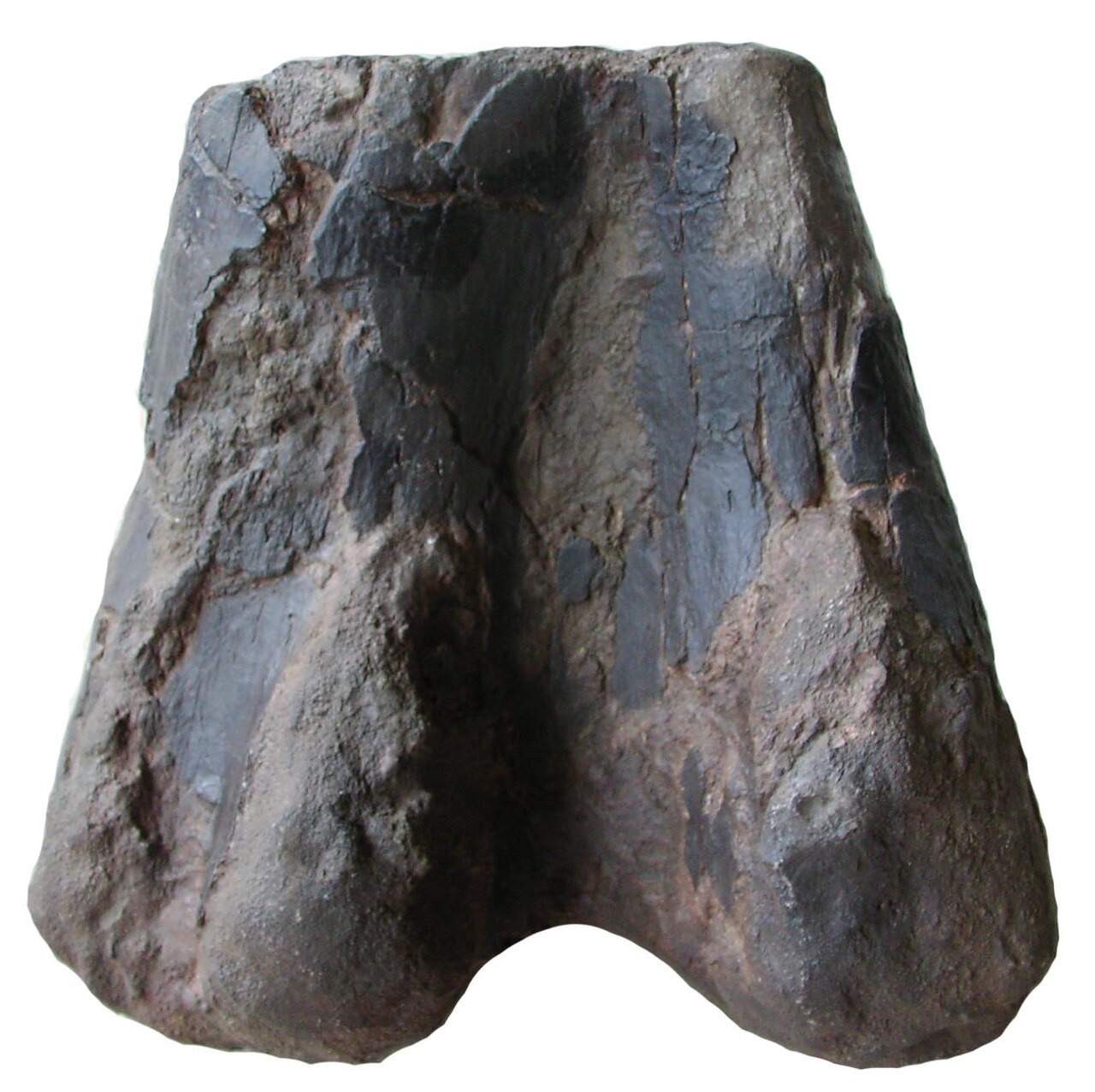
What different parts of dinosaur life are preserved by footprints and skeletons?
Phu Wiang’s dinosaur record is distributed through a succession of continental rocks. Sandstone in the older Phra Wihan Formation preserves footprints made on sediment surfaces, while the younger Sao Khua Formation is better known for skeletal remains. The distinction matters: a track records contact between a living animal and a particular substrate, whereas a bone may have travelled before burial. Neither record samples all animals equally.
The older river systems moved sand across channels and exposed surfaces on which dinosaurs walked. At Hin Lat Pa Chad, preserved tracks establish dinosaur activity even where no skeleton identifies the maker. Foot shape and trackway geometry can suggest broad groups and movement, but naming a species from a footprint alone is usually unwarranted. Preservation also depends on moisture, sediment strength and subsequent burial, so the absence of tracks is weak evidence for the absence of animals.
The Sao Khua landscape included rivers, floodplains, soils and ponds. Phuwiangosaurus bones and the remains of theropods such as Phuwiangvenator demonstrate a varied terrestrial fauna. Studies of sediments, ancient soils and detrital zircons have refined the formation’s environmental and chronological interpretation, although some fossil-based age assignments differ. The selected states use broad, explicit envelopes rather than making every Thai dinosaur locality exactly contemporaneous. Together, the records show how changing depositional settings influence what becomes visible in the fossil archive. Today’s wooded hills expose parts of those former lowland environments, but their present relief is not a model of the Cretaceous landscape.
[1] [2] [3] [4] [5]Time windows and evidence
Older ages are on the left. Bars span the dated intervals. A dot marks a single age.
- Track-bearing Phra Wihan river sands 133–145 Ma
- The Sao Khua floodplain fauna 130–136 Ma
- Hin Lat Pa Chad dinosaur tracks 133–145 Ma
- Phuwiangosaurus sirindhornae at Phu Wiang 130–136 Ma
- Phuwiangvenator yaemniyomi remains 130–136 Ma
Researched windowsEvidence records
140 Ma · interval 133–145 Ma
Track-bearing Phra Wihan river sands
Phra Wihan sandstone records Early Cretaceous continental sedimentation, including sand-rich river systems. Dinosaur tracks at Hin Lat Pa Chad preserve activity on particular sediment surfaces. The broad 145–133 Ma window reflects regional formation-level correlation rather than a direct date on the track-bearing slab. Conditions varied between channels and exposed margins. An identifiable track surface provides a moment of animal activity within a much longer and incompletely preserved history of sediment transport.
[1] [5]Locate this time in the atlas ↗Observed
Footprints occur on sandstone surfaces in the Phra Wihan succession.
Reconstructed
Dinosaurs crossed exposed or shallowly submerged sandy surfaces within a river landscape.
Uncertain
Formation correlation is broader than the age of an individual footprint.
Evidence windows overlapping this state: 3. Overlap does not establish exact coexistence.
trace fossil · Phu Wiang ↗
Hin Lat Pa Chad dinosaur tracks
Tracks at Hin Lat Pa Chad provide a direct record of dinosaur movement on Phra Wihan sediment surfaces. Unlike transported bones, a footprint forms where the foot contacts its substrate, although the preserved impression can be distorted or transmitted into underlying layers. Trackways allow comparisons of foot placement and relative movement. The named locality therefore contributes behavioural evidence distinct from the skeletal collections in younger rocks, without requiring a species identification that the tracks cannot securely provide.
body fossil · Phu Wiang ↗
Phuwiangosaurus sirindhornae at Phu Wiang
Registered Phuwiangosaurus material from Phu Wiang includes cervical vertebrae and other skeletal elements from the Sao Khua Formation. These remains document a long-necked sauropod within the Early Cretaceous fauna. Anatomical characters allow comparison with other sauropods, whereas the enclosing sediments establish environmental context. A skeleton is a stronger basis for taxonomic identification than an isolated footprint, but it still cannot demonstrate that all nearby tracks were made by the same species or that the animal died where its bones were found.
body fossil · Phu Wiang ↗
Phuwiangvenator yaemniyomi remains
Phuwiangvenator was described from a partial theropod skeleton recovered in the Sao Khua Formation of Phu Wiang. Preserved limb and vertebral elements provide the anatomical basis for recognizing this predator and testing its evolutionary relationships. Its occurrence adds a different ecological component from the sauropod remains. The specimen belongs within a broad formation-level chronology; precise placement in a family tree remains sensitive to which anatomical characters and comparison taxa are included in an analysis.
133 Ma · interval 130–136 Ma
The Sao Khua floodplain fauna
Sao Khua sediments include channels, floodplain deposits, developed soils and local pond facies. A 2022 study interprets a late Valanginian–early Hauterivian age near 133 Ma from detrital zircons and stratigraphic relationships. The rounded 136–130 Ma window allows for dating uncertainty and avoids applying excessive precision to all fossil sites. Dinosaurs shared a landscape with other terrestrial and freshwater organisms; the river label includes the adjacent floodplain habitats preserved in the succession.
[2] [3] [4]Locate this time in the atlas ↗Observed
Dinosaur bones occur among fluvial sediments, soils and pond deposits.
Reconstructed
A developing floodplain supported a diverse vertebrate community.
Uncertain
Detrital zircon ages constrain deposition indirectly, and some biostratigraphic schemes differ.
Evidence windows overlapping this state: 3. Overlap does not establish exact coexistence.
trace fossil · Phu Wiang ↗
Hin Lat Pa Chad dinosaur tracks
Tracks at Hin Lat Pa Chad provide a direct record of dinosaur movement on Phra Wihan sediment surfaces. Unlike transported bones, a footprint forms where the foot contacts its substrate, although the preserved impression can be distorted or transmitted into underlying layers. Trackways allow comparisons of foot placement and relative movement. The named locality therefore contributes behavioural evidence distinct from the skeletal collections in younger rocks, without requiring a species identification that the tracks cannot securely provide.
body fossil · Phu Wiang ↗
Phuwiangosaurus sirindhornae at Phu Wiang
Registered Phuwiangosaurus material from Phu Wiang includes cervical vertebrae and other skeletal elements from the Sao Khua Formation. These remains document a long-necked sauropod within the Early Cretaceous fauna. Anatomical characters allow comparison with other sauropods, whereas the enclosing sediments establish environmental context. A skeleton is a stronger basis for taxonomic identification than an isolated footprint, but it still cannot demonstrate that all nearby tracks were made by the same species or that the animal died where its bones were found.
body fossil · Phu Wiang ↗
Phuwiangvenator yaemniyomi remains
Phuwiangvenator was described from a partial theropod skeleton recovered in the Sao Khua Formation of Phu Wiang. Preserved limb and vertebral elements provide the anatomical basis for recognizing this predator and testing its evolutionary relationships. Its occurrence adds a different ecological component from the sauropod remains. The specimen belongs within a broad formation-level chronology; precise placement in a family tree remains sensitive to which anatomical characters and comparison taxa are included in an analysis.
What this story cannot resolve
The marker denotes the Phu Wiang hills. Formation age envelopes are approximate regional correlations, not direct dates on every footprint or bone.
Keep these ideas handy
Trace fossils
Preserved evidence of an organism’s activity, such as a footprint, burrow, feeding mark or coprolite. Explore the idea ↗
Taphonomy
Studying what happens between an organism’s life, death, burial, preservation and eventual discovery. Explore the idea ↗
Facies
The observable characteristics of a rock body that help describe and interpret its depositional setting. Explore the idea ↗
Radiometric dating
Estimating the time of a geological event from radioactive decay and the isotopic composition of a suitable material. Explore the idea ↗
The evidence notebook
trace fossil · Phu Wiang ↗
Hin Lat Pa Chad dinosaur tracks
Tracks at Hin Lat Pa Chad provide a direct record of dinosaur movement on Phra Wihan sediment surfaces. Unlike transported bones, a footprint forms where the foot contacts its substrate, although the preserved impression can be distorted or transmitted into underlying layers. Trackways allow comparisons of foot placement and relative movement. The named locality therefore contributes behavioural evidence distinct from the skeletal collections in younger rocks, without requiring a species identification that the tracks cannot securely provide.
body fossil · Phu Wiang ↗
Phuwiangosaurus sirindhornae at Phu Wiang
Registered Phuwiangosaurus material from Phu Wiang includes cervical vertebrae and other skeletal elements from the Sao Khua Formation. These remains document a long-necked sauropod within the Early Cretaceous fauna. Anatomical characters allow comparison with other sauropods, whereas the enclosing sediments establish environmental context. A skeleton is a stronger basis for taxonomic identification than an isolated footprint, but it still cannot demonstrate that all nearby tracks were made by the same species or that the animal died where its bones were found.
body fossil · Phu Wiang ↗
Phuwiangvenator yaemniyomi remains
Phuwiangvenator was described from a partial theropod skeleton recovered in the Sao Khua Formation of Phu Wiang. Preserved limb and vertebral elements provide the anatomical basis for recognizing this predator and testing its evolutionary relationships. Its occurrence adds a different ecological component from the sauropod remains. The specimen belongs within a broad formation-level chronology; precise placement in a family tree remains sensitive to which anatomical characters and comparison taxa are included in an analysis.
Follow the evidence
Sources & credits
- Dinosaur tracks and Mesozoic vertebrate sites in Thailand ↗
Department of Mineral Resources; Symposium on Geology of Thailand · 2002
Use, credit & modifications
Reference only; original factual synthesis. No third-party prose or media reproduced.
Credit: Department of Mineral Resources; Symposium on Geology of Thailand — Dinosaur tracks and Mesozoic vertebrate sites in Thailand. Original educational synthesis; rounded age envelopes distinguish teaching windows from analytical errors. No media licence asserted for this reference. Photograph rights are documented separately.
- Age, depositional history, and paleoclimatic setting of Early Cretaceous dinosaur assemblages from the Sao Khua Formation ↗
Tucker et al.; Palaeogeography, Palaeoclimatology, Palaeoecology · 2022-09-01
Use, credit & modifications
Reference only; original factual synthesis. No third-party prose or media reproduced.
Credit: Tucker et al.; Palaeogeography, Palaeoclimatology, Palaeoecology — Age, depositional history, and paleoclimatic setting of Early Cretaceous dinosaur assemblages from the Sao Khua Formation. Original educational synthesis; rounded age envelopes distinguish teaching windows from analytical errors. No media licence asserted for this reference. Photograph rights are documented separately.
- Registered Phuwiangosaurus sirindhornae specimens ↗
Thailand Department of Mineral Resources · 2011
Use, credit & modifications
Reference only; original factual synthesis. No third-party prose or media reproduced.
Credit: Thailand Department of Mineral Resources — Registered Phuwiangosaurus sirindhornae specimens. Original educational synthesis; rounded age envelopes distinguish teaching windows from analytical errors. No media licence asserted for this reference. Photograph rights are documented separately.
- Two new basal coelurosaurian theropod dinosaurs from the Lower Cretaceous Sao Khua Formation of Thailand ↗
Samathi et al.; Acta Palaeontologica Polonica · 2019
Use, credit & modifications
Reference only; original factual synthesis. No third-party prose or media reproduced.
Credit: Samathi et al.; Acta Palaeontologica Polonica — Two new basal coelurosaurian theropod dinosaurs from the Lower Cretaceous Sao Khua Formation of Thailand. Original educational synthesis; rounded age envelopes distinguish teaching windows from analytical errors. No media licence asserted for this reference. Photograph rights are documented separately.
- Phra Wihan Formation ↗
Stratigraphic lexicon of Thailand / Geolex · Not stated
Use, credit & modifications
Reference only; original factual synthesis. No third-party prose or media reproduced.
Credit: Stratigraphic lexicon of Thailand / Geolex — Phra Wihan Formation. Original educational synthesis; rounded age envelopes distinguish teaching windows from analytical errors. No media licence asserted for this reference. Photograph rights are documented separately.
Follow the connections
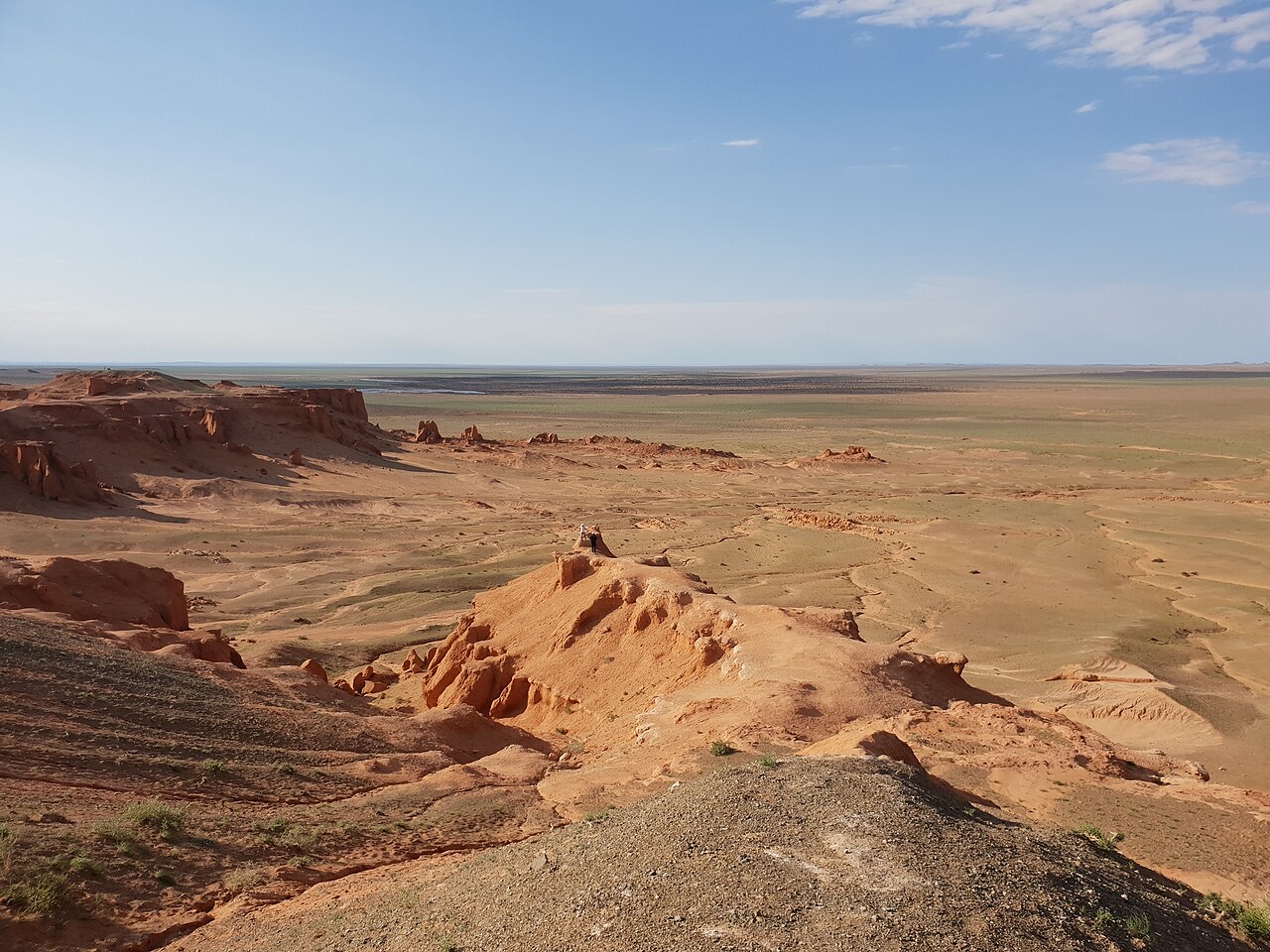 Asia
Mongolia ↗
The Mongolian Gobi
Late Cretaceous Gobi formations preserve contrasting environments and unusually direct clues to dinosaur behaviour.
75 Ma → 70 Ma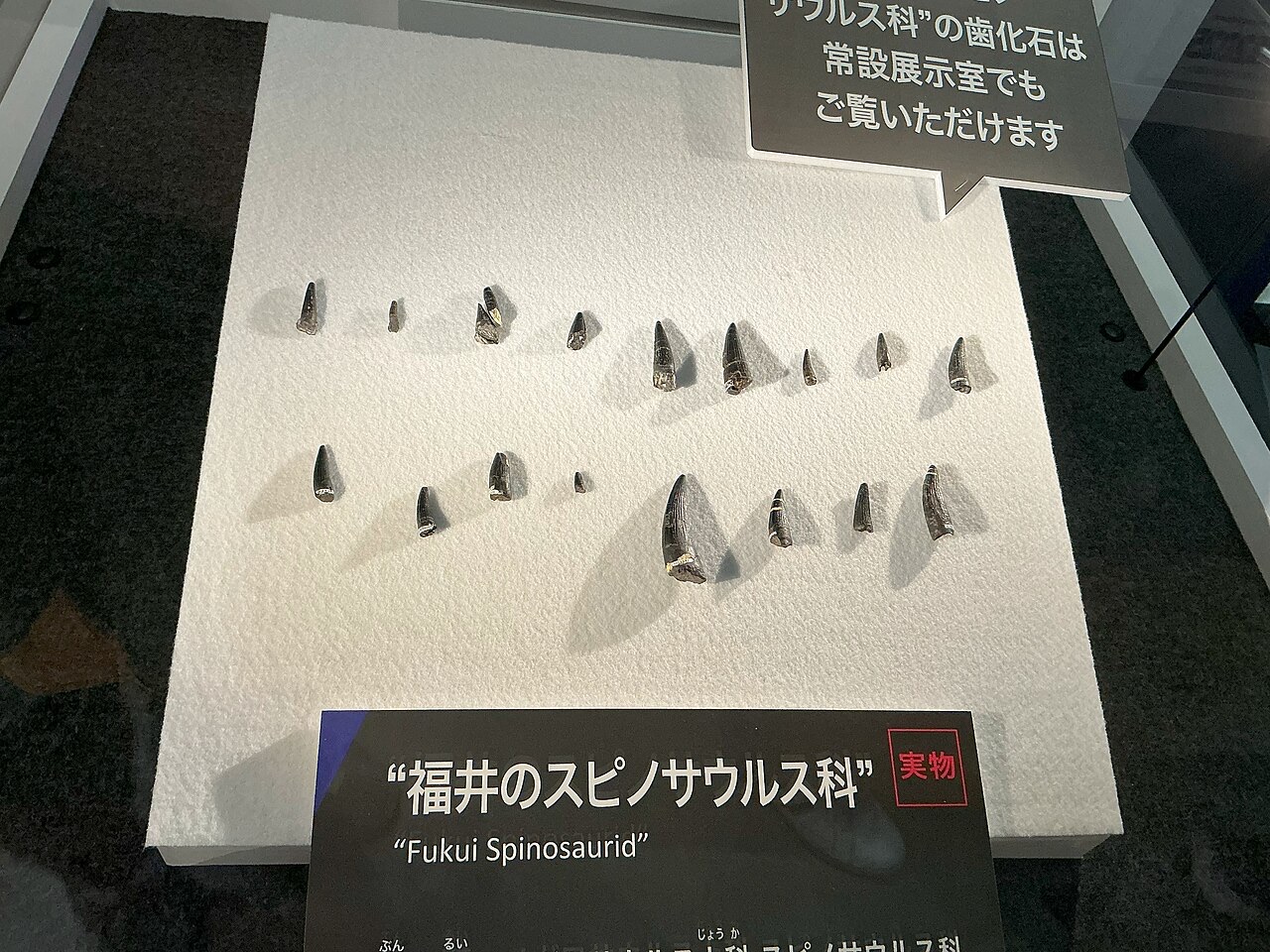 Asia
Japan ↗
Fukui & Hakusan
The Kuwajima and Kitadani formations reveal successive Early Cretaceous landscapes through mammals, dinosaurs and a three-dimensionally preserved bird.
129 Ma → 120 Ma