
How can minerals preserve an ancient trunk after its organic material is gone?
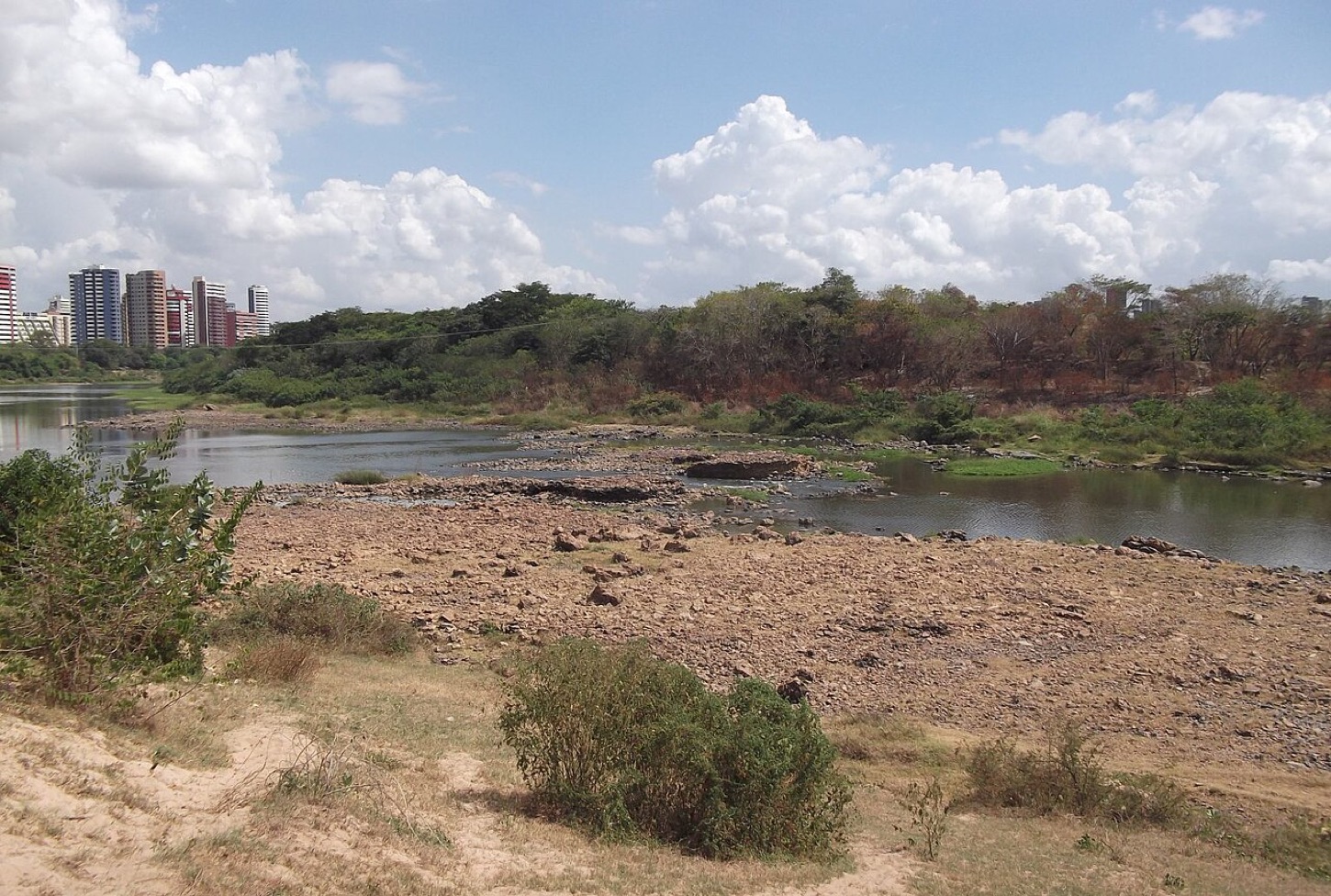
Along the Poti River at Teresina, fossil trunks stand out from the surrounding rock. When mineral-rich water fills or replaces spaces once held by organic material, it can preserve aspects of plant structure. A rough external shape tells us that a specimen resembles a trunk. Internal tissue organization can give a stronger basis for comparisons between ancient plant groups. At this locality, detailed anatomy supported the description of a distinctive fossil wood.
The forest site sits within a broader geological record. The early Permian Pedra de Fogo Formation includes rocks with considerable silicification and evidence for repeated changes in depositional setting. Sediments in different parts of the basin preserve different environments. The basin-scale account includes lakes, fluctuating margins and episodes of flowing water. Features recognized in a distant measured section should not automatically be put at the roots of a photographed trunk in Teresina.
The modern Poti is part of the preservation story because erosion affects which fossils are exposed and visible. The plant lived long before this river occupied its present course. Reports of trunks in life position allow local information about where some of the plants grew to survive. A transported piece of wood, by contrast, can tell us about the broader flora without fixing its growth site. The distinction makes field context just as important as laboratory identification.
[1] [2] [3]Time windows and evidence
Older ages are on the left. Bars span the dated intervals. A dot marks a single age.
- Early Permian plants and basin margins 273.01–298.9 Ma
- Teresina exposes fossil trunks along the Poti Today
- Teresinoxylon wood at Teresina 273.01–298.9 Ma
- Silica-rich Pedra de Fogo basin deposits 273.01–298.9 Ma
- The Poti fossil-forest exposure Today
Researched windowsEvidence records
285 Ma · interval 273.01–298.9 Ma
Early Permian plants and basin margins
Plants grew in the larger sedimentary landscape represented by the Parnaíba Basin. The Pedra de Fogo succession includes lake-margin and stream-associated deposits elsewhere in its extent. Silica preserves plant tissue and many sedimentary features. The plot gives a broadly Early Permian scene rather than a dated picture of a particular tree.
[1] [2] [3]Locate this time in the atlas ↗Observed
Silicified wood and varied silica-rich sediments are described from the formation.
Reconstructed
Changing shoreline and freshwater conditions supported plant growth and opportunities for burial.
Uncertain
The precise setting and age of any one trunk depends on its field and stratigraphic context.
Evidence windows overlapping this state: 2. Overlap does not establish exact coexistence.
body fossil · Pedra de Fogo and the Poti fossil forest ↗
Teresinoxylon wood at Teresina
An anatomically preserved wood from the Poti fossil-forest site was described as Teresinoxylon euzebioi. Recognizable structure survives even though the tissue has undergone silicification. Internal anatomy gives a way to compare the fossil with other ancient plants independently of the general shape of a trunk. Taxonomic affinity and original ecology require separate evidence.
sediment · Pedra de Fogo and the Poti fossil forest ↗
Silica-rich Pedra de Fogo basin deposits
Measured Pedra de Fogo sections contain siliciclastic sediment, carbonate and abundant chert. Different sections preserve lake-margin environments, ephemeral flows and other depositional conditions. The association records changing water and sediment conditions across the Parnaíba Basin. One measured section should not be treated as a precise reconstruction of the soil or water next to every Teresina trunk.
Today · interval Today
Teresina exposes fossil trunks along the Poti
The fossil forest is visible in a modern urban river setting. Silicified specimens exposed along the river preserve shapes and sometimes anatomy from their original plant tissues. Some reported trunks retain an upright growth position. Changes in present river levels and exposure do not describe the original forest floor itself.
[1]Locate this time in the atlas ↗Observed
Fossil trunks along the Poti were documented in field position.
Reconstructed
Erosion and exposure reveal a substantially older archive.
Uncertain
A specimen’s present height or relation to the modern river says little about its elevation in the Permian.
Evidence windows overlapping this state: 1. Overlap does not establish exact coexistence.
What this story cannot resolve
The 285 Ma value is a representative Early Permian age. The full period range is deliberately broad because the exact time of growth or silicification of each trunk is unresolved.
Keep these ideas handy
Fossilization
The varied processes by which remains or traces of past life enter the geological record. Explore the idea ↗
Facies
The observable characteristics of a rock body that help describe and interpret its depositional setting. Explore the idea ↗
Taphonomy
Studying what happens between an organism’s life, death, burial, preservation and eventual discovery. Explore the idea ↗
The evidence notebook
body fossil · Pedra de Fogo and the Poti fossil forest ↗
Teresinoxylon wood at Teresina
An anatomically preserved wood from the Poti fossil-forest site was described as Teresinoxylon euzebioi. Recognizable structure survives even though the tissue has undergone silicification. Internal anatomy gives a way to compare the fossil with other ancient plants independently of the general shape of a trunk. Taxonomic affinity and original ecology require separate evidence.
sediment · Pedra de Fogo and the Poti fossil forest ↗
Silica-rich Pedra de Fogo basin deposits
Measured Pedra de Fogo sections contain siliciclastic sediment, carbonate and abundant chert. Different sections preserve lake-margin environments, ephemeral flows and other depositional conditions. The association records changing water and sediment conditions across the Parnaíba Basin. One measured section should not be treated as a precise reconstruction of the soil or water next to every Teresina trunk.
locality · Pedra de Fogo and the Poti fossil forest ↗
The Poti fossil-forest exposure
The Teresina field description records dozens of permineralized trunks along the Poti, some described in life position. The present exposure is in an urban riverside landscape. Field position can distinguish some plants preserved where they grew from specimens transported before burial. Observed trunks are the fraction of the former environment exposed and preserved at the site.
Follow the evidence
Sources & credits
- A Permian petrified forest at Teresina, Piauí ↗
Boletim IG-USP · Instituto de Geociências, Universidade de São Paulo · 1989
Use, credit & modifications
Reference only. No source text, figures or photographs reproduced in this record.
Credit: Caldes de C. et al. · Boletim IG-USP. Facts paraphrased in original text; teaching intervals distinguished from measurement uncertainty. Reference use; no media rights asserted.
- Paleoenvironment and paleoclimate of the Pedra de Fogo Formation, Parnaíba Basin ↗
Universidade Federal do Pará · 2019
Use, credit & modifications
Reference only. No source text, figures or photographs reproduced in this record.
Credit: Universidade Federal do Pará. Facts paraphrased in original text; teaching intervals distinguished from measurement uncertainty. Reference use; no media rights asserted.
- Facies and stratigraphy of the upper Pedra de Fogo Formation ↗
Universidade Federal do Pará · 2012
Use, credit & modifications
Reference only. No source text, figures or photographs reproduced in this record.
Credit: Universidade Federal do Pará. Facts paraphrased in original text; teaching intervals distinguished from measurement uncertainty. Reference use; no media rights asserted.
Follow the connections
 North America
United States ↗
Petrified Forest
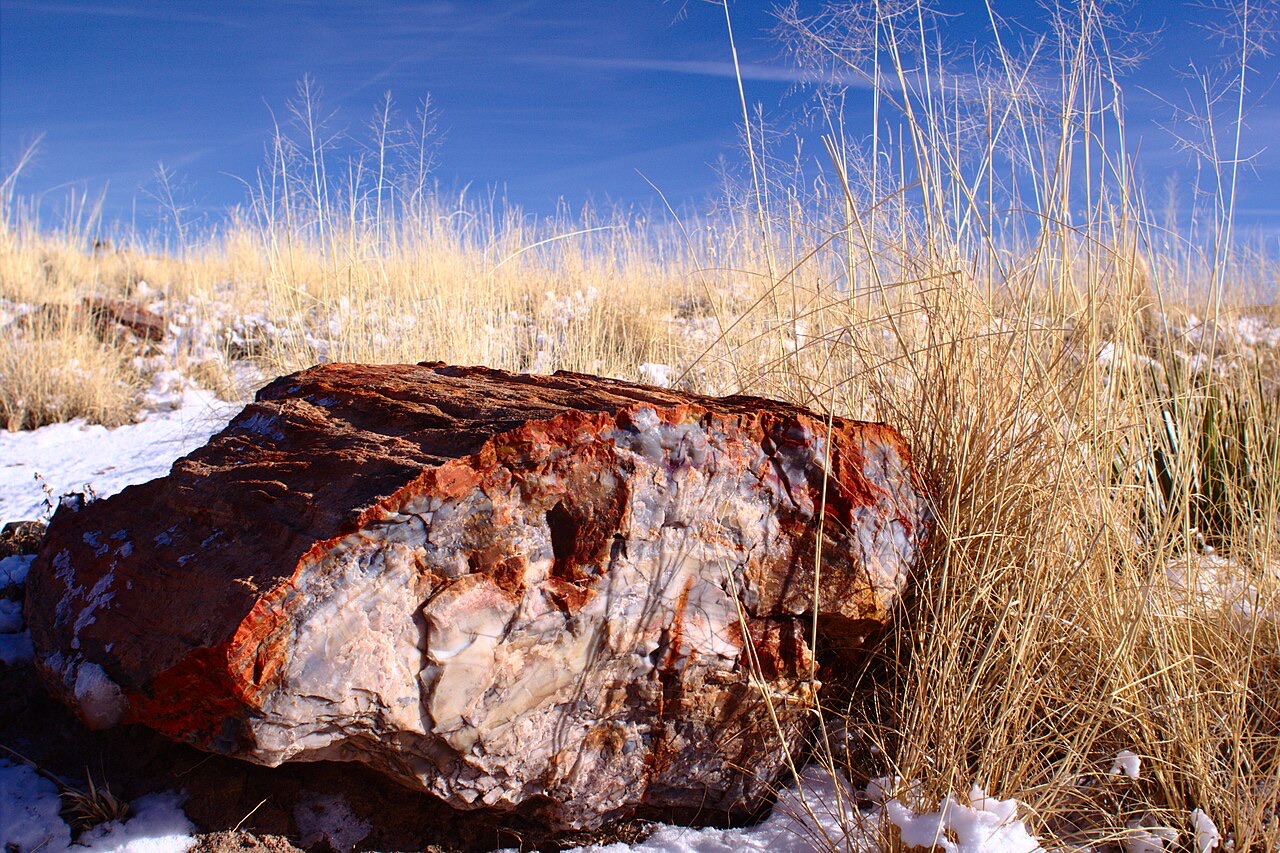
Arizona’s colorful badlands expose a changing Triassic river basin. Pond-margin vertebrates, mineralized wood and dated zircon grains reveal different parts of that history, including a tree that survived injury interpreted as fire.
220 Ma → 210 Ma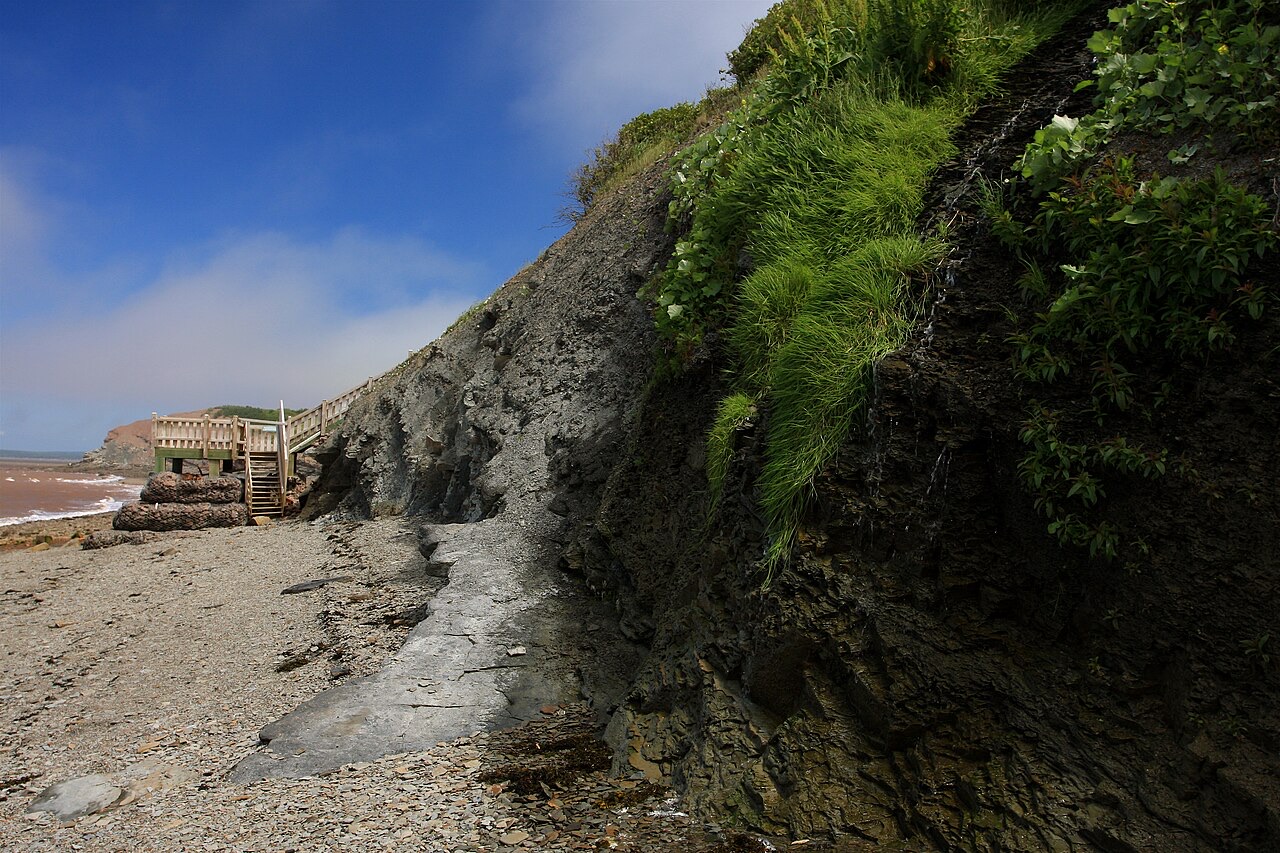 North America
Canada ↗
Joggins Fossil Cliffs
Carboniferous coastal forests, rivers and wetland communities survive in the rocks of a modern tidal cliff. Upright trees preserve the spatial context of an ecosystem as well as its organisms.
315 Ma → Today