
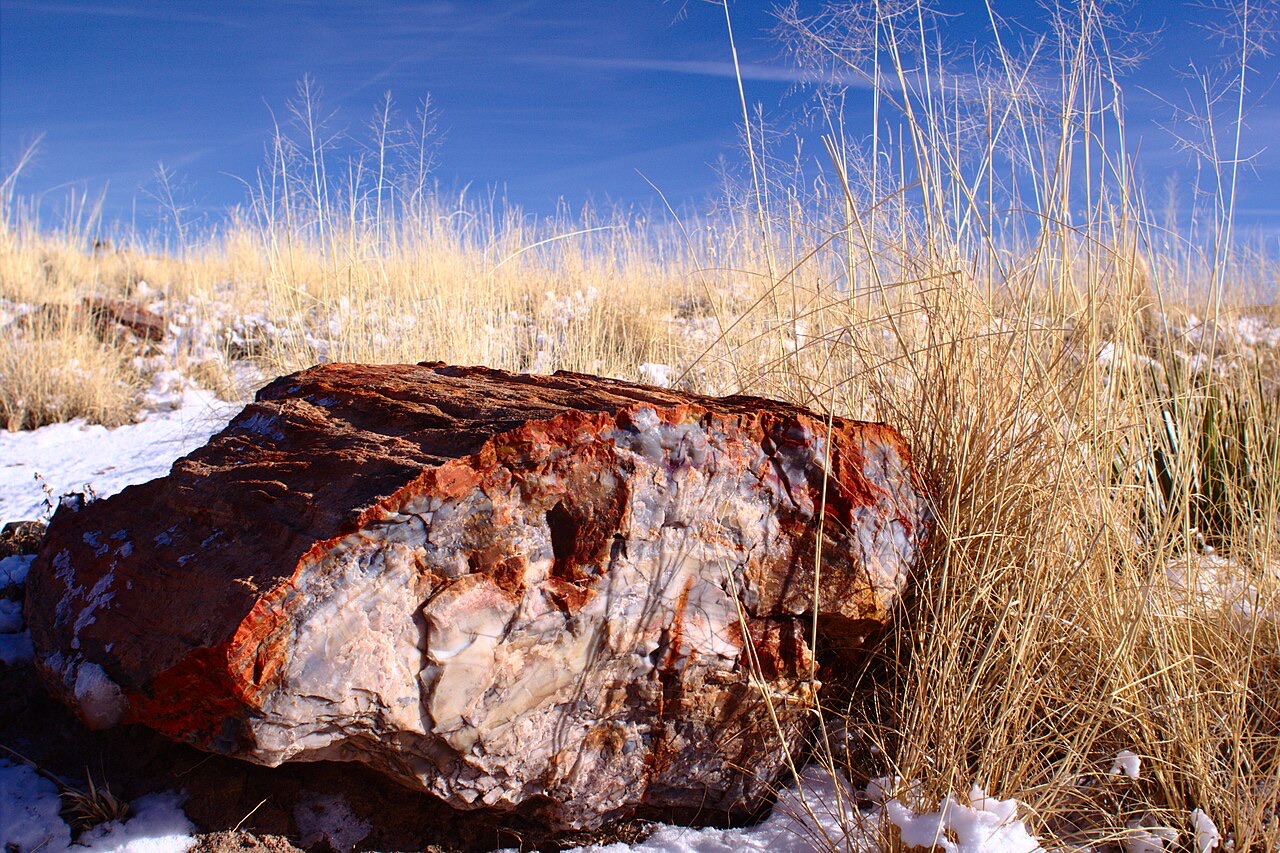
How can stone wood preserve both a landscape and an event in one tree’s life?
The name Petrified Forest can suggest one woodland frozen in place. The park instead exposes many layers and fossil localities within the Chinle Formation. Rivers moved sediment across a broad continental basin, with ponds, lakes and vegetated floodplains occupying different places through time. Trees could be buried close to where they grew or transported before burial. A log on today’s dry ground therefore needs its geological context before it can be used to reconstruct an ancient forest.
Thunderstorm Ridge, a locality in the upper Blue Mesa Member, preserves a rich assemblage of small vertebrate remains around 220 million years old. Researchers interpret the concentration as associated with a pond or lake margin. The small bones add organisms that a search focused on spectacular trunks or large skeletons would miss. This is a reminder that the apparent character of an ecosystem depends partly on the size of fossils collected and the methods used to recover them.
The younger Black Forest Bed records another chapter around 210 million years ago. Zircon dating helps anchor this part of the succession, while the wood supplies biological information. Silica-rich water contributed to mineralization that preserved aspects of plant structure. An age measured from a mineral grain and the age of a tree are not automatically identical: older grains can be carried into younger sediment, so geologists evaluate which grains meaningfully constrain deposition.
One Black Forest specimen, PEFO 40757, preserves an injury with wound growth and microscopic changes interpreted as a fire scar preceded by water stress. That interpretation concerns a particular tree and event. It does not establish the fire frequency of the entire basin or show that all petrified trees died in a single catastrophe. Read together, the fossils reveal a dynamic landscape and an unusually intimate episode within it.
[1] [2] [3] [4] [5] [6] [7]Time windows and evidence
Older ages are on the left. Bars span the dated intervals. A dot marks a single age.
- Life gathers at a pond margin 220–225 Ma
- Wood enters the Black Forest record 209.6–210.4 Ma
- Thunderstorm Ridge, PFV 456 220–225 Ma
- Zircon dates from the Black Forest Bed 209.6–210.4 Ma
- Fire-scarred Agathoxylon, PEFO 40757 209.6–210.4 Ma
Researched windowsEvidence records
220 Ma · interval 220–225 Ma
Life gathers at a pond margin
Thunderstorm Ridge preserves a concentration of small vertebrate remains in the upper Blue Mesa Member. The approximately 220 Ma locality is interpreted as a pond or lake margin within a wider humid lowland river system. The water body shown is schematic. The broad bounds use the park’s Blue Mesa interval rather than claiming a five-million-year lifespan for this particular pond or a formal analytical error on the locality age.
[1] [2]Locate this time in the atlas ↗Observed
Small vertebrate bones occur with plant and aquatic invertebrate remains at Thunderstorm Ridge, PFV 456.
Reconstructed
A local pond or lake margin within a larger lowland drainage system.
Uncertain
The exact shoreline, duration of accumulation and relative abundance of living species are unresolved.
Evidence windows overlapping this state: 1. Overlap does not establish exact coexistence.
210 Ma · interval 209.6–210.4 Ma
Wood enters the Black Forest record
The Black Forest Bed preserves logs and some stumps within the younger Chinle river-basin succession. Published zircon results place this chapter near 210 Ma, substantially younger than the older Blue Mesa example. The bounds are a rounded envelope around cited core and outcrop determinations, not a new confidence interval. Wood anatomy records biological events before burial, while sediment and mineral dating constrain a different part of the history.
[3] [4] [7] [6]Locate this time in the atlas ↗Observed
Mineralized wood occurs in the Black Forest Bed; dated zircon populations provide depositional-age constraints.
Reconstructed
A river-basin landscape with woody vegetation, burial and subsequent mineralization.
Uncertain
Transport histories differ among logs, and detrital zircon can predate deposition.
Evidence windows overlapping this state: 2. Overlap does not establish exact coexistence.
radiometric · Petrified Forest ↗
Zircon dates from the Black Forest Bed
A dated Black Forest core sample yielded a maximum depositional age near 210.16 Ma, while cited outcrop work returned a value near 209.93 Ma. The agreement helps place the bed near 210 Ma and supports comparison with magnetic polarity information. The displayed bounds round an envelope around the published determinations and their uncertainties. They are not an age assigned independently to every log, nor a newly calculated probability distribution.
body fossil · Petrified Forest ↗
Fire-scarred Agathoxylon, PEFO 40757
This named Black Forest wood specimen preserves an external scar, wound growth and microscopic changes across the injured part of the trunk. Researchers compared those features with living trees and interpreted them as a surviving fire injury preceded by water stress. The fossil makes a short biological episode accessible within a much longer geological record. Its age comes from the enclosing bed; the injury itself was not directly radiometrically dated.
What this story cannot resolve
The two scenes are separated stratigraphic samples, not endpoints of an unbroken ecological movie. The Black Forest age uses newer work near 210 Ma rather than the older 213 Ma figure still present on some interpretive pages.
Keep these ideas handy
Fossilization
The varied processes by which remains or traces of past life enter the geological record. Explore the idea ↗
Sampling bias
Differences between the history of life and the subset preserved, exposed, collected, identified and published. Explore the idea ↗
Radiometric dating
Estimating the time of a geological event from radioactive decay and the isotopic composition of a suitable material. Explore the idea ↗
Taphonomy
Studying what happens between an organism’s life, death, burial, preservation and eventual discovery. Explore the idea ↗
The evidence notebook
body fossil · Petrified Forest ↗
Thunderstorm Ridge, PFV 456
Thunderstorm Ridge in the upper Blue Mesa Member has yielded remains representing many small vertebrates alongside plants and aquatic invertebrates. Their association supports interpretation of a pond or lake-margin accumulation in the Triassic lowlands. The locality expands the ecological picture beyond large reptiles and petrified trunks. Its approximately 220 Ma age is a rounded estimate; the wider displayed interval identifies the Blue Mesa context rather than the lifetime of one community.
radiometric · Petrified Forest ↗
Zircon dates from the Black Forest Bed
A dated Black Forest core sample yielded a maximum depositional age near 210.16 Ma, while cited outcrop work returned a value near 209.93 Ma. The agreement helps place the bed near 210 Ma and supports comparison with magnetic polarity information. The displayed bounds round an envelope around the published determinations and their uncertainties. They are not an age assigned independently to every log, nor a newly calculated probability distribution.
body fossil · Petrified Forest ↗
Fire-scarred Agathoxylon, PEFO 40757
This named Black Forest wood specimen preserves an external scar, wound growth and microscopic changes across the injured part of the trunk. Researchers compared those features with living trees and interpreted them as a surviving fire injury preceded by water stress. The fossil makes a short biological episode accessible within a much longer geological record. Its age comes from the enclosing bed; the injury itself was not directly radiometrically dated.
Follow the evidence
Sources & credits
- Hidden cradle of tetrapod evolution at Petrified Forest National Park ↗
US National Park Service · Not stated
Use, credit & modifications
Reference only. No source text, photographs, figures or datasets reproduced. Original factual synthesis; no reuse licence asserted.
Credit: US National Park Service — Hidden cradle of tetrapod evolution at Petrified Forest National Park. Facts synthesized in original educational language; numerical ranges are identified as stage envelopes, published dating bounds, or approximate teaching intervals. No source assets reused; territorial permissions not applicable.
- Geologic Formations — Petrified Forest National Park ↗
US National Park Service · 2020-09-13
Use, credit & modifications
Reference only. No source text, photographs, figures or datasets reproduced. Original factual synthesis; no reuse licence asserted.
Credit: US National Park Service — Geologic Formations — Petrified Forest National Park. Facts synthesized in original educational language; numerical ranges are identified as stage envelopes, published dating bounds, or approximate teaching intervals. No source assets reused; territorial permissions not applicable.
- LA-ICPMS U–Pb geochronology of detrital zircon grains from Petrified Forest National Park ↗
Geochronology / Copernicus Publications · 2020
Use, credit & modifications
Reference only. No source text, photographs, figures or datasets reproduced. Original factual synthesis; no reuse licence asserted.
Credit: Geochronology / Copernicus Publications — LA-ICPMS U–Pb geochronology of detrital zircon grains from Petrified Forest National Park. Facts synthesized in original educational language; numerical ranges are identified as stage envelopes, published dating bounds, or approximate teaching intervals. No source assets reused; territorial permissions not applicable.
- U–Pb zircon geochronology and depositional age models for the Upper Triassic Chinle Formation ↗
Geological Society of America Bulletin / Rutgers University repository · 2020
Use, credit & modifications
Reference only. No source text, photographs, figures or datasets reproduced. Original factual synthesis; no reuse licence asserted.
Credit: Rasmussen and colleagues — GSA Bulletin. Facts synthesized in original educational language; numerical ranges are identified as stage envelopes, published dating bounds, or approximate teaching intervals. No source assets reused; territorial permissions not applicable.
- Fire-scarred fossil tree from the Late Triassic shows a pre-fire drought signal ↗
Scientific Reports · 2020-11-18
Use, credit & modifications
Reference only. No source text, photographs, figures or datasets reproduced. Original factual synthesis; no reuse licence asserted.
Credit: Bruce A. Byers and colleagues — Scientific Reports 10, 20104. Facts synthesized in original educational language; numerical ranges are identified as stage envelopes, published dating bounds, or approximate teaching intervals. No source assets reused; territorial permissions not applicable.
- Frequently Asked Questions: petrified wood and mineralization ↗
US National Park Service · Not stated
Use, credit & modifications
Reference only. No source text, photographs, figures or datasets reproduced. Original factual synthesis; no reuse licence asserted.
Credit: US National Park Service — Frequently Asked Questions: petrified wood and mineralization. Facts synthesized in original educational language; numerical ranges are identified as stage envelopes, published dating bounds, or approximate teaching intervals. No source assets reused; territorial permissions not applicable.
- Off the Beaten Path: Black Forest fossil logs ↗
US National Park Service · Not stated
Use, credit & modifications
Reference only. No source text, photographs, figures or datasets reproduced. Original factual synthesis; no reuse licence asserted.
Credit: US National Park Service — Off the Beaten Path: Black Forest fossil logs. Facts synthesized in original educational language; numerical ranges are identified as stage envelopes, published dating bounds, or approximate teaching intervals. No source assets reused; territorial permissions not applicable.
Follow the connections
 North America
United States ↗
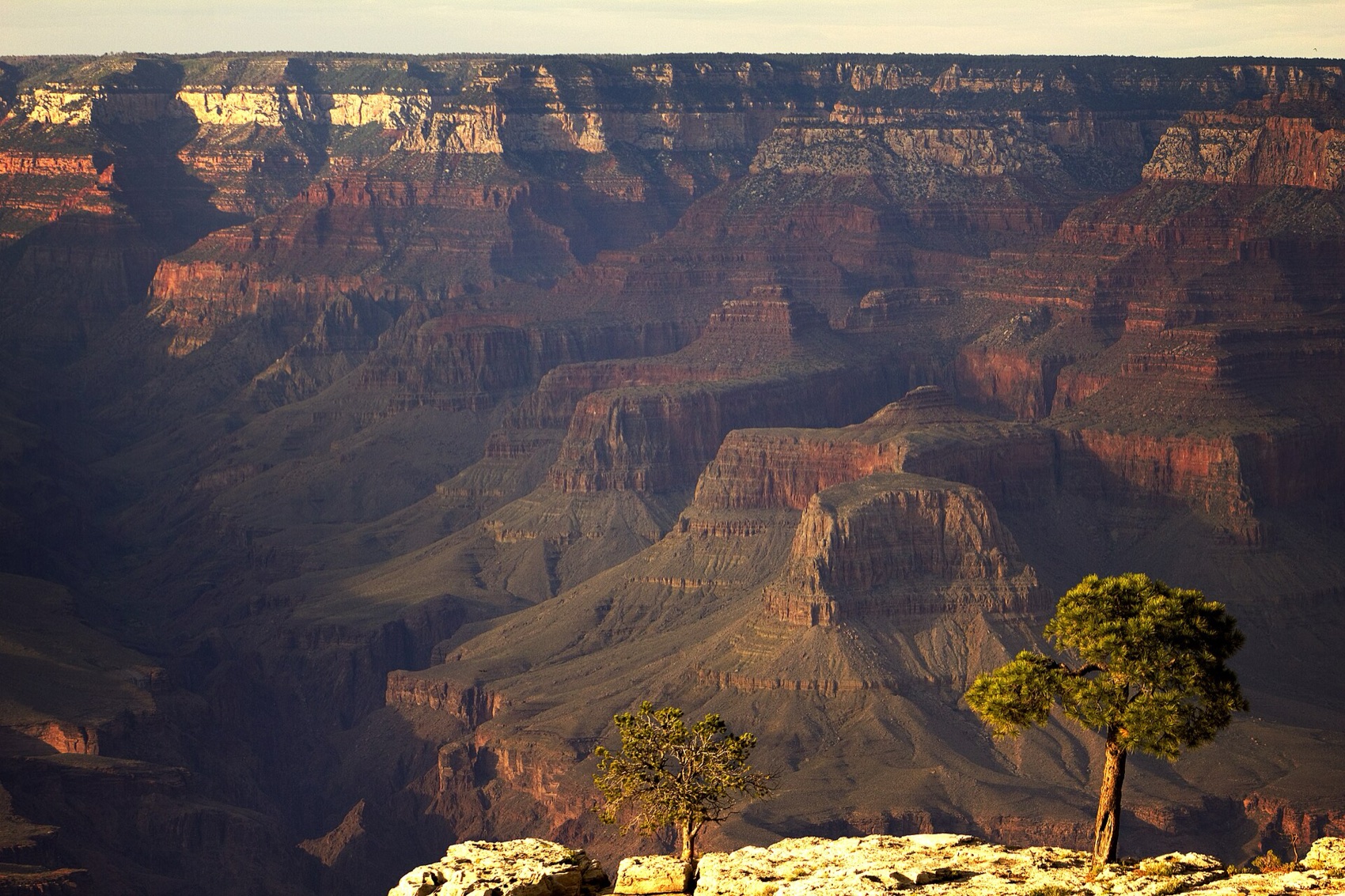
Grand Canyon
The canyon exposes older environments stacked in rock. Cambrian marine deposits and Permian dune sand record different chapters; the much younger canyon is the window through which we read them.
508 Ma → 275 Ma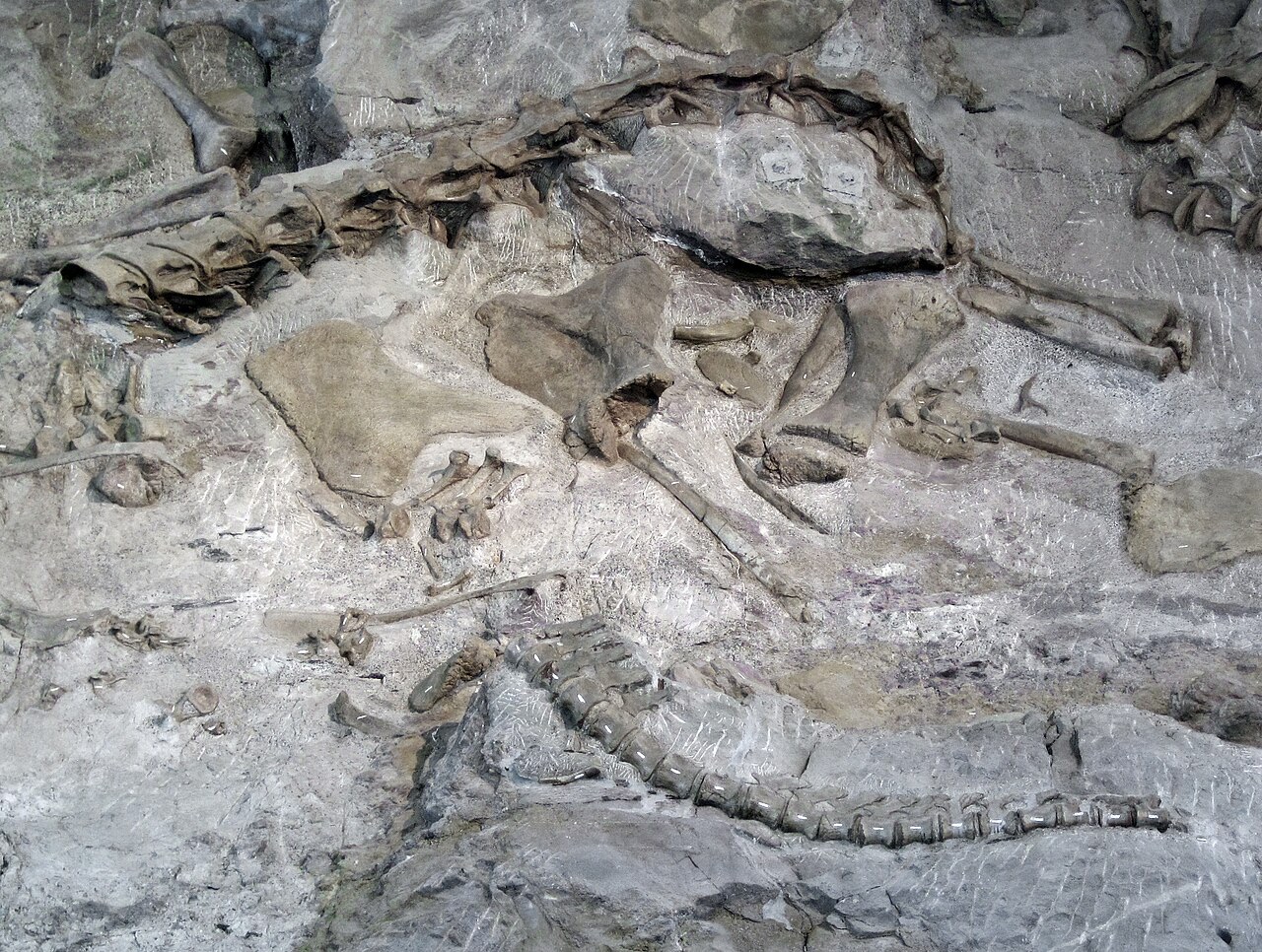 North America
United States ↗
Dinosaur National Monument
The monument preserves more than the Morrison dinosaur quarry. Older Nugget Sandstone records animals crossing desert dunes; younger river deposits preserve bones, wood and evidence of a different ecosystem.
200 Ma → 151 Ma