
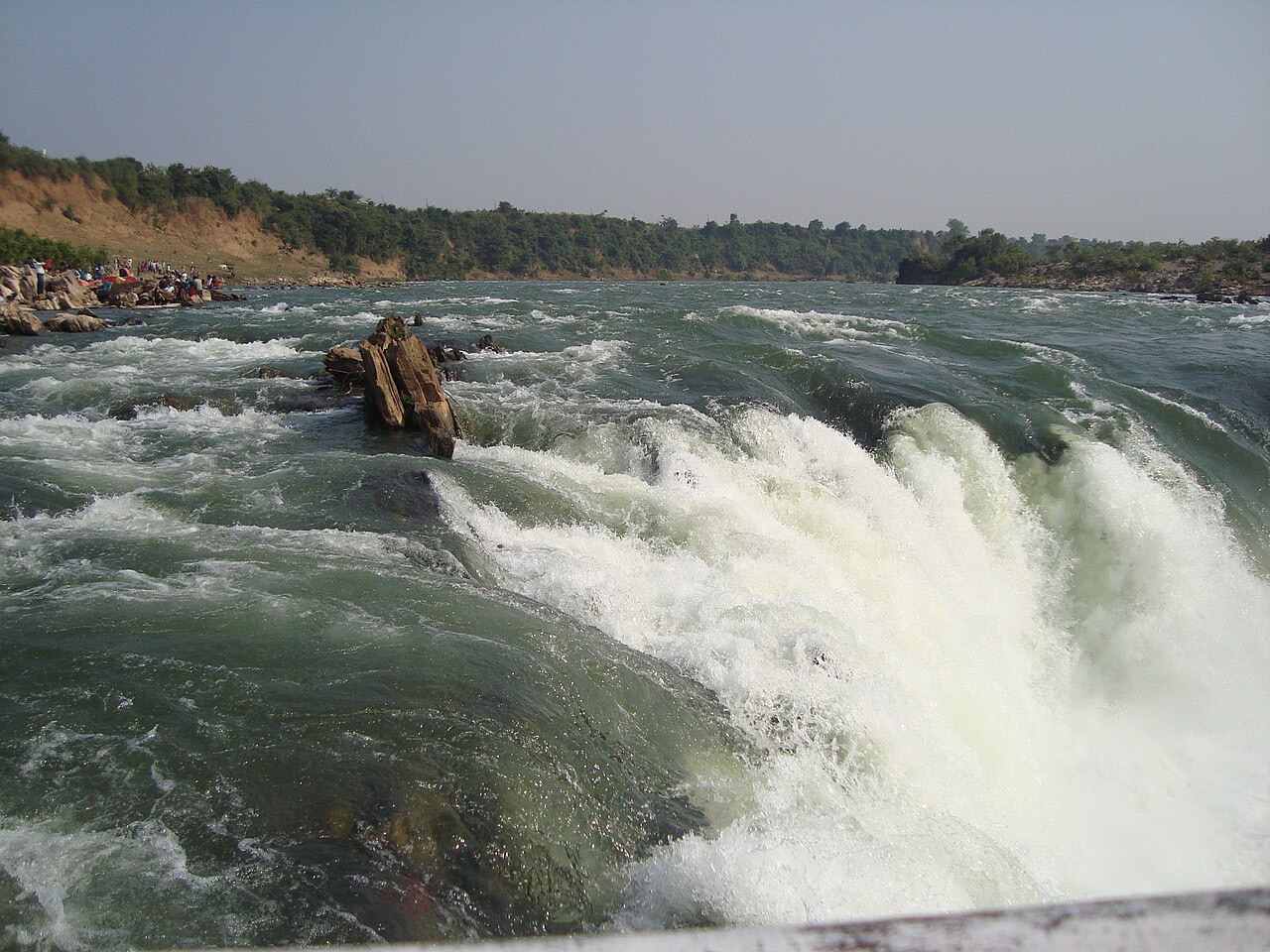
How can marine limestone and dinosaur eggs occur in the same valley’s rock record?
The modern Narmada valley exposes rocks formed in environments very different from the present river. During part of the Late Cretaceous, marine water advanced into a tectonically influenced basin, leaving the Bagh succession. Sandstones, limestones and fossil assemblages record changing connections between river, estuary and sea. The distribution of those units varies along the basin, so a section in the west cannot automatically be substituted for one farther east.
The older snapshot selects the Turonian marine interval. Microscopic fossils provide chronological and environmental information that is difficult to obtain from rock appearance alone. Their interpretation also shows why geological maps are revised: different fossil groups and new sampling can change the ages assigned to individual units. Broad bounds are more appropriate here than presenting every Bagh bed as the deposit of one synchronous sea-level event.
Much later, Lameta sediments accumulated in terrestrial settings where titanosaurs laid eggs. Surveys around Bagh and Padlya document clutches, eggshell microstructure and unusual eggs that help investigate reproduction and burial. These fossils do not mean dinosaurs nested on the floor of the earlier sea. A substantial interval and a changed depositional setting separate the two records. Nor does a cluster of eggs prove parental care or identify a particular skeleton species: eggshell classification and body-fossil taxonomy answer different questions. The region is a useful demonstration of stratigraphic change, with marine evidence below younger terrestrial deposits and later volcanic rocks providing another chapter beyond the selected nesting landscape.
[1] [2] [3] [4]Time windows and evidence
Older ages are on the left. Bars span the dated intervals. A dot marks a single age.
- Marine incursions into the Bagh basin 89.8–93.9 Ma
- Titanosaur nesting on the Lameta landscape 66–72.1 Ma
- Bagh Group calcareous nannofossil assemblages 89.8–93.9 Ma
- Titanosaur egg clutches of the Bagh district 66–72.1 Ma
- The unusual Padlya ovum-in-ovo egg 66–72.1 Ma
Researched windowsEvidence records
92 Ma · interval 89.8–93.9 Ma
Marine incursions into the Bagh basin
The selected Turonian window represents marine and estuarine deposition within the Bagh basin. Fossil-bearing limestone and calcareous sediment record seawater reaching far into what is now central India. Calcareous microfossils in the Nimar Sandstone helped revise its age from late to early Turonian. Sedimentary features there point to an estuary influenced by both tides and rivers. The representative age is therefore a regional teaching snapshot, not the age of every marine bed or the present river valley.
[1] [2]Locate this time in the atlas ↗Observed
Marine fossils occur in limestone and calcareous sedimentary units.
Reconstructed
A marine-connected basin occupied parts of the Narmada region.
Uncertain
Local tectonics, hiatuses and changing correlations complicate a single basin-wide chronology.
Evidence windows overlapping this state: 1. Overlap does not establish exact coexistence.
67 Ma · interval 66–72.1 Ma
Titanosaur nesting on the Lameta landscape
Lameta deposits around the lower Narmada valley preserve titanosaur egg clutches in a terrestrial floodplain and associated wetland setting. The broad Maastrichtian envelope reflects the formation-level age of the nesting sites, rather than a direct numerical date on every clutch. River denotes the wider depositional landscape, including surfaces outside active channels. Burial, flooding and later alteration affected eggs differently, making sedimentary context essential to interpretations of nesting behaviour.
[3] [4]Locate this time in the atlas ↗Observed
Egg clutches and eggshell fragments occur within Lameta sedimentary rocks.
Reconstructed
Titanosaurs repeatedly used parts of a terrestrial lowland for reproduction.
Uncertain
Nest timing, species identity and parental behaviour cannot all be established from preserved eggs alone.
Evidence windows overlapping this state: 2. Overlap does not establish exact coexistence.
trace fossil · Lower Narmada Valley ↗
Titanosaur egg clutches of the Bagh district
Field surveys of Lameta outcrops in the Bagh district document multiple titanosaur egg clutches. Egg arrangement, dimensions and shell microstructure supply evidence for nesting and reproductive diversity. The spatial clusters represent preserved nesting occurrences, not a census of all animals alive in the region. Some eggs were altered, broken or failed to hatch, and later exposure affects what can be counted. The record supports repeated reproductive use of the area without independently establishing social organization or parental attendance.
trace fossil · Lower Narmada Valley ↗
The unusual Padlya ovum-in-ovo egg
An unusual titanosaurid egg from the Dinosaur Fossil National Park near Padlya preserves one egg structure within another. Its shell relationships were interpreted as a reproductive abnormality with implications for the reproductive biology of sauropods. The specimen was found in Lameta sandy limestone and calcareous sandstone above older Bagh rocks. It is valuable as a specific anatomical and taphonomic observation, but one pathological example cannot establish the frequency of the condition or every aspect of normal reproductive behaviour.
What this story cannot resolve
The marker is near the Bagh–Padlya study area. The modern Narmada river is not assumed to follow an unchanged Cretaceous course; selected records are separated by millions of years.
Keep these ideas handy
Facies
The observable characteristics of a rock body that help describe and interpret its depositional setting. Explore the idea ↗
Relative dating
Determining which event came first without necessarily assigning a numerical age. Explore the idea ↗
Taphonomy
Studying what happens between an organism’s life, death, burial, preservation and eventual discovery. Explore the idea ↗
Trace fossils
Preserved evidence of an organism’s activity, such as a footprint, burrow, feeding mark or coprolite. Explore the idea ↗
The evidence notebook
body fossil · Lower Narmada Valley ↗
Bagh Group calcareous nannofossil assemblages
The Nimar Sandstone includes calcareous nannofossils and planktonic foraminifera. The first appearances of Quadrum gartneri and Helvetoglobotruncana helvetica in the sampled succession help place it in the early Turonian, revising an earlier late Turonian interpretation. Sediment structures and facies indicate an estuary shaped by rivers and tides. The microfossils identify marine influence at the sampled section; by themselves they cannot tell us how deep or salty water was across the entire basin.
trace fossil · Lower Narmada Valley ↗
Titanosaur egg clutches of the Bagh district
Field surveys of Lameta outcrops in the Bagh district document multiple titanosaur egg clutches. Egg arrangement, dimensions and shell microstructure supply evidence for nesting and reproductive diversity. The spatial clusters represent preserved nesting occurrences, not a census of all animals alive in the region. Some eggs were altered, broken or failed to hatch, and later exposure affects what can be counted. The record supports repeated reproductive use of the area without independently establishing social organization or parental attendance.
trace fossil · Lower Narmada Valley ↗
The unusual Padlya ovum-in-ovo egg
An unusual titanosaurid egg from the Dinosaur Fossil National Park near Padlya preserves one egg structure within another. Its shell relationships were interpreted as a reproductive abnormality with implications for the reproductive biology of sauropods. The specimen was found in Lameta sandy limestone and calcareous sandstone above older Bagh rocks. It is valuable as a specific anatomical and taphonomic observation, but one pathological example cannot establish the frequency of the condition or every aspect of normal reproductive behaviour.
Follow the evidence
Sources & credits
- Cenomanian–Turonian sea-level transgression and OAE2 deposition in the Western Narmada Basin ↗
Gondwana Research · 2021
Use, credit & modifications
Reference only; original factual synthesis. No third-party prose or media reproduced.
Credit: Gondwana Research — Cenomanian–Turonian sea-level transgression and OAE2 deposition in the Western Narmada Basin. Original educational synthesis; rounded age envelopes distinguish teaching windows from analytical errors. No media licence asserted for this reference. Photograph rights are documented separately.
- High-resolution calcareous nannofossil biostratigraphy and facies of Nimar Sandstone Formation ↗
Journal of the Palaeontological Society of India · 2023
Use, credit & modifications
Reference only; original factual synthesis. No third-party prose or media reproduced.
Credit: Journal of the Palaeontological Society of India — High-resolution calcareous nannofossil biostratigraphy and facies of Nimar Sandstone Formation. Original educational synthesis; rounded age envelopes distinguish teaching windows from analytical errors. No media licence asserted for this reference. Photograph rights are documented separately.
- New Late Cretaceous titanosaur sauropod dinosaur egg clutches from lower Narmada valley, India ↗
Dhiman et al.; PLOS ONE · 2023
Use, credit & modifications
Reference only; original factual synthesis. No third-party prose or media reproduced.
Credit: Dhiman et al.; PLOS ONE — New Late Cretaceous titanosaur sauropod dinosaur egg clutches from lower Narmada valley, India. Original educational synthesis; rounded age envelopes distinguish teaching windows from analytical errors. No media licence asserted for this reference. Photograph rights are documented separately.
- First ovum-in-ovo pathological titanosaurid egg throws light on the reproductive biology of sauropod dinosaurs ↗
Dhiman et al.; Scientific Reports · 2022
Use, credit & modifications
Reference only; original factual synthesis. No third-party prose or media reproduced.
Credit: Dhiman et al.; Scientific Reports — First ovum-in-ovo pathological titanosaurid egg throws light on the reproductive biology of sauropod dinosaurs. Original educational synthesis; rounded age envelopes distinguish teaching windows from analytical errors. No media licence asserted for this reference. Photograph rights are documented separately.
Follow the connections
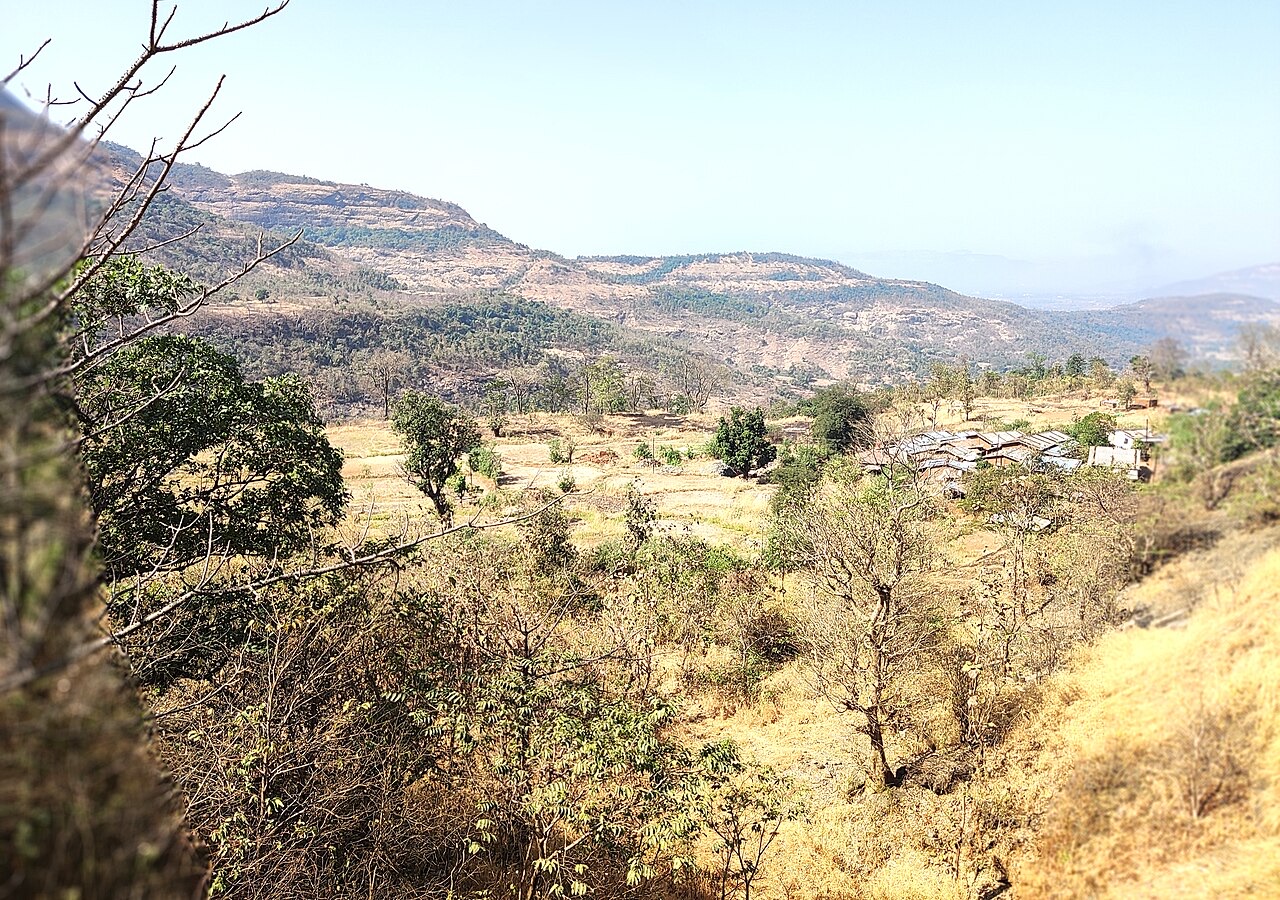 Asia
India ↗
Deccan Traps
Flood basalts and sedimentary intervals between flows record a prolonged volcanic episode spanning the end-Cretaceous extinction.
66.2 Ma → 65.7 Ma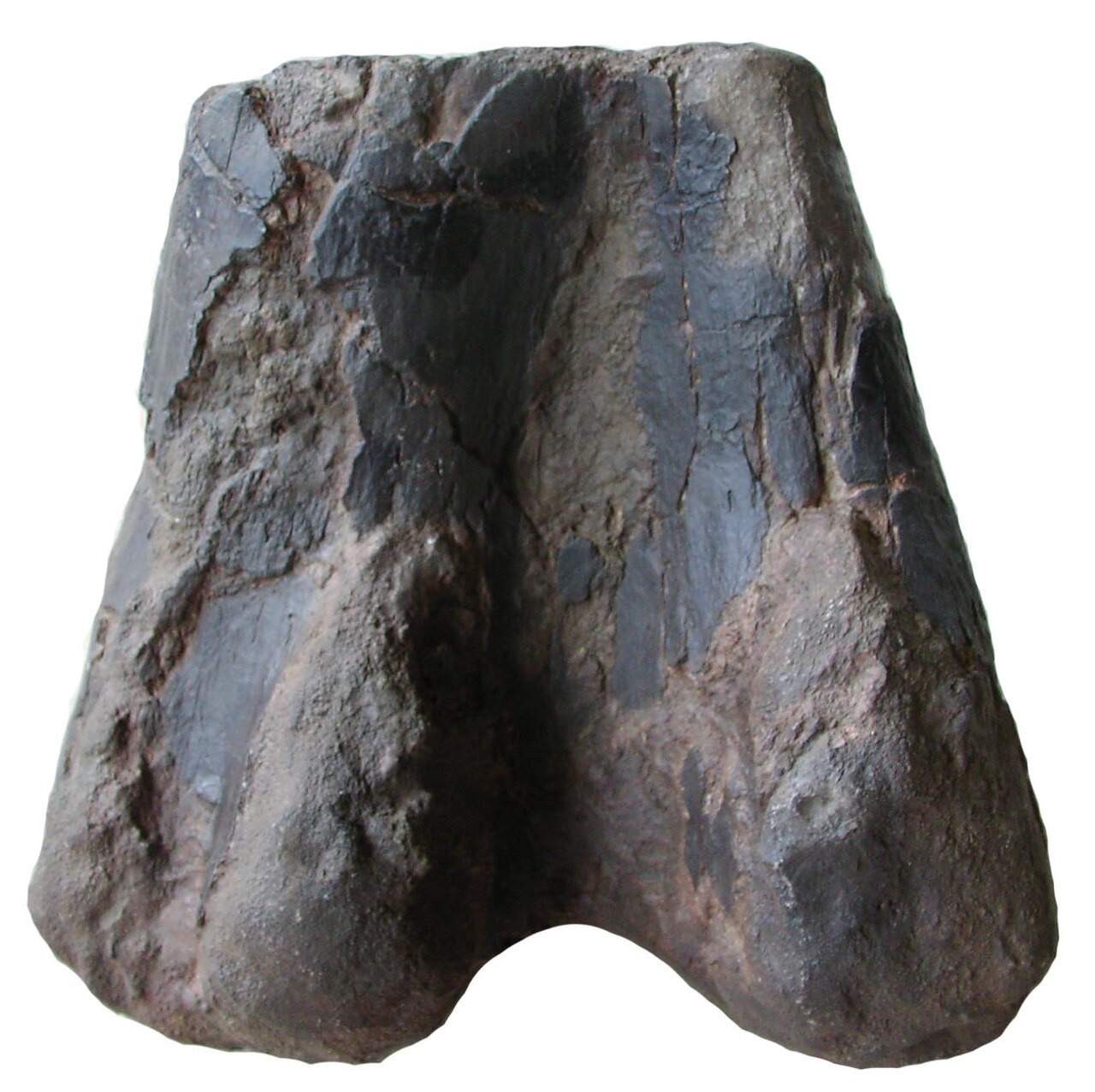 Asia
Thailand ↗
Phu Wiang
Older Phra Wihan track-bearing sandstone and younger Sao Khua floodplain deposits record dinosaurs in northeastern Thailand.
140 Ma → 133 Ma