
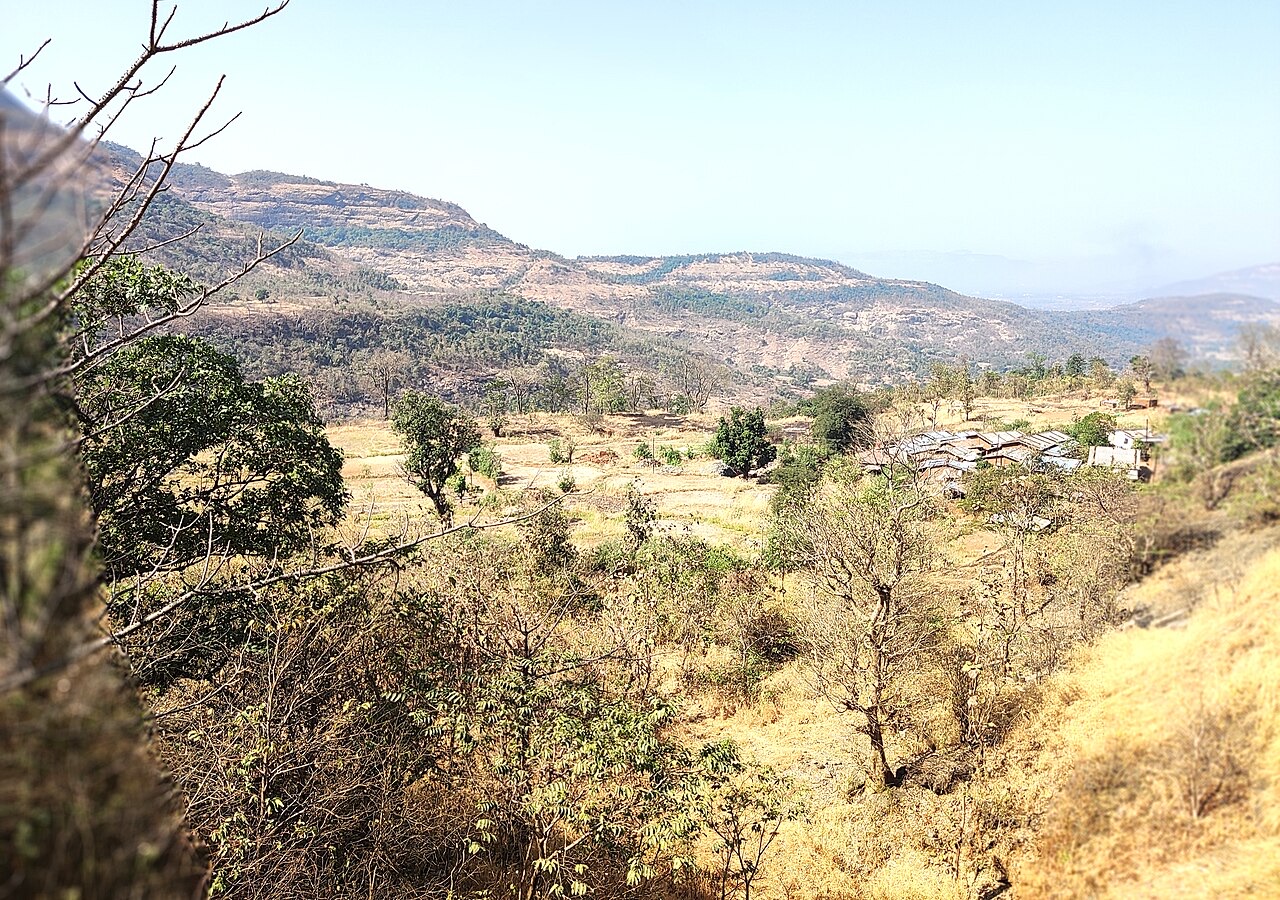
How can rocks distinguish the timing of eruptions from their ecological effects?
The Deccan Traps are the eroded remains of an enormous volcanic province, not the product of one eruption from a single cone. Successive lava flows spread across parts of India, while periods and places without active burial allowed soils, water bodies and biological communities to develop. The step-like slopes visible today reflect the later erosion of that layered sequence, rather than the original outline of each lava field.
High-precision dating places the main eruptive episode across the Cretaceous–Paleogene boundary. Different dating systems and statistical approaches resolve the sequence at different levels of detail, so conclusions about individual pulses require careful comparison of uncertainty. The two selected states distinguish pre-boundary and post-boundary volcanic activity. They do not imply continuous eruption everywhere, or that the stratigraphic boundary is visible between any two flows selected at random.
Sedimentary beds between basalts preserve a biological history that the lava alone cannot supply. At Naskal, small mammal teeth and other microfossils occur in an intertrappean deposit whose age is constrained by surrounding flows. The best estimate places it close to the end of the Cretaceous, although a very earliest Paleocene age cannot be excluded. Such local uncertainty matters when asking whether an organism crossed the extinction boundary. Farther afield, chemical and temperature records investigate volcanic environmental effects, but chronological association is only one step in establishing causation. The Deccan record demonstrates that eruption timing, gas release, habitat disruption and biological survival are related questions requiring different kinds of evidence.
[1] [2] [3] [4]Time windows and evidence
Older ages are on the left. Bars span the dated intervals. A dot marks a single age.
- Volcanism before the boundary 66.05–66.4 Ma
- Eruptions continue into the Paleocene 65.5–66 Ma
- Western Ghats dated interflow horizons 66.05–66.4 Ma
- Naskal intertrappean mammal teeth 66.03–66.2 Ma
- Wai Subgroup lava succession 65.5–66.1 Ma
Researched windowsEvidence records
66.2 Ma · interval 66.05–66.4 Ma
Volcanism before the boundary
The older snapshot selects the pre-boundary part of the main Deccan eruptive episode. Lava accumulated in a sequence interrupted locally by weathering and sedimentation. The broad window is grounded in high-precision geochronology but is not one continuously active eruption. Different sections preserve different portions of the province’s history. Intertrappean deposits show that biological communities existed within the wider volcanic landscape, and a lava-flow age does not automatically measure the time of all ecological effects.
[1] [2] [3]Locate this time in the atlas ↗Observed
Stacked basalt flows and intervening sedimentary horizons form dated sections.
Reconstructed
Repeated eruptions transformed parts of an inhabited terrestrial landscape.
Uncertain
Pulse durations, regional correlations and the timing of gas release remain less direct than measured mineral ages.
Evidence windows overlapping this state: 3. Overlap does not establish exact coexistence.
radiometric · Deccan Traps ↗
Western Ghats dated interflow horizons
Zircon-bearing horizons associated with the Western Ghats lava succession provide uranium–lead age constraints for parts of the main eruptive sequence. Their stratigraphic order helps test the interpretation of eruption pulses. These measurements date minerals and associated deposition; converting them into eruption rates additionally requires correlations and estimates of rock volume. Independent argon dating offers a complementary approach whose different precision should be considered before treating apparent disagreement as a fundamental geological contradiction.
body fossil · Deccan Traps ↗
Naskal intertrappean mammal teeth
Naskal preserves small mammal teeth in sediment between two basalt flows. The study describes two species, Indoclemensia naskalensis and I. magnus. Dating the lava and comparing its magnetic and chemical features places the most probable age at 66.136–66.056 million years ago, just before the extinction boundary. An earliest Paleocene age remains possible. The displayed window brackets the preferred estimate, so the fossils cannot by themselves establish survival across the boundary.
radiometric · Deccan Traps ↗
Wai Subgroup lava succession
The Wai Subgroup forms a major younger component of the Western Ghats basalt succession. Geochronological studies place much of its emplacement around and after the end-Cretaceous boundary, although the allocation of individual pulses depends on the dating framework. The named succession is evidence for continued volcanic construction, not simply an abstract climate forcing. Comparing measured ages with stratigraphic thickness and regional volume estimates helps distinguish a long interval of modest activity from shorter periods of higher output.
65.7 Ma · interval 65.5–66 Ma
Eruptions continue into the Paleocene
Substantial Deccan volcanism continued after the Cretaceous–Paleogene boundary. The 66.0–65.5 Ma selection summarizes this younger part of the main activity rather than the complete duration of every outlying volcanic centre. Dated sections permit estimates of changing eruption rates, but the volume assigned to each interval depends on correlations and the amount of rock subsequently removed. The state therefore represents continuing volcanic construction in the province, not a claim that all India remained barren.
[1] [2]Locate this time in the atlas ↗Observed
Younger flows occur above older members in independently dated basalt successions.
Reconstructed
Volcanic activity persisted after the global extinction boundary.
Uncertain
Erupted volume, exposure and chronological precision influence inferred rates.
Evidence windows overlapping this state: 1. Overlap does not establish exact coexistence.
What this story cannot resolve
A modern regional marker in the Western Ghats represents a vast province; Naskal is a distant eastern locality. Local sediment ages and province-wide eruption rates are not interchangeable.
Keep these ideas handy
Radiometric dating
Estimating the time of a geological event from radioactive decay and the isotopic composition of a suitable material. Explore the idea ↗
Mass extinction
A geologically concentrated increase in extinction affecting many groups and regions, recognizable in the fossil record. Explore the idea ↗
Ecological recovery
The re-establishment or reorganization of biological communities after disturbance, measured in more than one possible way. Explore the idea ↗
Uncertainty & reconstruction limits
Explicit limits on what evidence and models allow us to infer, including uncertainty in age, identity, place and process. Explore the idea ↗
The evidence notebook
radiometric · Deccan Traps ↗
Western Ghats dated interflow horizons
Zircon-bearing horizons associated with the Western Ghats lava succession provide uranium–lead age constraints for parts of the main eruptive sequence. Their stratigraphic order helps test the interpretation of eruption pulses. These measurements date minerals and associated deposition; converting them into eruption rates additionally requires correlations and estimates of rock volume. Independent argon dating offers a complementary approach whose different precision should be considered before treating apparent disagreement as a fundamental geological contradiction.
body fossil · Deccan Traps ↗
Naskal intertrappean mammal teeth
Naskal preserves small mammal teeth in sediment between two basalt flows. The study describes two species, Indoclemensia naskalensis and I. magnus. Dating the lava and comparing its magnetic and chemical features places the most probable age at 66.136–66.056 million years ago, just before the extinction boundary. An earliest Paleocene age remains possible. The displayed window brackets the preferred estimate, so the fossils cannot by themselves establish survival across the boundary.
radiometric · Deccan Traps ↗
Wai Subgroup lava succession
The Wai Subgroup forms a major younger component of the Western Ghats basalt succession. Geochronological studies place much of its emplacement around and after the end-Cretaceous boundary, although the allocation of individual pulses depends on the dating framework. The named succession is evidence for continued volcanic construction, not simply an abstract climate forcing. Comparing measured ages with stratigraphic thickness and regional volume estimates helps distinguish a long interval of modest activity from shorter periods of higher output.
Follow the evidence
Sources & credits
- U–Pb constraints on pulsed eruption of the Deccan Traps across the end-Cretaceous mass extinction ↗
Schoene et al.; Science · 2019-02-22
Use, credit & modifications
Reference only; original factual synthesis. No third-party prose or media reproduced.
Credit: Schoene et al.; Science — U–Pb constraints on pulsed eruption of the Deccan Traps across the end-Cretaceous mass extinction. Original educational synthesis; rounded age envelopes distinguish teaching windows from analytical errors. No media licence asserted for this reference. Photograph rights are documented separately.
- An evaluation of Deccan Traps eruption rates using geochronologic data ↗
Schoene et al.; Geochronology · 2021
Use, credit & modifications
Reference only; original factual synthesis. No third-party prose or media reproduced.
Credit: Schoene et al.; Geochronology — An evaluation of Deccan Traps eruption rates using geochronologic data. Original educational synthesis; rounded age envelopes distinguish teaching windows from analytical errors. No media licence asserted for this reference. Photograph rights are documented separately.
- New mammals from the Naskal intertrappean site and the age of India’s earliest eutherians ↗
Wilson Mantilla et al.; Palaeogeography, Palaeoclimatology, Palaeoecology · 2022-04-01
Use, credit & modifications
Reference only; original factual synthesis. No third-party prose or media reproduced.
Credit: Wilson Mantilla et al.; Palaeogeography, Palaeoclimatology, Palaeoecology — New mammals from the Naskal intertrappean site and the age of India’s earliest eutherians. Original educational synthesis; rounded age envelopes distinguish teaching windows from analytical errors. No media licence asserted for this reference. Photograph rights are documented separately.
- Biogenic carbonate mercury and marine temperature records reveal global influence of Late Cretaceous Deccan Traps ↗
Nature Communications · 2019
Use, credit & modifications
Reference only; original factual synthesis. No third-party prose or media reproduced.
Credit: Nature Communications — Biogenic carbonate mercury and marine temperature records reveal global influence of Late Cretaceous Deccan Traps. Original educational synthesis; rounded age envelopes distinguish teaching windows from analytical errors. No media licence asserted for this reference. Photograph rights are documented separately.
Follow the connections
 North America
United States ↗
Hell Creek & the Williston Basin
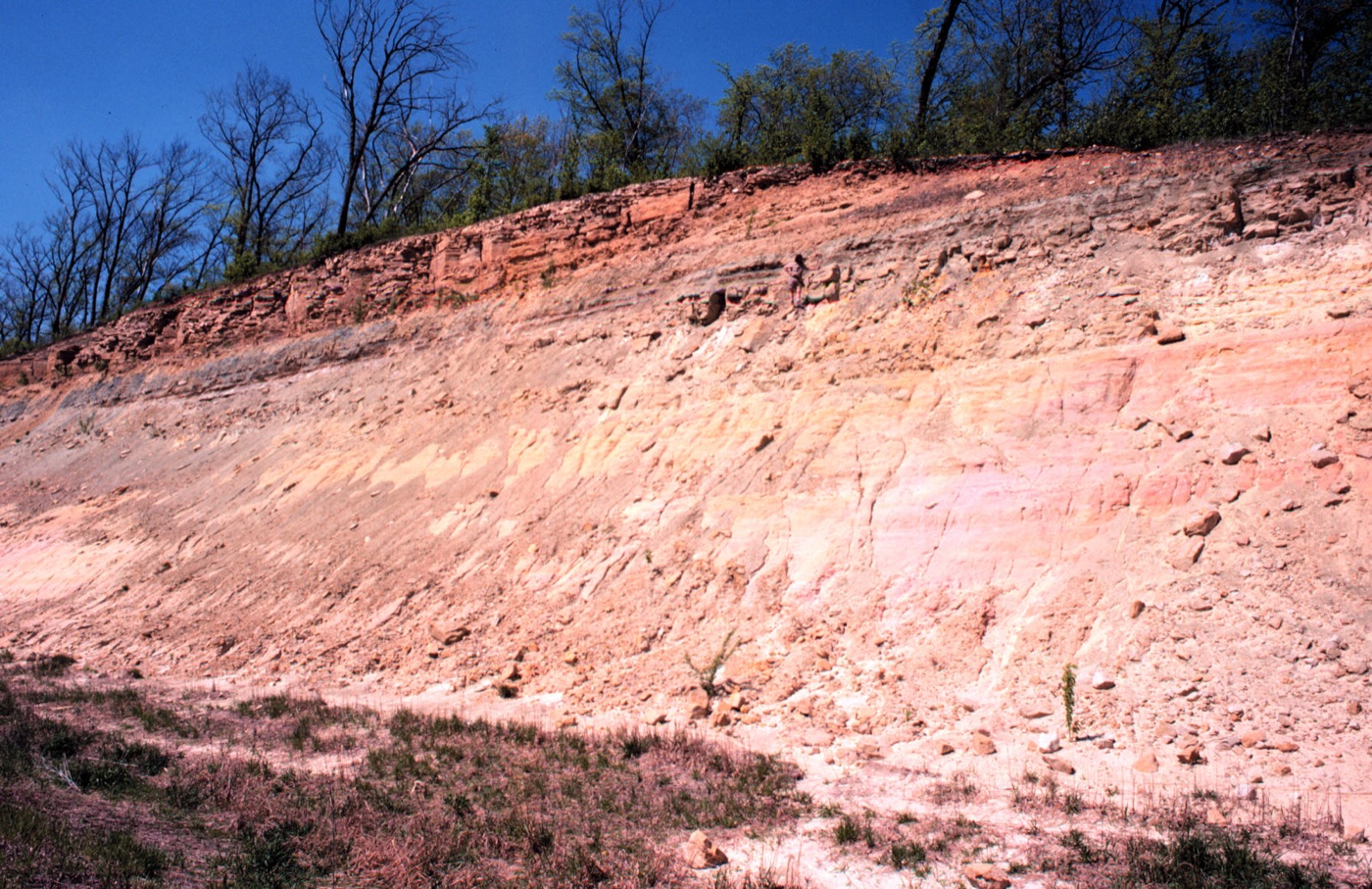
Floodplain fossils on either side of the end-Cretaceous boundary reveal major biological turnover. Pollen and leaves help place the change in time, alongside the more conspicuous dinosaur bones.
67 Ma → 65.5 Ma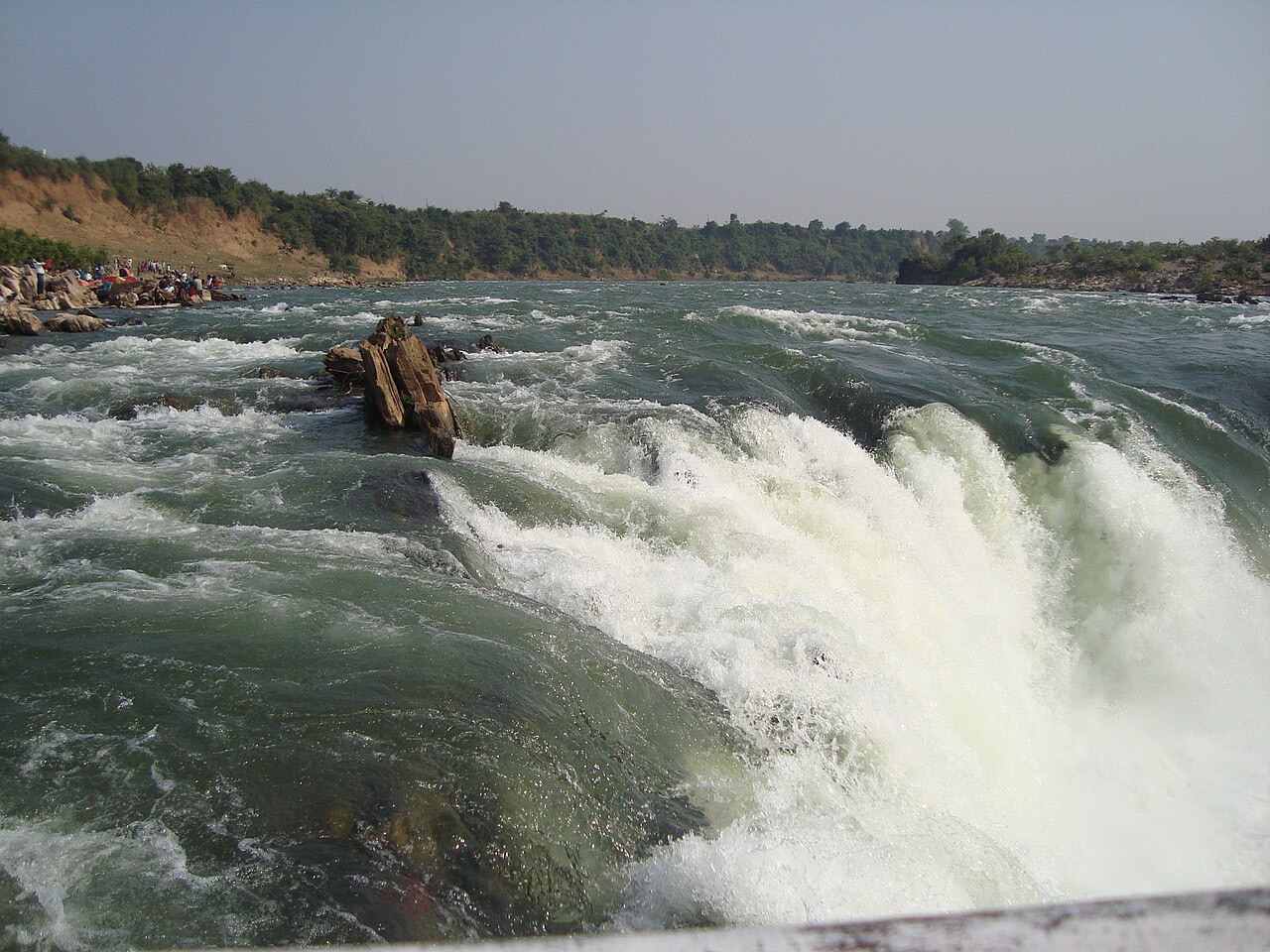 Asia
India ↗
Lower Narmada Valley
Bagh marine deposits and much younger Lameta nesting sites record separate Late Cretaceous environments in central India.
92 Ma → 67 Ma