
Were people restricted to a few uniformly wet intervals in ancient Arabia?
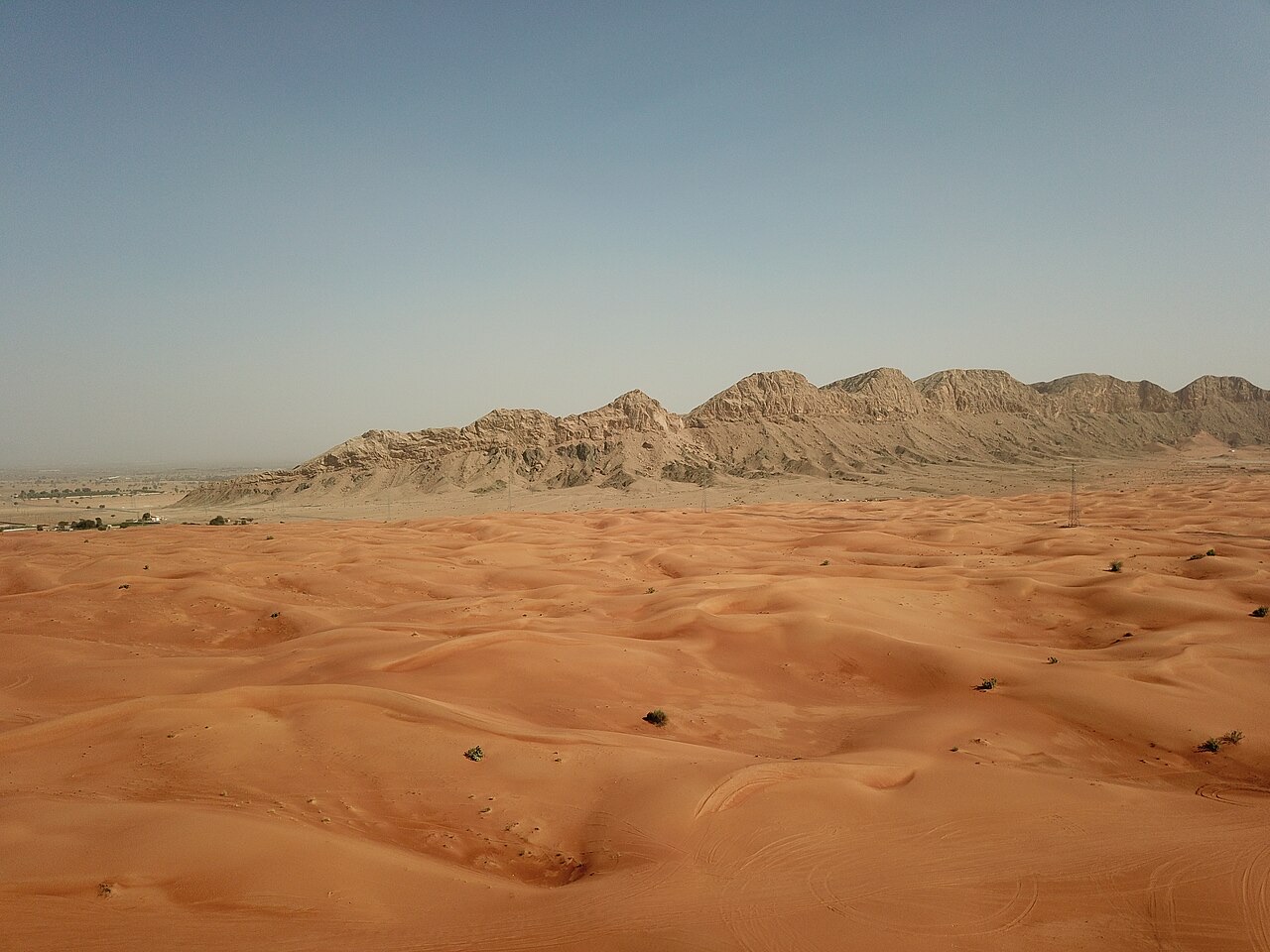
Jebel Faya is a limestone ridge within a wider landscape of drylands, drainage routes and localized water sources. The FAY-NE1 rockshelter preserves stone artefacts in layered sediments, allowing repeated human activity to be studied in chronological order. A shelter can preserve a much denser record than the surrounding open ground, so the sequence is evidence of occupation at this place rather than a complete map of people across Arabia.
Luminescence dating has extended the documented record to about 210,000 years ago and identified further activity near 170,000 years ago and between roughly 135,000 and 120,000 years ago. These episodes do not fit a simple claim that every generally dry climatic stage made the entire peninsula uninhabitable. Local topography, freshwater availability and short-lived environmental changes could matter at scales not resolved by broad marine climate stages. The tools establish presence; they do not independently identify the species or ancestry of their makers.
The younger selected window follows another occupation around the transition into the last interglacial. It is separated from the older episode by time and intervening deposits, not connected by an assumed continuous population. Later activity is documented in the upper sequence: new measurements place its youngest Middle Palaeolithic assemblage around 82,000 years ago. That episode lies outside both snapshots. The desert label used here denotes the wider dryland setting and includes intervals with substantially better water and vegetation than today. It should not be read as a reconstruction of permanent bare dunes at the shelter, nor as proof that climate had no influence on human movement.
[1] [2] [3] [4] [5]Time windows and evidence
Older ages are on the left. Bars span the dated intervals. A dot marks a single age.
- An early occupation of the Faya shelter 0.19–0.23 Ma
- Renewed occupation near the last interglacial 0.12–0.135 Ma
- FAY-NE1 lower occupation near 210 ka 0.19–0.23 Ma
- FAY-NE1 occupation near 170 ka 0.15–0.19 Ma
- FAY-NE1 135–120 ka assemblages 0.12–0.135 Ma
Researched windowsEvidence records
0.21 Ma · interval 0.19–0.23 Ma
An early occupation of the Faya shelter
The lower FAY-NE1 sequence documents human activity around 210 ka. The rounded 230–190 ka envelope is a teaching window around the luminescence chronology, not the duration of one occupation. Desert describes the regional dryland system; conditions near the shelter and available water could differ greatly from today. Stone artefacts establish human use, while the detailed vegetation and water regime at each visit remain more uncertain than the presence of the tools.
[1] [2]Locate this time in the atlas ↗Observed
Stratified worked stone occurs within luminescence-dated sediment.
Reconstructed
People used a shelter within a variable Arabian dryland landscape.
Uncertain
Tools do not identify the maker species or provide a complete local climate reconstruction.
Evidence windows overlapping this state: 1. Overlap does not establish exact coexistence.
0.125 Ma · interval 0.12–0.135 Ma
Renewed occupation near the last interglacial
Younger assemblages document renewed use of the shelter between approximately 135 and 120 ka. This interval overlaps a major climatic transition and should not be portrayed as permanently hyperarid. The dryland category includes wetter phases and localized habitats supported by drainage or groundwater. Comparing it with the older record tests how flexible occupation may have been, but the evidence does not establish a continuous lineage or one direct migration event linking the two episodes.
[1] [4] [2]Locate this time in the atlas ↗Observed
Separate younger tool-bearing horizons occur in the dated shelter succession.
Reconstructed
Habitable conditions recurred within a region whose water availability changed through time.
Uncertain
Regional climate stages do not resolve the conditions during every local visit.
Evidence windows overlapping this state: 1. Overlap does not establish exact coexistence.
What this story cannot resolve
The modern marker denotes FAY-NE1 and its ridge. Desert is a broad dryland category, not a claim of unchanging hyperaridity; no fossil human species is assigned from tool shape alone.
Keep these ideas handy
Radiometric dating
Estimating the time of a geological event from radioactive decay and the isotopic composition of a suitable material. Explore the idea ↗
Climate proxy
A measured feature of a natural archive used to infer some aspect of past climate. Explore the idea ↗
Sampling bias
Differences between the history of life and the subset preserved, exposed, collected, identified and published. Explore the idea ↗
Uncertainty & reconstruction limits
Explicit limits on what evidence and models allow us to infer, including uncertainty in age, identity, place and process. Explore the idea ↗
The evidence notebook
locality · Jebel Faya ↗
FAY-NE1 lower occupation near 210 ka
The lower excavated FAY-NE1 sequence contains a tool assemblage associated with a luminescence age near 210 ka. The dating method estimates the time since mineral grains were last exposed to light, so sedimentary context and adequate bleaching must be considered. The association places human activity in the region substantially earlier than the once better-known last-interglacial levels. It does not directly date manufacture of each artefact or prove that the excavated occupation was the first arrival anywhere in Arabia.
locality · Jebel Faya ↗
FAY-NE1 occupation near 170 ka
An occupation phase around 170 ka falls within a generally glacial climatic stage often portrayed as unfavourable for human presence in Arabia. Its stratified artefacts provide a local test of that broad assumption. The observation need not imply that the entire region was wet or easy to cross; localized resources and environmental variability could support occupation. This intermediate episode is distinct from both selected snapshots and helps prevent the long record being reduced to only two isolated points.
locality · Jebel Faya ↗
FAY-NE1 135–120 ka assemblages
Tool-bearing levels dating between approximately 135 and 120 ka record later Middle Palaeolithic activity at the shelter. Differences in artefact production can be examined within the local sequence, but technological resemblance alone is insufficient to demonstrate a biological population or a specific route from Africa. The assemblages are most securely evidence of renewed occupation during a period of changing regional conditions. Their interpretation benefits from keeping archaeological observations separate from broader dispersal hypotheses.
Follow the evidence
Sources & credits
- Multiple phases of human occupation in Southeast Arabia between 210,000 and 120,000 years ago ↗
Bretzke et al.; Scientific Reports · 2022
Use, credit & modifications
Reference only; original factual synthesis. No third-party prose or media reproduced.
Credit: Bretzke et al.; Scientific Reports — Multiple phases of human occupation in Southeast Arabia between 210,000 and 120,000 years ago. Original educational synthesis; rounded age envelopes distinguish teaching windows from analytical errors. No media licence asserted for this reference. Photograph rights are documented separately.
- Faya Palaeolandscape: Outstanding Universal Value ↗
UNESCO World Heritage Committee · 2025
Use, credit & modifications
Reference only; original factual synthesis. No third-party prose or media reproduced.
Credit: UNESCO World Heritage Committee — Faya Palaeolandscape: Outstanding Universal Value. Original educational synthesis; rounded age envelopes distinguish teaching windows from analytical errors. No media licence asserted for this reference. Photograph rights are documented separately.
- The environmental context of Paleolithic settlement at Jebel Faya ↗
Quaternary International · 2013
Use, credit & modifications
Reference only; original factual synthesis. No third-party prose or media reproduced.
Credit: Quaternary International — The environmental context of Paleolithic settlement at Jebel Faya. Original educational synthesis; rounded age envelopes distinguish teaching windows from analytical errors. No media licence asserted for this reference. Photograph rights are documented separately.
- Jebel Faya and the Middle to Late Pleistocene Transition: Settlement Continuity and Behavioural Flexibility ↗
Bretzke and Herkert; Paléorient · 2023
Use, credit & modifications
Reference only; original factual synthesis. No third-party prose or media reproduced.
Credit: Bretzke and Herkert; Paléorient — Jebel Faya and the Middle to Late Pleistocene Transition: Settlement Continuity and Behavioural Flexibility. Original educational synthesis; rounded age envelopes distinguish teaching windows from analytical errors. No media licence asserted for this reference. Photograph rights are documented separately.
- Archaeology, chronology, and sedimentological context of the youngest Middle Palaeolithic assemblage from Jebel Faya ↗
Archaeological and Anthropological Sciences · 2025
Use, credit & modifications
Reference only; original factual synthesis. No third-party prose or media reproduced.
Credit: Archaeological and Anthropological Sciences — Archaeology, chronology, and sedimentological context of the youngest Middle Palaeolithic assemblage from Jebel Faya. Original educational synthesis; rounded age envelopes distinguish teaching windows from analytical errors. No media licence asserted for this reference. Photograph rights are documented separately.
Follow the connections
 Asia
Malaysia ↗
Niah Caves
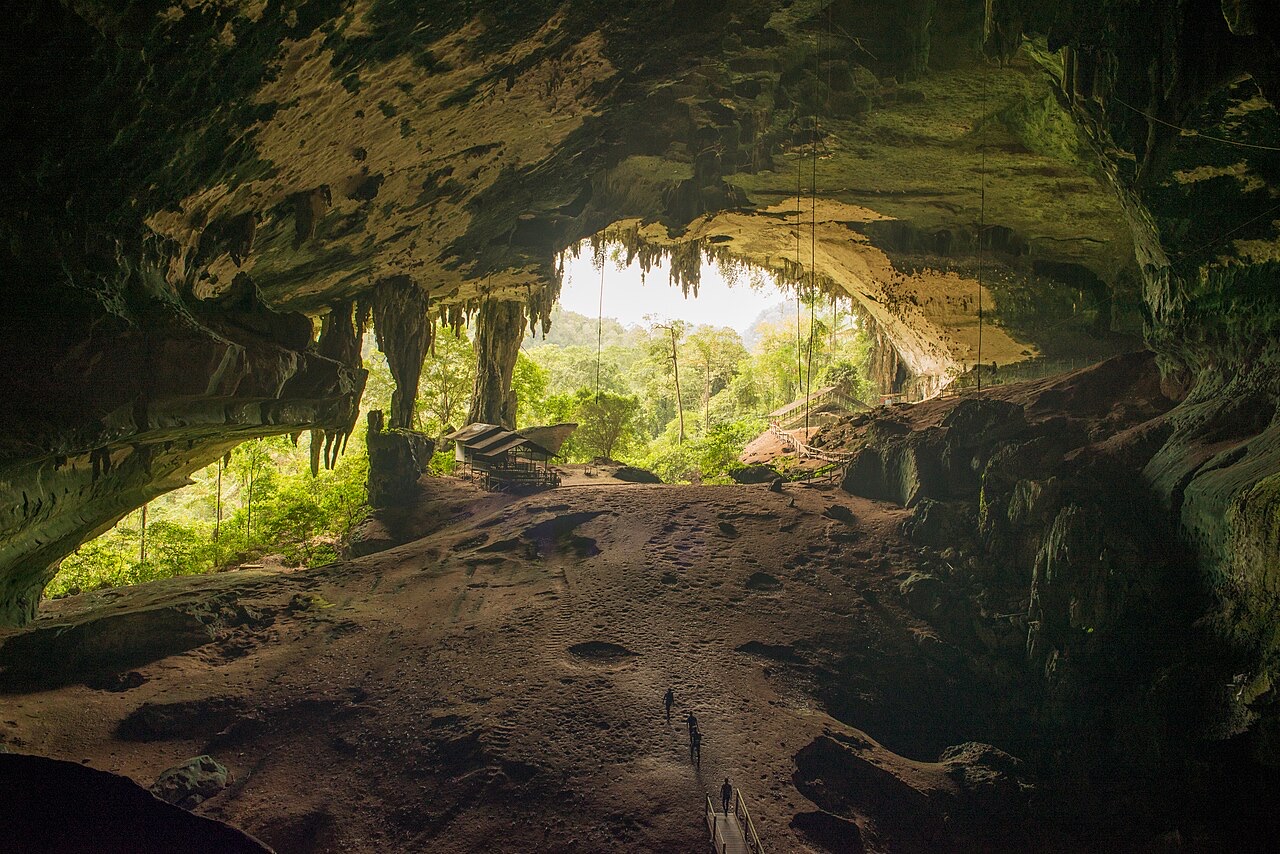
Borneo’s Niah complex preserves human remains, plant traces and hunted animals through late-glacial and early Holocene environmental changes.
0.042 Ma → 0.01 Ma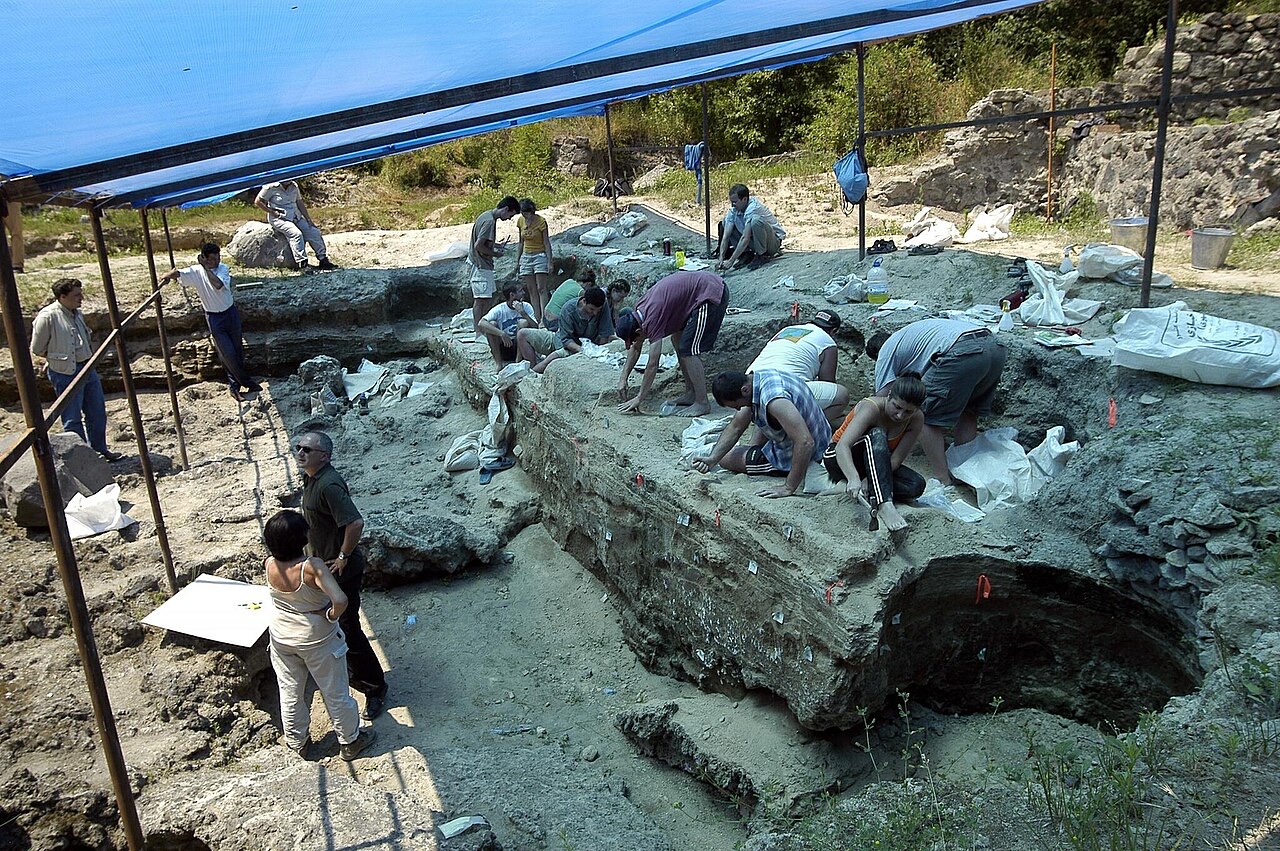 Asia
Georgia ↗
Dmanisi
An Early Pleistocene basalt and the younger fossil-bearing deposits above it connect volcanic construction with early hominin occupation.
1.85 Ma → 1.79 Ma