
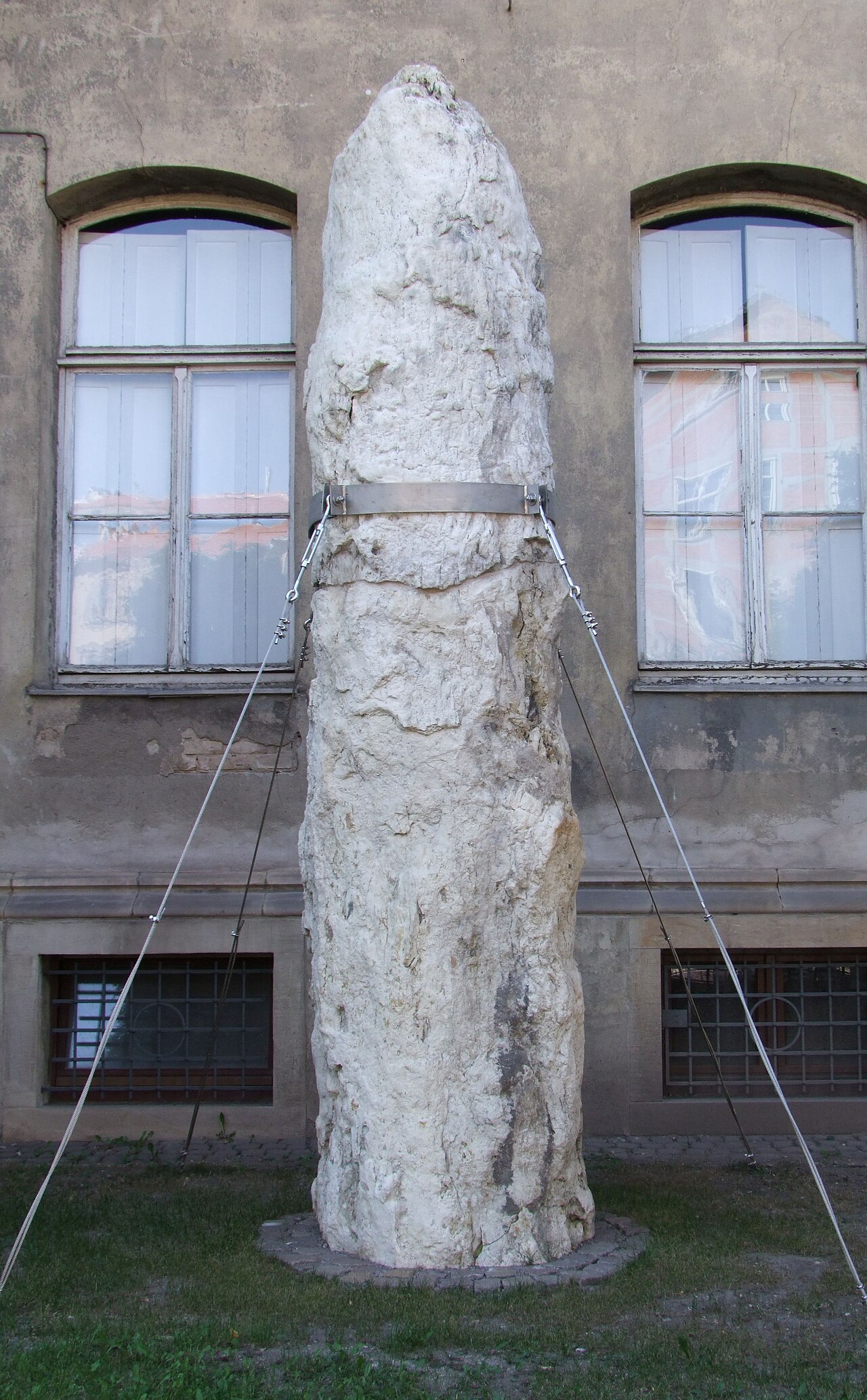
What happens to the scientific value of a collection when its original sites disappear underwater?
Geiseltal’s fossils came from a landscape transformed twice in very different ways. An Eocene wetland accumulated organic material that became brown coal. Much later, mining exposed the fossil-bearing succession and enabled decades of collection. Today the former sites lie beneath a lake. The modern water body is therefore not a surviving Eocene swamp, and the fossil trees displayed in Halle are collected evidence rather than plants preserved where they grew.
The ancient record includes early horse relatives, tapiromorph mammals, crocodilians, birds and many smaller organisms. Some specimens preserve extraordinary detail. The lignite setting is a preservation filter, however: organisms living near wet ground or entering it had different chances of burial from those in surrounding habitats. A rich assemblage is not automatically a complete census of the region’s animals.
A study comparing Propalaeotherium and Lophiodon used teeth from different coal levels to investigate body-size change. The lineages did not follow the same trend, while isotopic evidence supported broadly humid forest conditions. That combination cautions against explaining every size change as a simple thermometer. The same study also questioned aspects of the taxonomic chronology, so this page retains a broad Eocene age envelope instead of inventing exact dates for individual coal seams.
The younger window shows the present lake and collection-based research context. Once an exposure is submerged or removed, a specimen’s recorded locality and level may be the only surviving connection to its original setting. Collections can therefore become more valuable over time, even when they receive no new excavation material. Geiseltal connects environmental reconstruction with a practical lesson: preserving documentation is part of preserving the fossil record itself.
[1] [2] [3]Time windows and evidence
Older ages are on the left. Bars span the dated intervals. A dot marks a single age.
- An Eocene wetland accumulates organic material 42.5–47.5 Ma
- A modern lake covers the old mining exposures Today
- Propalaeotherium across the coal succession 42.5–47.5 Ma
- Lophiodon and a different size trend 42.5–47.5 Ma
- Fossil-bearing lignite deposits 42.5–47.5 Ma
Researched windowsEvidence records
45 Ma · interval 42.5–47.5 Ma
An Eocene wetland accumulates organic material
Humid, subtropical vegetation and wetland conditions supported a diverse terrestrial ecosystem. Organic-rich accumulation produced the lignite succession in which fossils were preserved. The wide age envelope follows the conventional regional chronology while acknowledging published concerns about precise correlations. It does not assign separate absolute dates to each coal seam or imply that every species persisted throughout the entire interval.
[1] [2] [3]Locate this time in the atlas ↗Observed
Plant and animal remains occur within successive lignite deposits.
Reconstructed
A wetland and forest mosaic supplied material to the accumulating organic sediment.
Uncertain
Fine chronological correlation and some taxonomic divisions remain debated.
Evidence windows overlapping this state: 3. Overlap does not establish exact coexistence.
body fossil · Geiseltal ↗
Propalaeotherium across the coal succession
Teeth and other remains of the early horse relative Propalaeotherium allow comparisons among successive Geiseltal coal levels. Tooth measurements can be used to estimate body size, but estimates require biological assumptions and adequate sampling. A change in average size is not automatically a temperature signal. The published analysis compared this lineage with another mammal group and with independent environmental evidence.
body fossil · Geiseltal ↗
Lophiodon and a different size trend
The tapiromorph Lophiodon is another abundant component of the Geiseltal collection. Its measured size trend differs from that of Propalaeotherium in the same broad succession. This contrast is informative because one shared climate explanation need not produce identical biological responses in different animals. Ecology, life history and taxonomic treatment must also be considered when interpreting change.
sediment · Geiseltal ↗
Fossil-bearing lignite deposits
The brown-coal succession preserves remains from an Eocene wetland ecosystem, including animals and plants. Organic accumulation and favourable preservation supplied a record different from that of a dry upland habitat. Mining exposed the fossil-bearing units, and their subsequent flooding means that collected specimens now have exceptional importance. The geological archive includes both the remaining material and the records of where samples were recovered.
Today · interval Today
A modern lake covers the old mining exposures
The former fossil localities are now submerged beneath the Geiseltalsee. Research relies on specimens and documentation preserved in collections, particularly at Halle. The modern lake is the outcome of a changed post-mining landscape, not the unchanged descendant of the Eocene wetland. Its role here is to explain access to evidence and why historical excavation context matters.
[1]Locate this time in the atlas ↗Observed
The original fossil sites are underwater, while collected material survives.
Reconstructed
Scientific reconstruction continues through collections and recorded stratigraphic context.
Uncertain
Missing documentation cannot be recovered simply by returning to the old exposure.
Evidence windows overlapping this state: 0. Overlap does not establish exact coexistence.
No curated evidence record overlaps this window. The full notebook for this region appears below.
What this story cannot resolve
The younger state is explicitly modern. The broad Eocene bracket is not a secure five-million-year duration for every coal succession; the cited study questions fine age correlations.
Keep these ideas handy
Sampling bias
Differences between the history of life and the subset preserved, exposed, collected, identified and published. Explore the idea ↗
Taphonomy
Studying what happens between an organism’s life, death, burial, preservation and eventual discovery. Explore the idea ↗
Climate proxy
A measured feature of a natural archive used to infer some aspect of past climate. Explore the idea ↗
The evidence notebook
body fossil · Geiseltal ↗
Propalaeotherium across the coal succession
Teeth and other remains of the early horse relative Propalaeotherium allow comparisons among successive Geiseltal coal levels. Tooth measurements can be used to estimate body size, but estimates require biological assumptions and adequate sampling. A change in average size is not automatically a temperature signal. The published analysis compared this lineage with another mammal group and with independent environmental evidence.
body fossil · Geiseltal ↗
Lophiodon and a different size trend
The tapiromorph Lophiodon is another abundant component of the Geiseltal collection. Its measured size trend differs from that of Propalaeotherium in the same broad succession. This contrast is informative because one shared climate explanation need not produce identical biological responses in different animals. Ecology, life history and taxonomic treatment must also be considered when interpreting change.
sediment · Geiseltal ↗
Fossil-bearing lignite deposits
The brown-coal succession preserves remains from an Eocene wetland ecosystem, including animals and plants. Organic accumulation and favourable preservation supplied a record different from that of a dry upland habitat. Mining exposed the fossil-bearing units, and their subsequent flooding means that collected specimens now have exceptional importance. The geological archive includes both the remaining material and the records of where samples were recovered.
Follow the evidence
Sources & credits
- Die Geiseltalsammlung ↗
Martin Luther University Halle-Wittenberg · 2026-05-05
Use, credit & modifications
Reference only; no source text, figures or photographs reproduced. Original educational synthesis.
Credit: Martin Luther University Halle-Wittenberg. Original synthesis with explicit approximate teaching windows. No source asset reuse; territorial permissions not applicable.
- Divergent mammalian body size in a stable Eocene greenhouse climate ↗
Scientific Reports · 2020-03-04
Use, credit & modifications
Reference only; no source text, figures or photographs reproduced. Original educational synthesis.
Credit: Scientific Reports. Original synthesis with explicit approximate teaching windows. No source asset reuse; territorial permissions not applicable.
- Einführung in die Fossillagerstätte Geiseltal ↗
Geiseltal exhibition catalogue · 2015
Use, credit & modifications
Reference only; no source text, figures or photographs reproduced. Original educational synthesis.
Credit: Geiseltal exhibition catalogue. Original synthesis with explicit approximate teaching windows. No source asset reuse; territorial permissions not applicable.
Follow the connections
 Europe
Germany ↗
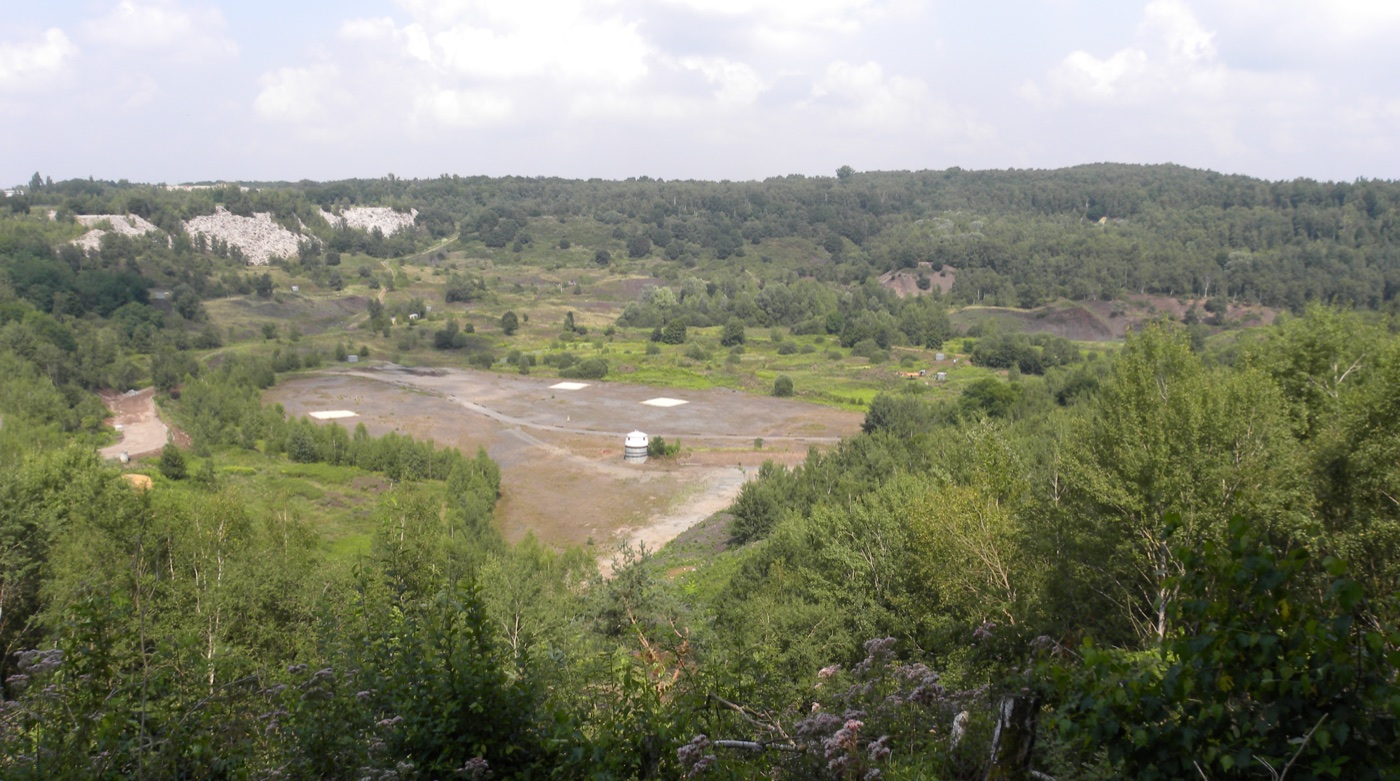
Messel
Eocene lake mud captured remains from water, air and surrounding forest. Exceptional preservation makes Messel rich in detail, while the lake’s selective archive keeps the whole ecosystem partly out of reach.
48 Ma → Today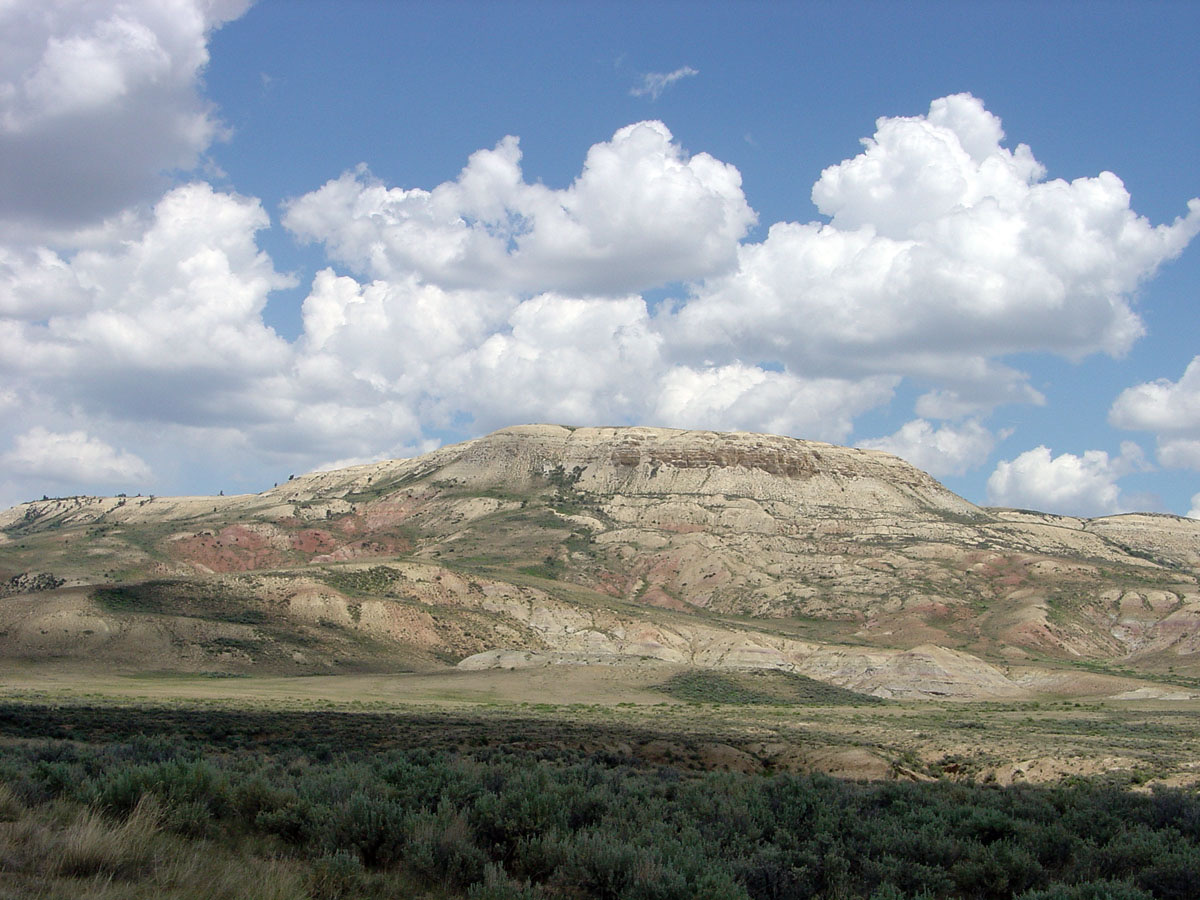 North America
United States ↗
Fossil Lake, Wyoming
The Green River Formation records several Eocene lakes. At Fossil Lake, an expanding lake and its later shrinking, saltier stage left different sediments and different opportunities for preservation.
52 Ma → 51 Ma