
What can two widely separated fossil windows reveal about evolution on an island?
Flores preserves a human evolutionary history that cannot be read from a single cave. At Mata Menge in the So’a Basin, fossil-bearing sandstone accumulated in a small stream about 700,000 years ago. Volcanic layers and several dating methods constrain that setting. Animal remains and environmental indicators suggest relatively open vegetation with wetlands in a seasonally dry landscape. The stream was one part of that habitat, not its entire extent.
An exceptionally small adult arm bone, together with jaws and teeth, shows that small body dimensions were already established among the Mata Menge hominins. Their relationship to the much younger Homo floresiensis remains at Liang Bua is an evolutionary interpretation supported by comparative anatomy. It does not supply an uninterrupted family tree or demonstrate that every population on Flores had identical proportions. The long interval between the two sites remains sparsely sampled.
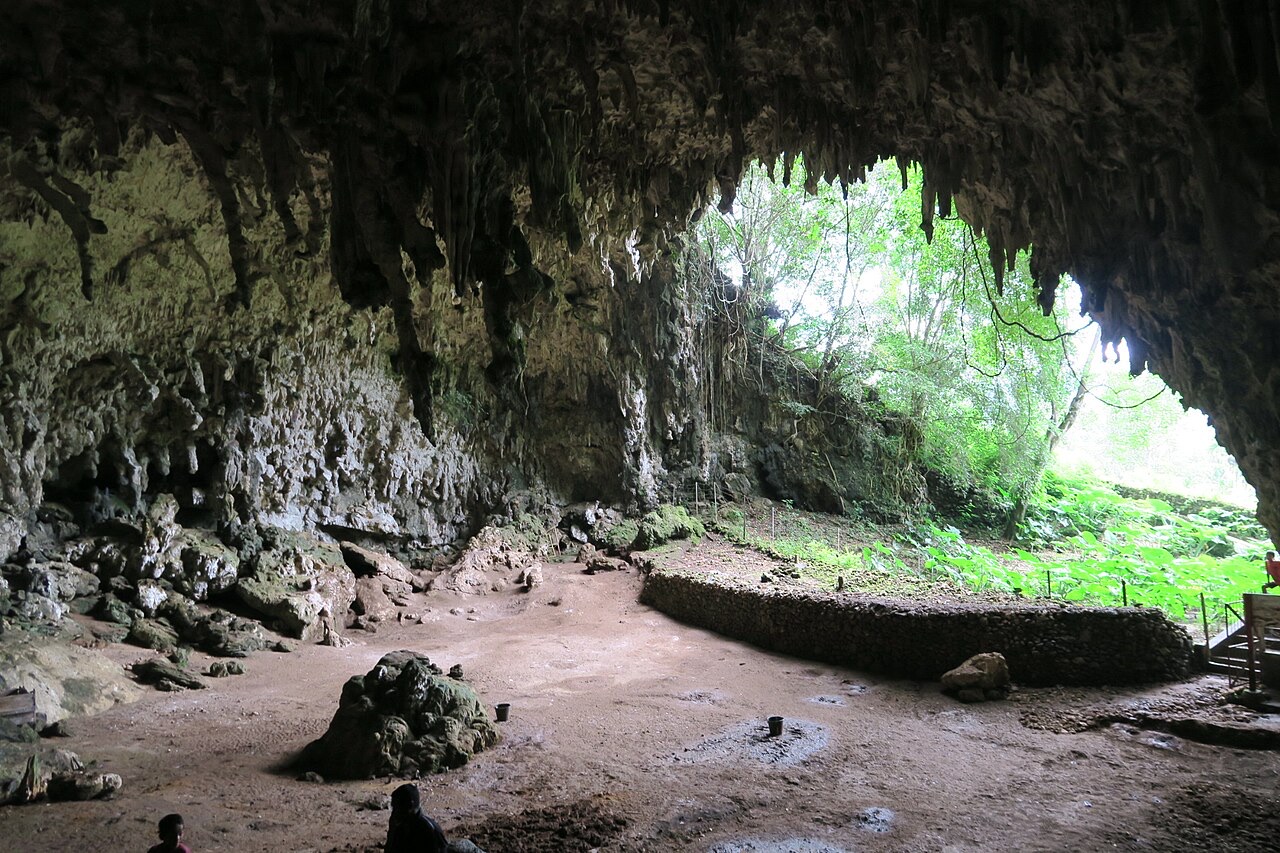
Liang Bua adds a younger cave record with hominin bones, stone artefacts and extinct island fauna. Renewed excavation revealed that erosion and the uneven arrangement of deposits had made some early age assignments misleading. The skeletal remains now fall around 100,000–60,000 years ago, considerably earlier than initially reported. Environmental work also investigates changing freshwater availability near the end of that record. The absence of younger fossils is not, by itself, a precise extinction date or proof of an encounter with modern humans. Together, the sites demonstrate the value of combining anatomy with the detailed geometry of sedimentary deposits before writing a narrative of island evolution.
[1] [2] [3] [4]Time windows and evidence
Older ages are on the left. Bars span the dated intervals. A dot marks a single age.
- The Mata Menge stream 0.63–0.77 Ma
- The fossil-bearing Liang Bua cave 0.06–0.1 Ma
- Mata Menge Layer II stream deposit 0.63–0.77 Ma
- Mata Menge humerus SOA-MM9 0.63–0.77 Ma
- Liang Bua LB1 and its revised stratigraphy 0.06–0.1 Ma
Researched windowsEvidence records
0.7 Ma · interval 0.63–0.77 Ma
The Mata Menge stream
A narrow stream deposited the pebbly sandstone of Mata Menge Layer II within a volcaniclastic alluvial landscape. Dates on volcanic deposits above and below the channel layer, together with measurements on fossil teeth, place it around 700,000 years ago. The rounded 770–630 ka envelope accommodates those constraints without claiming the fossil layer accumulated throughout the interval. The reconstructed surroundings include open grassland and a wetland component; the river category describes the place of burial rather than every habitat used by the hominins.
[1] [2]Locate this time in the atlas ↗Observed
Hominin fossils and artefacts occur in channel sandstone between dated volcanic deposits.
Reconstructed
Small-bodied hominins inhabited a seasonally dry landscape containing streams and wetlands.
Uncertain
The precise duration of accumulation and the full habitat range remain unresolved.
Evidence windows overlapping this state: 2. Overlap does not establish exact coexistence.
locality · Flores: Mata Menge & Liang Bua ↗
Mata Menge Layer II stream deposit
Layer II at Mata Menge is a pebbly sandstone containing hominin remains, stone artefacts and animal fossils. Sedimentary geometry identifies a small stream on an alluvial fan rather than a cave or an offshore deposit. Dates on volcanic deposits above and below the channel layer, together with measurements on fossil teeth, place it around 700,000 years ago. The sedimentary context is essential because it ties the biological finds to an environment and a dated sequence instead of assigning an age from appearance alone.
body fossil · Flores: Mata Menge & Liang Bua ↗
Mata Menge humerus SOA-MM9
The partial humerus SOA-MM9 comes from the same Mata Menge fossil-bearing deposit. Its internal bone structure supports adult status, so its tiny dimensions cannot simply be dismissed as those of a child. Comparative measurements add postcranial evidence to the previously known small jaws and teeth. The specimen supports early establishment of small body size on Flores, while reconstructions of total stature depend on the comparison model and are less direct than the measured bone dimensions.
0.08 Ma · interval 0.06–0.1 Ma
The fossil-bearing Liang Bua cave
The younger window represents the revised age of the Homo floresiensis skeletal remains in Liang Bua, approximately 100–60 ka. Forest is a broad label for the wooded component of the surrounding seasonal habitat, rather than a direct description of the cave floor or a claim of continuous closed canopy. Cave stratigraphy, faunal remains and nearby climate records show a changing environment. Stone artefacts extend beyond the narrower skeletal interval, so their entire age range is not assigned to every bone.
[3] [4]Locate this time in the atlas ↗Observed
Hominin bones and extinct fauna occur in a dated, partly eroded cave sequence.
Reconstructed
A cave used within a varied, seasonal island landscape.
Uncertain
Vegetation and freshwater availability changed; the final fossil appearance does not fix extinction.
Evidence windows overlapping this state: 1. Overlap does not establish exact coexistence.
What this story cannot resolve
The marker is at Liang Bua; Mata Menge lies farther east on the same island. The states compare separate localities and do not imply continuous occupation.
Keep these ideas handy
Biogeography
Studying how organisms are distributed through space and time and how those patterns developed. Explore the idea ↗
Evolutionary tree
A branching hypothesis of relationships among organisms, inferred from shared evidence rather than arranged as a ladder of progress. Explore the idea ↗
Stratigraphy
Studying the order, relationships and distribution of rock layers and the events they preserve. Explore the idea ↗
Uncertainty & reconstruction limits
Explicit limits on what evidence and models allow us to infer, including uncertainty in age, identity, place and process. Explore the idea ↗
The evidence notebook
locality · Flores: Mata Menge & Liang Bua ↗
Mata Menge Layer II stream deposit
Layer II at Mata Menge is a pebbly sandstone containing hominin remains, stone artefacts and animal fossils. Sedimentary geometry identifies a small stream on an alluvial fan rather than a cave or an offshore deposit. Dates on volcanic deposits above and below the channel layer, together with measurements on fossil teeth, place it around 700,000 years ago. The sedimentary context is essential because it ties the biological finds to an environment and a dated sequence instead of assigning an age from appearance alone.
body fossil · Flores: Mata Menge & Liang Bua ↗
Mata Menge humerus SOA-MM9
The partial humerus SOA-MM9 comes from the same Mata Menge fossil-bearing deposit. Its internal bone structure supports adult status, so its tiny dimensions cannot simply be dismissed as those of a child. Comparative measurements add postcranial evidence to the previously known small jaws and teeth. The specimen supports early establishment of small body size on Flores, while reconstructions of total stature depend on the comparison model and are less direct than the measured bone dimensions.
body fossil · Flores: Mata Menge & Liang Bua ↗
Liang Bua LB1 and its revised stratigraphy
The LB1 skeleton is the defining specimen of Homo floresiensis. Its chronological interpretation changed when further excavation exposed an erosional boundary and showed that younger sediment did not provide a simple date for the fossil-bearing remnant. Multiple dating methods now place the skeletal assemblage around 100–60 ka. This is a clear example of why a fossil’s age depends on reconstructing its sedimentary context, including missing layers, rather than merely choosing the closest available date.
Follow the evidence
Sources & credits
- Age and context of the oldest known hominin fossils from Flores ↗
Brumm et al.; Nature · 2016-06-08
Use, credit & modifications
Reference only; original factual synthesis. No third-party prose or media reproduced.
Credit: Brumm et al.; Nature — Age and context of the oldest known hominin fossils from Flores. Original educational synthesis; rounded age envelopes distinguish teaching windows from analytical errors. No media licence asserted for this reference. Photograph rights are documented separately.
- Early evolution of small body size in Homo floresiensis ↗
Kaifu et al.; Nature Communications · 2024-08-06
Use, credit & modifications
Reference only; original factual synthesis. No third-party prose or media reproduced.
Credit: Kaifu et al.; Nature Communications — Early evolution of small body size in Homo floresiensis. Original educational synthesis; rounded age envelopes distinguish teaching windows from analytical errors. No media licence asserted for this reference. Photograph rights are documented separately.
- Revised stratigraphy and chronology for Homo floresiensis at Liang Bua in Indonesia ↗
Sutikna et al.; Nature · 2016-03-30
Use, credit & modifications
Reference only; original factual synthesis. No third-party prose or media reproduced.
Credit: Sutikna et al.; Nature — Revised stratigraphy and chronology for Homo floresiensis at Liang Bua in Indonesia. Original educational synthesis; rounded age envelopes distinguish teaching windows from analytical errors. No media licence asserted for this reference. Photograph rights are documented separately.
- Onset of summer aridification and the decline of Homo floresiensis at Liang Bua 61,000 years ago ↗
Communications Earth & Environment · 2025
Use, credit & modifications
Reference only; original factual synthesis. No third-party prose or media reproduced.
Credit: Communications Earth & Environment — Onset of summer aridification and the decline of Homo floresiensis at Liang Bua 61,000 years ago. Original educational synthesis; rounded age envelopes distinguish teaching windows from analytical errors. No media licence asserted for this reference. Photograph rights are documented separately.
Follow the connections
 Asia
Indonesia ↗
Sangiran
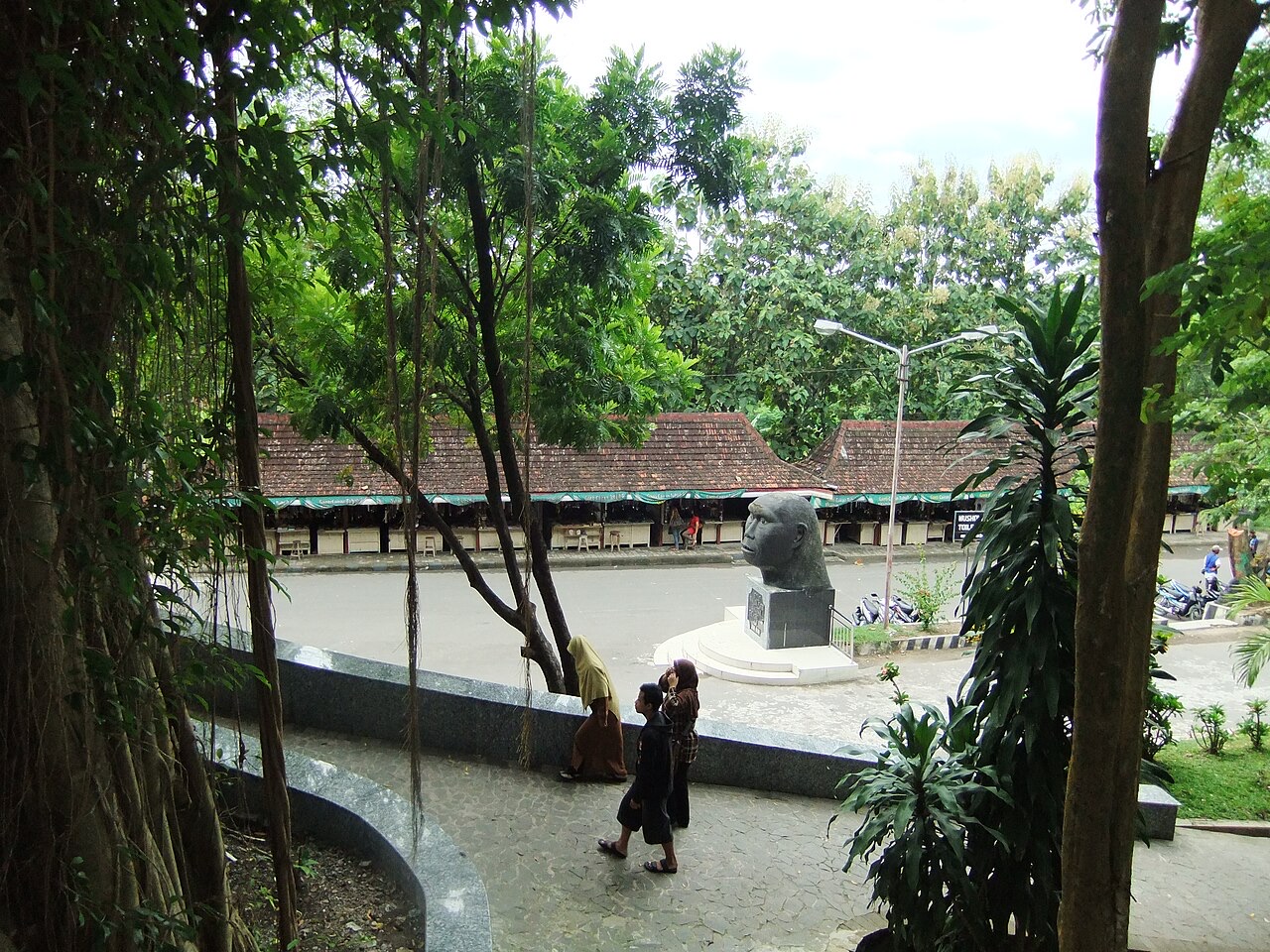
Swampy deposits, river sediments and Homo erectus fossils record the growth of a terrestrial landscape amid Java’s volcanoes.
1.6 Ma → 1.1 Ma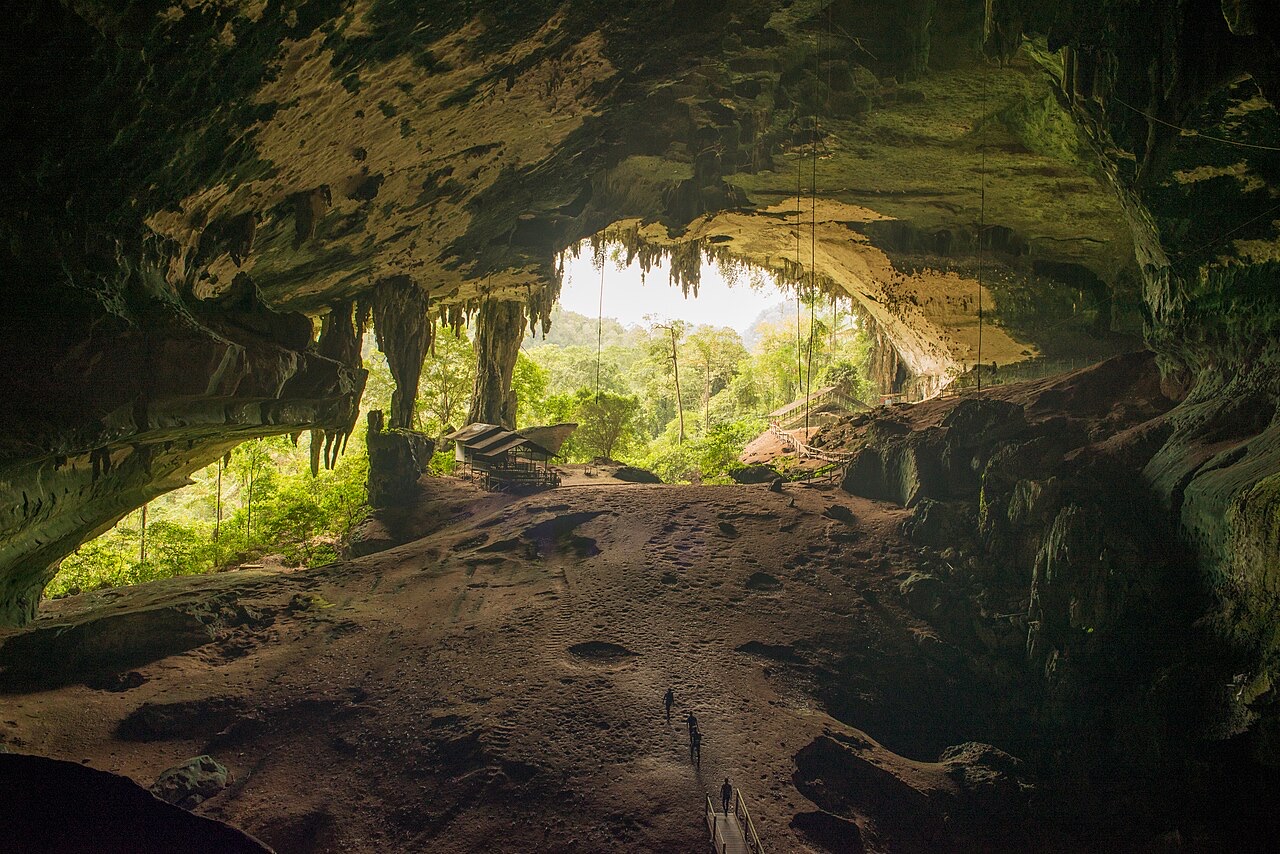 Asia
Malaysia ↗
Niah Caves
Borneo’s Niah complex preserves human remains, plant traces and hunted animals through late-glacial and early Holocene environmental changes.
0.042 Ma → 0.01 Ma