
When two fossils lie together, did their animals live together?
Bone Valley’s name reflects the abundance of fossils encountered in central Florida’s phosphate deposits. The archive includes marine and terrestrial animals, but proximity alone does not make them members of one community. Nearshore bays and channels received material from different habitats, and erosion could remove older fossils from one bed before depositing them again. A durable tooth may survive several journeys while a delicate skeleton disappears.
The early Pliocene Palmetto Fauna, dated by fossil comparison to about five to four and a half million years ago, provides a well-defined regional example. Sharks and rays are conspicuous, while horse teeth and other land-mammal remains reveal input from adjacent terrestrial environments. Clay-rich beds and gravelly channels represent different depositional conditions. Their collections are also biased toward robust remains and larger animals; a rare small mammal is not necessarily evidence that small mammals were rare in life.
A much younger example lies downstream at Peace River 3A. Unlike many loose river finds, its fossils were collected from an identifiable Pleistocene deposit of sand and gravel. The assemblage includes Bison antiquus and a giant ground sloth. It also contains older reworked material, including a Miocene horse tooth. The museum’s estimated age comes from vertebrate biochronology: attempted radiocarbon dating failed because suitable collagen was not preserved.
These two settings make the region a lesson in context rather than a treasure list. Phosphate mining and river erosion expose material that would otherwise remain hidden, but both can destroy the relationships needed to interpret it. Documenting the original layer, preservation and associated fauna allows researchers to separate an organism’s lifetime from the younger sediment into which its fossil may have been recycled.
[1] [2] [3]Time windows and evidence
Older ages are on the left. Bars span the dated intervals. A dot marks a single age.
- Palmetto’s nearshore bays and channels 4.5–5 Ma
- A Pleistocene Peace River channel 0.011–0.02 Ma
- Hemipristis serra in the Palmetto Fauna 4.5–5 Ma
- Palmetto Fauna phosphatic channel and bay deposits 4.5–5 Ma
- Peace River 3A, locality DE015 0.011–0.02 Ma
Researched windowsEvidence records
4.75 Ma · interval 4.5–5 Ma
Palmetto’s nearshore bays and channels
The Palmetto Fauna accumulated in nearshore marine environments, including quiet bays and energetic channels. Marine animals occur with transported terrestrial remains. The numerical envelope follows the Florida Museum’s early Pliocene biochronologic interpretation; it does not apply to every fossil called Bone Valley, because the district contains several ages and reworked specimens.
[1]Locate this time in the atlas ↗Observed
Shark and ray teeth, land-mammal remains, clays and phosphatic gravel occur in the regional deposits.
Reconstructed
A shifting nearshore environment receiving material from land and sea.
Uncertain
Some durable fossils were recycled from older beds.
Evidence windows overlapping this state: 2. Overlap does not establish exact coexistence.
body fossil · Bone Valley and the Peace River ↗
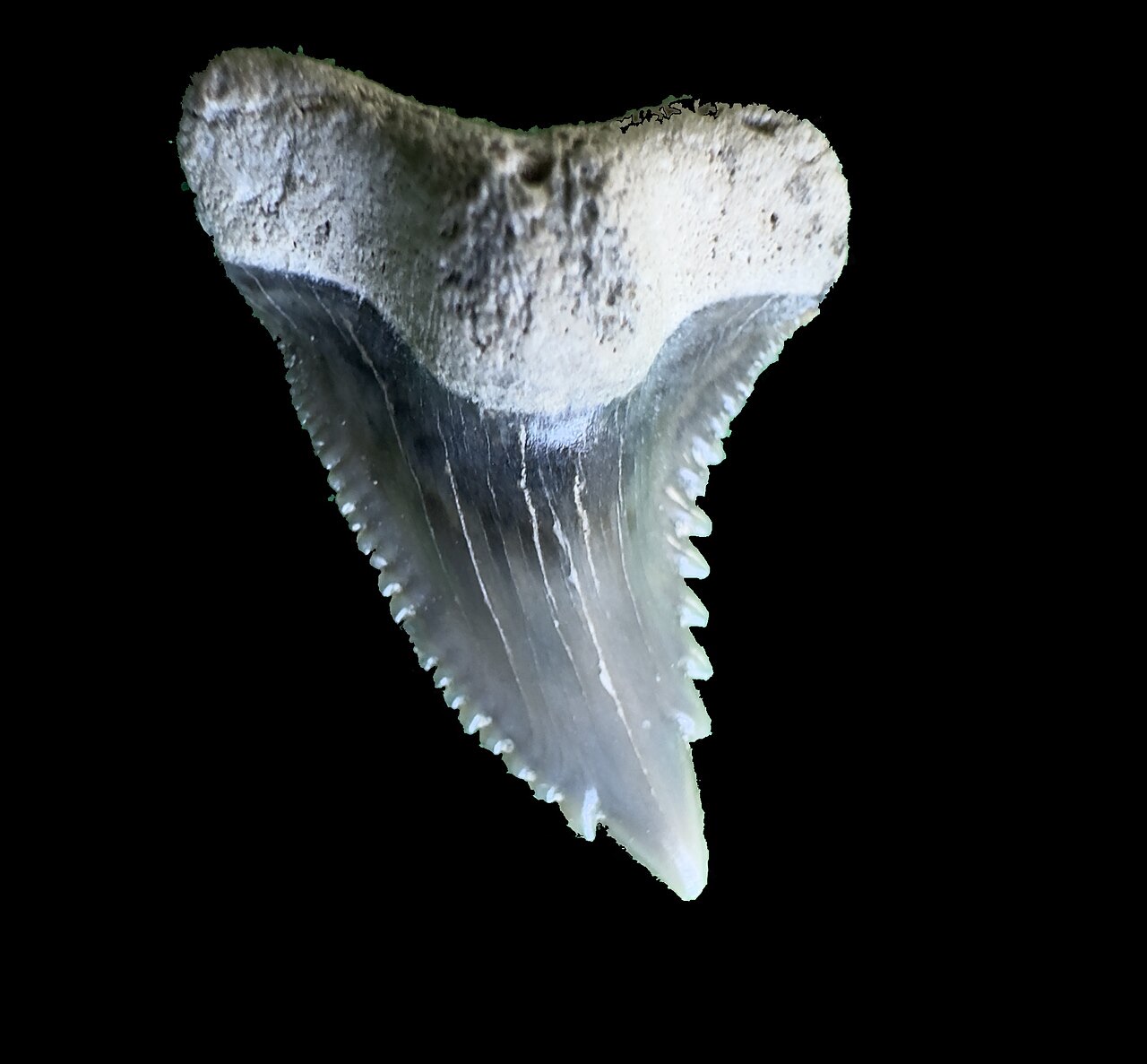
Hemipristis serra in the Palmetto Fauna
Teeth of the extinct shark Hemipristis serra are documented in the Palmetto assemblage. Their durable enamel-like covering makes them more likely to survive transport than many skeletal parts. The pictured tooth is a separately documented Bone Valley specimen, not a claim to illustrate a particular museum catalog number or a directly dated individual. Keeping specimen provenance and collection context attached to the identification is therefore essential when comparing apparent shark occurrences between deposits of different geological ages.
sediment · Bone Valley and the Peace River ↗
Palmetto Fauna phosphatic channel and bay deposits
The fossil-bearing Bone Valley succession varies from clay-rich low-energy deposits to gravelly channel beds. These differences explain why marine and terrestrial remains can enter the same regional collection by different routes. The phosphate mineral content is part of the sedimentary history, while the fauna provides the principal age correlation used here. Comparing sedimentary texture with fossil wear helps test whether a collection reflects quiet accumulation, energetic transport or recycling from a previously deposited and exposed unit.
0.015 Ma · interval 0.011–0.02 Ma
A Pleistocene Peace River channel
Peace River 3A records deposition of sand and gravel in a river channel. Its late Pleistocene fauna supplies an estimated 20,000–11,000 year age range. Older phosphate pebbles and fossils were incorporated from underlying rock. The reconstruction therefore separates the younger river ecosystem from Miocene remains carried into the same deposit.
[2]Locate this time in the atlas ↗Observed
An in-place sand-and-gravel body contains a predominantly Pleistocene vertebrate fauna.
Reconstructed
A river transported and buried remains while eroding older deposits.
Uncertain
The age is biochronologic; direct radiocarbon attempts lacked collagen.
Evidence windows overlapping this state: 1. Overlap does not establish exact coexistence.
What this story cannot resolve
This regional comparison spans the central phosphate district and a separate downstream river locality. Reworked fossils retain their older biological ages.
Keep these ideas handy
Taphonomy
Studying what happens between an organism’s life, death, burial, preservation and eventual discovery. Explore the idea ↗
Sampling bias
Differences between the history of life and the subset preserved, exposed, collected, identified and published. Explore the idea ↗
Relative dating
Determining which event came first without necessarily assigning a numerical age. Explore the idea ↗
The evidence notebook
body fossil · Bone Valley and the Peace River ↗
Hemipristis serra in the Palmetto Fauna
Teeth of the extinct shark Hemipristis serra are documented in the Palmetto assemblage. Their durable enamel-like covering makes them more likely to survive transport than many skeletal parts. The pictured tooth is a separately documented Bone Valley specimen, not a claim to illustrate a particular museum catalog number or a directly dated individual. Keeping specimen provenance and collection context attached to the identification is therefore essential when comparing apparent shark occurrences between deposits of different geological ages.
sediment · Bone Valley and the Peace River ↗
Palmetto Fauna phosphatic channel and bay deposits
The fossil-bearing Bone Valley succession varies from clay-rich low-energy deposits to gravelly channel beds. These differences explain why marine and terrestrial remains can enter the same regional collection by different routes. The phosphate mineral content is part of the sedimentary history, while the fauna provides the principal age correlation used here. Comparing sedimentary texture with fossil wear helps test whether a collection reflects quiet accumulation, energetic transport or recycling from a previously deposited and exposed unit.
locality · Bone Valley and the Peace River ↗
Peace River 3A, locality DE015
This documented deposit contains late Pleistocene mammals such as Bison antiquus alongside some older reworked fossils. Its stratigraphic position makes it more informative than an unprovenanced tooth from the modern riverbed. Failed collagen-based dating leaves an estimated biochronologic range, which is retained here rather than replaced with false numerical precision. The named locality and documented deposit allow researchers to evaluate that mixture explicitly, rather than assuming that every specimen recovered from one river shares one age.
Follow the evidence
Sources & credits
- Palmetto Fauna ↗
Florida Museum of Natural History · Not stated
Use, credit & modifications
Reference only. No source text or assets reproduced. Original factual synthesis; no reuse licence asserted.
Credit: Florida Museum of Natural History — Palmetto Fauna. Facts synthesized in original educational language. Rounded teaching intervals are distinguished from measured dates. No source assets reused; territorial permissions not applicable.
- Peace River 3A ↗
Florida Museum of Natural History · Not stated
Use, credit & modifications
Reference only. No source text or assets reproduced. Original factual synthesis; no reuse licence asserted.
Credit: Florida Museum of Natural History — Peace River 3A. Facts synthesized in original educational language. Rounded teaching intervals are distinguished from measured dates. No source assets reused; territorial permissions not applicable.
- The Discovery of Phosphate ↗
Southwest Florida Water Management District · Not stated
Use, credit & modifications
Reference only. No source text or assets reproduced. Original factual synthesis; no reuse licence asserted.
Credit: Southwest Florida Water Management District — The Discovery of Phosphate. Facts synthesized in original educational language. Rounded teaching intervals are distinguished from measured dates. No source assets reused; territorial permissions not applicable.
Follow the connections
 North America
United States ↗
La Brea
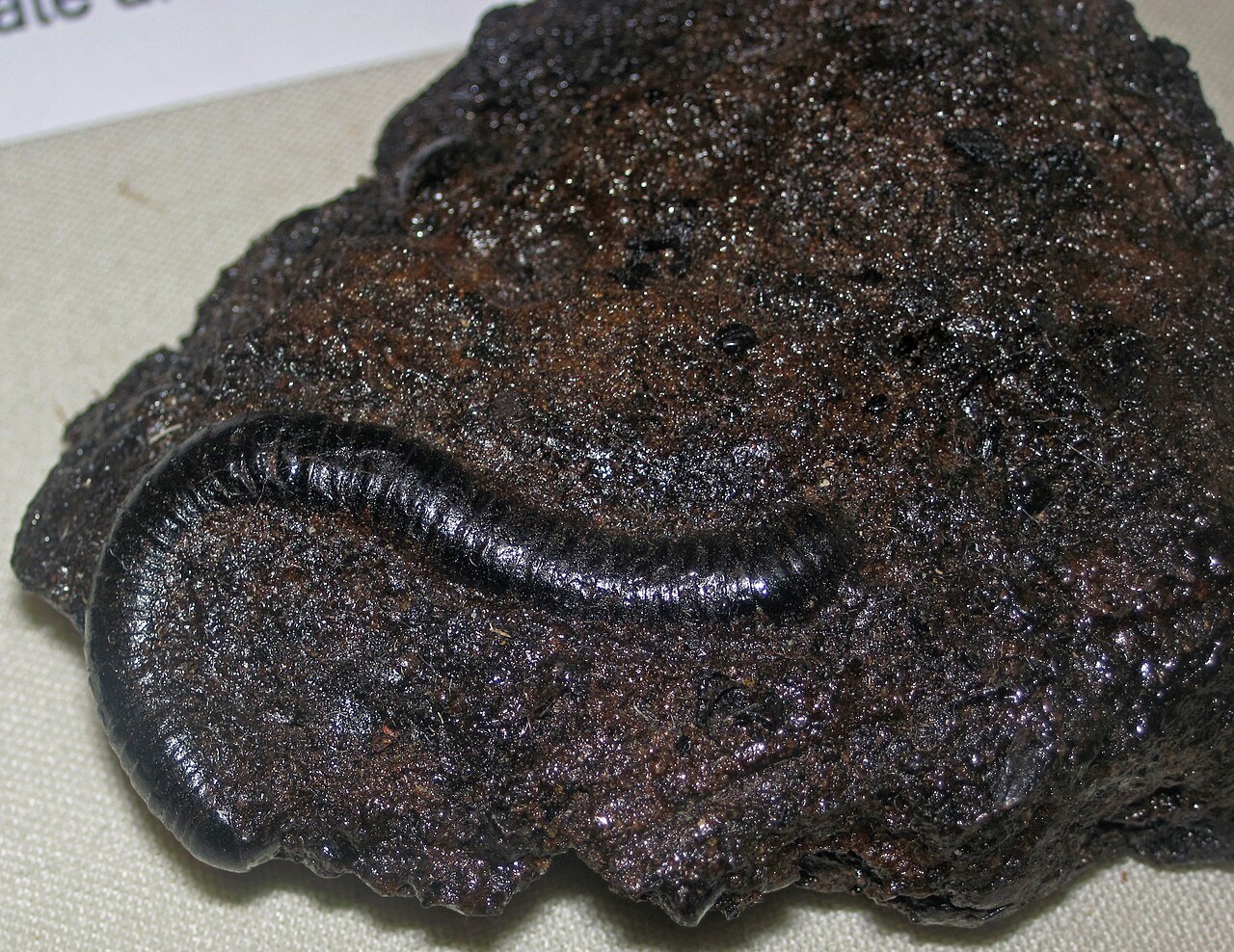
Natural asphalt seeps in the Los Angeles Basin trapped and preserved organisms through the late Pleistocene. Pit 91 reveals small organisms alongside large mammals, while directly dated bones help test the timing of regional megafaunal disappearance.
0.025 Ma → 0.0132 Ma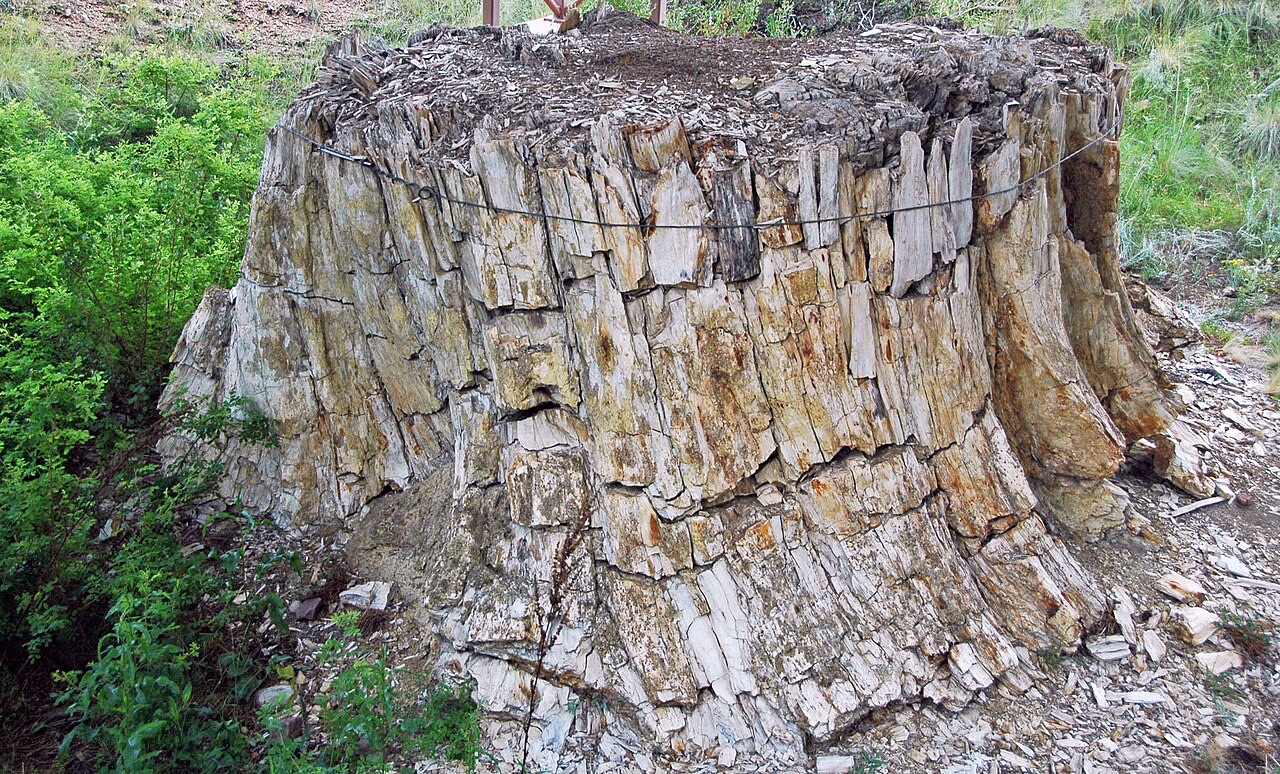 North America
United States ↗
Florissant
Florissant juxtaposes an Eocene lake and buried redwoods with much younger gravel containing mammoth remains.
34.5 Ma → 0.04993 Ma