
Why do nearby fossil deposits preserve different pictures of the same broad marine world?
Bolca is famous for fish that retain an almost illustrated clarity on pale slabs. Yet the regional name covers more than one deposit. Monte Postale and Pesciara differ in their stratigraphic position, fossil assemblages and preservation. Keeping those records separate is essential. Otherwise, a museum collection can look like one extraordinarily diverse community when it actually samples different places and intervals within an Eocene marine system.
The older window follows Monte Postale, whose succession has been constrained using microfossil biostratigraphy. Fish-bearing layers form part of a wider shallow marine record that also contains other organisms. Controlled excavation makes it possible to compare completeness, composition and sedimentary context systematically. Those comparisons ask whether a difference between collections reflects the living community, the original environment or events after death.
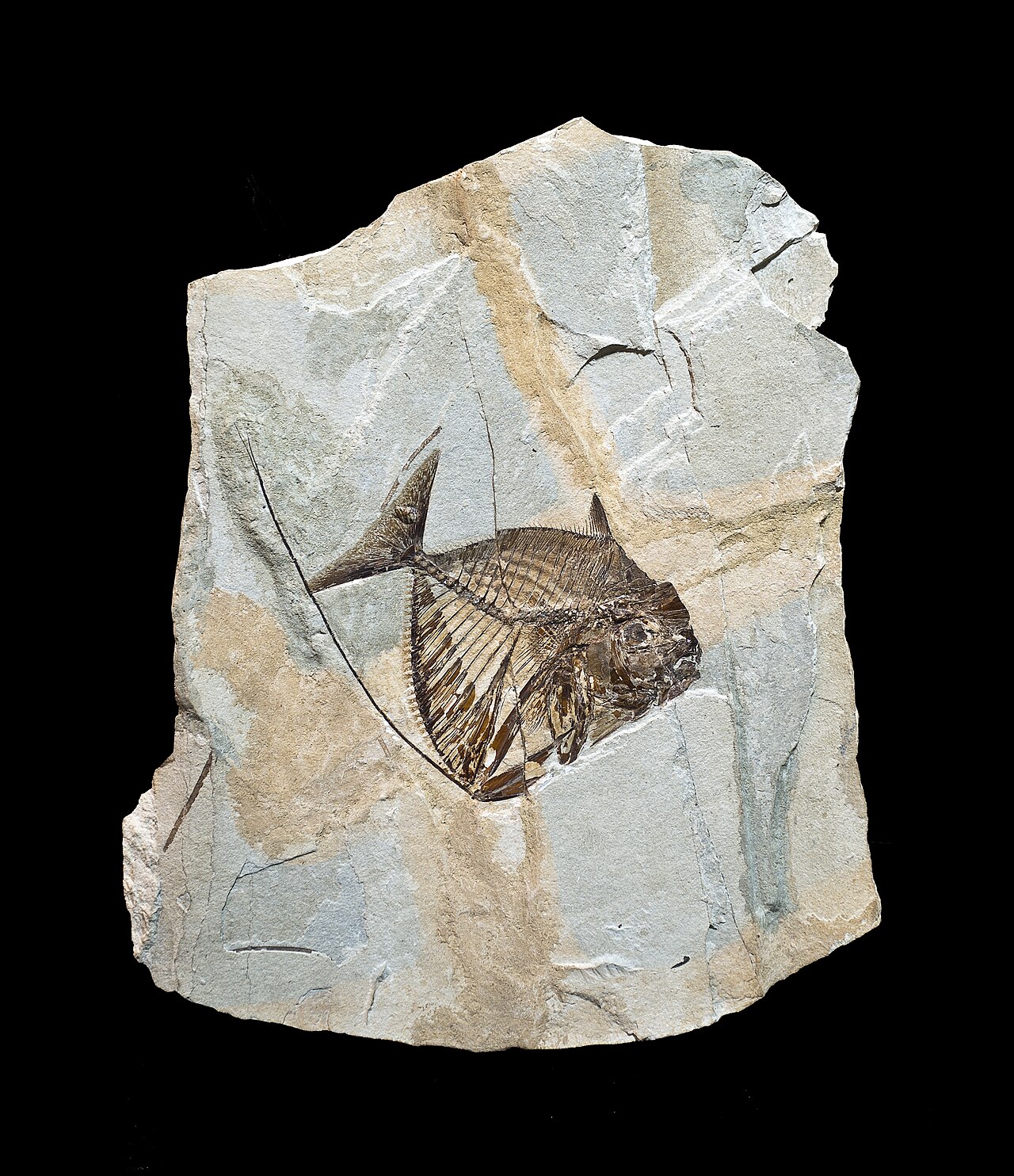
The younger Pesciara window preserves especially striking articulated fishes in fine carbonate rock. A protected marine setting provided conditions favourable to retaining delicate anatomy. Mene rhombea is among the familiar Bolca fishes, but a specimen’s recognizable outline is only one part of its scientific value. The exact quarry, bed and collection history determine how securely it can be placed within the regional sequence.
The two snapshots cover a relatively short span compared with many atlas comparisons, which makes local environmental differences particularly useful. They do not require a sweeping evolutionary replacement to explain every change. The modern hillside and quarry reveal deposits formed under very different conditions, while the photographs show prepared fossils rather than living animals. Bolca demonstrates that exceptional preservation increases anatomical detail without removing the need to examine sampling and context.
[1] [2] [3] [4]Time windows and evidence
Older ages are on the left. Bars span the dated intervals. A dot marks a single age.
- Monte Postale’s shallow marine setting 48.96–50.5 Ma
- Pesciara’s protected marine basin 48.5–48.96 Ma
- Monte Postale’s fossil-bearing limestone 48.96–50.5 Ma
- Mene rhombea from Bolca 48.5–50.5 Ma
- Pesciara’s finely preserved fish assemblage 48.5–48.96 Ma
Researched windowsEvidence records
49.7 Ma · interval 48.96–50.5 Ma
Monte Postale’s shallow marine setting
The Monte Postale succession records shallow marine environments with fish and other fossil material. Its published biostratigraphic interval provides the older bracket in this comparison. Different levels within the succession need not represent identical habitats, and the representative age is not assigned to every specimen. Controlled excavation offers a way to connect anatomy, preservation and the sedimentary setting.
[2] [3] [4]Locate this time in the atlas ↗Observed
Fossil assemblages occur within a dated carbonate succession.
Reconstructed
Shallow marine habitats supplied organisms to a locally distinctive deposit.
Uncertain
Biostratigraphic ages and environmental interpretations have finite resolution.
Evidence windows overlapping this state: 2. Overlap does not establish exact coexistence.
locality · Bolca ↗
Monte Postale’s fossil-bearing limestone
Monte Postale is a separate fossil-bearing succession from the famous Pesciara quarry. Controlled excavation allows researchers to compare its fish assemblage and preservation with that of the younger deposit. Differences in specimen completeness or composition can therefore be tested against environment and burial, rather than assumed to represent evolutionary change alone. The site provides the older part of this regional comparison.
body fossil · Bolca ↗
Mene rhombea from Bolca
The compressed body of Mene rhombea is one of Bolca’s recognizable fish fossils. Preserved fins, skeleton and outline support anatomical study of an Eocene marine fish. A prepared specimen can show detail beautifully while losing little or much of its quarry context, depending on the collection record. This regional evidence record therefore uses a broad bracket rather than inventing a precise bed for the photographed example.
48.7 Ma · interval 48.5–48.96 Ma
Pesciara’s protected marine basin
Fine carbonate sediment in the Pesciara deposit retained many articulated fish. A protected marine setting is supported by the geological and palaeontological evidence, but its precise shape and connection to open water are not mapped here. This narrower window follows a published age model rather than the rounded 48 or 50 million years often used in public descriptions.
[1] [2] [3]Locate this time in the atlas ↗Observed
Articulated fish occur in fine fossiliferous limestone.
Reconstructed
Favourable burial conditions reduced disturbance of many carcasses.
Uncertain
Complete bodies do not establish that every organism lived directly above the burial site.
Evidence windows overlapping this state: 2. Overlap does not establish exact coexistence.
body fossil · Bolca ↗
Mene rhombea from Bolca
The compressed body of Mene rhombea is one of Bolca’s recognizable fish fossils. Preserved fins, skeleton and outline support anatomical study of an Eocene marine fish. A prepared specimen can show detail beautifully while losing little or much of its quarry context, depending on the collection record. This regional evidence record therefore uses a broad bracket rather than inventing a precise bed for the photographed example.
locality · Bolca ↗
Pesciara’s finely preserved fish assemblage
The Pesciara deposit contains numerous articulated fish in fine carbonate sediment. A protected marine setting and favourable burial conditions help explain why fragile structures survived. Comparison with Monte Postale shows that even neighbouring exceptional deposits need not capture the same habitat or preserve bodies in the same way. The assemblage is especially useful when collection follows recorded layers rather than selecting only the most spectacular slabs.
What this story cannot resolve
The age brackets follow the cited Bolca biostratigraphic synthesis. Specimens without a documented quarry horizon retain a broader regional age instead of an invented precise assignment.
Keep these ideas handy
Exceptional preservation
Preservation that retains normally lost features such as soft tissues. Geologists call a deposit rich in such fossils a Konservat-Lagerstätte. Explore the idea ↗
Taphonomy
Studying what happens between an organism’s life, death, burial, preservation and eventual discovery. Explore the idea ↗
Facies
The observable characteristics of a rock body that help describe and interpret its depositional setting. Explore the idea ↗
The evidence notebook
locality · Bolca ↗
Monte Postale’s fossil-bearing limestone
Monte Postale is a separate fossil-bearing succession from the famous Pesciara quarry. Controlled excavation allows researchers to compare its fish assemblage and preservation with that of the younger deposit. Differences in specimen completeness or composition can therefore be tested against environment and burial, rather than assumed to represent evolutionary change alone. The site provides the older part of this regional comparison.
body fossil · Bolca ↗
Mene rhombea from Bolca
The compressed body of Mene rhombea is one of Bolca’s recognizable fish fossils. Preserved fins, skeleton and outline support anatomical study of an Eocene marine fish. A prepared specimen can show detail beautifully while losing little or much of its quarry context, depending on the collection record. This regional evidence record therefore uses a broad bracket rather than inventing a precise bed for the photographed example.
locality · Bolca ↗
Pesciara’s finely preserved fish assemblage
The Pesciara deposit contains numerous articulated fish in fine carbonate sediment. A protected marine setting and favourable burial conditions help explain why fragile structures survived. Comparison with Monte Postale shows that even neighbouring exceptional deposits need not capture the same habitat or preserve bodies in the same way. The assemblage is especially useful when collection follows recorded layers rather than selecting only the most spectacular slabs.
Follow the evidence
Sources & credits
- The Pesciara di Bolca and Monte Postale ↗
ISPRA · Not stated
Use, credit & modifications
Reference only; no source text, figures or photographs reproduced. Original educational synthesis.
Credit: ISPRA. Original synthesis with explicit approximate teaching windows. No source asset reuse; territorial permissions not applicable.
- I fossili di Bolca: icone della Paleontologia italiana ↗
Società Geologica Italiana · 2020
Use, credit & modifications
Reference only; no source text, figures or photographs reproduced. Original educational synthesis.
Credit: Società Geologica Italiana. Original synthesis with explicit approximate teaching windows. No source asset reuse; territorial permissions not applicable.
- Controlled excavations in the Pesciara and Monte Postale sites ↗
Palaeogeography, Palaeoclimatology, Palaeoecology · 2016
Use, credit & modifications
Reference only; no source text, figures or photographs reproduced. Original educational synthesis.
Credit: Palaeogeography, Palaeoclimatology, Palaeoecology. Original synthesis with explicit approximate teaching windows. No source asset reuse; territorial permissions not applicable.
- Diversity and palaeoenvironmental significance of the Eocene chondrichthyan assemblages of Bolca ↗
Lethaia · 2021
Use, credit & modifications
Reference only; no source text, figures or photographs reproduced. Original educational synthesis.
Credit: Lethaia. Original synthesis with explicit approximate teaching windows. No source asset reuse; territorial permissions not applicable.
Follow the connections
 North America
United States ↗
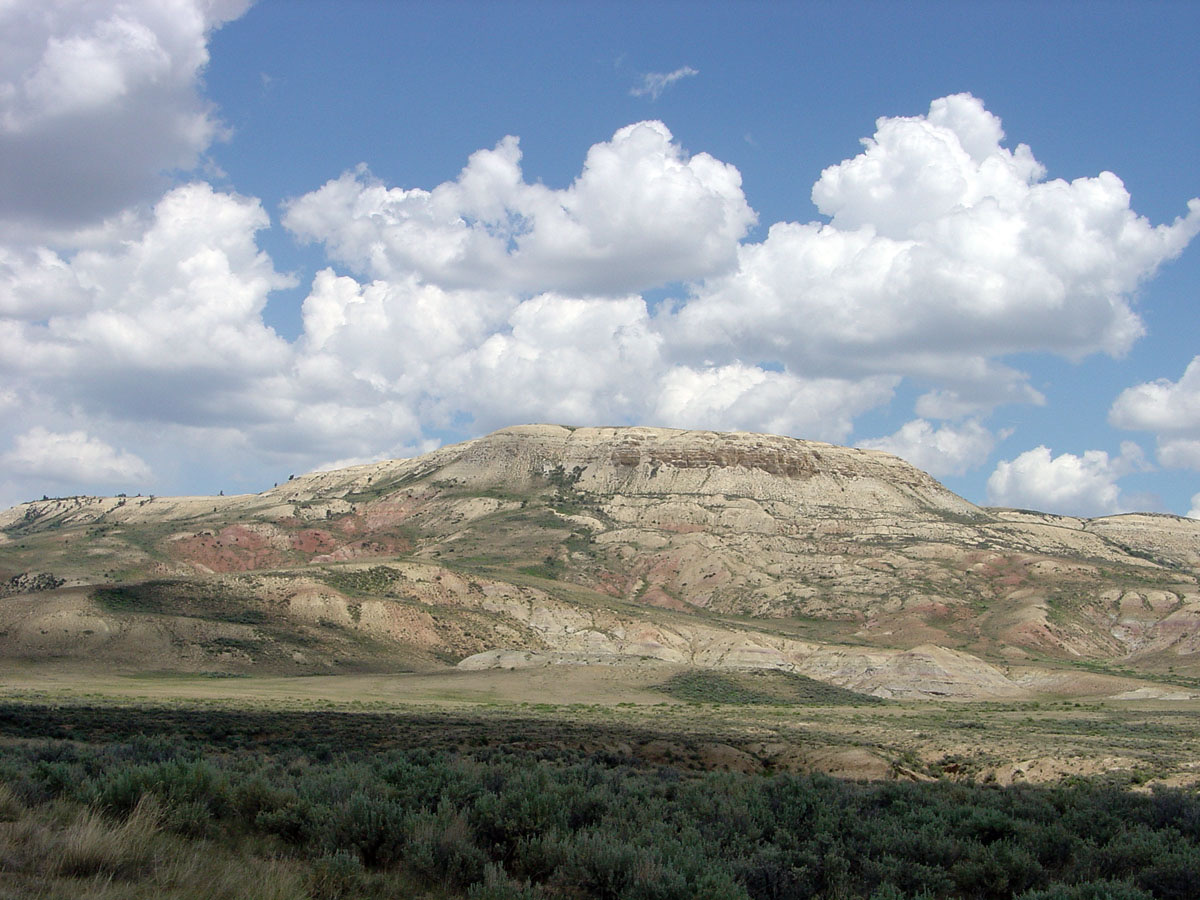
Fossil Lake, Wyoming
The Green River Formation records several Eocene lakes. At Fossil Lake, an expanding lake and its later shrinking, saltier stage left different sediments and different opportunities for preservation.
52 Ma → 51 Ma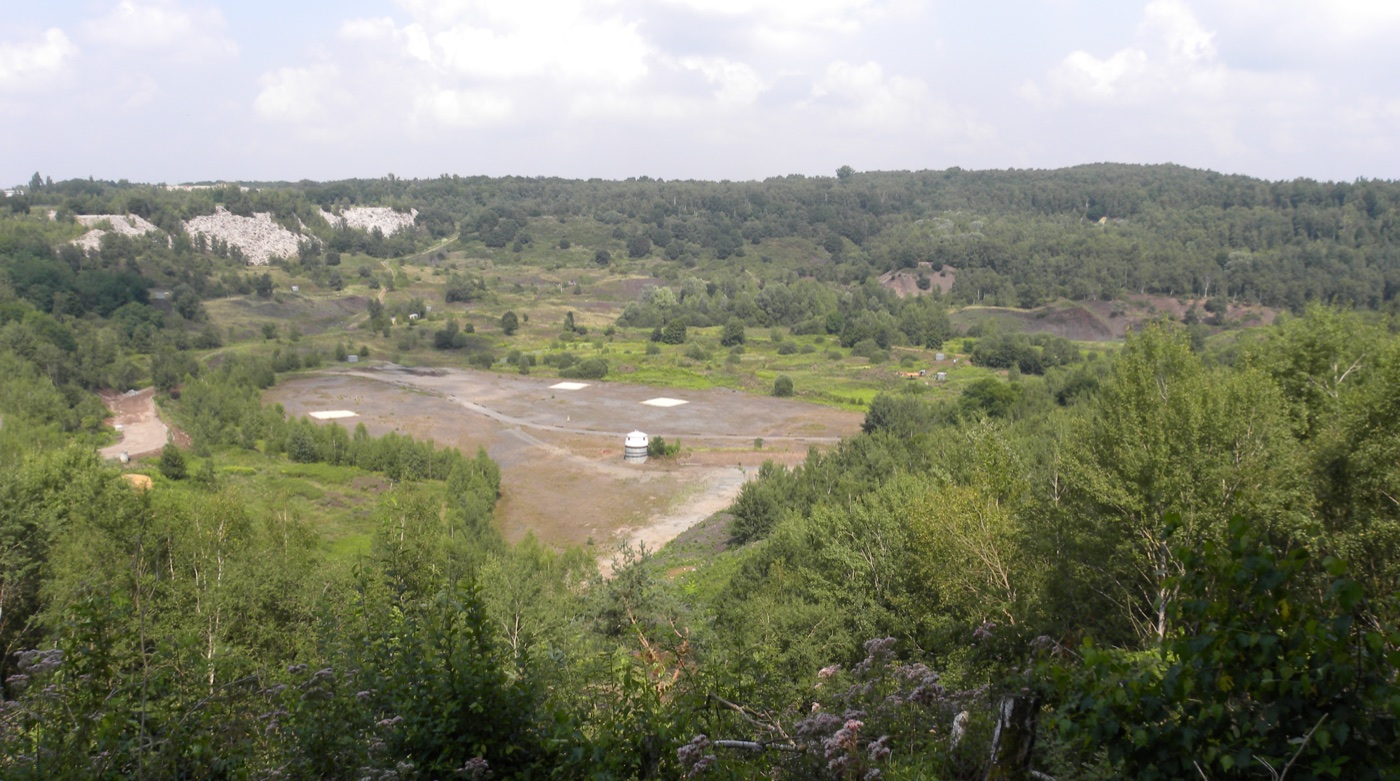 Europe
Germany ↗
Messel
Eocene lake mud captured remains from water, air and surrounding forest. Exceptional preservation makes Messel rich in detail, while the lake’s selective archive keeps the whole ecosystem partly out of reach.
48 Ma → Today