
Do petrified trees and a volcanic caldera record the same volcanic episode?
Yellowstone’s geothermal scenery can make its whole history seem like one continuing eruption. The rocks show a much longer and more varied sequence. At Specimen Ridge, petrified trees belong to an Eocene landscape around 50 million years old. Volcanic debris flows buried wood, and later mineralization preserved its structure. That archive is vastly older than the eruptions responsible for the present Yellowstone caldera.
Upright trunks are striking, but upright position alone does not prove that every tree stands exactly where it grew. Debris flows can transport trunks and leave some standing. Researchers compare roots, sedimentary contacts, orientation and associated plant material to distinguish burial in place from transport. Leaves and wood record a varied forest, while the preservation process filters what survives. The fossil forest is therefore both an ecological record and a problem in taphonomy.
The younger volcanic history includes the Huckleberry Ridge eruption around 2.08 million years ago and the Lava Creek eruption around 631,000 years ago. Their tuffs contain fragmented volcanic material deposited by explosive activity. Mineral dating and chemical comparison allow units to be correlated, and field contacts reveal sequences that a single rounded age cannot resolve.
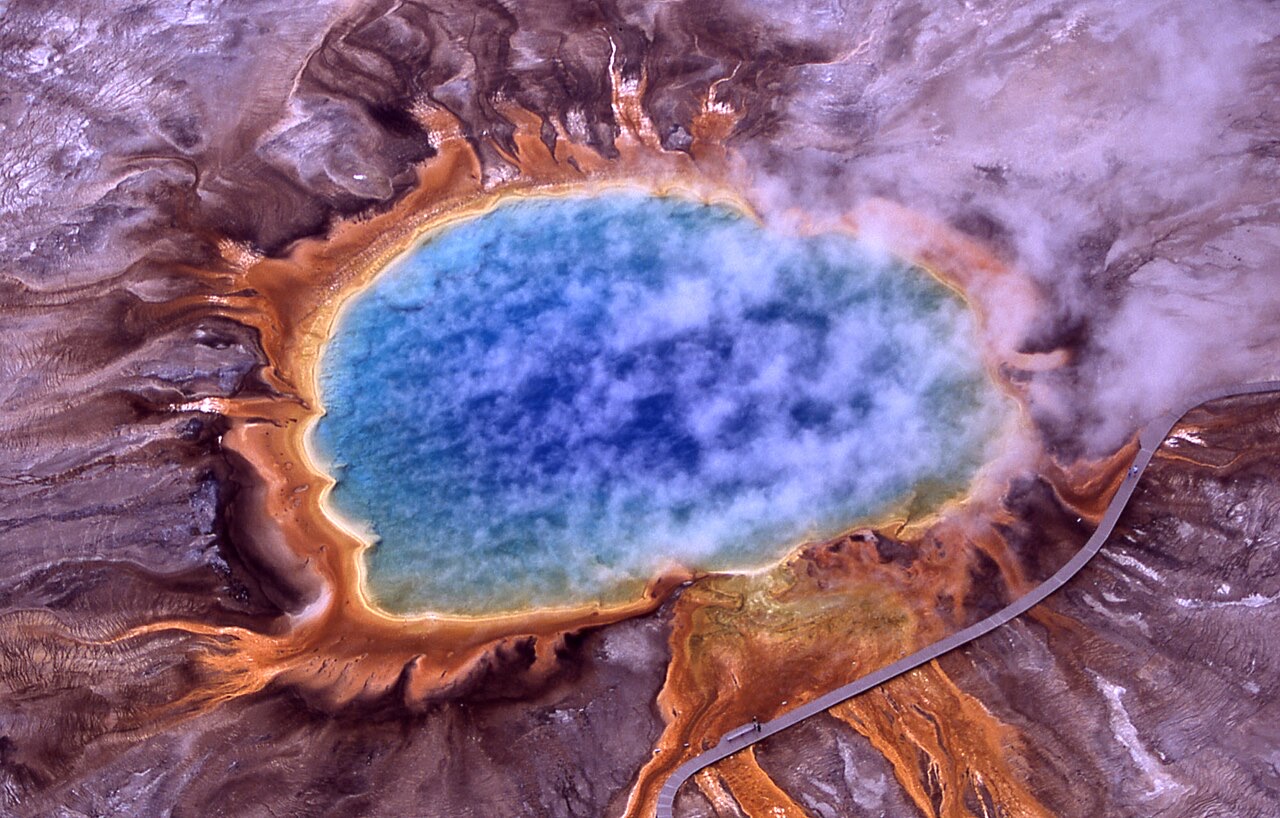
New mapping at Sour Creek dome shows why the 631,000-year age cannot distinguish every pulse. Some deposits contain fragments of earlier volcanic rock that had already cooled enough to break apart. Field relationships suggest the mapped Sour Creek deposits followed the main Lava Creek Tuff eruption, even though their ages overlap within dating uncertainty. The photograph shows a modern hot spring, a much later manifestation of Yellowstone’s heat.
[1] [2] [3]Time windows and evidence
Older ages are on the left. Bars span the dated intervals. A dot marks a single age.
- Forests beside Eocene volcanic landscapes 50 Ma
- The Lava Creek eruptive sequence 0.631 Ma
- Specimen Ridge petrified trees 50 Ma
- Huckleberry Ridge Tuff 2.08 Ma
- Lava Creek Tuff at Sour Creek dome 0.631 Ma
Researched windowsEvidence records
50 Ma · interval 50 Ma
Forests beside Eocene volcanic landscapes
Trees and other plants grew in the region around 50 million years ago. Volcanic debris flows buried some remains, and mineralization preserved wood. The rounded point age represents the Eocene fossil-forest record, not the much younger Yellowstone caldera system. Some trunks may have been transported before burial.
[1]Locate this time in the atlas ↗Observed
Petrified trunks, wood anatomy and plant fossils occur at Specimen Ridge and nearby deposits.
Reconstructed
A forested landscape was repeatedly affected by sediment-laden volcanic debris flows.
Uncertain
Growth position must be tested rather than assumed from an upright trunk.
Evidence windows overlapping this state: 1. Overlap does not establish exact coexistence.
0.631 Ma · interval 0.631 Ma
The Lava Creek eruptive sequence
The main Lava Creek Tuff eruption formed Yellowstone Caldera about 631,000 years ago. At Sour Creek dome, deposits dated to about the same time contain pieces of already cooled volcanic rock. Field relationships suggest these pulses followed the main eruption. The rounded age cannot resolve how much time passed between them.
[2] [3]Locate this time in the atlas ↗Observed
Ash-flow tuffs, volcanic clasts and dated minerals record explosive activity.
Reconstructed
Multiple eruptive processes and magma bodies contributed to caldera-related deposits.
Uncertain
The Sour Creek deposits and main Lava Creek Tuff have overlapping numerical ages. Their order is clearer from field relationships than from dates alone.
Evidence windows overlapping this state: 1. Overlap does not establish exact coexistence.
What this story cannot resolve
Eocene forests and Quaternary caldera eruptions belong to separate geological episodes. Modern hot-spring photographs do not depict an ancient eruption.
Keep these ideas handy
Taphonomy
Studying what happens between an organism’s life, death, burial, preservation and eventual discovery. Explore the idea ↗
Radiometric dating
Estimating the time of a geological event from radioactive decay and the isotopic composition of a suitable material. Explore the idea ↗
Uncertainty & reconstruction limits
Explicit limits on what evidence and models allow us to infer, including uncertainty in age, identity, place and process. Explore the idea ↗
The evidence notebook
body fossil · Yellowstone ↗
Specimen Ridge petrified trees
Petrified trunks and other plant remains at Specimen Ridge record Eocene vegetation and its burial. Preserved wood structure can retain information lost from a simple external cast. Transport by debris flows complicates interpretation of upright trees, so individual root systems and enclosing deposits are important evidence for original growth position. The comparison between fossil anatomy and the enclosing debris provides a way to test competing burial histories, rather than choosing the most visually appealing reconstruction of a forest.
radiometric · Yellowstone ↗
Huckleberry Ridge Tuff
The Huckleberry Ridge Tuff records an older major explosive episode in the Yellowstone region. Its approximately 2.08 million year age distinguishes it from the younger Lava Creek deposits. Modern remapping sometimes revises assignments of superficially similar rocks, showing why field relationships and mineral dates must be evaluated together. Recognizing this older unit prevents separate eruptions from being merged into one event simply because their deposits occur in the same modern volcanic region and resemble one another.
radiometric · Yellowstone ↗
Lava Creek Tuff at Sour Creek dome
Sour Creek dome contains several packages of volcanic rock that date to approximately the same time as the Lava Creek Tuff. Some packages include fragments of volcanic rock that had already cooled. The USGS reports that field relationships suggest these Sour Creek deposits postdate the main eruption that formed the caldera. The fragments therefore help establish an order that the rounded dates alone cannot resolve.
Follow the evidence
Sources & credits
- Yellowstone Fossils ↗
National Park Service · Not stated
Use, credit & modifications
Reference only. No source text or assets reproduced. Original factual synthesis; no reuse licence asserted.
Credit: National Park Service — Yellowstone Fossils. Facts synthesized in original educational language. Rounded teaching intervals are distinguished from measured dates. No source assets reused; territorial permissions not applicable.
- Yellowstone Volcano Observatory 2022 Annual Report ↗
U.S. Geological Survey · 2023
Use, credit & modifications
Reference only. No source text or assets reproduced. Original factual synthesis; no reuse licence asserted.
Credit: U.S. Geological Survey — Yellowstone Volcano Observatory 2022 Annual Report. Facts synthesized in original educational language. Rounded teaching intervals are distinguished from measured dates. No source assets reused; territorial permissions not applicable.
- An expanded understanding of the Lava Creek Tuff eruption ↗
U.S. Geological Survey / Madison Myers · 2026-08-17
Use, credit & modifications
Reference only. No source text or assets reproduced. Original factual synthesis; no reuse licence asserted.
Credit: U.S. Geological Survey / Madison Myers — An expanded understanding of the Lava Creek Tuff eruption. Facts synthesized in original educational language. Rounded teaching intervals are distinguished from measured dates. No source assets reused; territorial permissions not applicable.
Follow the connections
 North America
United States ↗
Florissant
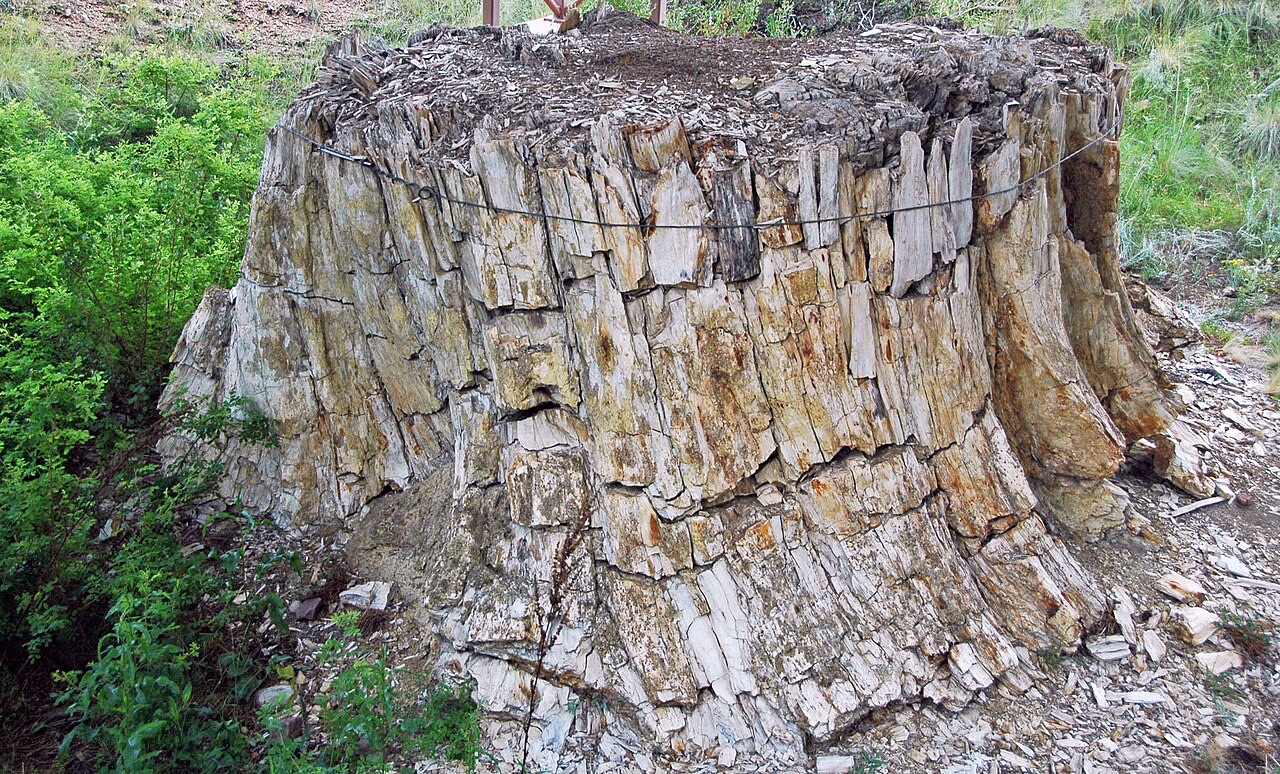
Florissant juxtaposes an Eocene lake and buried redwoods with much younger gravel containing mammoth remains.
34.5 Ma → 0.04993 Ma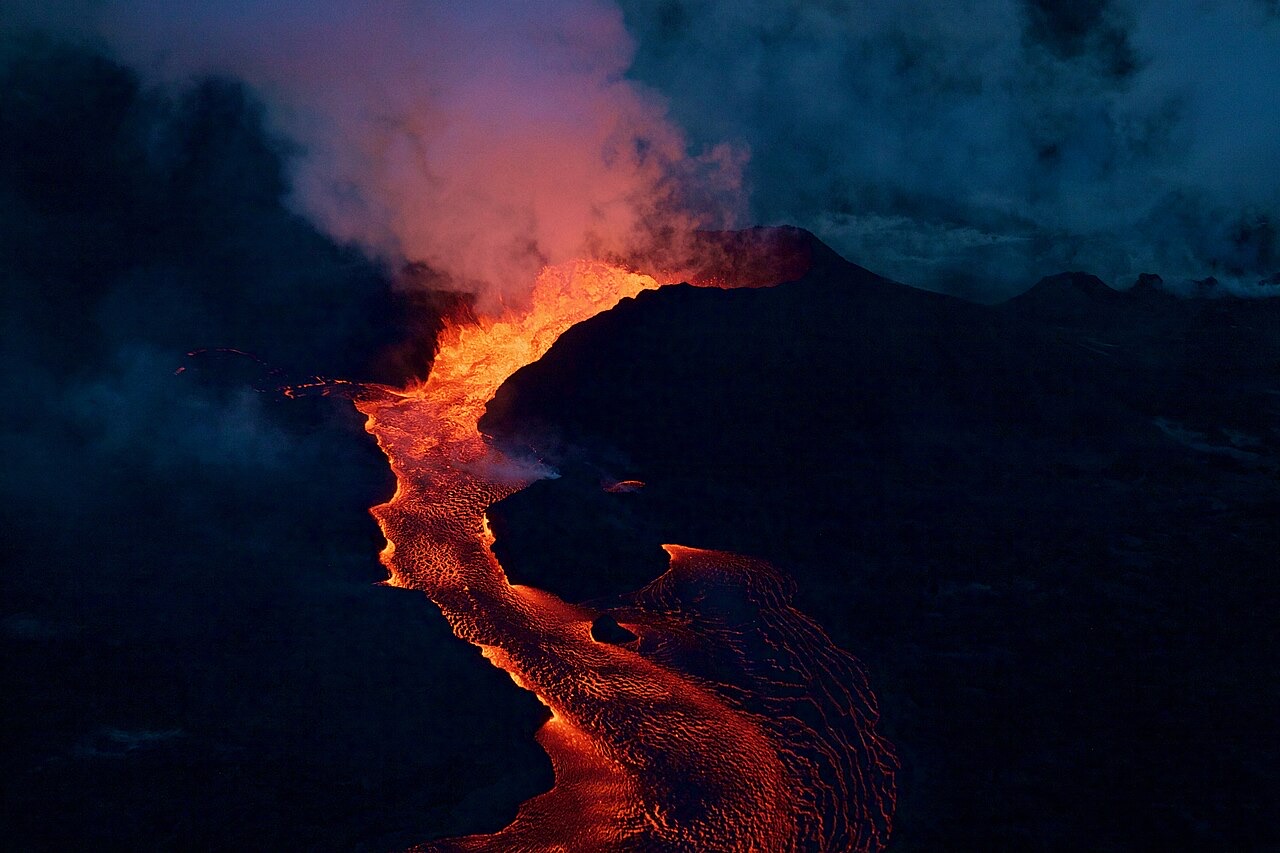 Oceania
United States ↗
Hawaiian Islands
Older volcanic rocks on Kauaʻi contrast with monitored eruptions at Kīlauea, illustrating island-chain development and ongoing crustal construction.
5 Ma → Today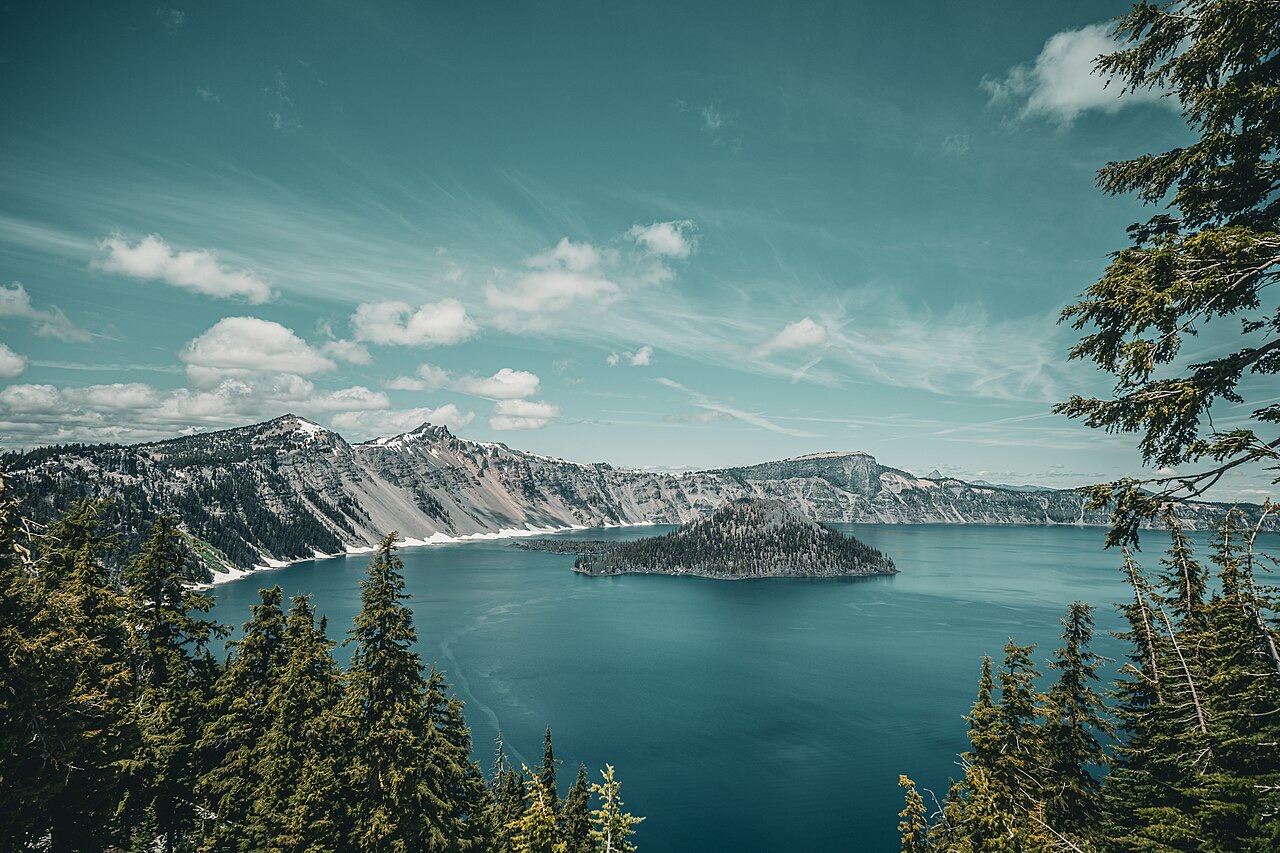 North America
United States ↗
Crater Lake
Mount Mazama’s eruption and collapse about 7,700 years ago formed a basin that filled with water while younger volcanoes grew inside it.
0.0077 Ma → 0.007 Ma