
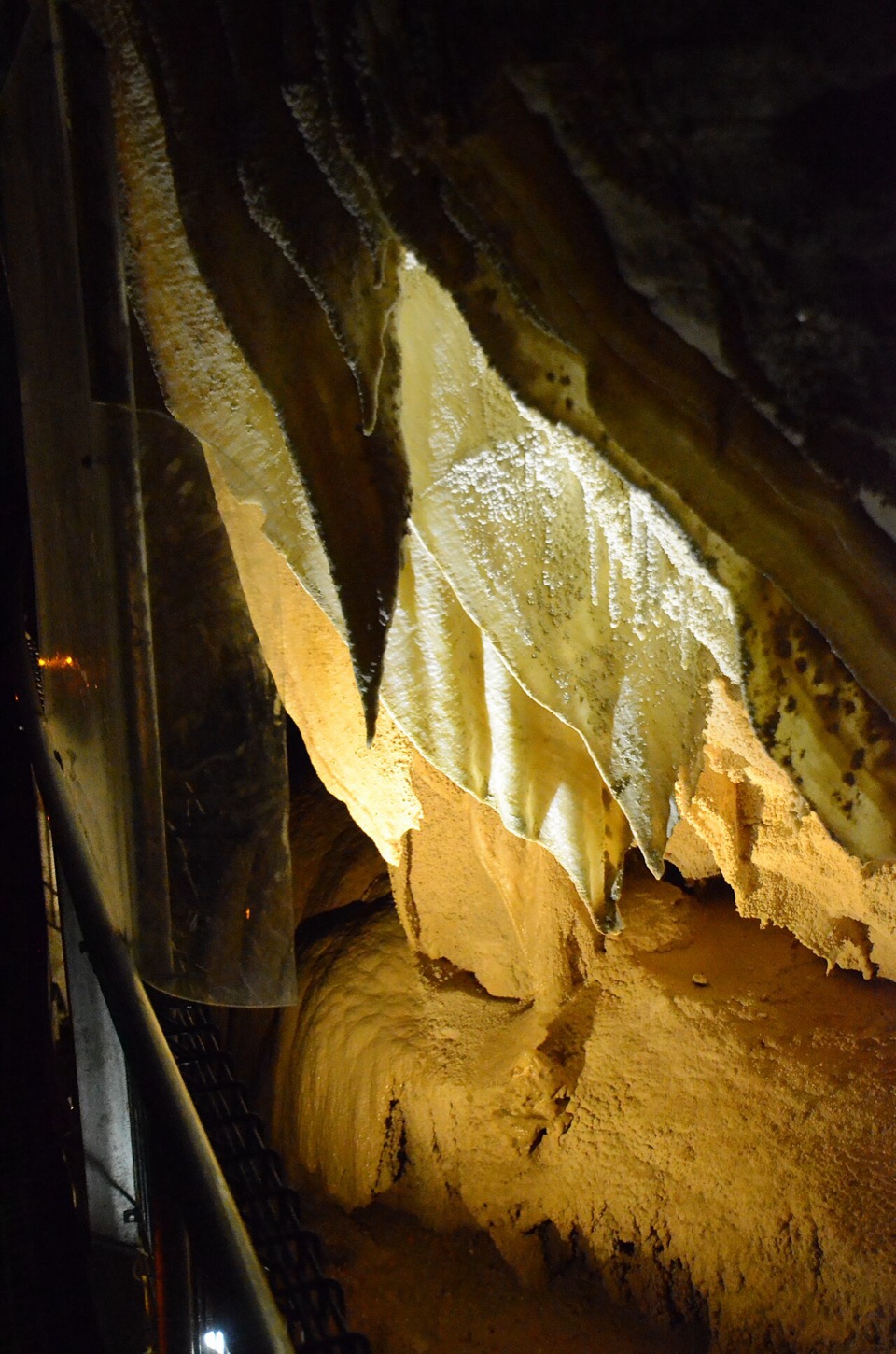
Can a cave be millions of years younger than its walls?
The rock in a cave wall and a mineral deposit hanging from its ceiling need not have anything close to the same age. At Waitomo, the marine sediments that became limestone began as material laid down in older seas. Only later, as the region emerged and water eroded and dissolved the rock, could the modern type of cave landscape develop. Stratigraphic names allow scientists to tell limestone units from neighboring sandstone and other sedimentary rocks.
The Orahiri Limestone is one part of the Te Kūiti Group succession. Observations of sediment type and fossils support the interpretation of marine shelf environments. The chosen Oligocene view focuses on a broad interval rather than a single bed in every cave. Some related limestone units span different parts of geological time. Precise dating involves separating the contacts and interpreting the fossils that constrain each unit.
Groundwater can dissolve carbonate rock along cracks and paths of flow. In a cave, dripping water can later leave carbonate behind as a speleothem. Those younger deposits hold their own record. At Waitomo, dated cave minerals also let geologists investigate intermittent movement along a fault. The dates apply to cave deposits and the movements that affected them. They do not date marine sedimentation or determine when every passage first opened. The information from the coast, the cave walls and a stained layer of young mineral each answers a different question.
[1] [2] [3] [4]Time windows and evidence
Older ages are on the left. Bars span the dated intervals. A dot marks a single age.
- Marine carbonate settles on the Oligocene shelf 23.03–33.9 Ma
- Cave minerals record late Pleistocene fault movement 0.035–0.045 Ma
- Orahiri Limestone of the Te Kūiti Group 23.03–33.9 Ma
- Ruakuri Cave in the modern limestone landscape Today
- Dated speleothems near the Okohua fault 0.035–0.045 Ma
Researched windowsEvidence records
26 Ma · interval 23.03–33.9 Ma
Marine carbonate settles on the Oligocene shelf
Fossiliferous carbonate and associated sediment accumulated in a marine setting. The formations in the Waitomo district contain rocks with different amounts of carbonate and siliciclastic material. Fossils and measured contacts help separate environments within the wider marine succession. The 26 Ma representative falls within the Duntroonian assignment of the Orahiri Limestone. The wider displayed Oligocene bounds provide regional context and are not this formation’s measured duration.
[1] [2] [4]Locate this time in the atlas ↗Observed
Orahiri Limestone and neighboring units retain fossils and stratigraphic contacts.
Reconstructed
A temperate shelf supported carbonate accumulation during marine transgression.
Uncertain
Formations span different intervals, and some neighboring limestone is younger.
Evidence windows overlapping this state: 1. Overlap does not establish exact coexistence.
0.038 Ma · interval 0.035–0.045 Ma
Cave minerals record late Pleistocene fault movement
Younger calcite deposits in a cave near Waitomo record processes that followed the older marine sedimentation. A published study uses dates and relations in the cave to infer intermittent Okohua fault movement up to around 38,000 years ago. The window illustrates evidence from the late part of this history.
[3]Locate this time in the atlas ↗Observed
Dated cave mineral deposits are associated with evidence of displacement.
Reconstructed
Some passages existed and accumulated mineral deposits while the fault intermittently moved.
Uncertain
The last movement recorded in these samples is not a universal age of cave opening.
Evidence windows overlapping this state: 1. Overlap does not establish exact coexistence.
What this story cannot resolve
The older teaching window is broad and focuses on Oligocene units. The younger age represents evidence of fault movement from a particular cave study, not the age of all Waitomo caves or the present photographed structures.
Keep these ideas handy
Facies
The observable characteristics of a rock body that help describe and interpret its depositional setting. Explore the idea ↗
Relative dating
Determining which event came first without necessarily assigning a numerical age. Explore the idea ↗
Radiometric dating
Estimating the time of a geological event from radioactive decay and the isotopic composition of a suitable material. Explore the idea ↗
The evidence notebook
sediment · Waitomo limestone and caves ↗
Orahiri Limestone of the Te Kūiti Group
Stratigraphic studies recognize the fossiliferous Orahiri Limestone and distinguish it from adjacent named rocks, including the Waitomo Sandstone. Depositional indicators and zone fossils are described in measured sequences. These observations support a marine shelf account of the rock that underlies part of the later karst. The Oligocene teaching range does not date every bed or all limestones around Waitomo.
locality · Waitomo limestone and caves ↗
Ruakuri Cave in the modern limestone landscape
Field studies document carbonate rocks, cave passages and mineral deposits at Ruakuri. Drainage sinks and enclosed pathways in the broader terrain show that water can travel underground. Dissolution and later mineral deposition record a separate history from the marine origin of the rock. Different passages have opened and changed over different time spans.
radiometric · Waitomo limestone and caves ↗
Dated speleothems near the Okohua fault
Cave mineral deposits with dated relationships to fault movement give a chronology extending into the late Pleistocene. The study places the younger end of its recorded movement near 38,000 years ago. Such deposits can constrain movement that would not be dated by the wall rock alone. The dates do not show more recent movement elsewhere or fix the opening age of every passage.
Follow the evidence
Sources & credits
- Stratigraphy and paleontology of the Oligocene Te Kuiti Group, Waitomo County ↗
Nelson · New Zealand Journal of Geology and Geophysics · 1978
Use, credit & modifications
Reference only. No source text, figures or photographs reproduced in this record.
Credit: Nelson · New Zealand Journal of Geology and Geophysics. Facts paraphrased in original text; teaching intervals distinguished from measurement uncertainty. Reference use; no media rights asserted.
- Field trip guide to Oligocene limestones and caves in the Waitomo District ↗
Geoscience Society of New Zealand · University of Waikato archive · 2012
Use, credit & modifications
Reference only. No source text, figures or photographs reproduced in this record.
Credit: Geoscience Society of New Zealand · University of Waikato archive. Facts paraphrased in original text; teaching intervals distinguished from measurement uncertainty. Reference use; no media rights asserted.
- Quaternary uplift and fault movement near Waitomo, North Island, New Zealand ↗
New Zealand Journal of Geology and Geophysics · 2021
Use, credit & modifications
Reference only. No source text, figures or photographs reproduced in this record.
Credit: New Zealand Journal of Geology and Geophysics. Facts paraphrased in original text; teaching intervals distinguished from measurement uncertainty. Reference use; no media rights asserted.
- New Zealand geological age intervals: Duntroonian and Waitakian ↗
Geoscience Society of New Zealand / GNS Science, Fossil Record Electronic Database · Not stated
Use, credit & modifications
Reference only; no source text or assets reproduced.
Credit: FRED geological age intervals; original factual synthesis. Original explanation; no source asset modified. Worldwide reference citation.
Follow the connections
 Oceania
New Zealand ↗
Whanganui Basin
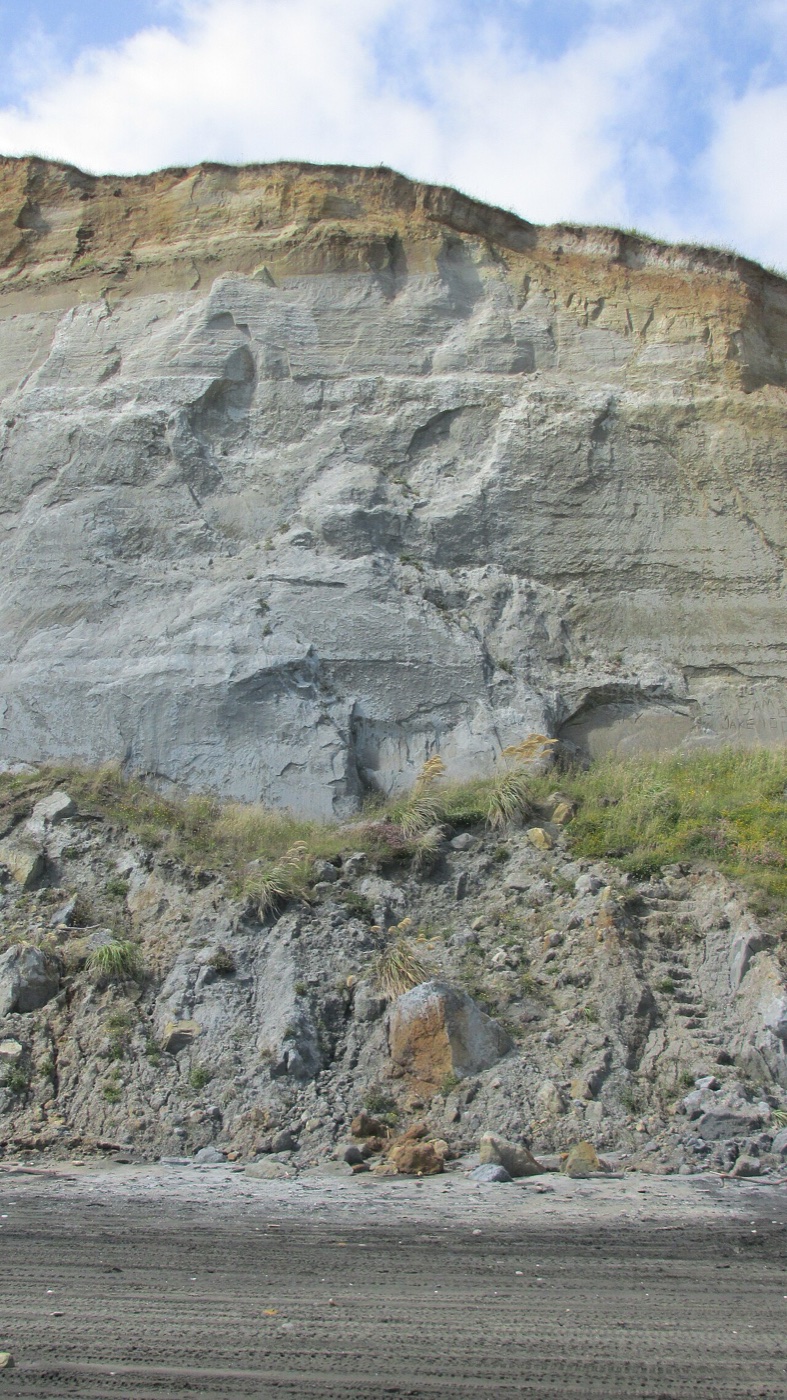
Pliocene shelf sediments and younger Pleistocene shellbeds record recurring changes in water depth, sediment supply and tectonic accommodation in New Zealand.
3 Ma → 0.9 Ma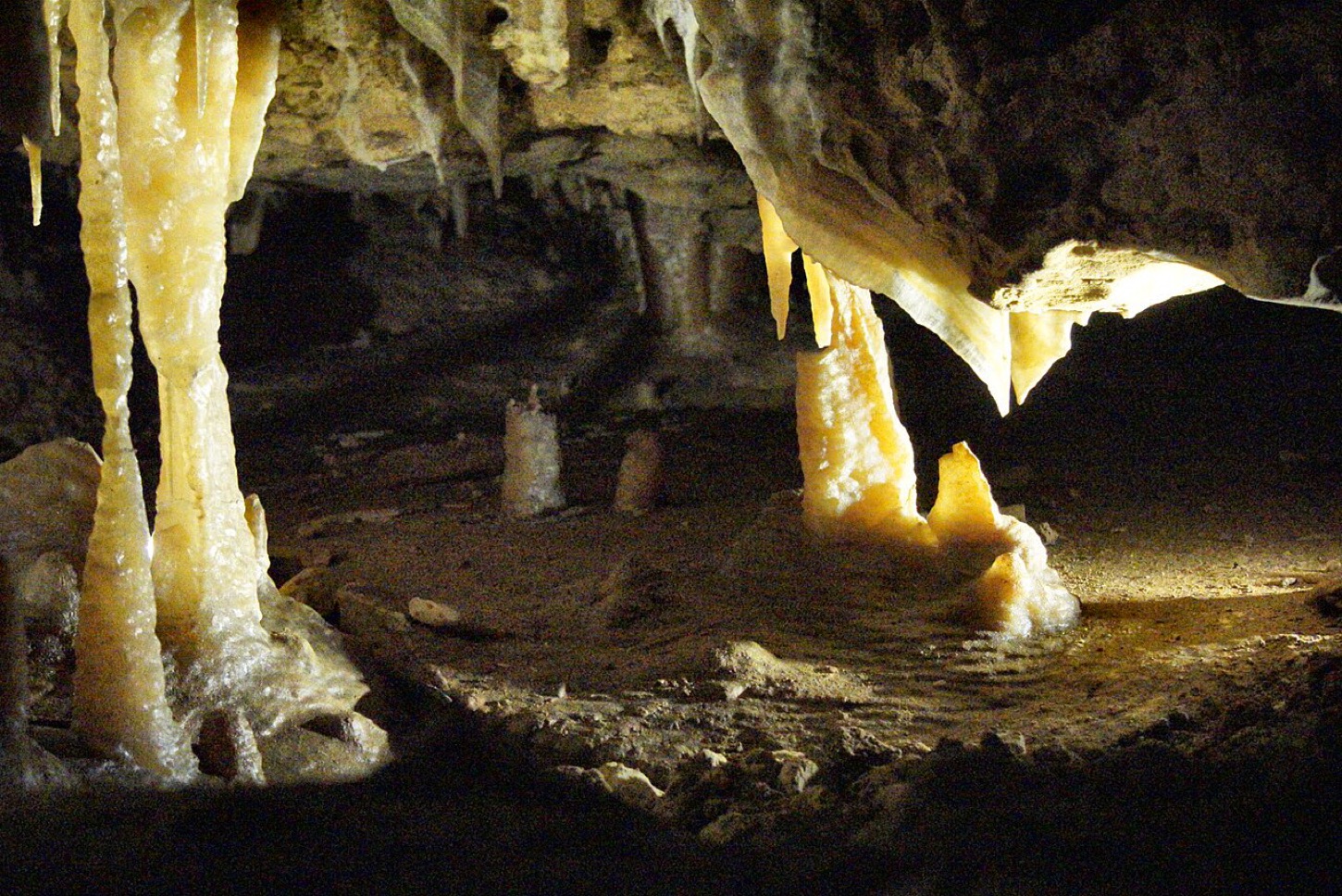 Oceania
Australia ↗
Naracoorte Caves
Dated cave minerals record early passages. Later openings let pollen, charcoal, sediment and animals enter.
1.34 Ma → 0.5 Ma