
Can a long fossil record show environmental change without one continuous exposure?
The John Day fossil record is distributed across a basin, not contained in one spectacular cliff. Its separate park units expose different portions of a long history of volcanism, sedimentation and life. At the Clarno Nut Beds, fruits, seeds and wood document a warm, moist forest around 44 million years ago. These fossils preserve anatomical detail that leaves alone may not provide. Matching several plant organs helps identify the vegetation while reducing reliance on superficial resemblance.
By about 40 million years ago, an ancient stream bend accumulated the fossils now known from Hancock Mammal Quarry. Sediment and remains collected on a point bar as water moved through a forested landscape. This is a record shaped by transport: animals found together in a deposit need not have died together. Their association becomes more informative when researchers examine the grain sizes, skeletal preservation and arrangement of the bones.
The younger Turtle Cove succession records forests becoming more open during the Oligocene. Three-toed horses, oreodonts and carnivores lived in a mixture of wooded and open habitats. The small primate Ekgmowechashala also occurs, showing that forest-dependent animals remained part of this changing world. A shift toward drier conditions did not turn every part of the basin into grassland at once.
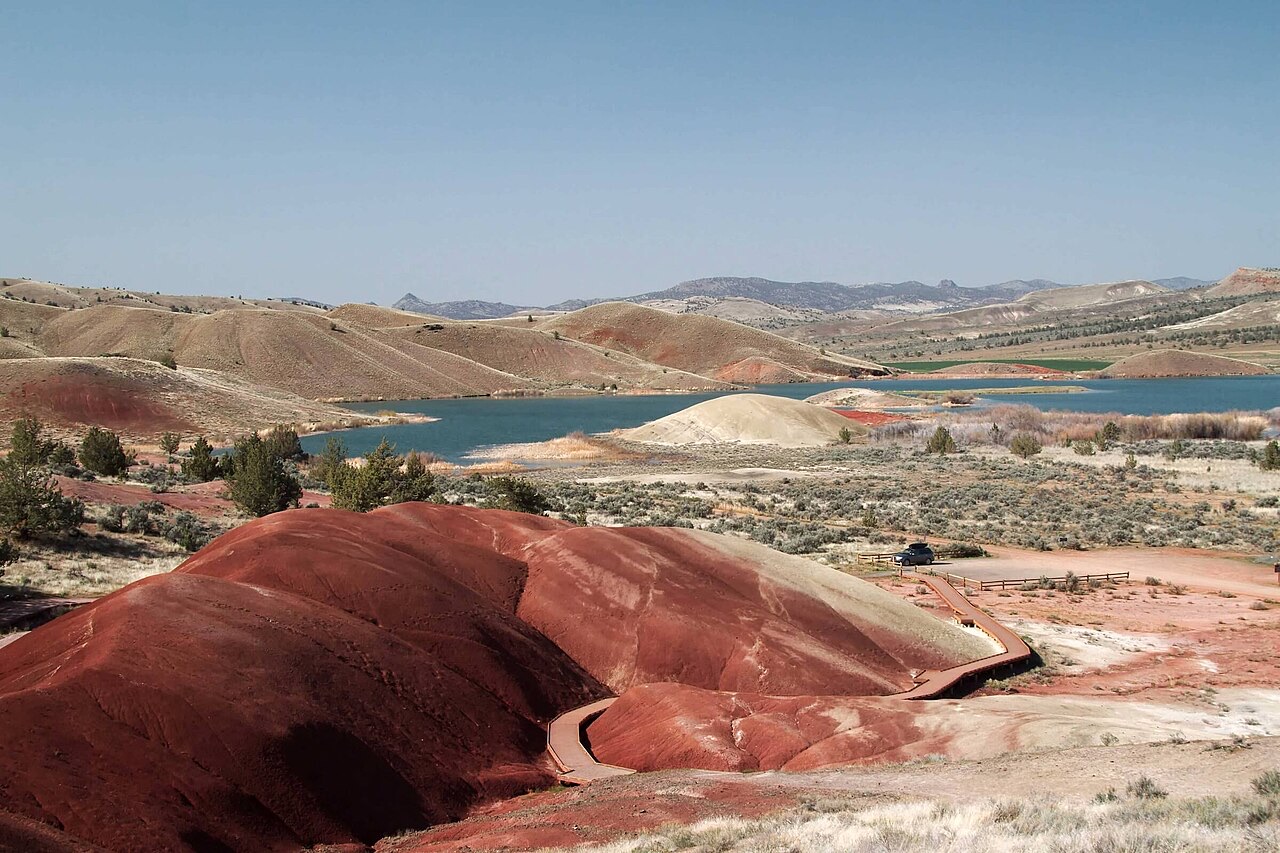
Volcanic ash is both a disturbance and a research tool. It contributed sediment and sometimes buried organisms, while suitable minerals provide opportunities for numerical dating. Even so, the selected snapshots are summaries of distinct assemblages, not consecutive frames. The colorful Painted Hills photograph shows one modern exposure within the wider basin; it should not be mistaken for the exact locality of every fossil discussed here.
[1] [2] [3] [4]Time windows and evidence
Older ages are on the left. Bars span the dated intervals. A dot marks a single age.
- The Clarno forest 44 Ma
- Turtle Cove’s mixed woodland 29 Ma
- Clarno Nut Beds fruits and seeds 44 Ma
- Hancock Mammal Quarry point bar 40 Ma
- Ekgmowechashala zancanellai of Turtle Cove 29 Ma
Researched windowsEvidence records
44 Ma · interval 44 Ma
The Clarno forest
Fruits, nuts and petrified wood document a diverse, moist Eocene forest. Volcanic deposits and water moved material through the landscape, creating unusual opportunities for preservation. The 44 million year marker is the park’s rounded age for the Nut Beds, not a claim that all Clarno Formation rocks formed at that instant.
[1]Locate this time in the atlas ↗Observed
Diverse seeds, fruits and wood are preserved at the Clarno Nut Beds.
Reconstructed
A warm, humid forest with a varied plant community.
Uncertain
Transport and preservation determine which plant parts entered the deposit.
Evidence windows overlapping this state: 1. Overlap does not establish exact coexistence.
29 Ma · interval 29 Ma
Turtle Cove’s mixed woodland
The selected Oligocene assemblage represents wooded habitats becoming more open. Mammals with different ways of moving and feeding occupied a landscape periodically affected by ash deposition. The 29 million year age follows the park’s representative Turtle Cove assemblage; the whole member spans several million years and contains changing faunas.
[3] [4]Locate this time in the atlas ↗Observed
Mammal fossils, plants, claystones and paleosols document a varied terrestrial landscape.
Reconstructed
A mosaic of forest and open ground under cooler, drier conditions.
Uncertain
A representative assemblage cannot stand for every level of the member.
Evidence windows overlapping this state: 1. Overlap does not establish exact coexistence.
What this story cannot resolve
Coordinates locate the Sheep Rock area within a wider multi-locality record. Point ages are rounded published assemblage ages, not zero-duration events.
Keep these ideas handy
Climate proxy
A measured feature of a natural archive used to infer some aspect of past climate. Explore the idea ↗
Taphonomy
Studying what happens between an organism’s life, death, burial, preservation and eventual discovery. Explore the idea ↗
Sampling bias
Differences between the history of life and the subset preserved, exposed, collected, identified and published. Explore the idea ↗
The evidence notebook
body fossil · John Day Basin ↗
Clarno Nut Beds fruits and seeds
Mineralized fruits and seeds at the Clarno Nut Beds preserve internal structures useful for identifying plants. Together with fossil wood, they document a diverse Eocene forest. Their survival reflects unusual burial and mineralization conditions, so the richness of this collection should not be compared uncritically with a locality preserving only fragmentary leaves. Studying their internal anatomy can distinguish plants whose external shapes look similar, improving reconstruction of the vegetation represented in the fossil-bearing sediment.
locality · John Day Basin ↗
Hancock Mammal Quarry point bar
The Hancock Mammal Quarry accumulated at a stream bend around 40 million years ago. Its mammals include Eubrontotherium clarnoensis and early horses. Sediment transport concentrated remains, making this locality particularly useful for considering the difference between a living community and the assemblage eventually excavated from rock. A concentration produced by stream transport can include animals from different parts of the catchment, so collection richness need not describe one small patch of forest.
body fossil · John Day Basin ↗
Ekgmowechashala zancanellai of Turtle Cove
Teeth and jaw material of this small primate occur in the Turtle Cove Member. The fossil helps establish that wooded habitats persisted during environmental change. Its presence complements the evidence from paleosols and other mammals; it does not require that the entire basin remained a continuous closed forest. Its ecological significance is strongest when interpreted alongside the wider assemblage, rather than using one animal as a precise thermometer for the entire ancient region.
Follow the evidence
Sources & credits
- Clarno Nut Beds ↗
National Park Service · Not stated
Use, credit & modifications
Reference only. No source text or assets reproduced. Original factual synthesis; no reuse licence asserted.
Credit: National Park Service — Clarno Nut Beds. Facts synthesized in original educational language. Rounded teaching intervals are distinguished from measured dates. No source assets reused; territorial permissions not applicable.
- Hancock Mammal Quarry ↗
National Park Service · Not stated
Use, credit & modifications
Reference only. No source text or assets reproduced. Original factual synthesis; no reuse licence asserted.
Credit: National Park Service — Hancock Mammal Quarry. Facts synthesized in original educational language. Rounded teaching intervals are distinguished from measured dates. No source assets reused; territorial permissions not applicable.
- Turtle Cove Assemblage ↗
National Park Service · Not stated
Use, credit & modifications
Reference only. No source text or assets reproduced. Original factual synthesis; no reuse licence asserted.
Credit: National Park Service — Turtle Cove Assemblage. Facts synthesized in original educational language. Rounded teaching intervals are distinguished from measured dates. No source assets reused; territorial permissions not applicable.
- Fossils of the 2025 National Fossil Day Artwork ↗
National Park Service · Not stated
Use, credit & modifications
Reference only. No source text or assets reproduced. Original factual synthesis; no reuse licence asserted.
Credit: National Park Service — Fossils of the 2025 National Fossil Day Artwork. Facts synthesized in original educational language. Rounded teaching intervals are distinguished from measured dates. No source assets reused; territorial permissions not applicable.
Follow the connections
 North America
United States ↗
Florissant
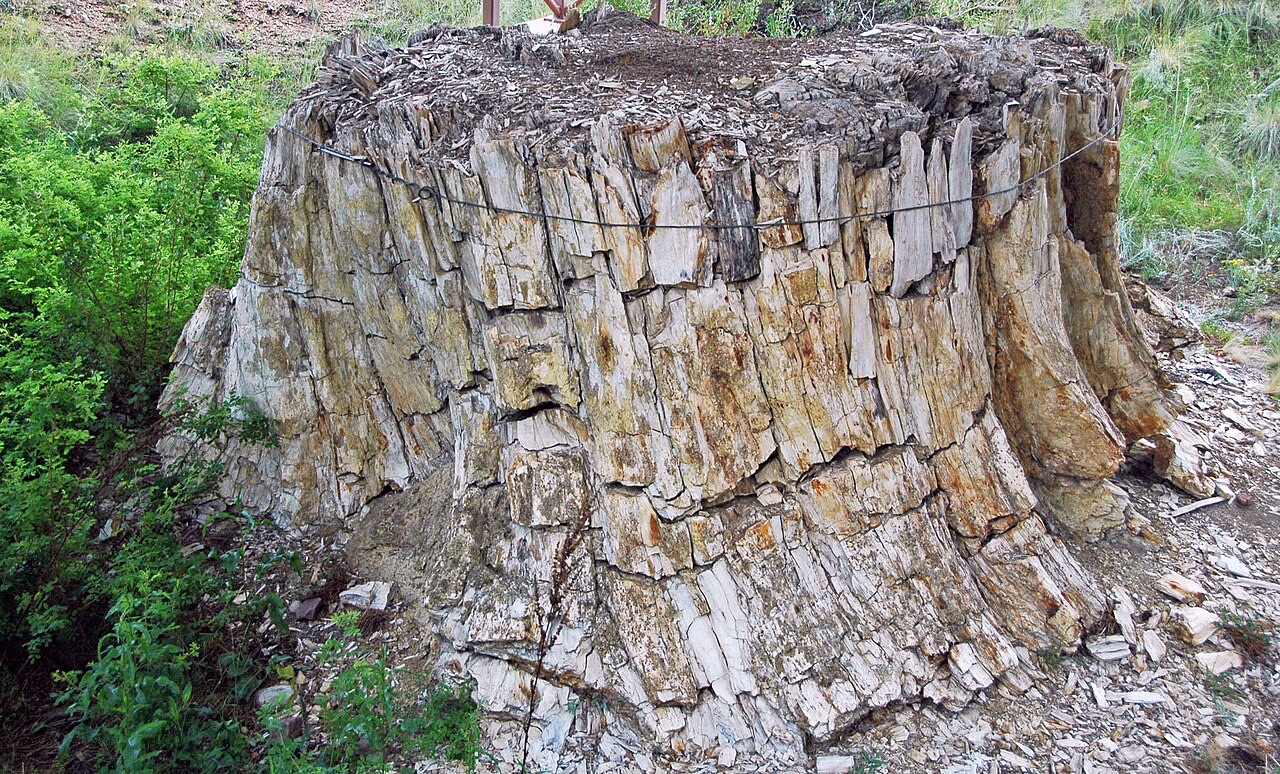
Florissant juxtaposes an Eocene lake and buried redwoods with much younger gravel containing mammoth remains.
34.5 Ma → 0.04993 Ma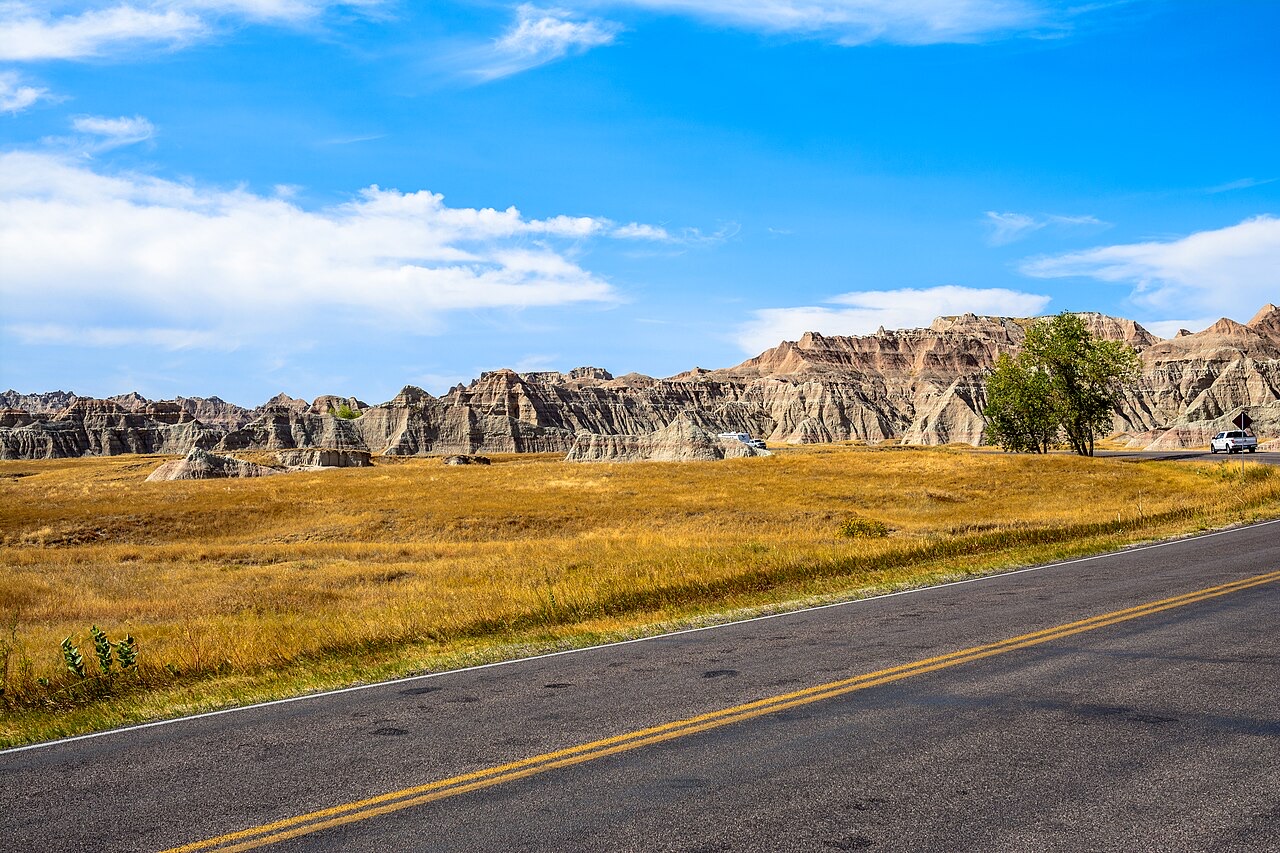 North America
United States ↗
Badlands, South Dakota
Marine shale and younger mammal-bearing floodplain deposits record different worlds beneath the sharp ridges of today.
72 Ma → 32 Ma