
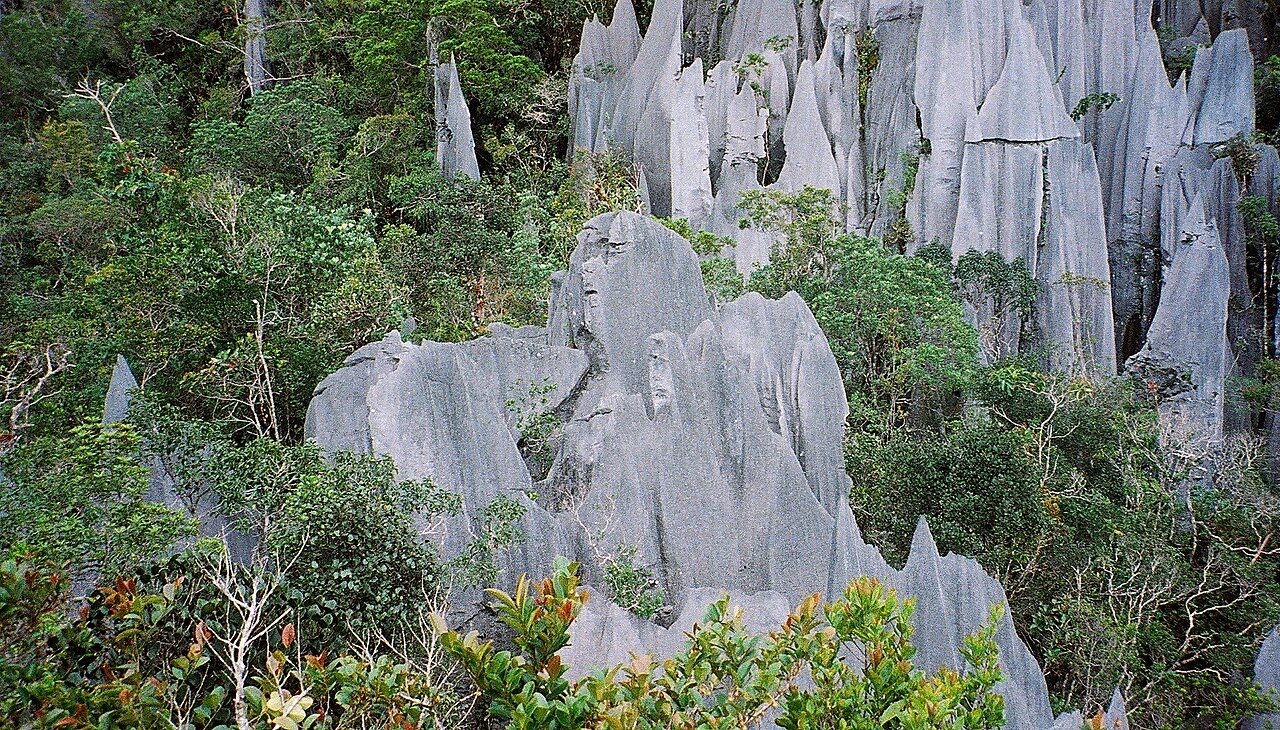
How can the same rock record an ancient sea and a much younger climate?
Mulu’s limestone pinnacles began as sediment in a marine setting, long before caves opened beneath the forest. The Melinau Limestone contains abundant foraminifera and other carbonate components that help establish both its age and depositional environment. Much of the succession represents shallow-water conditions behind a reef complex, although actual reef structures are less obvious than the popular label might suggest. The older snapshot selects an Oligocene portion of this much longer-lived carbonate system.
Uplift, tilting and removal of surrounding material later exposed the limestone to flowing water. Rainwater and groundwater dissolved pathways along openings and fractures, creating a cave network with passages at different levels. Those empty spaces are younger than the rock surrounding them. A stalagmite growing within a passage therefore dates a stage of cave history, not the original formation of the limestone or necessarily the first opening of the cave.
The younger snapshot uses the last glacial termination, when dated speleothems preserve evidence of changing tropical conditions. A stalagmite from Secret Chamber in the Clearwater system has been used to reconstruct warming from the glacial period into the Holocene. Such work combines age control with measurements sensitive to temperature or water history; interpreting those signals requires understanding the cave system today. Mulu thus offers two very different geological clocks. Fossils and marine sediment establish the origin of the host rock, while much younger calcite records processes operating after the landscape had become terrestrial. Neither clock alone can date every pinnacle or reconstruct the entire rainforest.
[1] [2] [3] [4] [5]Time windows and evidence
Older ages are on the left. Bars span the dated intervals. A dot marks a single age.
- The Melinau carbonate platform 23.03–33.9 Ma
- A cave recording deglacial change 0.01069–0.01946 Ma
- Melinau Gorge foraminiferal limestone 23.03–33.9 Ma
- Secret Chamber stalagmite SC02 0.008–0.02 Ma
- Bukit Berar dolomitized Oligocene limestone 23.03–33.9 Ma
Researched windowsEvidence records
28 Ma · interval 23.03–33.9 Ma
The Melinau carbonate platform
This Oligocene teaching window selects part of the Melinau Limestone, whose full deposition extends from the Late Eocene into the Early Miocene. Foraminifera-rich carbonate accumulated mainly in shallow marine settings, including lagoonal areas associated with a reef complex. The representative age is not a direct date on a photographed pinnacle. Local unconformities and variations in thickness show that deposition was not uniform across the region, and some intervals are absent in particular sections.
[1] [2]Locate this time in the atlas ↗Observed
Marine carbonate fabrics and abundant foraminifera occur in the Melinau succession.
Reconstructed
A shallow carbonate platform with lagoonal and reef-associated environments.
Uncertain
Age and facies vary laterally; not every exposure contains the complete interval.
Evidence windows overlapping this state: 2. Overlap does not establish exact coexistence.
body fossil · Gunung Mulu ↗
Melinau Gorge foraminiferal limestone
The Melinau Gorge succession contains abundant microscopic foraminifera within carbonate rocks. Their assemblages help subdivide a visually rather uniform limestone sequence and connect it to wider marine biostratigraphy. Sedimentary texture and fossil content together support shallow-water platform conditions. The selected age envelope covers its Oligocene component, while the whole formation is older and younger in different parts. Fossil organisms establish a marine origin for rocks now standing well above the sea.
sediment · Gunung Mulu ↗
Bukit Berar dolomitized Oligocene limestone
Upper Oligocene limestone at Bukit Berar shows strong secondary dolomitization. Field studies relate this alteration provisionally to a phase of partial emergence also recorded by an unconformity in the northern Melinau outcrop. This is a different observation from the marine microfossils and the much younger cave deposits. The mineral change records alteration of an existing carbonate body; determining the responsible fluids and their timing requires interpretation beyond merely identifying dolomite in the rock.
0.015 Ma · interval 0.01069–0.01946 Ma
A cave recording deglacial change
Dated cave mineral records from Mulu cover the transition out of the last glacial period. A Clearwater-system stalagmite provides an independent reconstruction of tropical warming, while other speleothem measurements track aspects of rainfall and water movement. Forest denotes the terrestrial tropical landscape containing the cave, not a fossil forest inside it. The numerical window follows a published Mulu speleothem archive and is distinct from both the limestone’s age and the much longer history of cave excavation.
[4] [5]Locate this time in the atlas ↗Observed
Layered calcite contains measurable isotopic and other geochemical signals with age control.
Reconstructed
Tropical conditions changed across deglaciation while the cave acted as an environmental recorder.
Uncertain
Proxy interpretation depends on cave processes and does not date the entire cave network.
Evidence windows overlapping this state: 1. Overlap does not establish exact coexistence.
What this story cannot resolve
The modern marker represents the park. Marine deposition, cave excavation and speleothem growth are separate processes with different ages.
Keep these ideas handy
Facies
The observable characteristics of a rock body that help describe and interpret its depositional setting. Explore the idea ↗
Climate proxy
A measured feature of a natural archive used to infer some aspect of past climate. Explore the idea ↗
Unconformity
A surface representing a break in the preserved geological record, caused by nondeposition, erosion or both. Explore the idea ↗
Relative dating
Determining which event came first without necessarily assigning a numerical age. Explore the idea ↗
The evidence notebook
body fossil · Gunung Mulu ↗
Melinau Gorge foraminiferal limestone
The Melinau Gorge succession contains abundant microscopic foraminifera within carbonate rocks. Their assemblages help subdivide a visually rather uniform limestone sequence and connect it to wider marine biostratigraphy. Sedimentary texture and fossil content together support shallow-water platform conditions. The selected age envelope covers its Oligocene component, while the whole formation is older and younger in different parts. Fossil organisms establish a marine origin for rocks now standing well above the sea.
geochemistry · Gunung Mulu ↗
Secret Chamber stalagmite SC02
Stalagmite SC02 was collected in Secret Chamber of the Clearwater Cave system. Geochemical measurements and age control were used to reconstruct the temperature difference between glacial and Holocene conditions. The study identifies substantial warming at this tropical inland site. Its result concerns the cave environment and the relationship between mineral properties and temperature, rather than a direct measurement of ancient outdoor weather. Modern observations help test how closely cave conditions track the surrounding climate.
sediment · Gunung Mulu ↗
Bukit Berar dolomitized Oligocene limestone
Upper Oligocene limestone at Bukit Berar shows strong secondary dolomitization. Field studies relate this alteration provisionally to a phase of partial emergence also recorded by an unconformity in the northern Melinau outcrop. This is a different observation from the marine microfossils and the much younger cave deposits. The mineral change records alteration of an existing carbonate body; determining the responsible fluids and their timing requires interpretation beyond merely identifying dolomite in the rock.
Follow the evidence
Sources & credits
- The Geology of Mulu ↗
Mulu Caves Project; original geological field synthesis · 1982
Use, credit & modifications
Reference only; original factual synthesis. No third-party prose or media reproduced.
Credit: Mulu Caves Project; original geological field synthesis — The Geology of Mulu. Original educational synthesis; rounded age envelopes distinguish teaching windows from analytical errors. No media licence asserted for this reference. Photograph rights are documented separately.
- Gunung Mulu National Park ↗
UNESCO World Heritage Centre · Not stated
Use, credit & modifications
Reference only; original factual synthesis. No third-party prose or media reproduced.
Credit: UNESCO World Heritage Centre — Gunung Mulu National Park. Original educational synthesis; rounded age envelopes distinguish teaching windows from analytical errors. No media licence asserted for this reference. Photograph rights are documented separately.
- Weathering and solution of the Melinau Limestones in the Gunong Mulu National Park ↗
Sweeting; Annales de la Société géologique de Belgique · 1979
Use, credit & modifications
Reference only; original factual synthesis. No third-party prose or media reproduced.
Credit: Sweeting; Annales de la Société géologique de Belgique — Weathering and solution of the Melinau Limestones in the Gunong Mulu National Park. Original educational synthesis; rounded age envelopes distinguish teaching windows from analytical errors. No media licence asserted for this reference. Photograph rights are documented separately.
- Evolution of tropical land temperature across the last glacial termination ↗
Nature Communications · 2022
Use, credit & modifications
Reference only; original factual synthesis. No third-party prose or media reproduced.
Credit: Nature Communications — Evolution of tropical land temperature across the last glacial termination. Original educational synthesis; rounded age envelopes distinguish teaching windows from analytical errors. No media licence asserted for this reference. Photograph rights are documented separately.
- Gunung Mulu National Park Speleothem Geochemical Data from 19460–10690 BP ↗
NOAA National Centers for Environmental Information · Not stated
Use, credit & modifications
Reference only; original factual synthesis. No third-party prose or media reproduced.
Credit: NOAA National Centers for Environmental Information — Gunung Mulu National Park Speleothem Geochemical Data from 19460–10690 BP. Original educational synthesis; rounded age envelopes distinguish teaching windows from analytical errors. No media licence asserted for this reference. Photograph rights are documented separately.
Follow the connections
 Asia
Malaysia ↗
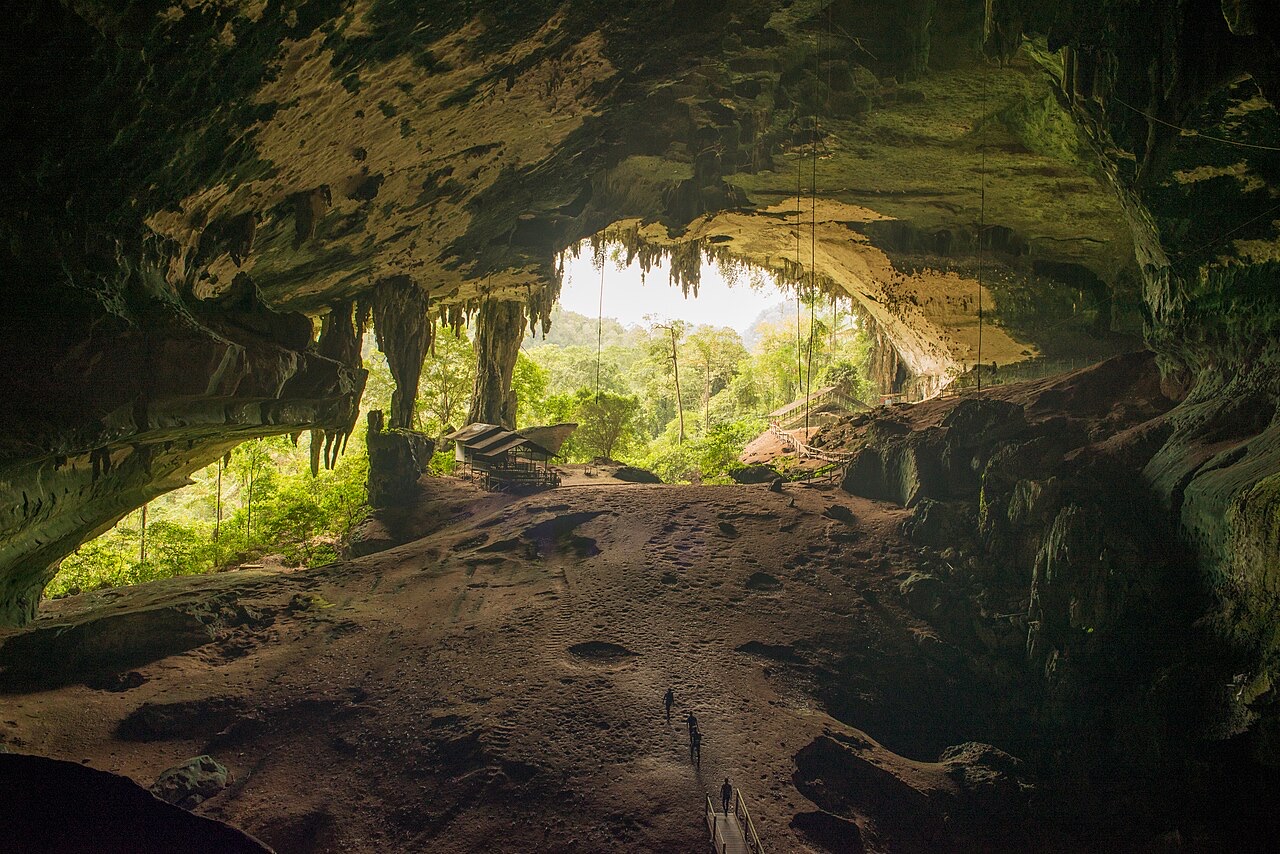
Niah Caves
Borneo’s Niah complex preserves human remains, plant traces and hunted animals through late-glacial and early Holocene environmental changes.
0.042 Ma → 0.01 Ma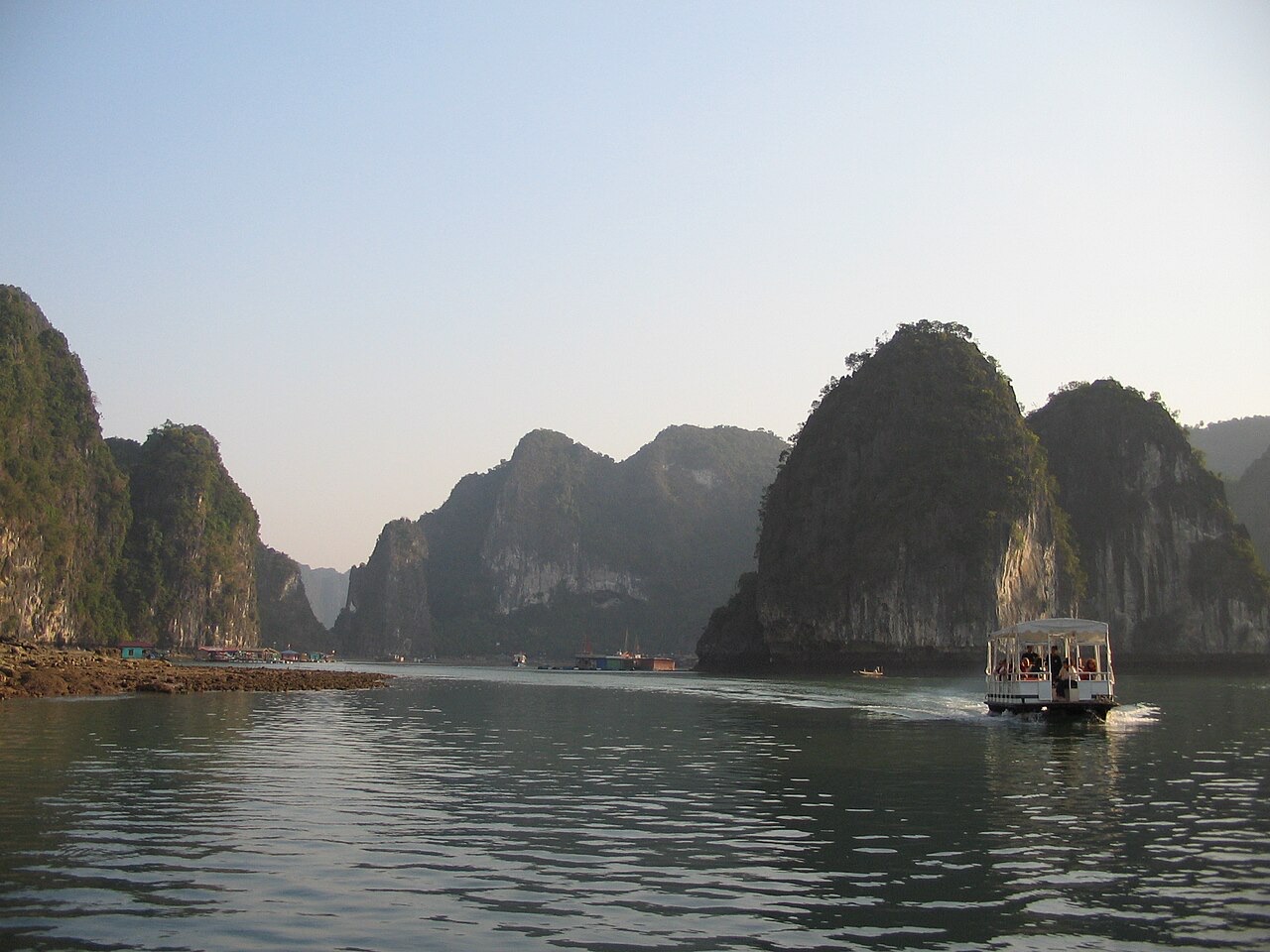 Asia
Vietnam ↗
Ha Long Bay & Cat Ba
Palaeozoic marine carbonates became a terrestrial karst landscape before Holocene seas flooded its lower ground.
330 Ma → 0.005 Ma