
What do different island ages reveal about an archipelago’s growth?
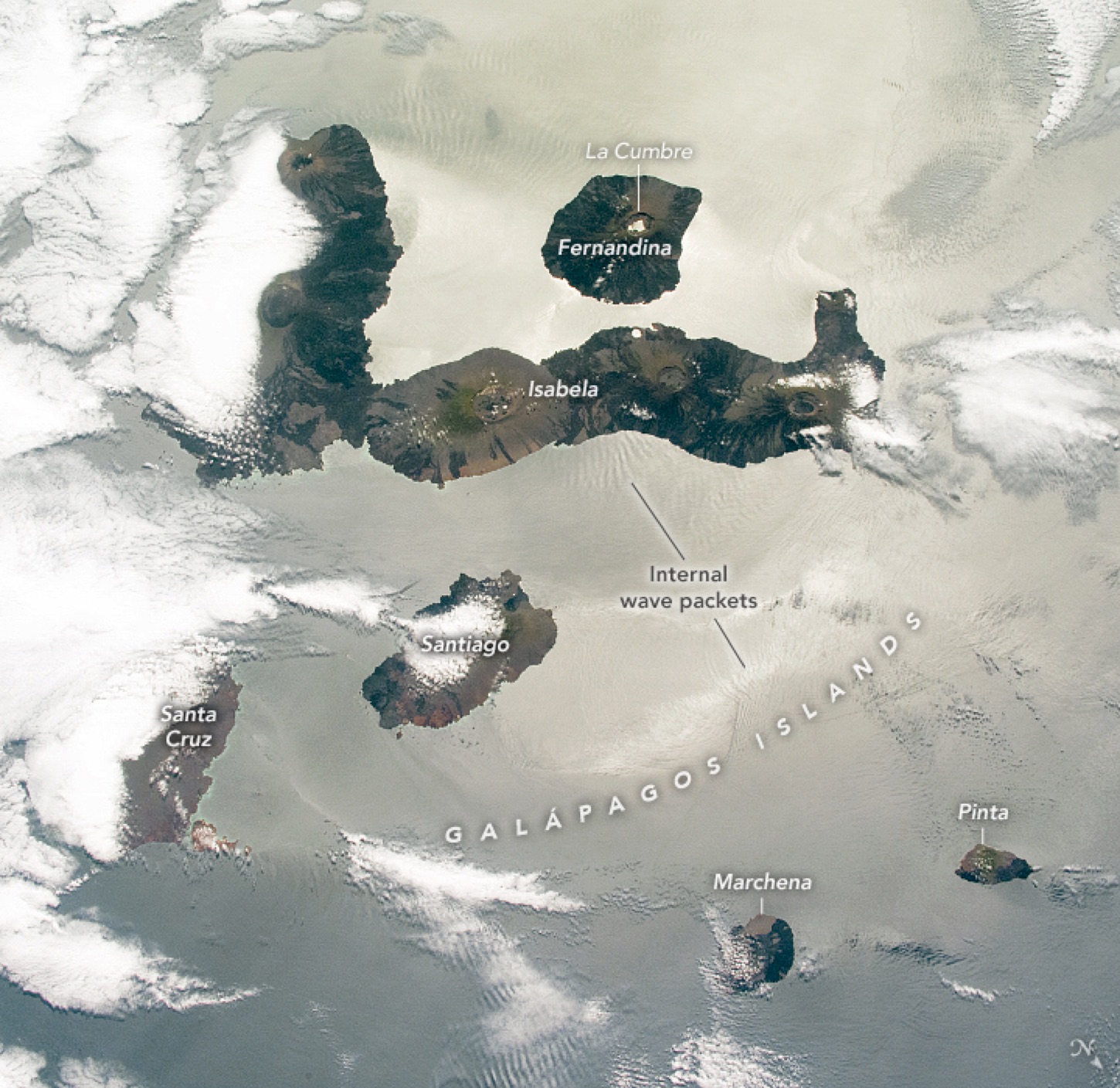
The Galápagos are an archipelago of different volcanic edifices. Some islands contain much older exposed rock than others. A single date for the islands would blend separate histories and hide one of the most interesting features of the chain. It is more useful to compare old exposed lava at Española, at the eastern end, with evidence about a younger volcano in the west.
The exposed rock age of an island says when a sampled lava cooled or when a material acquired a record used in dating. The initial construction of a volcano can have started earlier, underwater, where much of the rock is inaccessible to ordinary sampling. Erosion removes part of an earlier record, and a later flow can bury an earlier land surface. The oldest measured exposed lava should be read as a minimum constraint on how long an edifice has existed in some form.
Fernandina provides a clear example of why a fresh-looking surface can be much younger than the volcano’s emergence. Exposure dating and mapped lava surfaces inform estimates about the timing of emergence and later resurfacing by eruptions. The east–west contrast fits broad ideas about the movement of plates and prolonged volcanic activity, but the simple conveyor-belt picture is incomplete. Several volcanoes can be active at overlapping times, and their geometry and chemistry vary. The two windows are separate island histories alongside one another.
[1] [2]Time windows and evidence
Older ages are on the left. Bars span the dated intervals. A dot marks a single age.
- Older exposed lava on Española 2.5–2.72 Ma
- Young Fernandina emerges in the west 0.025–0.04 Ma
- A dated lava sample on Española 2.5–2.72 Ma
- Exposure-based emergence estimate for Fernandina 0.025–0.04 Ma
- Young lava surfaces at Fernandina 0–0.0043 Ma
Researched windowsEvidence records
2.61 Ma · interval 2.5–2.72 Ma
Older exposed lava on Española
Measurements on exposed lava at Española establish an older volcanic record among the modern eastern islands. The plotted age uses one published dated sample and its reported uncertainty. That sample anchors one episode in a broader constructional and erosional history.
[1]Locate this time in the atlas ↗Observed
Published radiometric ages document Pliocene lava at Española.
Reconstructed
An eastern volcanic edifice was already producing lava in the selected interval.
Uncertain
The oldest exposed dated lava is not necessarily the age of initial submarine construction.
Evidence windows overlapping this state: 1. Overlap does not establish exact coexistence.
0.032 Ma · interval 0.025–0.04 Ma
Young Fernandina emerges in the west
Studies of cosmogenic exposure ages and volcanic growth suggest emergence of Fernandina around 32,000 years ago. Younger lavas subsequently resurfaced its visible terrain. The estimate is best treated as a reconstruction based on modern samples and emplacement rates, rather than an exact date captured directly at the shoreline.
[1] [2]Locate this time in the atlas ↗Observed
Exposure ages and volcanic mapping constrain the history of its recent lava surfaces.
Reconstructed
Fernandina became an emergent volcano during the late Pleistocene and was resurfaced afterward.
Uncertain
The interval around emergence is a teaching envelope. Surviving young flows do not date all the buried rock.
Evidence windows overlapping this state: 1. Overlap does not establish exact coexistence.
What this story cannot resolve
The marker represents the archipelago and the snapshots refer to different islands, not a single point that moved from Española to Fernandina. Exposure and eruption history ages are approximate.
Keep these ideas handy
Plate tectonics
The movement and interaction of the relatively rigid plates that make up Earth’s lithosphere. Explore the idea ↗
Radiometric dating
Estimating the time of a geological event from radioactive decay and the isotopic composition of a suitable material. Explore the idea ↗
Uncertainty & reconstruction limits
Explicit limits on what evidence and models allow us to infer, including uncertainty in age, identity, place and process. Explore the idea ↗
The evidence notebook
radiometric · Galápagos volcanic islands ↗
A dated lava sample on Española
Published dates for exposed Española lavas extend back to the Pliocene. A reported value of 2.61 Ma with about 0.11 Ma uncertainty anchors one of the atlas views. A direct rock age provides a concrete comparison with younger surfaces elsewhere in the island group. It cannot specify when volcanic growth started below the waves.
radiometric · Galápagos volcanic islands ↗
Exposure-based emergence estimate for Fernandina
Researchers use cosmogenic helium measurements, mapped flows and other volcanic constraints to estimate Fernandina’s timing and eruption rates. The synthesis discusses emergence around 32,000 years ago. The method places a Late Pleistocene time scale on construction at the western end of the archipelago. It is an inference about an edifice, not a direct numerical date of the oldest submerged rock.
locality · Galápagos volcanic islands ↗
Young lava surfaces at Fernandina
Fernandina’s mapped exposed lavas are comparatively young, with exposure dates used to estimate extensive resurfacing in the last several thousand years. Successive flows can cover much older terrain. The visible surface may have an age very different from that of initial emergence or submarine growth. Surviving exposures provide an incomplete record of former flow volumes and deposition geometry.
Follow the evidence
Sources & credits
- The evolution of Galápagos volcanoes: an alternative perspective ↗
Harpp and Geist · Frontiers in Earth Science · 2018
Use, credit & modifications
Reference only. No source text, figures or photographs reproduced in this record.
Credit: Harpp and Geist · Frontiers in Earth Science. Facts paraphrased in original text; teaching intervals distinguished from measurement uncertainty. Reference use; no media rights asserted.
- Eruption Rates for Fernandina Volcano ↗
Kurz et al. · AGU / Wiley · 2014
Use, credit & modifications
Reference only. No source text, figures or photographs reproduced in this record.
Credit: Kurz et al. · AGU / Wiley. Facts paraphrased in original text; teaching intervals distinguished from measurement uncertainty. Reference use; no media rights asserted.
Follow the connections
 South America
Brazil ↗
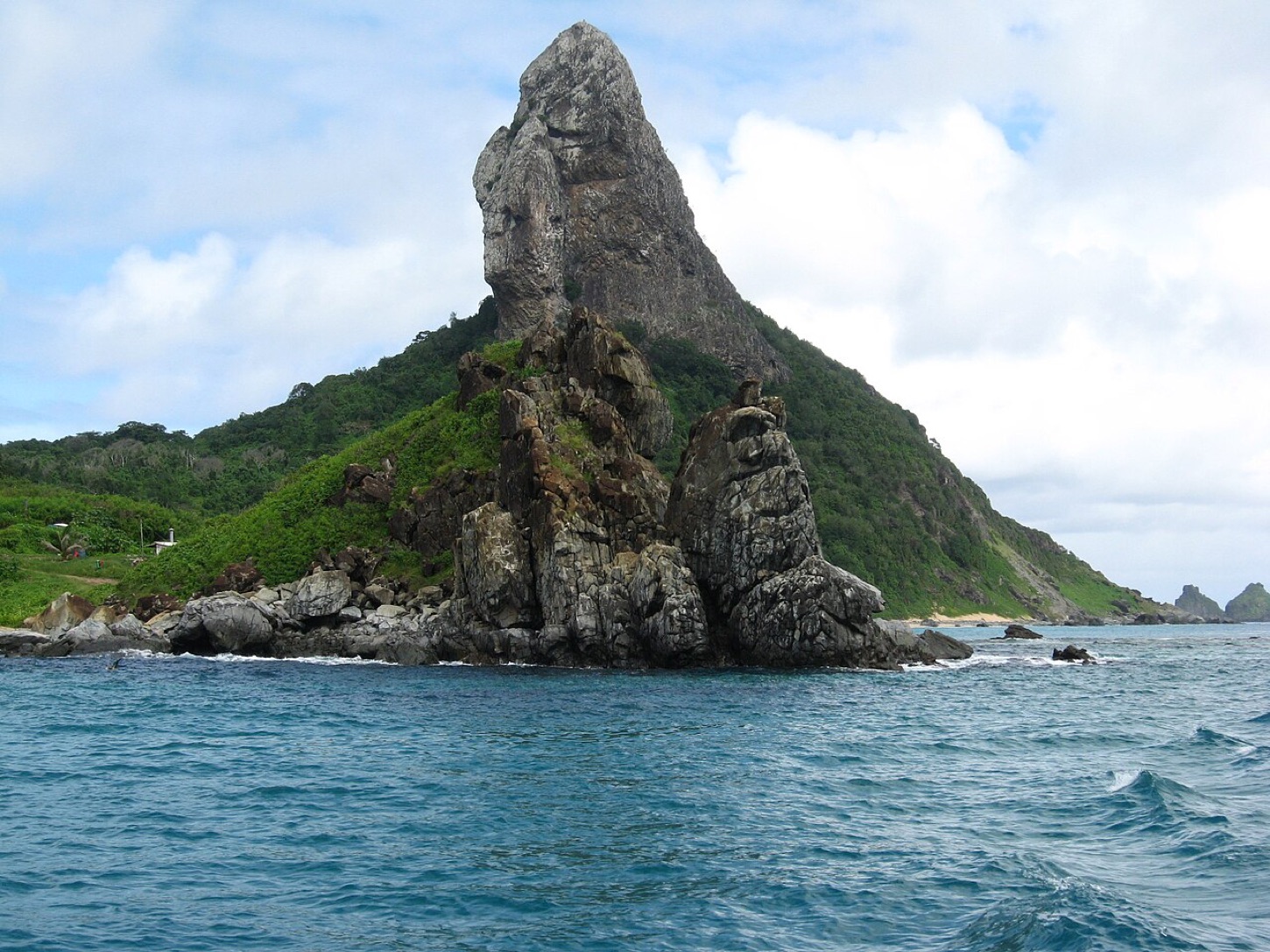
Fernando de Noronha
Dated intrusive and eruptive rocks distinguish an older phase of volcanism from younger activity on this South Atlantic island group.
10 Ma → 3 Ma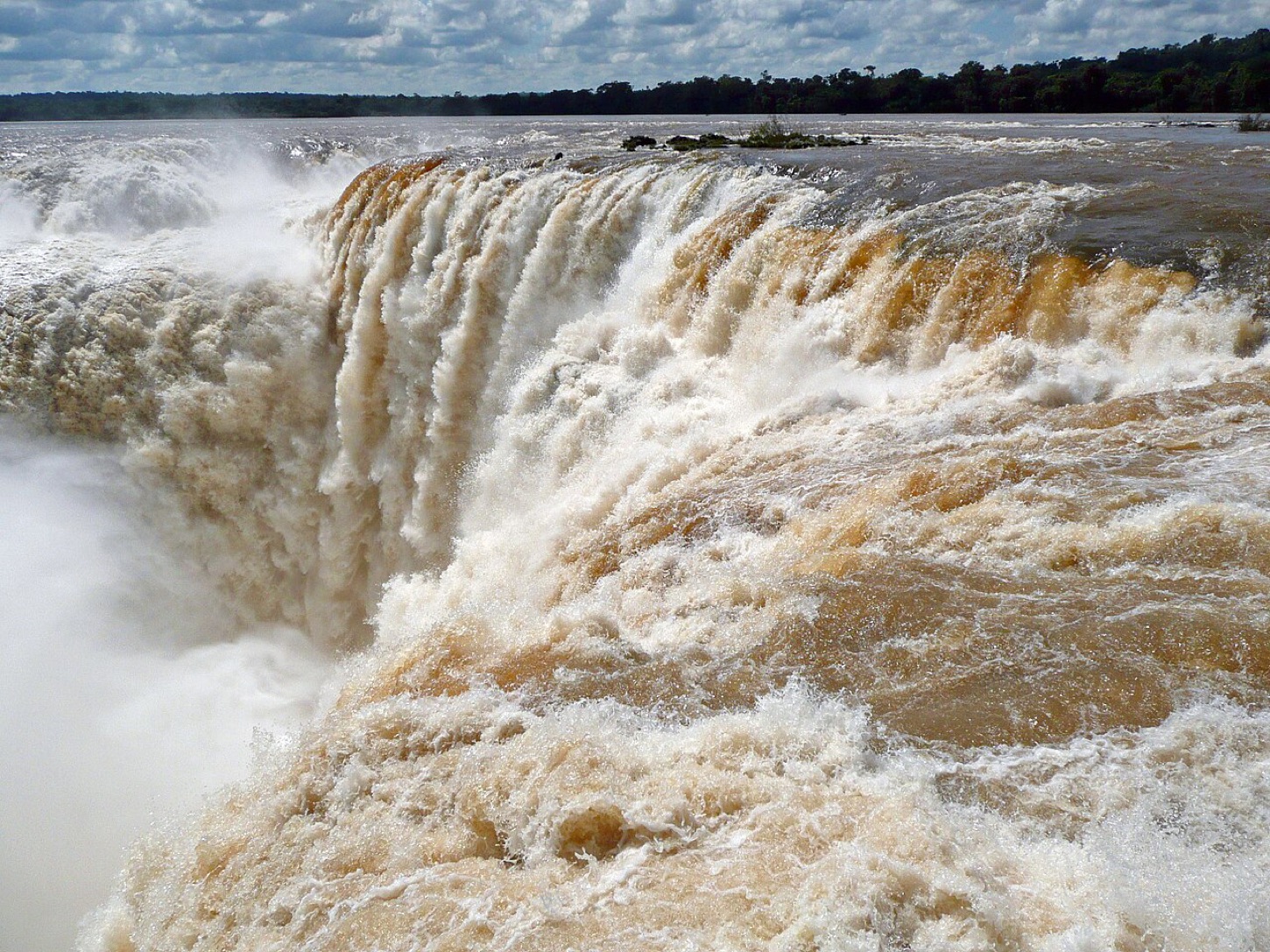 South America
Argentina / Brazil ↗
Iguazú–Iguaçu Falls
The falls expose part of the Cretaceous Serra Geral volcanic succession. Modern flow and erosion have shaped steps, cliffs and a gorge.
134.4 Ma → Today