
Why are so many coastal-plain dinosaurs exposed in dry badlands?
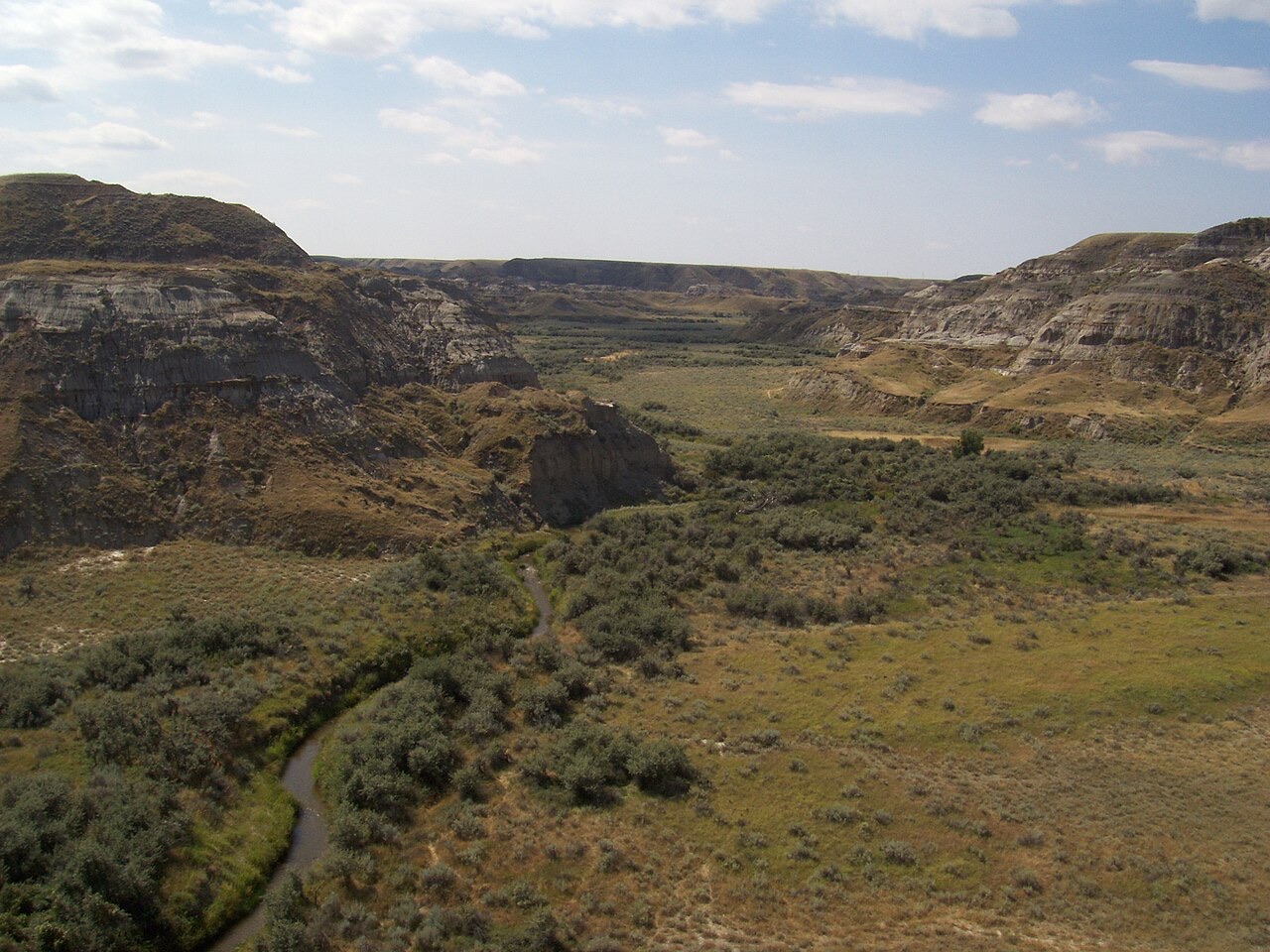
Dinosaur Provincial Park contains two histories that visitors can easily confuse. The fossils belong to a Cretaceous coastal plain, while the sculpted valley exposing them owes much of its form to erosion near the end of the last ice age. The dinosaur-bearing sands and muds were deposited long before the modern badlands existed. Rivers crossed a vegetated lowland toward an inland sea, carrying sediment and the remains of organisms from surrounding habitats.
Large dinosaur skeletons draw attention, but pollen, spores, fish, turtles and small vertebrates supply essential environmental context. Plant remains support a much warmer and more wooded setting than today. The extinct horned dinosaur Centrosaurus occurs in bone concentrations, including the studied locality BB180. Such deposits require a burial explanation as well as a species list. Flooding, transport and later exposure can each affect which bones survive and how they are arranged.
The sea also matters even when the selected scene is terrestrial. Coastal environments shift sideways as water levels and sediment supply change. Dinosaur Park Formation deposits include river, estuarine and nearshore settings, and marine Bearpaw strata occur above and intertongue with parts of the succession. A formation boundary is therefore not necessarily the same instant everywhere across the basin.
Many millions of years later, ice and meltwater transformed the region. Park summaries place major valley carving around 15,000–13,000 years ago. Subsequent runoff continues to expose Cretaceous rocks. This younger river scene is an episode of excavation by natural processes, not a second dinosaur ecosystem. The distinction explains why the age of the scenery, the age of the rock and the age of a fossil can differ so dramatically at one viewpoint.
[1] [2] [3]Time windows and evidence
Older ages are on the left. Bars span the dated intervals. A dot marks a single age.
- Rivers on a Cretaceous coastal plain 75 Ma
- Meltwater opens the Red Deer valley 0.013–0.015 Ma
- Centrosaurus apertus bonebed BB180 75 Ma
- Dinosaur Park plant pollen and spores 75 Ma
- Red Deer River valley at Dinosaur Provincial Park 0.013–0.015 Ma
Researched windowsEvidence records
75 Ma · interval 75 Ma
Rivers on a Cretaceous coastal plain
The park’s rounded 75 million year teaching age represents a dinosaur-bearing coastal plain crossed by rivers. Plant and vertebrate fossils document a wooded landscape near the inland sea. This point marker is not a claim that every fossil site or the entire Dinosaur Park Formation is exactly the same age; detailed dating resolves a succession of assemblages.
[1] [2] [3]Locate this time in the atlas ↗Observed
Dinosaur bones, plant microfossils and river-deposited sands and muds occur in the park.
Reconstructed
A warm, vegetated coastal plain with channels and nearby estuarine habitats.
Uncertain
Individual bonebeds differ in age, transport history and habitat.
Evidence windows overlapping this state: 2. Overlap does not establish exact coexistence.
body fossil · Dinosaur Provincial Park ↗
Centrosaurus apertus bonebed BB180
BB180 is a documented Centrosaurus-bearing locality in the Dinosaur Park Formation. Its sedimentary context belongs to the coastal-plain succession, while later chemical and microbial alteration is part of the fossil’s subsequent history. Modern microbes in excavated bone are not preserved dinosaur tissues or evidence that those microbes lived with the animal. Researchers must distinguish biological remains, surrounding sediment and material introduced after burial before making claims about the original animal or the conditions in which it lived.
body fossil · Dinosaur Provincial Park ↗
Dinosaur Park plant pollen and spores
Pollen and spores attributed to trees and ferns accompany the park’s better-known vertebrate record. Small plant remains provide an independent test of the habitat suggested by the sediments. Their transport by air and water means they sample a catchment or regional vegetation mixture, rather than proving that every represented plant grew directly beside a particular skeleton. Comparison across several samples helps distinguish a persistent vegetation pattern from the unusual contribution of one flood, wind event or particularly productive plant population.
0.014 Ma · interval 0.013–0.015 Ma
Meltwater opens the Red Deer valley
Near the end of the last ice age, meltwater helped carve the valley that now exposes fossil-bearing bedrock. The 15,000–13,000 year range reconciles rounded park summaries, rather than representing a precisely dated single flood. Ancient bones exposed by this erosion remained Cretaceous fossils; they were not animals living alongside the retreating ice.
[2] [1]Locate this time in the atlas ↗Observed
The Red Deer River valley cuts through older sedimentary formations.
Reconstructed
Large meltwater flows excavated and widened the valley during deglaciation.
Uncertain
Erosion continued afterward and the valley was not created in one instant.
Evidence windows overlapping this state: 1. Overlap does not establish exact coexistence.
What this story cannot resolve
The Cretaceous snapshot uses a rounded park teaching age. Younger bounds summarize deglacial valley development, not dinosaur ages.
Keep these ideas handy
Taphonomy
Studying what happens between an organism’s life, death, burial, preservation and eventual discovery. Explore the idea ↗
Facies
The observable characteristics of a rock body that help describe and interpret its depositional setting. Explore the idea ↗
Relative dating
Determining which event came first without necessarily assigning a numerical age. Explore the idea ↗
The evidence notebook
body fossil · Dinosaur Provincial Park ↗
Centrosaurus apertus bonebed BB180
BB180 is a documented Centrosaurus-bearing locality in the Dinosaur Park Formation. Its sedimentary context belongs to the coastal-plain succession, while later chemical and microbial alteration is part of the fossil’s subsequent history. Modern microbes in excavated bone are not preserved dinosaur tissues or evidence that those microbes lived with the animal. Researchers must distinguish biological remains, surrounding sediment and material introduced after burial before making claims about the original animal or the conditions in which it lived.
body fossil · Dinosaur Provincial Park ↗
Dinosaur Park plant pollen and spores
Pollen and spores attributed to trees and ferns accompany the park’s better-known vertebrate record. Small plant remains provide an independent test of the habitat suggested by the sediments. Their transport by air and water means they sample a catchment or regional vegetation mixture, rather than proving that every represented plant grew directly beside a particular skeleton. Comparison across several samples helps distinguish a persistent vegetation pattern from the unusual contribution of one flood, wind event or particularly productive plant population.
locality · Dinosaur Provincial Park ↗
Red Deer River valley at Dinosaur Provincial Park
The valley exposes Cretaceous bedrock because much younger erosion removed overlying material. Park accounts associate its major development with meltwater near the end of the last ice age. This landform is evidence for the history of exposure, complementing rather than dating the fossils found in its walls. Its relationship to the bedrock offers a clear example of relative chronology: the channel that cuts a formation must be younger than the rock it removes.
Follow the evidence
Sources & credits
- Dinosaur Provincial Park: Nature and History ↗
Alberta Parks · Not stated
Use, credit & modifications
Reference only. No source text or assets reproduced. Original factual synthesis; no reuse licence asserted.
Credit: Alberta Parks — Dinosaur Provincial Park: Nature and History. Facts synthesized in original educational language. Rounded teaching intervals are distinguished from measured dates. No source assets reused; territorial permissions not applicable.
- Dinosaur Provincial Park Fact Sheet ↗
Alberta Parks · 2024-06
Use, credit & modifications
Reference only. No source text or assets reproduced. Original factual synthesis; no reuse licence asserted.
Credit: Alberta Parks — Dinosaur Provincial Park Fact Sheet. Facts synthesized in original educational language. Rounded teaching intervals are distinguished from measured dates. No source assets reused; territorial permissions not applicable.
- Genome-centric resolution of microbial lineages in a Centrosaurus fossil bone ↗
Environmental Microbiome / research authors · 2021
Use, credit & modifications
Reference only. No source text or assets reproduced. Original factual synthesis; no reuse licence asserted.
Credit: Environmental Microbiome / research authors — Genome-centric resolution of microbial lineages in a Centrosaurus fossil bone. Facts synthesized in original educational language. Rounded teaching intervals are distinguished from measured dates. No source assets reused; territorial permissions not applicable.
Follow the connections
 North America
United States ↗
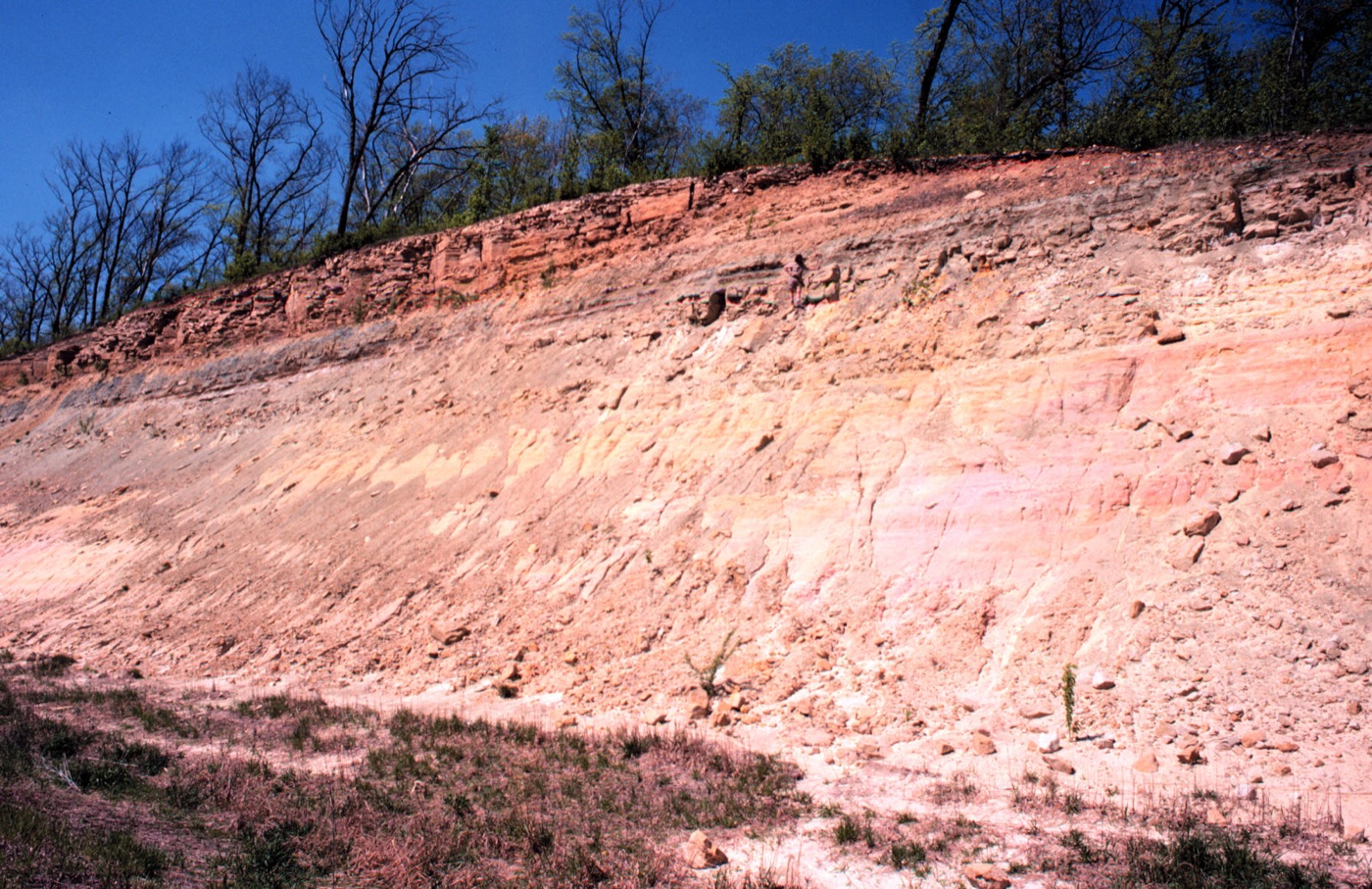
Hell Creek & the Williston Basin
Floodplain fossils on either side of the end-Cretaceous boundary reveal major biological turnover. Pollen and leaves help place the change in time, alongside the more conspicuous dinosaur bones.
67 Ma → 65.5 Ma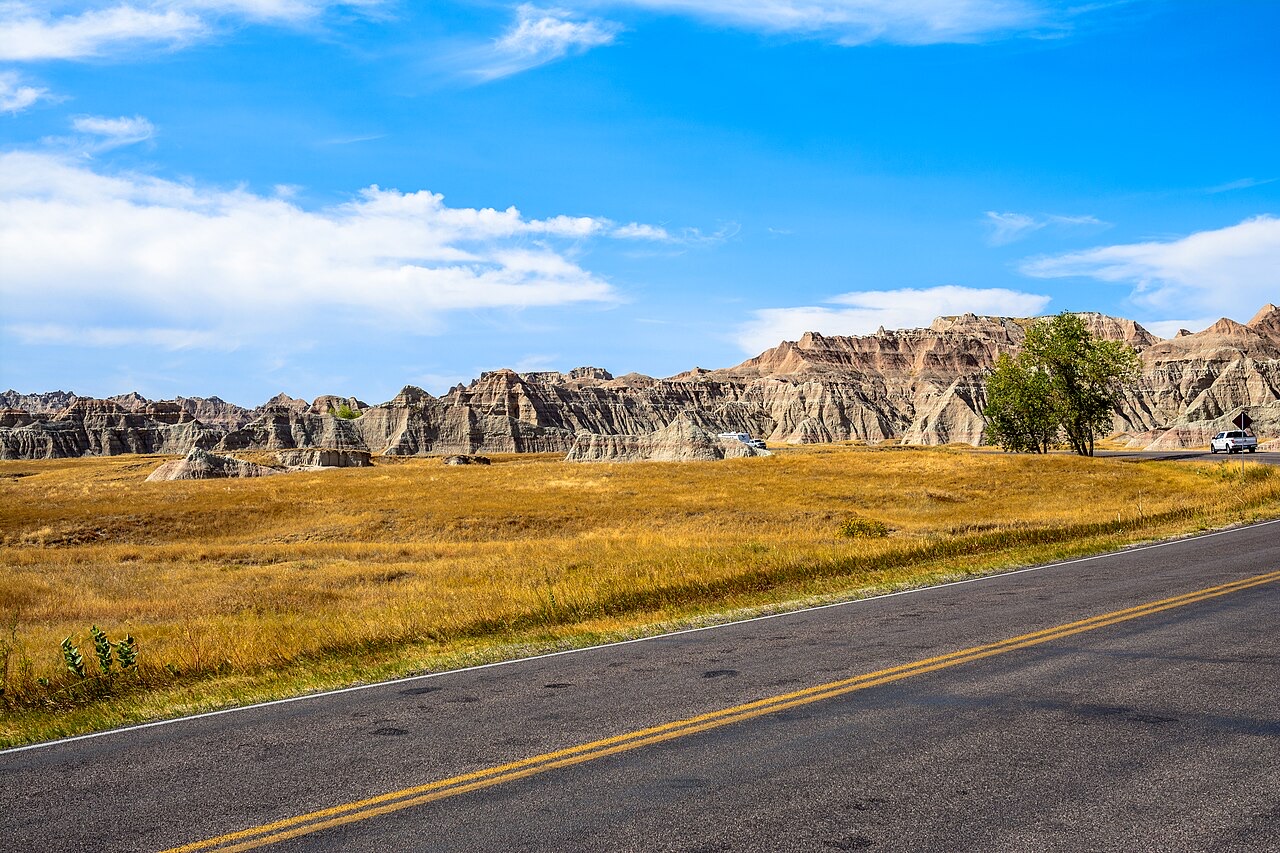 North America
United States ↗
Badlands, South Dakota
Marine shale and younger mammal-bearing floodplain deposits record different worlds beneath the sharp ridges of today.
72 Ma → 32 Ma