
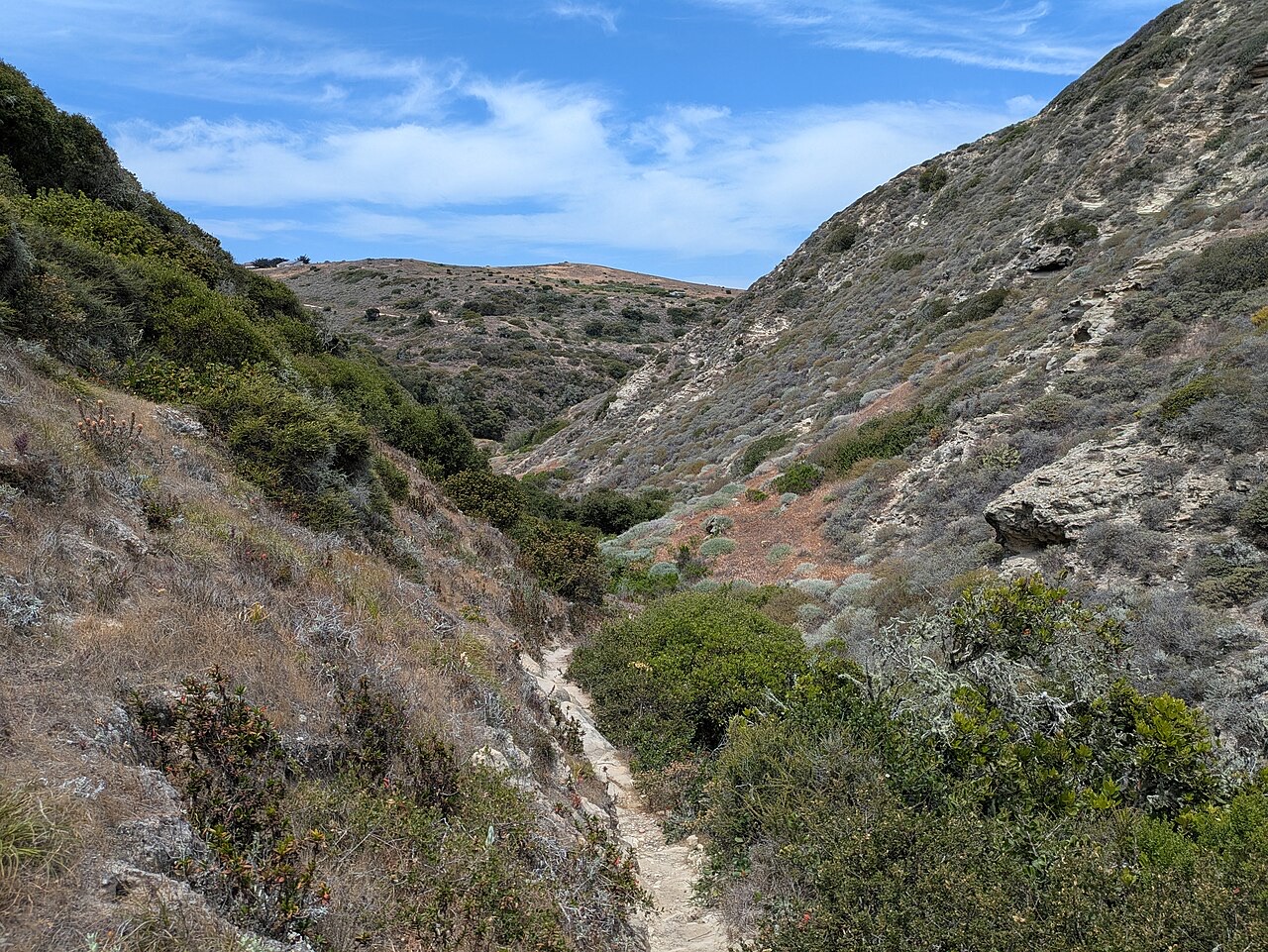
How can a sea cow fossil end up high on an island inhabited by mammoths much later?
The Channel Islands preserve evidence of places that moved as well as environments that changed. A fossil sea cow skeleton excavated on Santa Rosa Island in 2018 was estimated at 20–25 million years old. It was buried in coastal sediment before the rocks became part of an uplifted island. The animal did not swim on a modern mountaintop, and its original coastal setting was not at the fossil’s present map position.
The rock-bearing crustal block underwent major rotation and translation during the development of southern California. Later compression contributed to uplift. Fossils, sedimentary environments and structural geology must therefore be combined to reconstruct the original setting. A marine animal supplies evidence for water, but the mechanism that moved its bed into an island landscape comes from tectonic relationships.
By the last ice age, lower sea level joined the four northern islands into a larger landmass called Santarosae. It remained separated from the mainland by water. This distinction matters for interpreting the arrival of mammoths: a shorter crossing is not a land bridge. Island isolation provided the setting in which small-bodied Mammuthus exilis evolved, but the fossil record does not justify a single precisely dated migration story.
A mammoth skull excavated on Santa Rosa in 2016 was associated with charcoal around 13,000 years old; its unusual size made the initial species assignment uncertain. Earlier island mammoth evidence shows that this was not the beginning of their history. As sea level rose, the larger island fragmented into the islands visible today. The two selected scenes therefore compare a mobile coastal rock record with a much younger terrestrial island, keeping both fossil identity and geographic reconstruction open to testing.
[1] [2] [3] [4]Time windows and evidence
Older ages are on the left. Bars span the dated intervals. A dot marks a single age.
- Coastal waters before the islands rose 20–25 Ma
- Santarosae stands above a lower sea 0.02 Ma
- The 2018 Santa Rosa Island sea cow skeleton 20–25 Ma
- The submerged shelf around northern Santarosae 0.02 Ma
- The Santa Rosa mammoth skull excavated in 2016 0.013 Ma
Researched windowsEvidence records
22.5 Ma · interval 20–25 Ma
Coastal waters before the islands rose
The Santa Rosa sea cow lived in coastal waters and was buried in marine sediment before the rock-bearing block moved and rose. The 25–20 million year interval is the published preliminary estimate for the excavated specimen. Its ancient position was nearer the region of present-day San Diego, so the modern atlas marker must not be treated as a paleocoordinate.
[1]Locate this time in the atlas ↗Observed
A sea cow skeleton occurs in uplifted marine sedimentary rock.
Reconstructed
Coastal marine habitat preceded rotation, translation and uplift of the block.
Uncertain
The initial age and taxonomic interpretation were provisional.
Evidence windows overlapping this state: 1. Overlap does not establish exact coexistence.
0.02 Ma · interval 0.02 Ma
Santarosae stands above a lower sea
Around 20,000 years ago, lower sea level connected the northern islands into the larger, hilly landmass Santarosae. The mountain symbol represents its terrestrial uplands, not an alpine glacier. A water gap still separated it from the mainland. Mammoths occupied the island system during the Pleistocene, and rising seas later reduced and divided the land area.
[2] [4]Locate this time in the atlas ↗Observed
Seafloor topography and island geology permit reconstruction of a larger exposed landmass.
Reconstructed
Lower sea level connected islands while preserving mainland isolation.
Uncertain
Exact shorelines depend on sea level, uplift and local topography.
Evidence windows overlapping this state: 1. Overlap does not establish exact coexistence.
What this story cannot resolve
The marine fossil’s original location differs from its modern coordinates. Santarosae remained separated from the mainland by water even when the northern islands joined together.
Keep these ideas handy
Plate reconstruction
A model-based restoration of geological material to estimated past positions using an explicit plate model, age and reference frame. Explore the idea ↗
Sea level & shorelines
The position of the sea relative to the land, affected by both water-volume changes and movements of the solid Earth. Explore the idea ↗
Biogeography
Studying how organisms are distributed through space and time and how those patterns developed. Explore the idea ↗
The evidence notebook
body fossil · California Channel Islands ↗
The 2018 Santa Rosa Island sea cow skeleton
The excavated sirenian skeleton came from marine rocks now exposed on Santa Rosa Island. Its preliminary 20–25 million year age and coastal interpretation place it before the modern island landscape. The specimen was described as potentially representing a new species; no unconfirmed formal species name is assigned here. Its marine identity and present elevation pose separate questions, answered respectively by fossil anatomy and by the structural history of the crustal block containing the sedimentary rock.
locality · California Channel Islands ↗
The submerged shelf around northern Santarosae
Bathymetric information shows how lower sea level could connect the northern islands without eliminating the channel to the mainland. This geographical evidence is essential to interpreting island dispersal. It distinguishes a continuous larger island from a mainland land bridge, two reconstructions with very different biological implications. The reconstructed water gap affects which dispersal mechanisms are plausible, while the larger exposed area changes estimates of the habitat available to mammals on the island itself.
body fossil · California Channel Islands ↗
The Santa Rosa mammoth skull excavated in 2016
The unusually sized mammoth skull was excavated from an eroding stream bank. Nearby charcoal yielded an approximate age of 13,000 years. Its size did not immediately settle whether it represented a young Columbian mammoth or another form, demonstrating why an impressive skeleton can still require cautious identification. Maintaining that distinction avoids turning a dated neighboring material into an unjustifiably exact lifespan, or converting an initially uncertain identification into a formally established species occurrence.
Follow the evidence
Sources & credits
- Mountaintop Sea Cows? ↗
National Park Service · 2018-11-26
Use, credit & modifications
Reference only. No source text or assets reproduced. Original factual synthesis; no reuse licence asserted.
Credit: National Park Service — Mountaintop Sea Cows?. Facts synthesized in original educational language. Rounded teaching intervals are distinguished from measured dates. No source assets reused; territorial permissions not applicable.
- San Miguel Island Tour: Geographic Isolation ↗
National Park Service · Not stated
Use, credit & modifications
Reference only. No source text or assets reproduced. Original factual synthesis; no reuse licence asserted.
Credit: National Park Service — San Miguel Island Tour: Geographic Isolation. Facts synthesized in original educational language. Rounded teaching intervals are distinguished from measured dates. No source assets reused; territorial permissions not applicable.
- Rare Mammoth Fossil Excavated at Channel Islands National Park ↗
National Park Service · 2016-09-14
Use, credit & modifications
Reference only. No source text or assets reproduced. Original factual synthesis; no reuse licence asserted.
Credit: National Park Service — Rare Mammoth Fossil Excavated at Channel Islands National Park. Facts synthesized in original educational language. Rounded teaching intervals are distinguished from measured dates. No source assets reused; territorial permissions not applicable.
- The Pygmy Mammoth ↗
National Park Service · Not stated
Use, credit & modifications
Reference only. No source text or assets reproduced. Original factual synthesis; no reuse licence asserted.
Credit: National Park Service — The Pygmy Mammoth. Facts synthesized in original educational language. Rounded teaching intervals are distinguished from measured dates. No source assets reused; territorial permissions not applicable.
Follow the connections
 North America
United States ↗
La Brea
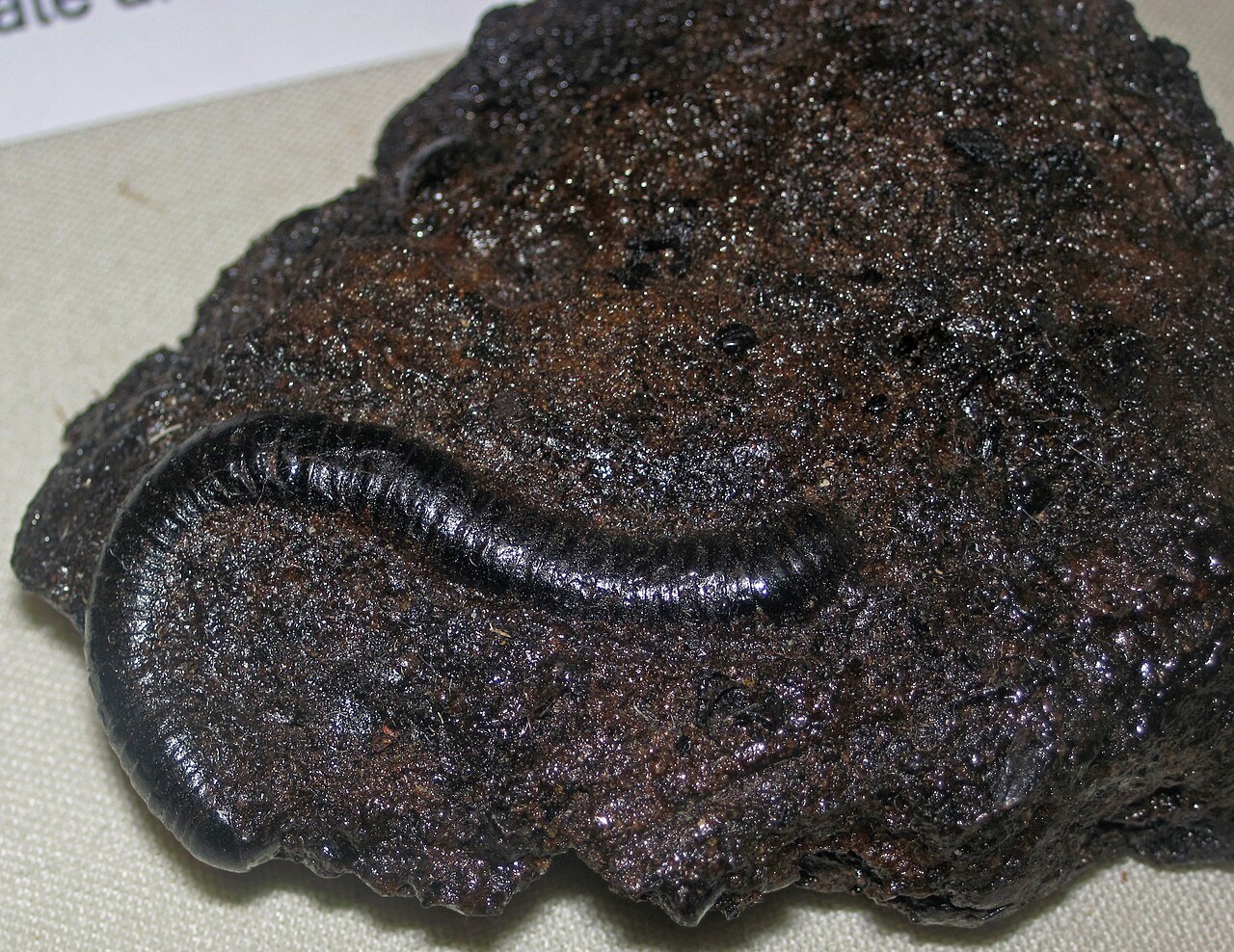
Natural asphalt seeps in the Los Angeles Basin trapped and preserved organisms through the late Pleistocene. Pit 91 reveals small organisms alongside large mammals, while directly dated bones help test the timing of regional megafaunal disappearance.
0.025 Ma → 0.0132 Ma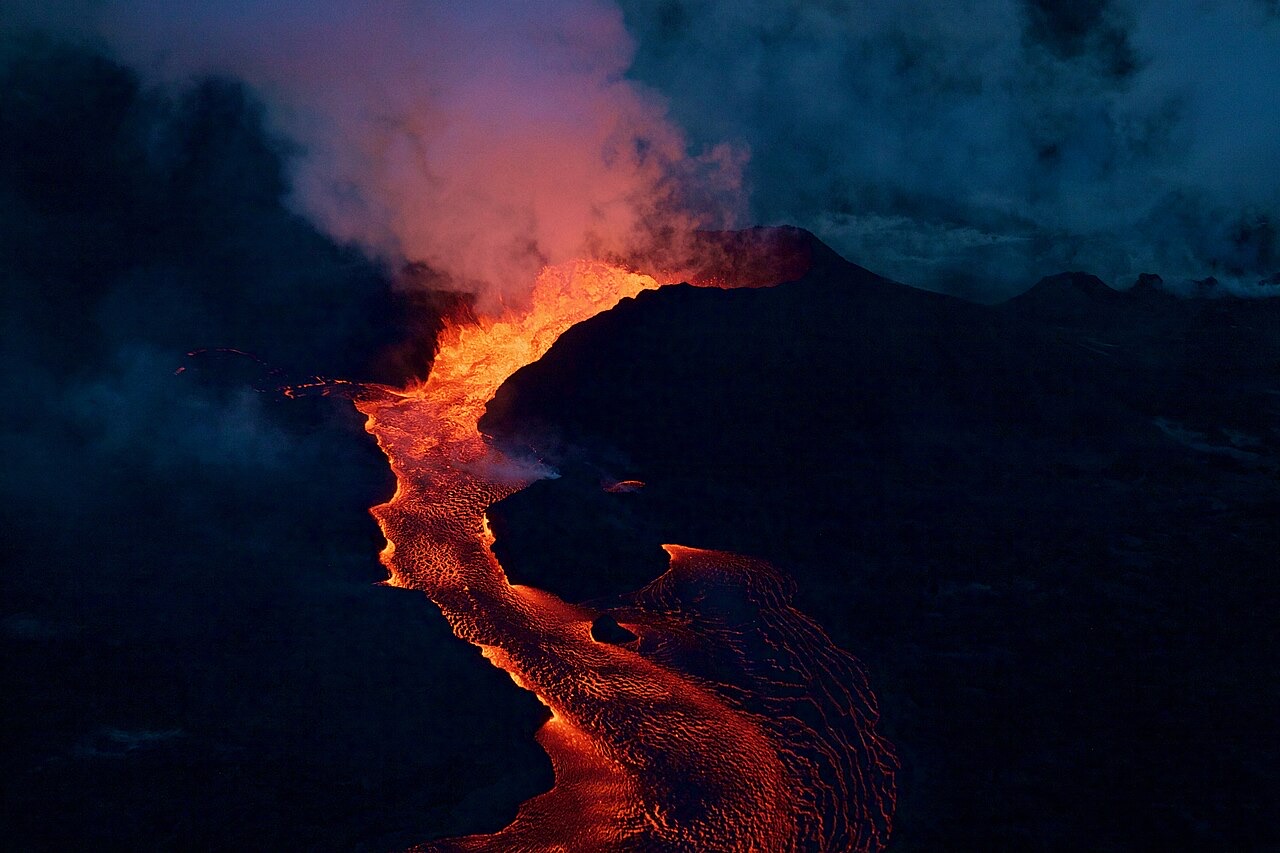 Oceania
United States ↗
Hawaiian Islands
Older volcanic rocks on Kauaʻi contrast with monitored eruptions at Kīlauea, illustrating island-chain development and ongoing crustal construction.
5 Ma → Today