
How can leaves and a giant snake explain the same ancient landscape?
Cerrejón offers a fossil account of tropical life soon after the end-Cretaceous extinction on the scale of geological time. Early investigators identified familiar plant families in an assemblage much older than any present forest. Well-preserved leaves, pollen and other plant remains allow different types of comparison. A fossil seed or pod can reveal a family even if leaf shape alone is ambiguous. Species diversity and vegetation structure need other lines of evidence as well.
The coal-bearing sediment records places where organic matter accumulated and was buried. Fossils collected between and around the coal beds come from different layers. Wet conditions can favor preservation of plant material, so the resulting collection is a selected view of an ancient forest and its waterways. It does not imply that every layer of sediment formed in precisely the same setting.
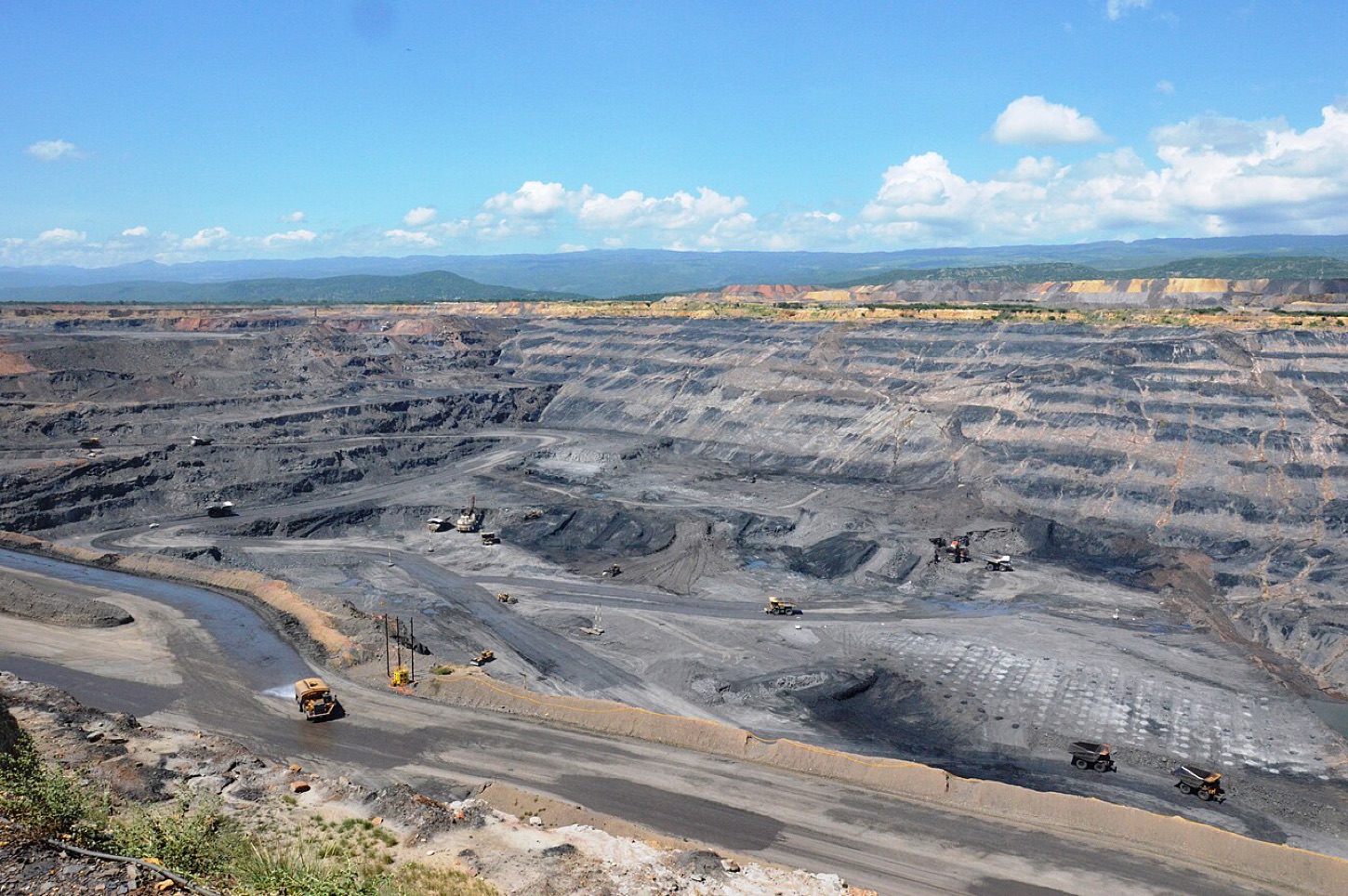
The giant snake Titanoboa provides another clue. Its vertebrae can be compared with relatives to estimate body size, and paleontologists have explored the relationship between size and a warm tropical climate. The temperature estimate depends in part on how the physiology of a fossil animal is modelled. Leaves and pollen independently confirm the broader tropical character of the setting. Open pits expose the ancient deposits today. The present quarry and the Paleocene ecosystem belong to very different histories, with the pit serving as a window into the older archive.
[1] [2] [3]Time windows and evidence
Older ages are on the left. Bars span the dated intervals. A dot marks a single age.
- Forest and wet lowlands near the Paleocene equator 57–59 Ma
- Coal workings expose the fossil record Today
- Titanoboa vertebrae from Cerrejón 57–59 Ma
- Legume fruits and leaflets in the Cerrejón flora 57–59 Ma
- Coal-associated Cerrejón pollen assemblages 57–59 Ma
Researched windowsEvidence records
58 Ma · interval 57–59 Ma
Forest and wet lowlands near the Paleocene equator
Fossil leaves, seeds, pollen and vertebrates document tropical lowlands in the Cerrejón Formation. Coal indicates repeated concentration and burial of plant matter. Researchers combine these clues with stratigraphy to discuss the forest around ancient waterways. The individual specimens were collected in distinct beds.
[1] [2]Locate this time in the atlas ↗Observed
Plant macrofossils, pollen and giant snake remains occur in the coal-bearing formation.
Reconstructed
A warm tropical forest and freshwater habitats occupied part of the ancient basin.
Uncertain
Exact temperature depends on the method and careful comparison with younger assemblages.
Evidence windows overlapping this state: 3. Overlap does not establish exact coexistence.
body fossil · Cerrejón coal basin ↗
Titanoboa vertebrae from Cerrejón
Giant snake vertebrae from the Paleocene Cerrejón Formation were described as Titanoboa cerrejonensis using taxonomic comparisons with other boid snakes. Their exceptional size prompted body-length estimates. They establish the presence of a very large tropical snake and provide a separate biological clue about the environment. Length and temperature estimates depend on the comparative anatomy and physiology model selected.
body fossil · Cerrejón coal basin ↗
Legume fruits and leaflets in the Cerrejón flora
The Cerrejón macroflora includes fossil legume pods, seeds and leaves. Preservation of several structures supports comparisons that would be weaker if only a single leaf outline had survived. Legumes belonged to the Paleocene forest assemblage, alongside other recognizable tropical groups. A family-level identification does not make the fossil plant equivalent to any modern species.
sediment · Cerrejón coal basin ↗
Coal-associated Cerrejón pollen assemblages
Microscopic pollen recovered from the formation provides an additional plant record next to the leaf assemblage. Coal-bearing sections preserve different plant materials in distinctive depositional contexts. Pollen and megafossils together support the interpretation of a tropical rainforest setting. Pollen transport, differential production and preservation affect the observed proportions, so a count is not a mapped forest census.
Today · interval Today
Coal workings expose the fossil record
Modern excavations make parts of the coal-bearing succession visible for study. The present landscape in the photograph includes landforms created by mining and sediment movement. The modern regional locator identifies the general mine district. The Paleocene record is read from the layers and collection notes.
[3] [1]Locate this time in the atlas ↗Observed
Mine exposures and excavations reveal coal and associated sediment layers.
Reconstructed
Modern human excavation exposed a much older geological archive.
Uncertain
Variable access and preservation affect which strata scientists can study.
Evidence windows overlapping this state: 0. Overlap does not establish exact coexistence.
No curated evidence record overlaps this window. The full notebook for this region appears below.
What this story cannot resolve
Approximately 58 Ma is a representative age; the displayed wider window is for teaching. The modern context describes exposure in a mining district, not ancient habitat or collecting access.
Keep these ideas handy
Taphonomy
Studying what happens between an organism’s life, death, burial, preservation and eventual discovery. Explore the idea ↗
Facies
The observable characteristics of a rock body that help describe and interpret its depositional setting. Explore the idea ↗
Climate proxy
A measured feature of a natural archive used to infer some aspect of past climate. Explore the idea ↗
The evidence notebook
body fossil · Cerrejón coal basin ↗
Titanoboa vertebrae from Cerrejón
Giant snake vertebrae from the Paleocene Cerrejón Formation were described as Titanoboa cerrejonensis using taxonomic comparisons with other boid snakes. Their exceptional size prompted body-length estimates. They establish the presence of a very large tropical snake and provide a separate biological clue about the environment. Length and temperature estimates depend on the comparative anatomy and physiology model selected.
body fossil · Cerrejón coal basin ↗
Legume fruits and leaflets in the Cerrejón flora
The Cerrejón macroflora includes fossil legume pods, seeds and leaves. Preservation of several structures supports comparisons that would be weaker if only a single leaf outline had survived. Legumes belonged to the Paleocene forest assemblage, alongside other recognizable tropical groups. A family-level identification does not make the fossil plant equivalent to any modern species.
sediment · Cerrejón coal basin ↗
Coal-associated Cerrejón pollen assemblages
Microscopic pollen recovered from the formation provides an additional plant record next to the leaf assemblage. Coal-bearing sections preserve different plant materials in distinctive depositional contexts. Pollen and megafossils together support the interpretation of a tropical rainforest setting. Pollen transport, differential production and preservation affect the observed proportions, so a count is not a mapped forest census.
Follow the evidence
Sources & credits
- Late Paleocene fossils from the Cerrejón Formation, Colombia, are the earliest record of Neotropical rainforest ↗
Wing et al. · Proceedings of the National Academy of Sciences · 2009
Use, credit & modifications
Reference only. No source text, figures or photographs reproduced in this record.
Credit: Wing et al. · Proceedings of the National Academy of Sciences. Facts paraphrased in original text; teaching intervals distinguished from measurement uncertainty. Reference use; no media rights asserted.
- Giant boid snake from the Palaeocene neotropics reveals hotter past equatorial temperatures ↗
Head et al. · Nature · 2009
Use, credit & modifications
Reference only. No source text, figures or photographs reproduced in this record.
Credit: Head et al. · Nature. Facts paraphrased in original text; teaching intervals distinguished from measurement uncertainty. Reference use; no media rights asserted.
- The first Neotropical rainforest was home of the Titanoboa ↗
Smithsonian Institution · 2009
Use, credit & modifications
Reference only. No source text, figures or photographs reproduced in this record.
Credit: Smithsonian Institution. Facts paraphrased in original text; teaching intervals distinguished from measurement uncertainty. Reference use; no media rights asserted.
Follow the connections
 South America
Colombia ↗
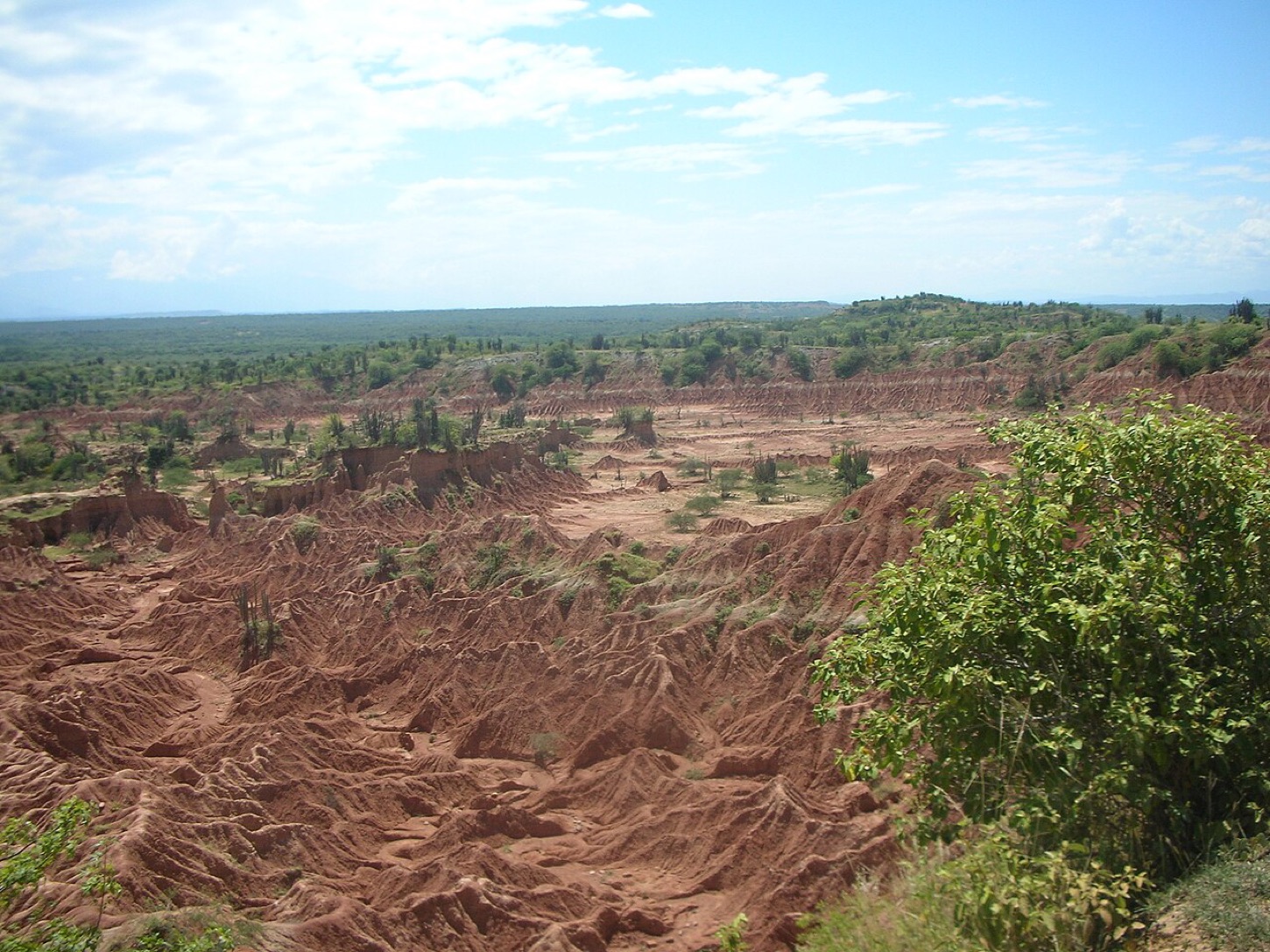
La Venta and the Tatacoa
The La Victoria and Villavieja formations preserve a succession of wet-channel and floodplain deposits with an exceptional vertebrate record.
13.2 Ma → 12.2 Ma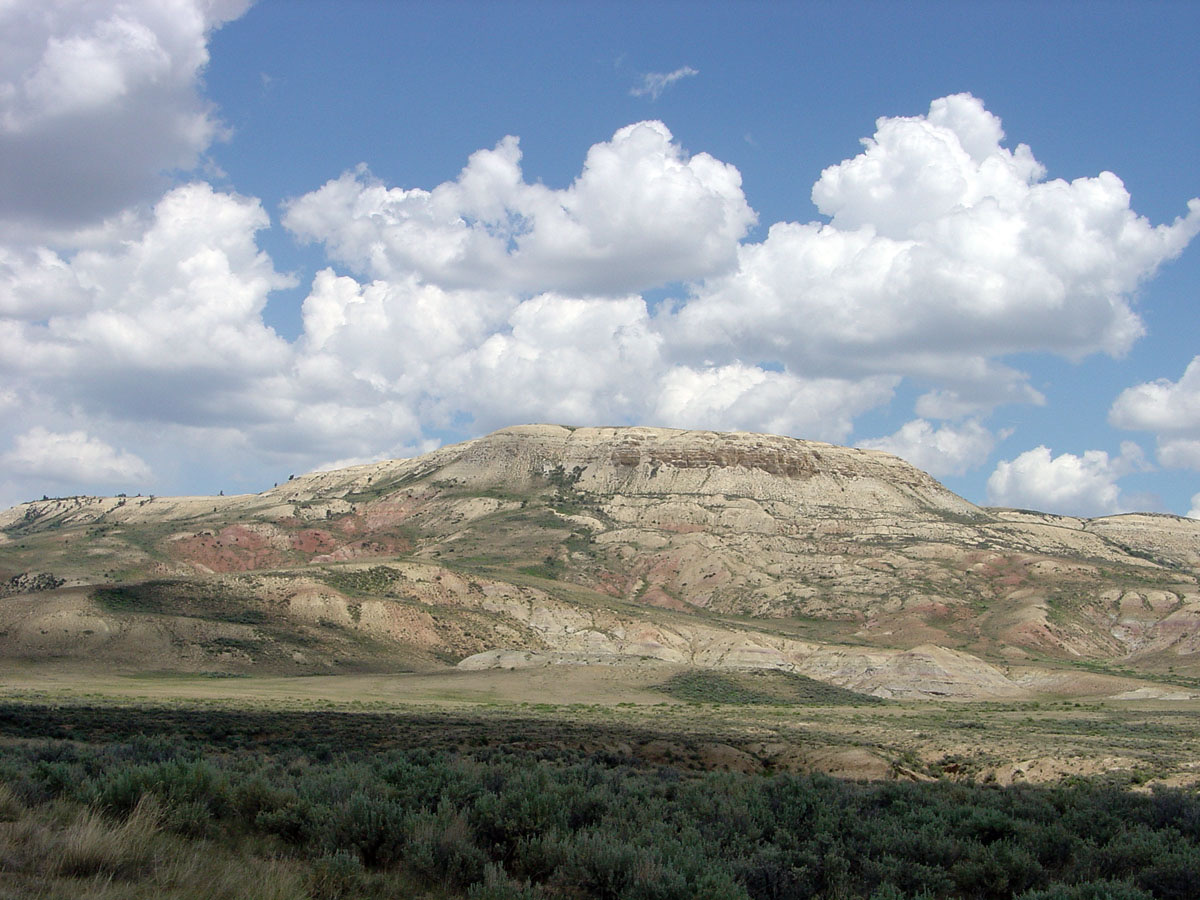 North America
United States ↗
Fossil Lake, Wyoming
The Green River Formation records several Eocene lakes. At Fossil Lake, an expanding lake and its later shrinking, saltier stage left different sediments and different opportunities for preservation.
52 Ma → 51 Ma