
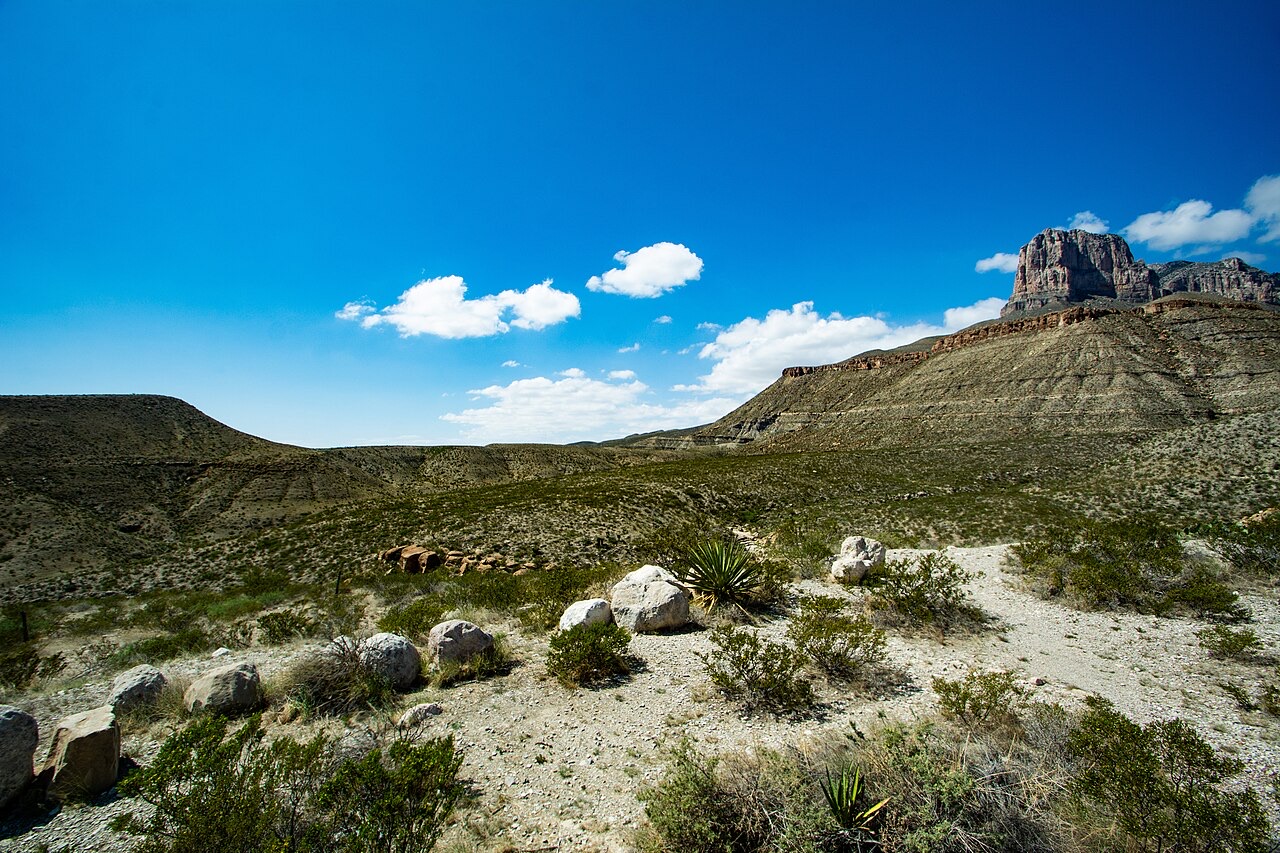
How can a marine reef become the walls of a deep inland cavern?
The Capitan Reef was a living marine structure before it was a mountain rock or a cave wall. Around 265–260 million years ago, organisms and carbonate cement built a resistant rim along the Delaware Basin. Its builders were unlike the coral communities familiar from many modern tropical reefs. Sponges, encrusting organisms and other carbonate producers contributed to the accumulation and stabilization of the reef.
The surrounding rocks preserve an environmental cross section. Behind the reef lay shallow, sometimes saline water; in front, broken reef debris moved down slopes toward deeper basin sediment. These facies can differ even when they are approximately the same age. Fossils and the geometry of the deposits therefore tell a richer story than a limestone label alone. A sponge preserved in growth position provides different evidence from a fragment carried downslope.
Later burial hid the reef beneath younger sediment. Uplift, faulting and erosion eventually exposed parts of the complex in the Guadalupe Mountains. That tectonic history did not simply lift an intact modern-style reef into the air: rocks were buried, altered and stripped of cover over immense spans of time. The present desert cliffs preserve portions of the ancient construction, not its original surface.
Carlsbad Cavern records a further transformation, mainly around six to four million years ago. Hydrogen sulfide interacting with oxygen-bearing groundwater generated sulfuric acid that dissolved limestone near the water table. Gypsum and other minerals record this chemical history. The cave’s age is consequently much younger than the rock surrounding it. Its chambers are neither empty spaces left by reef animals nor tunnels excavated during the Permian sea.
[1] [2] [3]Time windows and evidence
Older ages are on the left. Bars span the dated intervals. A dot marks a single age.
- The living Capitan reef margin 260–265 Ma
- Caves enlarge inside the rising rock 4–6 Ma
- Calcareous sponges in the Capitan reef framework 260–265 Ma
- El Capitan reef-to-basin rock succession 260–265 Ma
- Big Room gypsum, Carlsbad Cavern 4–6 Ma
Researched windowsEvidence records
262 Ma · interval 260–265 Ma
The living Capitan reef margin
Sponges, encrusting organisms and carbonate cement built a reef along the Delaware Basin. Adjacent back-reef, slope and basin settings accumulated contrasting sediment. The 265–260 million year envelope follows the park’s rounded interpretation of reef growth; the diagram does not imply that every reef organism was a coral or that all facies had the same depth.
[1] [2]Locate this time in the atlas ↗Observed
Fossil-rich limestone, reef-building organisms and slope deposits form a coherent reef complex.
Reconstructed
A marine carbonate margin separating shallow back-reef water from a deeper basin.
Uncertain
Local growth, erosion and cementation varied through time.
Evidence windows overlapping this state: 2. Overlap does not establish exact coexistence.
body fossil · Capitan Reef and Carlsbad ↗
Calcareous sponges in the Capitan reef framework
Near the entrance to Walnut Canyon, New Mexico Bureau of Geology field notes document elongated calcareous sponges still oriented within the Capitan reef framework. Other organisms grew over the sponge skeletons, and mineral cement filled spaces between them. That arrangement is evidence of a rigid structure built on the sea floor. Broken fragments also occur in slope deposits nearby, so the presence of a sponge fossil by itself does not show where it grew.
sediment · Capitan Reef and Carlsbad ↗
El Capitan reef-to-basin rock succession
The Guadalupe exposures show massive reef limestone alongside slope debris and finer basin deposits. Their spatial relationships preserve the architecture of an ancient marine margin. Different rocks can have formed simultaneously in neighboring environments, so changing lithology across this exposure should not automatically be read as a simple sequence of time. The sequence provides a spatial comparison of linked environments, illustrating why a change in rock type can indicate a change in location as well as time.
5 Ma · interval 4–6 Ma
Caves enlarge inside the rising rock
Much later, sulfuric acid dissolved large chambers within uplifted limestone. The mountain setting represents the regional rock mass and its groundwater system, not a surface volcanic eruption. Dating of cave-related minerals supports an approximate six-to-four million year dissolution interval for Carlsbad Cavern. Later decoration and continued change are separate parts of its history.
[3]Locate this time in the atlas ↗Observed
Large chambers, gypsum deposits and dated alteration minerals occur within older limestone.
Reconstructed
Acid-producing groundwater reactions enlarged caves near a changing water table.
Uncertain
Different caves and minerals record different episodes.
Evidence windows overlapping this state: 1. Overlap does not establish exact coexistence.
What this story cannot resolve
The region encompasses the Capitan complex from the Guadalupe Mountains to Carlsbad. Cave formation, reef deposition and modern exposure have different ages.
Keep these ideas handy
Facies
The observable characteristics of a rock body that help describe and interpret its depositional setting. Explore the idea ↗
Fossilization
The varied processes by which remains or traces of past life enter the geological record. Explore the idea ↗
Mountain building
Processes that thicken, deform or raise Earth’s crust, often associated with convergence and collision. Explore the idea ↗
The evidence notebook
body fossil · Capitan Reef and Carlsbad ↗
Calcareous sponges in the Capitan reef framework
Near the entrance to Walnut Canyon, New Mexico Bureau of Geology field notes document elongated calcareous sponges still oriented within the Capitan reef framework. Other organisms grew over the sponge skeletons, and mineral cement filled spaces between them. That arrangement is evidence of a rigid structure built on the sea floor. Broken fragments also occur in slope deposits nearby, so the presence of a sponge fossil by itself does not show where it grew.
sediment · Capitan Reef and Carlsbad ↗
El Capitan reef-to-basin rock succession
The Guadalupe exposures show massive reef limestone alongside slope debris and finer basin deposits. Their spatial relationships preserve the architecture of an ancient marine margin. Different rocks can have formed simultaneously in neighboring environments, so changing lithology across this exposure should not automatically be read as a simple sequence of time. The sequence provides a spatial comparison of linked environments, illustrating why a change in rock type can indicate a change in location as well as time.
geochemistry · Capitan Reef and Carlsbad ↗
Big Room gypsum, Carlsbad Cavern
Large gypsum deposits in Carlsbad’s Big Room are part of the evidence for sulfuric-acid cave dissolution. Chemical reactions altered carbonate rock and left sulfate minerals. The displayed interval refers to the major cave-forming episode inferred from dated associated minerals, not a direct date for every visible gypsum block or younger cave decoration. Distinguishing these products from the original reef limestone separates the chemistry that created a cavern from the much older biological processes that built its enclosing rock.
Follow the evidence
Sources & credits
- Guadalupe Mountains: Geologic Formations ↗
National Park Service · Not stated
Use, credit & modifications
Reference only. No source text or assets reproduced. Original factual synthesis; no reuse licence asserted.
Credit: National Park Service — Guadalupe Mountains: Geologic Formations. Facts synthesized in original educational language. Rounded teaching intervals are distinguished from measured dates. No source assets reused; territorial permissions not applicable.
- Permian Reef Complex Virtual Field Trip: Stop I-2 ↗
New Mexico Bureau of Geology and Mineral Resources · Not stated
Use, credit & modifications
Reference only. No source text or assets reproduced. Original factual synthesis; no reuse licence asserted.
Credit: New Mexico Bureau of Geology and Mineral Resources — Permian Reef Complex Virtual Field Trip: Stop I-2. Facts synthesized in original educational language. Rounded teaching intervals are distinguished from measured dates. No source assets reused; territorial permissions not applicable.
- Carlsbad Caverns: Geologic Formations ↗
National Park Service · Not stated
Use, credit & modifications
Reference only. No source text or assets reproduced. Original factual synthesis; no reuse licence asserted.
Credit: National Park Service — Carlsbad Caverns: Geologic Formations. Facts synthesized in original educational language. Rounded teaching intervals are distinguished from measured dates. No source assets reused; territorial permissions not applicable.
Follow the connections
 North America
United States ↗
White Sands
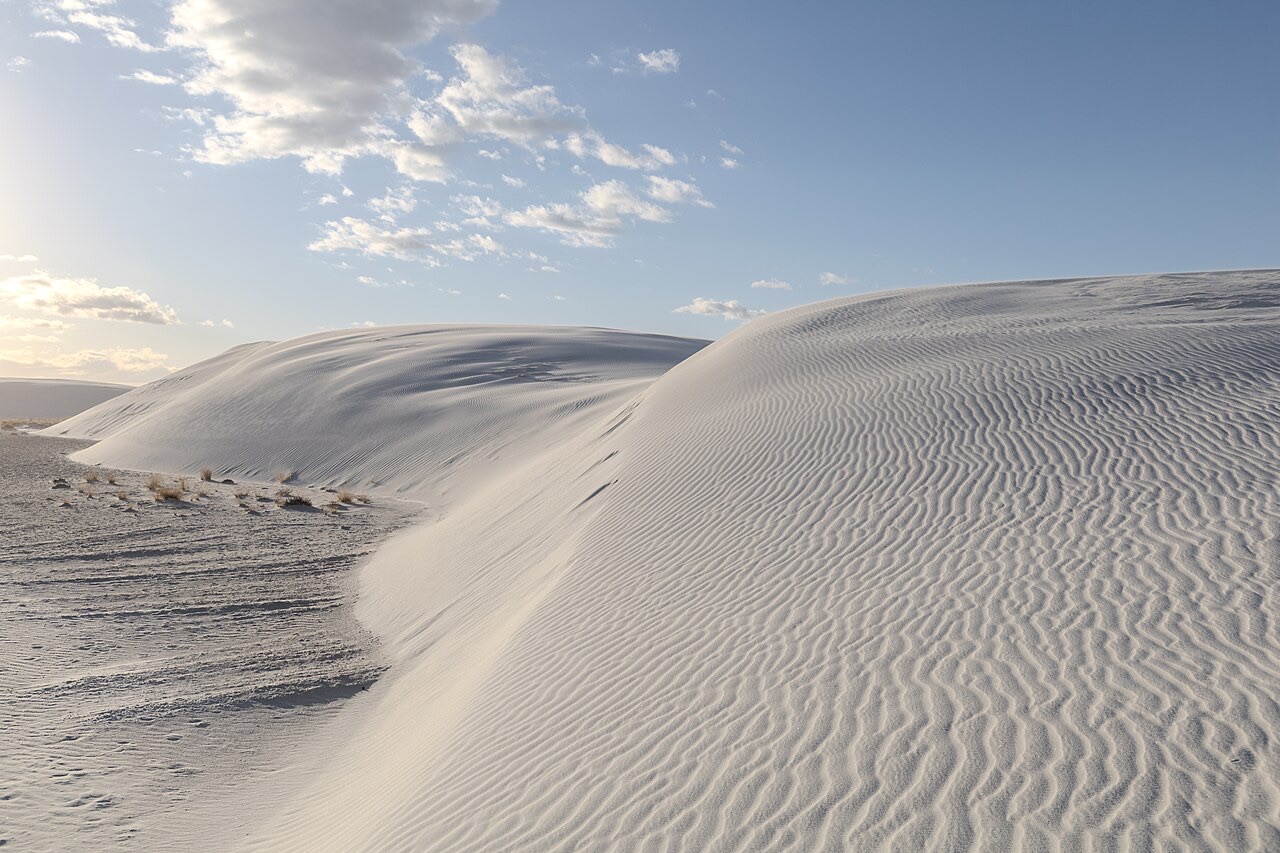
Lake Otero’s sediments preserve traces and environmental change; later gypsum recycling supplied the modern white dune field.
0.0234 Ma → Today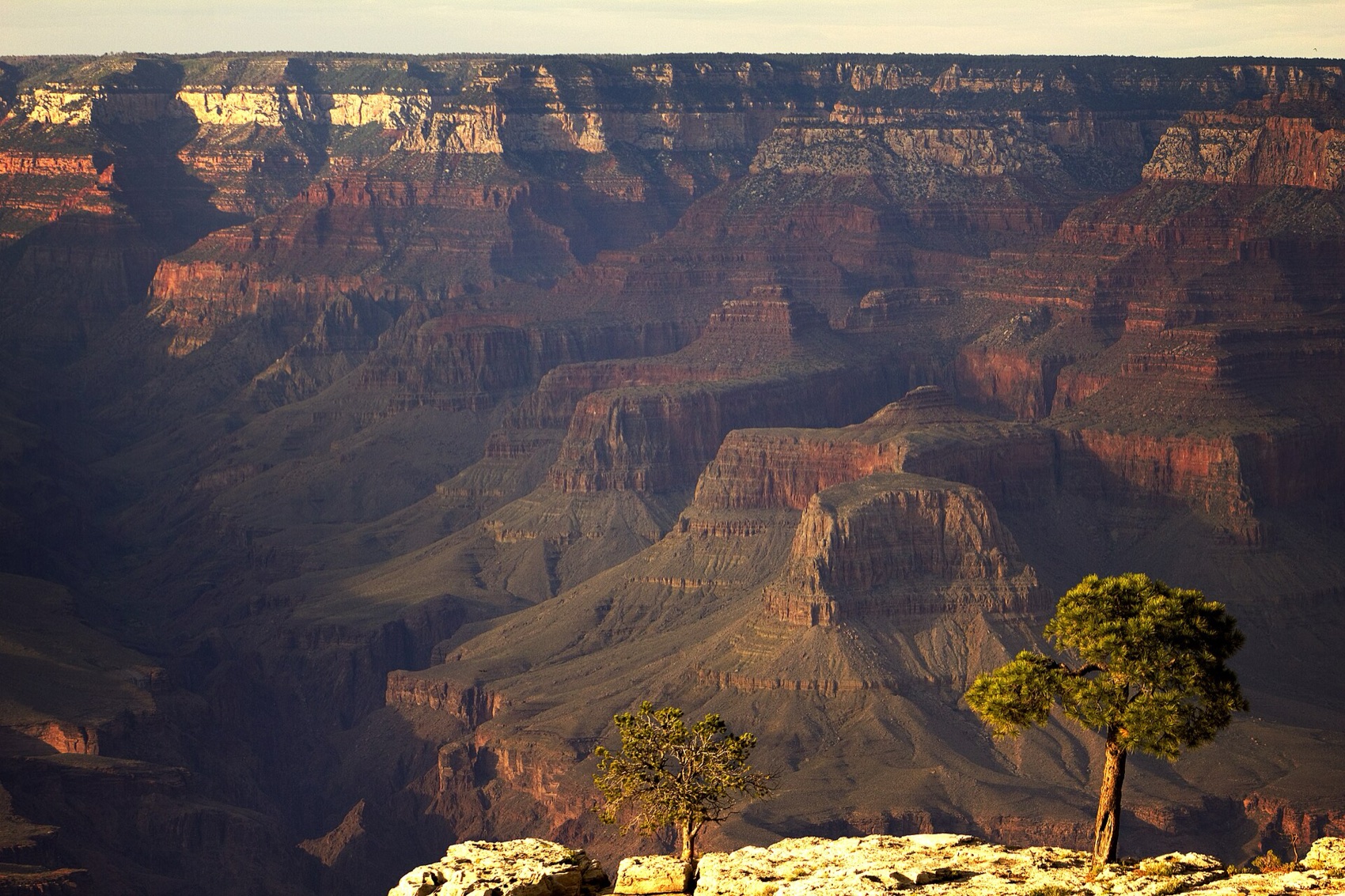 North America
United States ↗
Grand Canyon
The canyon exposes older environments stacked in rock. Cambrian marine deposits and Permian dune sand record different chapters; the much younger canyon is the window through which we read them.
508 Ma → 275 Ma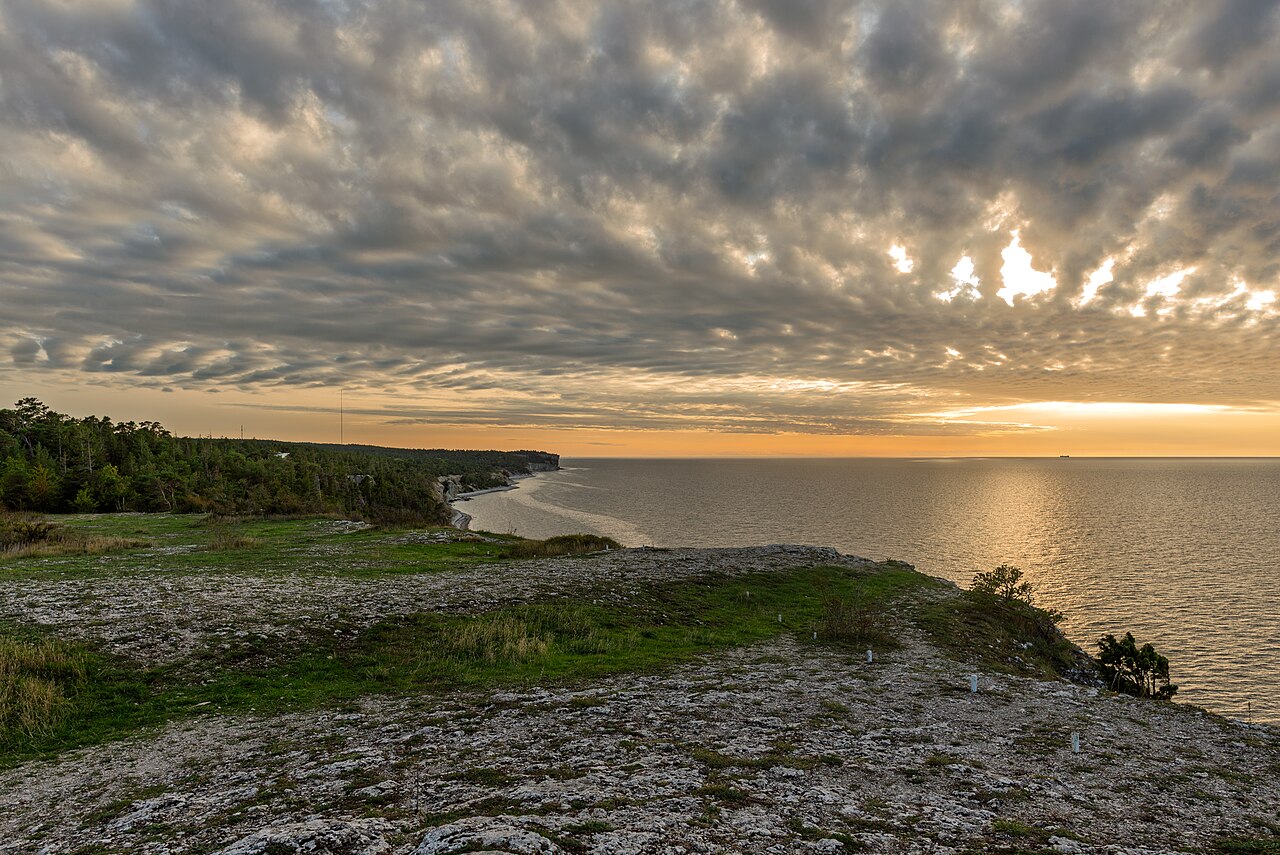 Europe
Sweden ↗
Gotland
Silurian limestones preserve repeated reef development on a marine platform. Högklint and the younger Sundre succession show that reef frameworks were assembled by changing partnerships of corals, sponges, bryozoans and microbial communities.
432 Ma → 423 Ma