
Compare vertebrates preserved in older Oligocene–Miocene limestone with the bat assemblage of early Pleistocene Rackham’s Roost. The two windows also show why a cave samples its surroundings differently from a freshwater deposit.
Window A / 23 Ma
Riversleigh
Freshwater pools in a wetter world
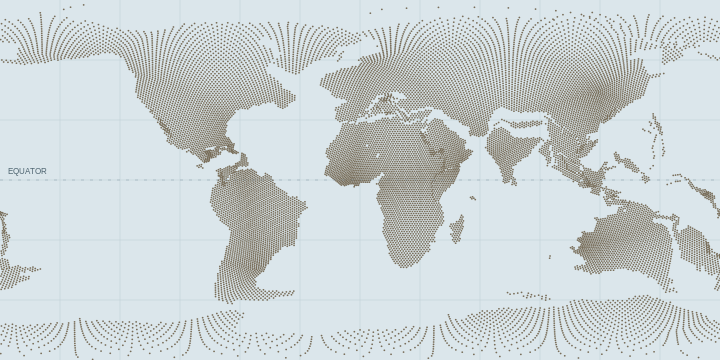
Research window 15–25 Ma
The older window represents Oligocene–Miocene Riversleigh deposits associated with wetter, forested habitats. Mineral-rich freshwater settings helped preserve remains that would otherwise have been lost. The scene represents the wider habitat around a deposit rather than claiming every animal inhabited one pool. Its broad interval intentionally covers a regional fossil window; individual sites within it have their own ages and communities.
[6] [7] [9]- Observed
- Limestone deposits contain diverse mammals, crocodilians, birds and other vertebrates.
- Reconstructed
- Many older assemblages indicate wetter, forested environments compared with the modern region.
- Uncertain
- The localities are not all contemporaneous, and a pooled fauna would obscure ecological change.
Window B / 2.1 Ma
Riversleigh
Rackham’s Roost and a changing fauna
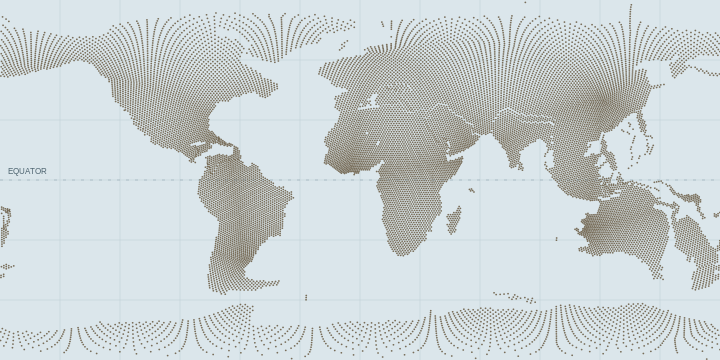
Research window 1.1–2.7 Ma
Rackham’s Roost preserves a cave assemblage with teeth and other remains of bats. Newer work places the site in the early Pleistocene, using an age of about 2.1 million years from associated cave deposits. The oldest dated flowstone touches the fossil bed. Other samples formed above it. The timeline shows a rounded range that encompasses reported mineral ages and dating uncertainties, while the fossil-bearing sediment is at least as old as the calcite covering it.
[8] [9] [11] [10]- Observed
- Rackham’s Roost preserves fossil bat teeth and jaw fragments below dated cave minerals.
- Reconstructed
- The assemblage documents bats using a regional landscape that had changed since the older Oligocene–Miocene deposits.
- Uncertain
- The dates constrain the cave deposits. Their relationship to individual fossils depends on exactly where the sediments and calcite accumulated.
What the evidence shows
Older Riversleigh limestone deposits preserve land and freshwater vertebrates. Bat remains occur in the younger cave fill of Rackham’s Roost, where dated flowstone in contact with the deposit provides an age constraint around 2.1 Ma. This date refers to calcite growth.
[6] [7] [8] [10] [11]What we infer from it
Many older communities support wetter, forested conditions, whereas the younger bat fauna is closer in composition to the modern regional community. That contrast supports ecological questions but needs care: a cave selectively samples roosting animals and other routes of accumulation, not every organism on the surrounding landscape.
[8] [3] [11]What remains open
The windows cover different localities. The age of flowstone helps constrain deposition without directly dating every fossil. Changes in which organisms the caves preserve cannot alone quantify rainfall, canopy cover or the rate of environmental change.
Follow the evidence
Sources & credits
- palaeoverse: palaeogeographic reconstruction files, v2.0.0 ↗
Lewis A. Jones / Zenodo · 2024-09-19
Use, credit & modifications
CC BY 4.0; verified on dataset API metadata, not inferred from paper
Credit: Lewis A. Jones (2024), palaeoverse v2.0.0; Jones & Domeier (2024); MERDITH2021 model. RDS converted to static JSON and original dot maps; selected ages; nearest-centroid regional matching; display rounding. Worldwide under CC BY 4.0.
- A Phanerozoic gridded dataset for palaeogeographic reconstructions ↗
Jones & Domeier, Scientific Data 11:710 · 2024
Use, credit & modifications
Reference only; no paper text or figures reproduced
Credit: Jones & Domeier (2024). Original methodological synthesis. No reproduced asset.
- Australian Fossil Mammal Sites (Riversleigh / Naracoorte) ↗
UNESCO World Heritage Centre · Not stated
Use, credit & modifications
Reference only. No source text, photographs, charts or other assets reproduced; original factual synthesis.
Credit: UNESCO World Heritage Centre. Original explanatory synthesis; geological boundary ages normalized to ICS 2026/06 where relevant. No third-party asset reuse; no territorial asset licence asserted.
- The Miocene Epoch ↗
University of California Museum of Paleontology · 2011-06-10
Use, credit & modifications
Reference only. No source text, photographs, charts or other assets reproduced; original factual synthesis.
Credit: University of California Museum of Paleontology. Original explanatory synthesis; geological boundary ages normalized to ICS 2026/06 where relevant. No third-party asset reuse; no territorial asset licence asserted.
- What Are Proxy Data? ↗
NOAA National Centers for Environmental Information · 2018-08-24
Use, credit & modifications
Reference only. No source text, photographs, charts or other assets reproduced; original factual synthesis.
Credit: NOAA National Centers for Environmental Information. Original explanatory synthesis; geological boundary ages normalized to ICS 2026/06 where relevant. No third-party asset reuse; no territorial asset licence asserted.
- Australian Fossil Mammal Sites — Riversleigh ↗
Australian Department of Climate Change, Energy, the Environment and Water · 2026-05-25
Use, credit & modifications
Reference only. No third-party prose, figures, photographs or datasets reproduced; factual interpretation written originally for this atlas.
Credit: Australian Department of Climate Change, Energy, the Environment and Water — Australian Fossil Mammal Sites — Riversleigh. Original educational synthesis; geological ages rounded into explicitly labelled teaching intervals. No licensed media incorporated; no territorial reuse permission asserted.
- Fossils in Riversleigh, Queensland ↗
Australian Museum · 2020-07-16
Use, credit & modifications
Reference only. No third-party prose, figures, photographs or datasets reproduced; factual interpretation written originally for this atlas.
Credit: Australian Museum — Fossils in Riversleigh, Queensland. Original educational synthesis; geological ages rounded into explicitly labelled teaching intervals. No licensed media incorporated; no territorial reuse permission asserted.
- Riversleigh fossil bats and Rackham’s Roost ↗
Australian Museum; Australian Natural History · Not stated
Use, credit & modifications
Reference only. No third-party prose, figures, photographs or datasets reproduced; factual interpretation written originally for this atlas.
Credit: Australian Museum; Australian Natural History — Riversleigh fossil bats and Rackham’s Roost. Original educational synthesis; geological ages rounded into explicitly labelled teaching intervals. No licensed media incorporated; no territorial reuse permission asserted.
- Australian Fossil Mammal Sites (Riversleigh / Naracoorte) ↗
UNESCO World Heritage Centre · Not stated
Use, credit & modifications
Reference only. No third-party prose, figures, photographs or datasets reproduced; factual interpretation written originally for this atlas.
Credit: UNESCO World Heritage Centre — Australian Fossil Mammal Sites (Riversleigh / Naracoorte). Original educational synthesis; geological ages rounded into explicitly labelled teaching intervals. No licensed media incorporated; no territorial reuse permission asserted.
- The late Cenozoic passerine avifauna from Rackham’s Roost Site, Riversleigh, Australia ↗
Nguyen et al. · Records of the Australian Museum · 2016
Use, credit & modifications
Reference only. No source text, photographs, figures or datasets reproduced. Original factual synthesis.
Credit: Nguyen et al. · Records of the Australian Museum — The late Cenozoic passerine avifauna from Rackham’s Roost Site, Riversleigh, Australia. Facts paraphrased into original educational text. No asset reuse requested; territorial permissions not applicable.
- Sheath-tailed bats from the early Pleistocene Rackham’s Roost Site ↗
King et al. · PeerJ · 2021
Use, credit & modifications
Reference only. No source text, photographs, figures or datasets reproduced. Original factual synthesis.
Credit: King et al. · PeerJ — Sheath-tailed bats from the early Pleistocene Rackham’s Roost Site. Facts paraphrased into original educational text. No asset reuse requested; territorial permissions not applicable.