
Wetland vegetation, changing sea levels and continental assembly created a varied record of late Paleozoic life.
Coal is a geological outcome, not a synonym for an ancient forest. Plant matter must accumulate and survive enough decomposition to be buried and transformed. Many Carboniferous basins preserved repeated mixtures of wetland, river, coastal and marine deposits. Their stacked layers record shifting environments and the space available for sediment, rather than one unchanging swamp lasting for the whole period.
At Joggins, rooted trees, plant remains, animal bodies and tracks let different parts of a terrestrial ecosystem be considered together. A standing trunk can constrain where a tree grew, while a transported fragment answers a different question. Small animals preserved within a tree create their own taphonomic puzzle. Bringing these clues together produces a richer account than reconstructing the forest from a single famous vertebrate.
The Carboniferous also includes the development of early amniotes and major tectonic assembly toward Pangaea. These events changed biological possibilities and geography over long intervals. The common North American terms Mississippian and Pennsylvanian subdivide the Carboniferous; they are not extra time inserted into the timeline. Our chapter groups both to keep the global sequence readable, while the Joggins story belongs to the younger subdivision.
[1] [2] [3] [4] [5] [6]A turning point
Terrestrial vertebrate lineages and forest ecosystems diversified while continents converged.
Reading this chapter carefully
The coal-forest image is regionally biased. Much of the planet was not swamp forest, and different Carboniferous basins preserve different environments.
Ma means millions of years before the present. The international chart gives the estimated boundary ages. [1]
Where to see this chapter in the rocks
These places preserve selected windows from the chapter. Find all overlapping regional histories.
 North America
Canada ↗
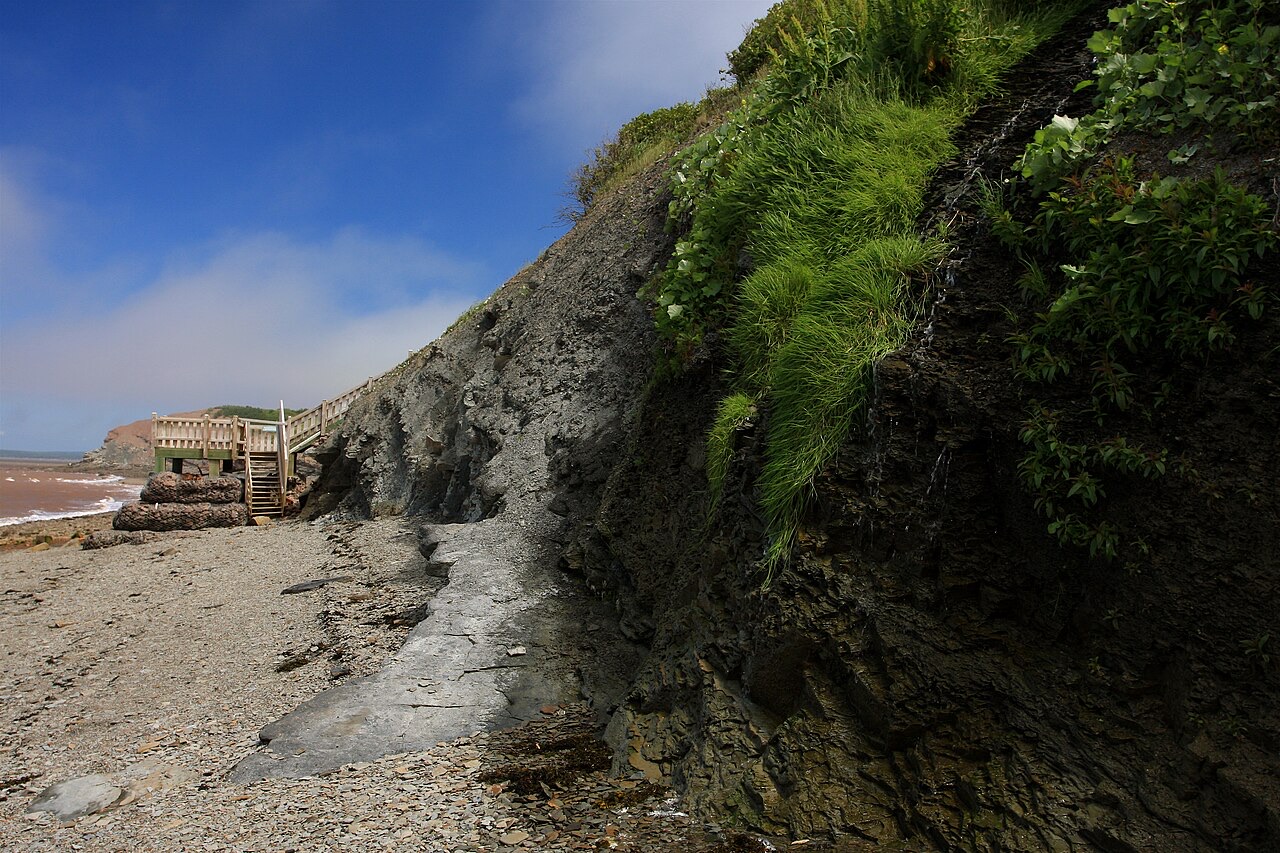
Joggins Fossil Cliffs
Carboniferous coastal forests, rivers and wetland communities survive in the rocks of a modern tidal cliff. Upright trees preserve the spatial context of an ecosystem as well as its organisms.
315 Ma → Today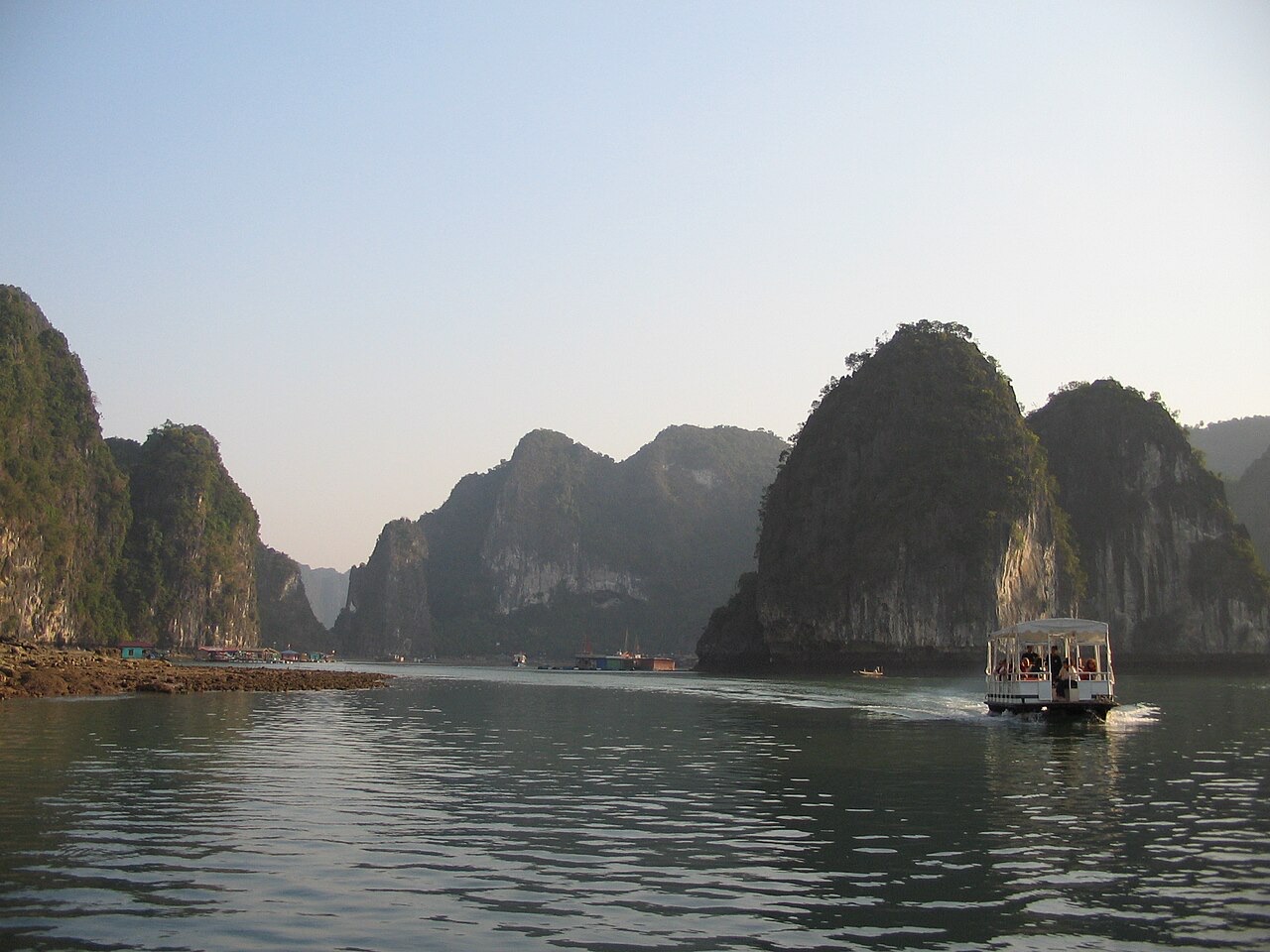 Asia
Vietnam ↗
Ha Long Bay & Cat Ba
Palaeozoic marine carbonates became a terrestrial karst landscape before Holocene seas flooded its lower ground.
330 Ma → 0.005 MaFollow the evidence
Sources & credits
- International Chronostratigraphic Chart, version 2026/06 ↗
International Commission on Stratigraphy · 2026-06
Use, credit & modifications
Reference only. No source text, photographs, charts or other assets reproduced; original factual synthesis.
Credit: International Commission on Stratigraphy. Original explanatory synthesis; geological boundary ages normalized to ICS 2026/06 where relevant. No third-party asset reuse; no territorial asset licence asserted.
- The Carboniferous Period ↗
University of California Museum of Paleontology · 2011 compilation; older underlying material
Use, credit & modifications
Reference only. No source text, photographs, charts or other assets reproduced; original factual synthesis.
Credit: University of California Museum of Paleontology. Original explanatory synthesis; geological boundary ages normalized to ICS 2026/06 where relevant. No third-party asset reuse; no territorial asset licence asserted.
- Joggins Fossil Cliffs ↗
UNESCO World Heritage Centre · Not stated
Use, credit & modifications
Reference only. No source text, photographs, charts or other assets reproduced; original factual synthesis.
Credit: UNESCO World Heritage Centre. Original explanatory synthesis; geological boundary ages normalized to ICS 2026/06 where relevant. No third-party asset reuse; no territorial asset licence asserted.
- Sedimentary Rocks ↗
US National Park Service · Not stated
Use, credit & modifications
Reference only. No source text, photographs, charts or other assets reproduced; original factual synthesis.
Credit: US National Park Service. Original explanatory synthesis; geological boundary ages normalized to ICS 2026/06 where relevant. No third-party asset reuse; no territorial asset licence asserted.
- Joggins Fossil Cliffs ↗
UNESCO World Heritage Centre · Not stated
Use, credit & modifications
Reference only. No source text, photographs, figures or datasets reproduced. Original factual synthesis; no reuse licence asserted.
Credit: UNESCO World Heritage Centre — Joggins Fossil Cliffs. Facts paraphrased into original educational text; ages rounded to declared teaching intervals. No asset reuse requested; territorial permissions not applicable.
- Joggins Fossil Cliffs — World Heritage Datasheet ↗
UNEP-WCMC · Not stated
Use, credit & modifications
Reference only. No source text, photographs, figures or datasets reproduced. Original factual synthesis; no reuse licence asserted.
Credit: UNEP-WCMC — Joggins Fossil Cliffs — World Heritage Datasheet. Facts paraphrased into original educational text; ages rounded to declared teaching intervals. No asset reuse requested; territorial permissions not applicable.